




Decorative Marble Plinth
These decorative marble plinth examples elevate sculpture and display pieces with classical presence.
Decorative Marble Plinth
A decorative marble plinth serves as a sturdy architectural foundation for displaying urns, figures, and lamps within a room. Buyers searching for a decorative marble plinth encounter various columns, pedestals, and bases designed to elevate sculptural objects.
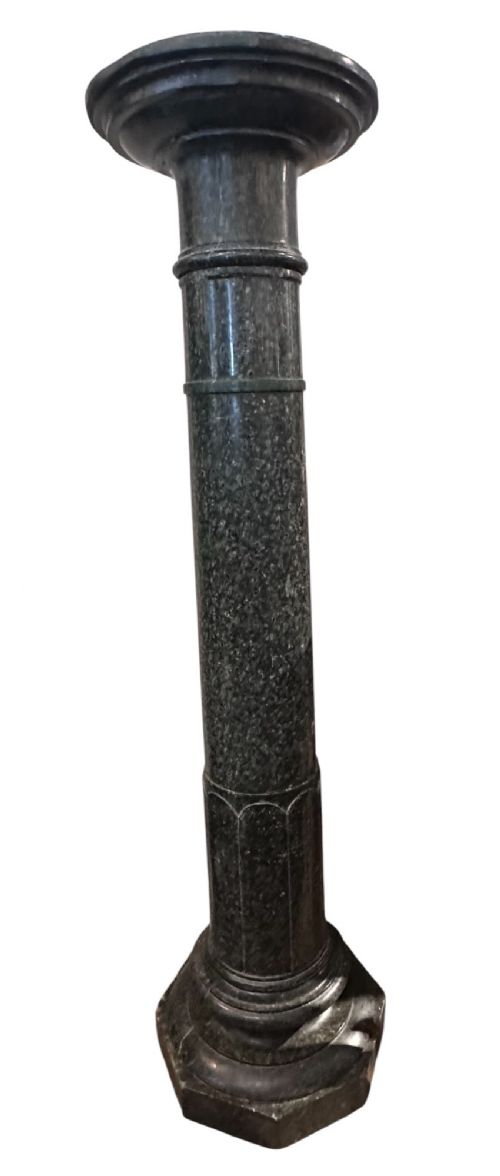
The selections available range from 19th Century Italian verde antico marble columns to Victorian green marble pedestals and faux marble alternatives. These pieces draw heavily on Neoclassical, French Empire, and Grand Tour aesthetics.
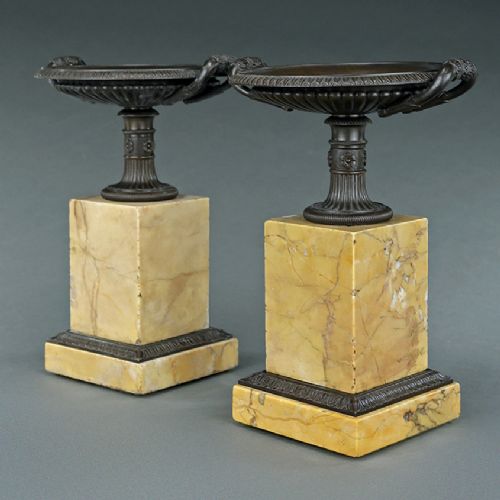
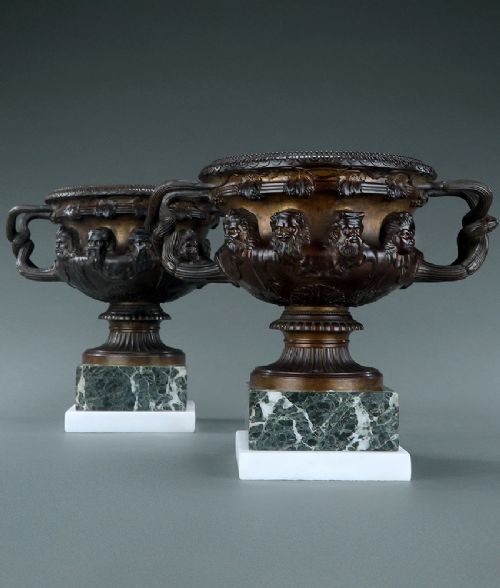
Makers utilised contrasting materials alongside the stone, pairing marble with bronze, brass, or ormolu mounts. The resulting objects function both as standalone architectural fragments and as functional supports for other decorative arts.
Materials and construction techniques
Craftsmen carved natural stones including Carrara marble, verde antico, and Vert De Patricia to form columns, pedestals, and bases. Some examples utilise painted timber or plaster finished as faux marble to achieve a similar visual weight.
Metal components such as bronze, brass, and ormolu provide structural mounts and decorative enrichment. These elements are cast and chased before being integrated with the stone bases of columns and tazzas.
A solitary seagull keeps watch from an Art Deco night light, perching permanently on its marble base.
Assessing quality in stone and metal
The quality of a decorative marble plinth depends on the natural figuring of the stone and the precision of the carving. Finely worked fluting, crisp acanthus leaves, and tight joints distinguish superior examples from simpler forms.
The integration of secondary materials dictates overall refinement. Cast bronze mounts and gilded details demonstrate a higher level of workshop skill than plain timber or standard plaster construction.
The Decorative Marble Plinth Glossary
- Verde Antico
- A dark green serpentine marble prized in classical and neoclassical sculpture for its rich, mottled colour. It appears frequently in Italian columns and pedestals from the nineteenth century.
- Grand Tour
- The traditional journey of Europe undertaken by upper-class European young men of sufficient status. Souvenirs collected included small bronzes, tazzas, and marble architectural fragments.
- Scagliola
- A composite material made from selenite, glue, and pigments, mixed to imitate marble and other fine stones. It allows artisans to create intricate decorative columns and urns.
- Ormolu
- Gilded bronze used for decorative mounts and accents on furniture and sculpture bases. The technique involves applying a mercury-gold amalgam to cast bronze.
Decorative Marble Plinth: Frequently Asked Questions
What is a decorative marble plinth used for?
A decorative marble plinth provides an elevated platform for displaying sculptures, urns, and lamps. It introduces architectural weight and classical proportion into an interior space.
These pieces support heavier decorative objects while adding visual interest through natural stone veining and carved details.
How do I identify a Grand Tour piece?
Grand Tour items are typically high-quality souvenir bronzes, marbles, or tazzas acquired during nineteenth-century travels in Italy. They often replicate classical antiquities found in European museums and archaeological sites.
The craftsmanship reflects precise casting and carving methods intended to satisfy the refined tastes of period collectors.
What is faux marble?
Faux marble is a decorative finish applied to materials like timber or plaster to imitate genuine stone. Artisans paint or treat the surface to replicate the distinctive veining and coloration of natural marble.
This technique provided a lighter and more affordable alternative for pedestals and columns during the nineteenth century.
Where should I place a column pedestal?
Column pedestals suit corners, hallways, or focal points in a room where vertical height is required. They perform best when paired with a contrasting sculpture, vase, or lamp on top.
Ensure the weight capacity of the floor and the balance of the object match the footprint of the column.