



Italian Marble Tazza
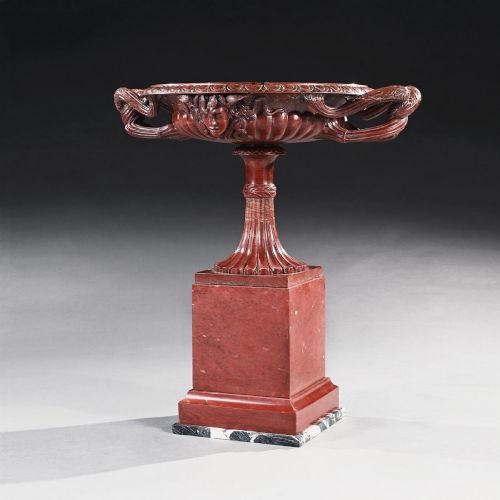
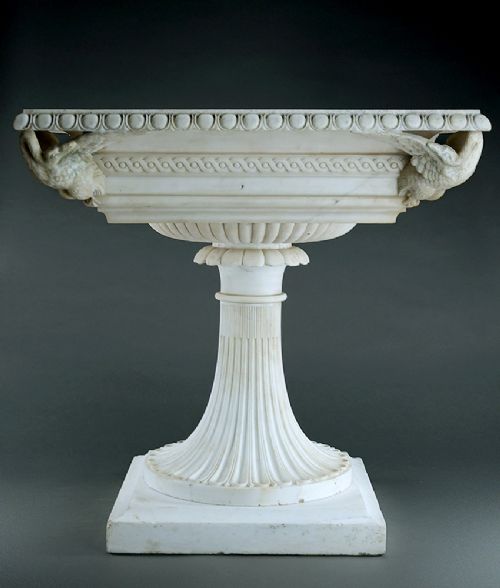
These Italian marble tazza pieces are classical pedestal bowls carved during the Grand Tour, offering timeless sculptural presence for a mantelpiece.
Italian Marble Tazza
When searching for an Italian marble tazza, a buyer encounters pedestal bowls and decorative shallow vessels shaped by classical antiquity and the Grand Tour. These pieces emerge predominantly from the nineteenth century, reflecting nineteenth-century appreciation for classical sculpture and architectural forms.
The version most commonly met on this page is the nineteenth-century Grand Tour souvenir, frequently fashioned in varied marbles such as Rosso Antico, Sienna, white marble, and alabaster. Surviving examples often appear as pairs or individual decorative centrepieces, occasionally mounted upon contrasting marble block bases or incorporating bronze elements.
Materials and Construction
Makers shaped these tazzas using hand-carved stone, utilising dense marbles like Rosso Antico, Sienna, and black marble alongside alabaster. Craftsmen selected variegated and strongly figured stones to display natural geological patterns across the shallow basin and pedestal stem.
Certain pieces integrate cast bronze mounts and patinated metal components combined directly with marble and rouge griotte bases. Artisans turned and carved the stone to echo ancient vessels discovered during excavations in Italy.
Italian Marble Tazza Retail Price Guide 2026
Typical asking prices for italian marble tazza among the pieces listed under this phrase on Sellingantiques today, from the lower quarter to the upper quarter. They describe what is for sale here now, not the wider market.
Distinctions in Quality
Proportion and execution of the classical form dictate the visual impact of the piece. Masterful turning of the pedestal stem and balanced integration of bronze elements elevate the object from a simple souvenir to a substantial work of stone carving.
Benedetto Boschetti
The Italian Marble Tazza Glossary
- Tazza
- A shallow bowl or cup mounted on a stem and foot, used historically for display or serving. These decorative examples derive from ancient classical forms.
- Grand Tour
- A traditional trip through Europe undertaken by upper-class young men in the eighteenth and nineteenth centuries. Travellers collected antiquities and architectural souvenirs including marble tazzas.
- Rosso Antico
- A deep red antique marble prized by classical sculptors and later nineteenth-century carvers. Its rich colour distinguishes specific high-status tazzas.
- Alabaster
- A fine-grained translucent stone used for carving decorative vessels and small-scale tazze. It allows light to penetrate the surface of the carved object.
Italian Marble Tazza: Frequently Asked Questions
What is an Italian marble tazza used for?
These vessels served primarily as decorative objects during the nineteenth century, brought home as mementos from European travels.
Today they function as striking centrepieces on tables, consoles, or mantelpieces, displaying natural stone patterns.
How do I identify a Grand Tour tazza?
Grand Tour pieces typically date from the nineteenth century and reference classical Roman or Greek forms. They utilise characteristic stones like Rosso Antico, Sienna marble, and alabaster.
Many incorporate black marble bases or bronze mounts that emulate excavated antiquities.
Are these tazzas made from real marble?
The listings comprise genuine carved stone, including white marble, Rosso Antico, Sienna marble, and black specimen marble. Artisans also worked in alabaster and carved stone.
Each vessel displays the natural veining and heavy weight characteristic of solid mineral specimens.
How should I clean a marble tazza?
Dust the carved surfaces gently with a dry, soft cloth to prevent accumulation in the crevices. Avoid water and chemical cleaning agents that might damage the polished stone or bronze mounts.
Special care is required for softer stones like alabaster which scratch and absorb moisture easily.