





Carved Stone Tazza
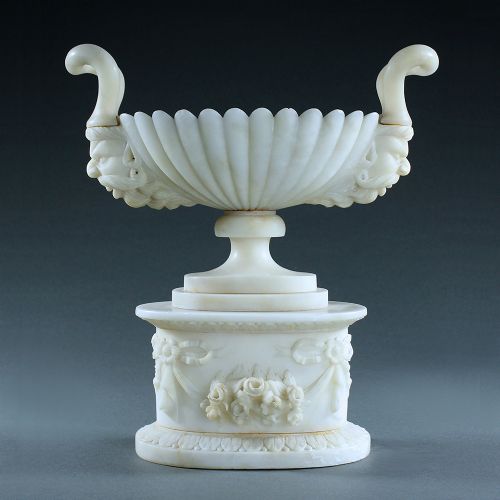
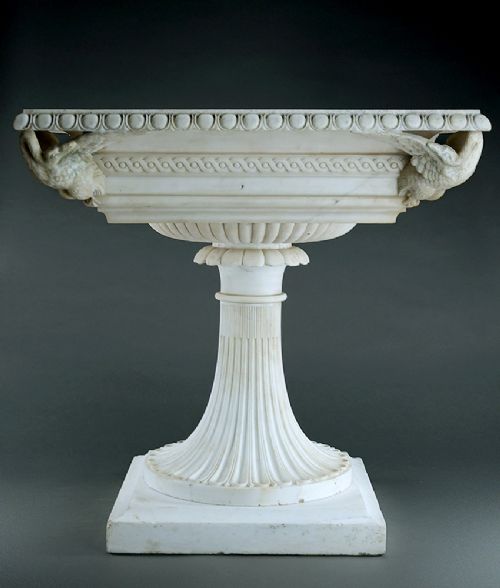
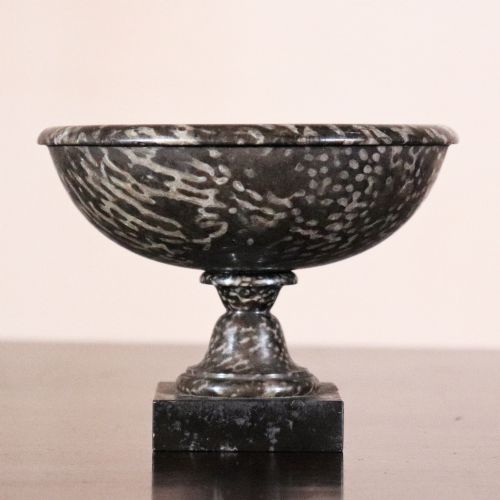
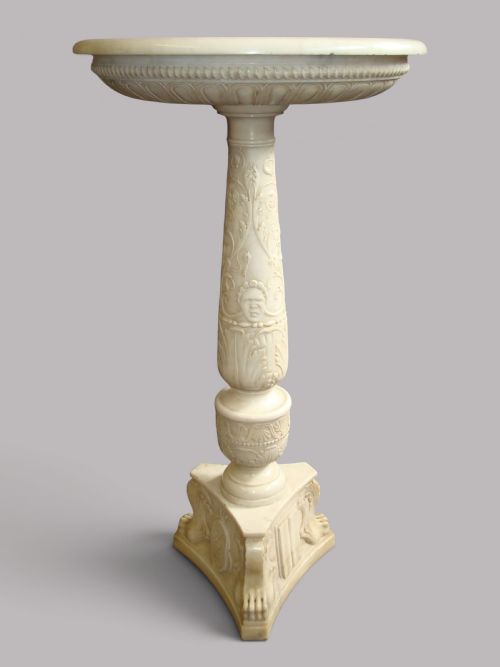
These carved stone tazza examples are classic pedestal vessels spanning the eighteenth and nineteenth centuries, offering tangible history for display.
Carved Stone Tazza
A carved stone tazza is a pedestal vessel designed for display, originating primarily from the eighteenth and nineteenth centuries with strong Neoclassical and Grand Tour influences. These items take the form of pedestal bowls, urns, and decorative dishes shaped from various mineral substances.
Buyers frequently encounter Italian Grand Tour souvenirs alongside continental European interpretations. The examples on this page range from miniature banded agate bowls with gilt brass ormolu mounts to monumental proportions and paired sets mounted on black marble block bases.
Forms include shallow dishes, labrum vessels after ancient models, and pedestal-mounted basins. Many pieces reflect classical antiquity through their architectural proportions and decorative turning.
Materials and construction methods
The construction relies on hard minerals such as white marble, Sienna marble, antico rosso, limestone, alabaster, Ashford coral marble, and malachite. Artisans turned these heavy materials on lathes or carved them by hand to achieve precise classical profiles.
Metal mounts in ormolu, gilt brass, and bronze frequently complement the stone elements, particularly on smaller or continental pieces. Black marble blocks often serve as supporting bases for the main alabaster or marble bodies.
Carved Stone Tazza Retail Price Guide 2026
Typical asking prices for carved stone tazza among the pieces listed under this phrase on Sellingantiques today, from the lower quarter to the upper quarter. They describe what is for sale here now, not the wider market.
Even miniature vessels occasionally demand heavy lifting due to solid blocks of mineral beneath them.
Assessing quality in stone vessels
Quality rests on the selection and figuring of the raw stone, from highly figured alabastro egiziano to banded agate and rich Sienna marble. Finer examples display harmonious natural veining and precise control over the turning of the bowl and stem.
The integration of secondary materials dictates distinction at the upper end of the range. Finely chased ormolu mounts or solid black marble block pedestals elevate the execution beyond standard decorative turns.
The Carved Stone Tazza Glossary
- Tazza
- A shallow bowl or vase set upon a pedestal foot, used traditionally for display.
- Grand Tour
- The nineteenth-century practice of continental travel where travellers acquired souvenir antiquities and classical copies.
- Ormolu
- Gilt bronze or brass mounts applied to decorative objects.
- Labrum
- A large classical stone basin or tub modelled after ancient Roman forms.
- Alabastro egiziano
- A dense, highly figured variety of stone favoured for decorative carving during the nineteenth century.
Carved Stone Tazza: Frequently Asked Questions
What is a carved stone tazza?
A carved stone tazza is an elevated pedestal bowl or shallow vessel shaped from marble, alabaster, or other hard stones. They serve primarily as decorative objects for tabletop display.
Most examples date from the eighteenth and nineteenth centuries, often connected to the Grand Tour tradition of collecting classical souvenirs in Italy.
How were these vessels used historically?
These pieces functioned purely as decorative ornaments within domestic interiors, reflecting a classical aesthetic. Wealthy travellers displayed them on pedestals, side tables, or cabinets.
They were designed to emulate ancient Roman and Greek artefacts rather than serve practical dining or serving functions.
What materials are common in these pieces?
The primary materials are various marbles including white, Sienna, antico rosso, and Ashford coral marble. Alabaster and malachite also appear frequently.
Secondary materials include bronze, brass, and ormolu for mounts, alongside black marble used for supporting bases.
How do I identify a Grand Tour tazza?
Grand Tour pieces typically date from the nineteenth century and draw directly on classical antiquity. They often feature Italian marble or alabaster construction.
Many incorporate souvenir markers such as specific regional stones, ormolu mounts, or association with known classical forms like the labrum.