




Dark Wool Wall Hanging
A dark wool wall hanging brings heavy tribal texture and deep natural dye tones straight into a modern interior.
Dark Wool Wall Hanging
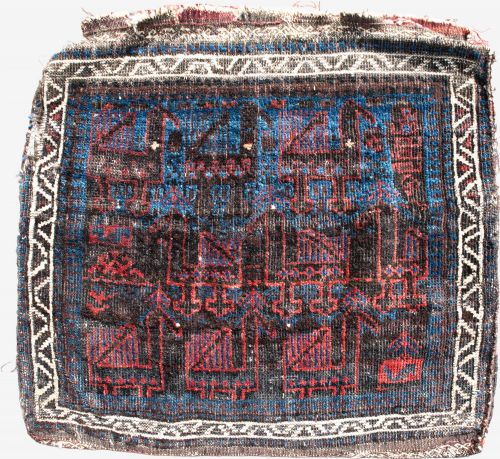
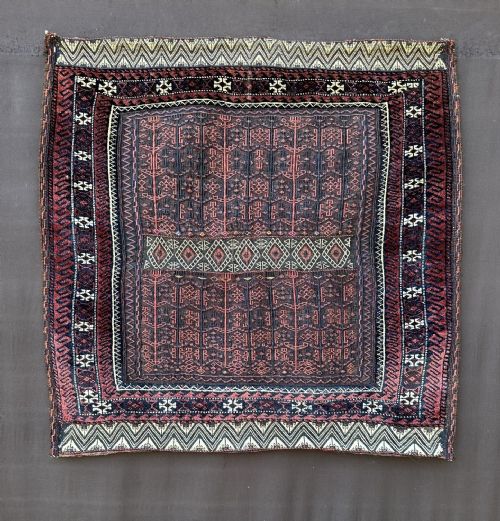
A dark wool wall hanging on this page typically originates as a nomadic storage bag face, a tent hanging, or a tribal weaving from Persia, Afghanistan, and Central Asia. These pieces date from the mid-nineteenth century through the early twentieth century, spanning periods such as 1850, 1880, 1900, and 1920.
The version most commonly met here is the torba or chuval face, originally woven by Turkmen, Baluch, and related tribal groups for domestic utility inside tents. Such items arrive repurposed as wall decor, often retaining original hanging loops, tassels, or full pile surfaces.
Beyond torbas, buyers encounter bread sofrehs, vanity bags, and framed tapestries utilising wool, cotton, silk, and cowrie shells. These objects display specific regional designs including guls, tiled patterns, and tribal motifs passed down through generations of makers.
Wool, natural dyes and flatweaves
Construction relies heavily on hand-spun wool and natural dyes, producing dark, saturated backgrounds that anchor the intricate secondary colours. Artisans combine pile weaving with flatweave techniques, occasionally incorporating white cotton and crimson silk highlights for contrast.
Structural integrity often depends on sturdy plain weave backs, sturdy wool foundations, and in some instances oak framing for nineteenth-century tapestries. Certain pieces integrate organic embellishments such as cowrie shells and glass beads directly into the textile matrix.
Some nineteenth-century bags retain their original cowrie shells, once believed to ward off the evil eye while storing household grain.
Weave density and design clarity
Quality separates on this page by the fineness of the weave and the crispness of tribal motifs such as guls, curled leaves, and stepped polygons. Finer knotting permits sharper detail and longevity in the textile surface.
Preservation of original structural elements, including hanging loops, side cords, and complete borders, elevates an example above fragments trimmed from larger bags. The richness and stability of the natural dye palette also dictate the standing of a piece.
The Dark Wool Wall Hanging Glossary
- Torba
- A small Turkmen tent-bag used for storage, frequently displayed today as a wall hanging due to its compact dimensions and primary guls. These pieces often feature specific tribal crests.
- Chuval
- A large Turkmen tent storage bag face designed to hold household goods and bedding inside a yurt. They display numerous primary guls arranged across the field.
- Sofreh
- A flatwoven spread or cloth utilised for dining, kneading dough, or ritual meals within nomadic households. They often feature geometric field patterns.
- Gul
- An octagonal medallion or tribal crest repeated across Turkmen and Central Asian carpets and bags. Each design identifies the specific sub-tribe or clan of the weaver.
- Mafrash
- A rectangular storage chest side or end panel produced by nomadic groups for transit and domestic organisation. These panels employ striking tribal designs.
Dark Wool Wall Hanging: Frequently Asked Questions
How do I hang a textile safely?
Mounting requires a method that distributes weight evenly across the entire upper edge rather than pinning at isolated points. A sleeve stitched to the reverse or careful use of a padded wooden batten protects the old wool fibres.
Keeping the piece away from direct sunlight preserves the natural dyes and prevents the dark wool from fading over time.
What is a gul design?
A gul is a repeating medallion motif traditionally used by Turkmen and Central Asian tribes to denote specific clan lineages. These formal symbols appear frequently on torbas and chuvals.
Master weavers arranged these motifs in structured rows across the dark wool field to create balance and visual rhythm.
Where did these pieces originate?
The pieces originate primarily from nomadic and village groups across Persia, Afghanistan, and Central Asia during the nineteenth and early twentieth centuries. Tribes such as the Yomud, Tekke, Ersari, and various Baluch groups created them for daily domestic use.
Each region developed distinct palettes, wool qualities, and structural formats reflecting local environmental conditions and cultural traditions.
Are these items antique?
The listings consist entirely of nineteenth and early twentieth-century examples, with dates spanning from the mid-nineteenth century up to the 1920s. These dates reflect the period of traditional nomadic production before synthetic aniline dyes became widespread.
Age is determined by material analysis, dye characteristics, and traditional tribal weaving structures recorded in the evidence.