
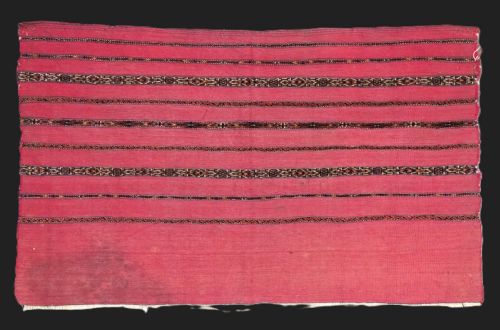


Antique Wool Bagface
An antique wool bagface brings the rich geometry of nomadic and tribal weaving directly into your interior on a manageable scale.
Antique Wool Bagface
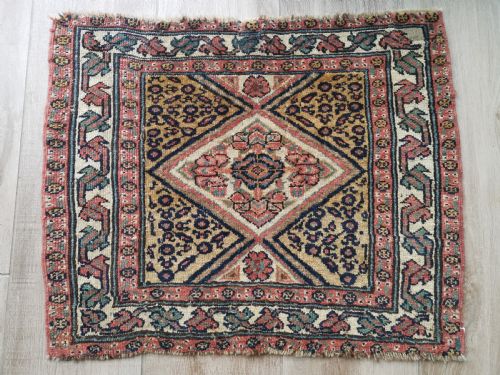
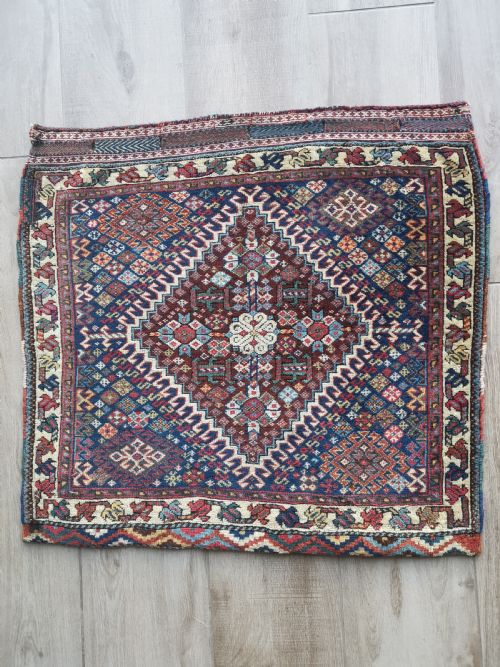
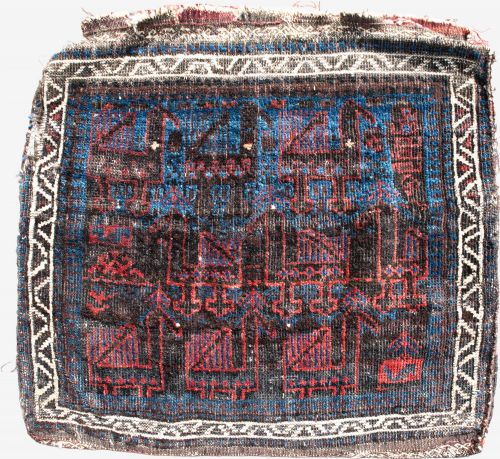
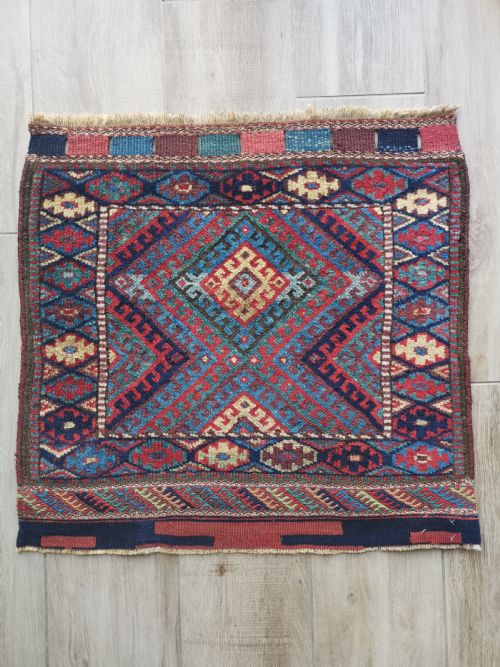
An antique wool bagface represents the surviving front panel of a utility sack, storage bag, or saddlebag created by nomadic and tribal groups. These textile fragments, including torbas, chuvals, and half-saddlebags, originate from Turkmen, Persian, and Kurdish weavers across Central Asia and the Near East. They display the distinct patterns and formats developed by specific tribes for household storage or transport.
The pieces on this page span from the nineteenth century into the early twentieth century, encompassing works from the 1860s through to 1920. Collectors encounter formats such as square storage faces, long torba faces, and specialised forms like bird bags and spindle bags. Each item preserves the utilitarian artistry of nomadic life, adapted for display as a wall hanging or small furnishing.
Materials and construction
Weavers constructed these textiles primarily using hand-spun wool and natural dyes, occasionally incorporating cotton or goat hair for structural support and contrast. The reliance on natural dye sources yielded the deep, enduring colour palettes seen across Turkmen and Persian tribal output. Artisans worked on portable vertical looms set up in camps, producing dense piles and tight flatweave structures.
Fine weaves characterise the dowry pieces and presentation bags, demanding immense patience from the maker. Structural elements often involve reinforced plain weave backs, kilim ends, or sturdy selvedges designed to withstand the rigours of nomadic existence.
Nomadic weavers kept their spinning tools inside dedicated spindle bags called igsalyks, proving that even tent chores demanded fine artistic flair.
Distinguishing quality in tribal bagfaces
Quality rests upon the precision of the knotting, the handling of the wool, and the saturation of the natural dyes. Tighter, finer weaves permit greater intricacy in tribal motifs such as guls, curled leaf designs, and animal or bird forms. The finest examples demonstrate superior structural integrity and meticulous balance within the border systems.
Another measure of quality is the purity and complexity of the palette, where well-preserved natural dyes retain their depth and clarity. Pieces showing exceptional clarity in design layout and careful wool preparation stand apart from standard utility examples.
The Antique Wool Bagface Glossary
- Torba
- A small Turkmen storage bag, wider than it is tall, traditionally used inside a tent for household goods. These pieces frequently display detailed primary guls and complex border arrangements.
- Chuval
- A large Turkmen storage sack intended for bedding or heavy possessions, with the face retaining the principal decorative weaving. They often feature multiple rows of major guls.
- Gul
- A repeating primary medallion motif used by Central Asian tribes, particularly the Turkmen, to identify specific clans and lineages. Each design variant holds distinct cultural meaning.
- Tubreh
- A Persian term for a tribal bag or saddlebag, encompassing various nomadic formats used for transport and storage. These items reflect the regional preferences of groups like the Kurds and Luri.
- Beshir
- A regional style associated with Ersari Turkmen weavers along the Amu Darya river, noted for incorporating distinctive ikat influences and alternative colour schemes.
Antique Wool Bagface: Frequently Asked Questions
What is a bagface?
A bagface is the decorative front panel of a nomadic storage sack or saddlebag that survived after the utilitarian rear section wore away or was removed. Tribes used these sacks for domestic storage within tents or for animal transport during seasonal migrations.
Today, collectors frame or mount these fragments as standalone textile art. They offer a concentrated view of tribal iconography without requiring the floor space of a full-sized carpet.
How do I hang a bagface on the wall?
Mounting a textile requires careful distribution of weight to avoid placing stress on the historic wool fibres. Professionals generally recommend using a cotton sleeve hand-stitched to the upper reverse edge, supported by a padded wooden lath or archival rod.
Alternatively, specialised non-damaging brass clips can support smaller fragments if padded properly. Avoid using direct nails or heavy adhesives that pierce or weaken the material.
How do I tell Turkmen bagfaces apart?
Distinguishing Turkmen subgroups relies on identifying the primary guls, border patterns, and structural formats unique to each tribe. Tekke pieces often display precise, small-scale guls with refined colour control, whereas Yomut and Ersari works utilise different medallion geometries and varied palettes.
Format also provides a clue, as torbas are broad and shallow while chuvals are considerably larger storage sacks. Examining the handling of the natural dyes and the density of the weave helps narrow down the origin.