
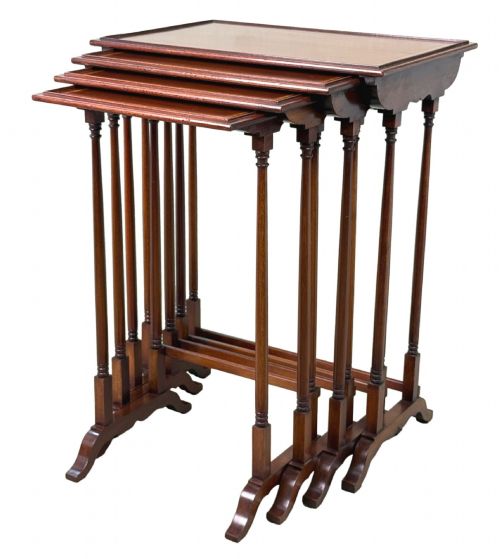
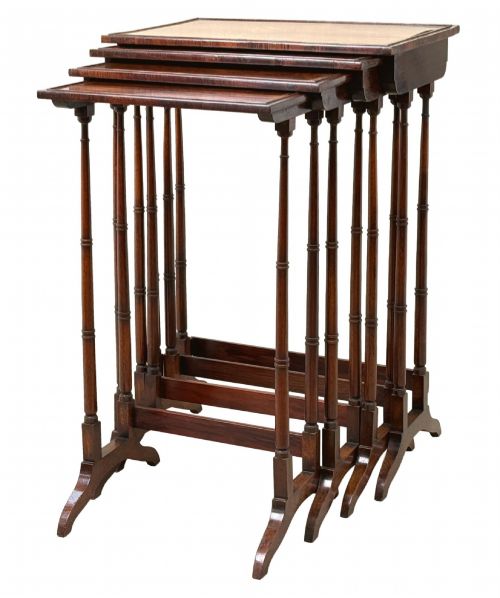

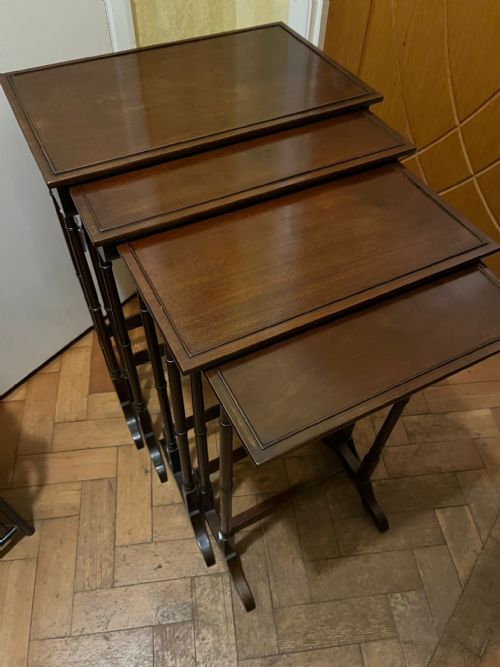


Dark Wood Stacking Tables
Dark wood stacking tables are practical nests of graduated surfaces built to slide neatly beneath one another when floor space matters.
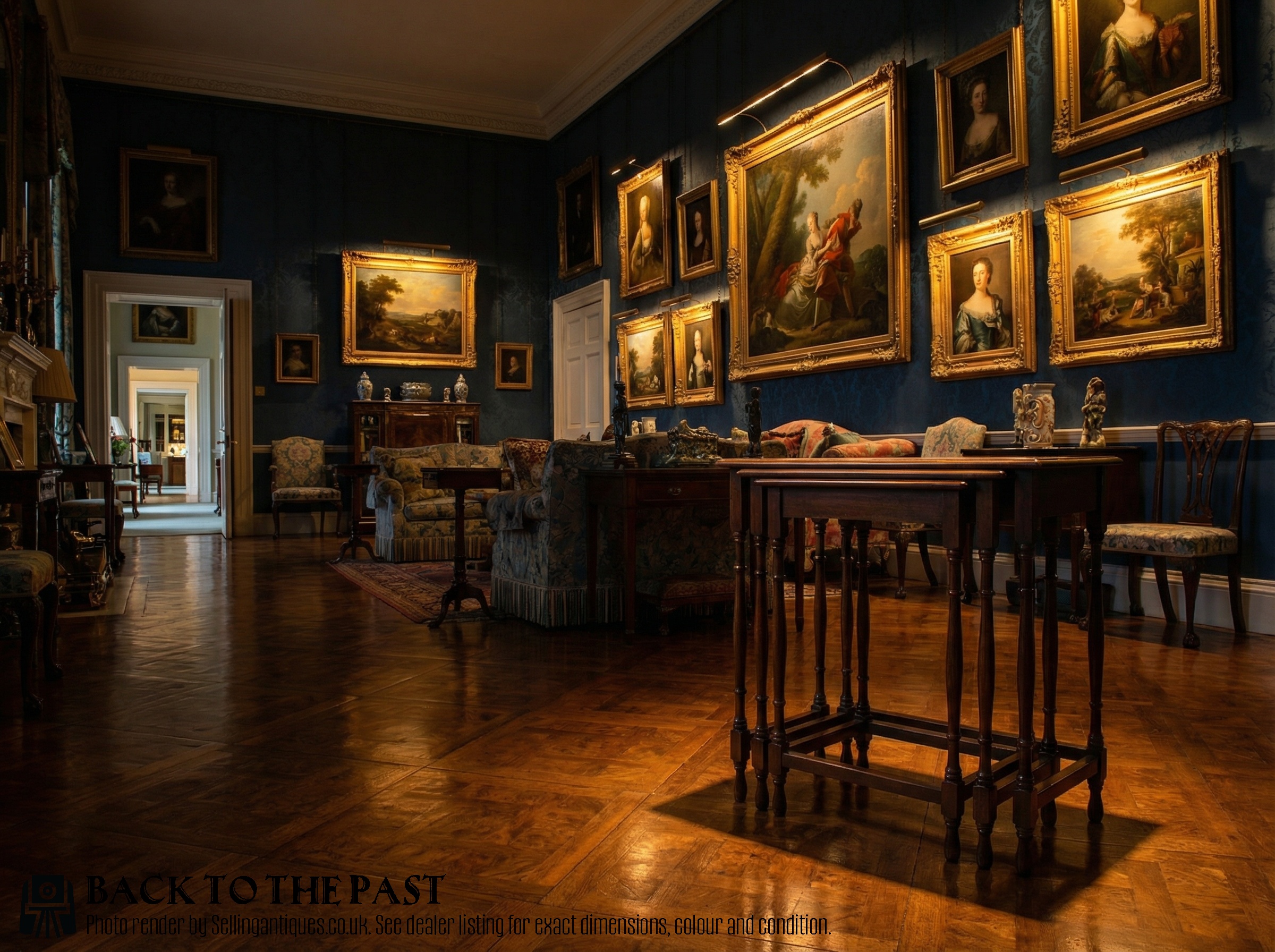
Dark Wood Stacking Tables
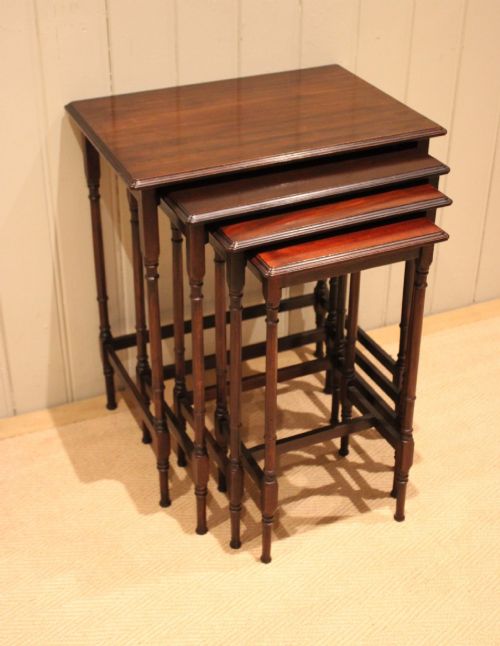
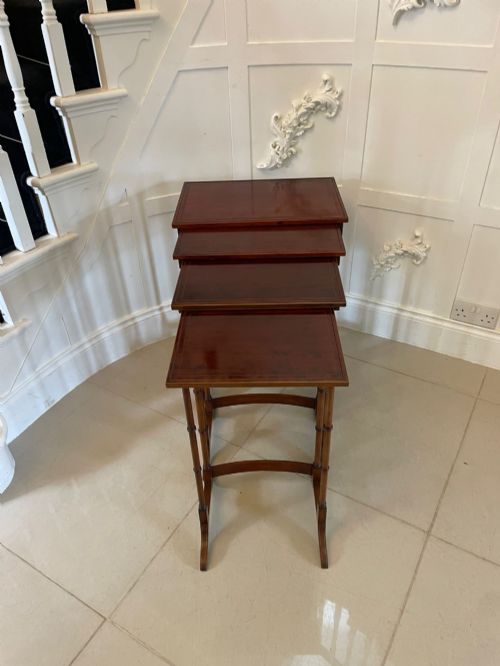
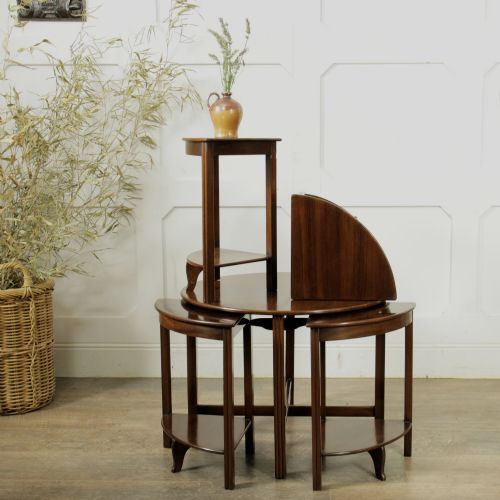
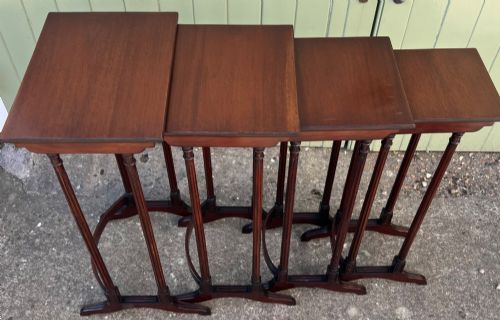
Dark wood stacking tables appear predominantly as sets of three or four graduated pieces designed to slide one beneath the other. When you search for dark wood stacking tables, you encounter forms ranging from Edwardian and Victorian mahogany sets to 19th Century rosewood and oriental hardwood examples.
The English examples frequently take the form of quartetto tables, while oriental pieces include Chinese Qing Dynasty hongmu tables and Chinoiserie decorated lacquer designs. These sets served as versatile occasional furniture for drawing rooms and parlours where surfaces were needed briefly and stored compactly afterward.
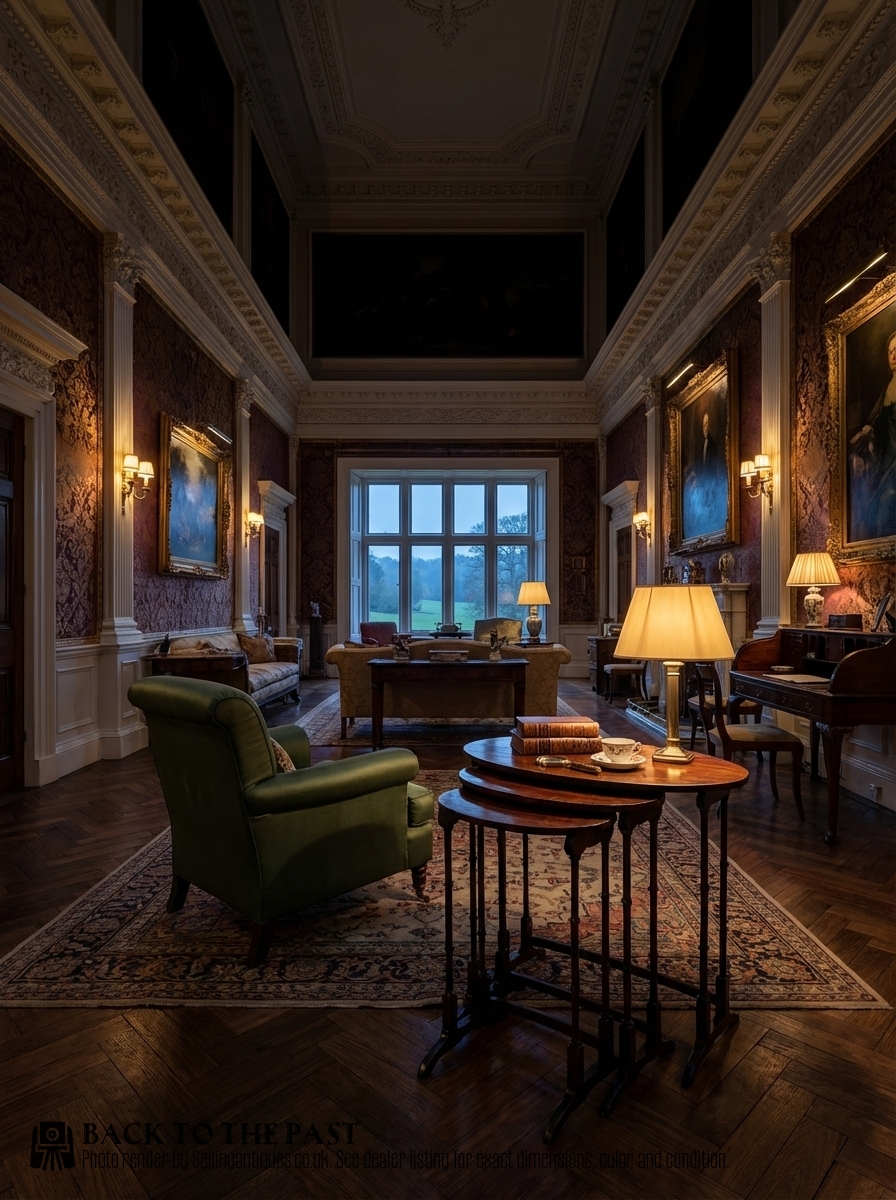
Assessing Quality
Quality in these nests rests upon the crispness of the timber selection and the precision of the graduated sizing. Superior sets maintain structural rigidity across every tier without loose joints or excessive play when nested.
Fine examples show careful attention to secondary details like boxwood stringing, matched grain patterns, and hand carving. Poorer versions often display clumsy proportions, thick frames that clumsy the silhouette, or careless repairs to the delicate runner joints.
Materials span mahogany, rosewood, teak, boxwood inlay, and lacquered hardwood.
Waring & Gillow
The Dark Wood Stacking Tables Glossary
- Quartetto
- A set of four tables designed to nest together. This term appears frequently in 19th Century and Edwardian cataloguing for mahogany and rosewood nests.
- Hongmu
- Red wood used in Chinese cabinetmaking, often seen in Qing Dynasty nesting sets. It provides a dense, dark substrate for traditional tables.
- Chinoiserie
- European imitation of Chinese artistic motifs, applied here to lacquered occasional tables. It typically involves painted or gilt decoration on a dark ground.
- Graduated
- Describing tables made in decreasing sizes so each smaller tier slides beneath the preceding one. This scaling defines the mechanics of any nesting set.
- Boxwood Inlay
- Contrasting light wood set into dark mahogany or rosewood surfaces in thin lines. Edwardian makers used this technique to define borders.
Dark Wood Stacking Tables: Frequently Asked Questions
What are dark wood stacking tables?
Dark wood stacking tables are nests of graduated occasional tables built from timbers such as mahogany, rosewood, and teak. They are designed to fit neatly beneath the largest surface to save floor space.
Cabinetmakers produced these sets in various styles, including Edwardian crossbanded designs, Regency rosewood models, and Chinese export lacquerware.
How were stacking tables used?
These tables served primarily in drawing rooms and sitting rooms for tea, writing, or holding decorative objects. Servants or hosts could pull out the smaller tiers individually as guests required extra surfaces.
Once tea was finished or the room needed to be cleared, the tables slid back into a single compact stack beneath the main top.
How do I identify an Edwardian nest?
Edwardian nests often feature light boxwood stringing or inlay set into a mahogany frame. The wood tone tends to be warm, and the legs frequently show slender tapered or column forms.
Many examples from this period around 1900 to 1910 are described as quartetto sets, denoting a group of four graduated tables.
What is the difference between English and Chinese nests?
English nests rely on European cabinet timbers like mahogany and rosewood with understated joinery or inlay. Chinese export and Qing Dynasty sets frequently employ dense Asian hardwoods or black lacquer decorated with Chinoiserie motifs.
Chinese examples often feature carved aprons and panels distinct from the smooth tops of standard Edwardian or Victorian English furniture.