



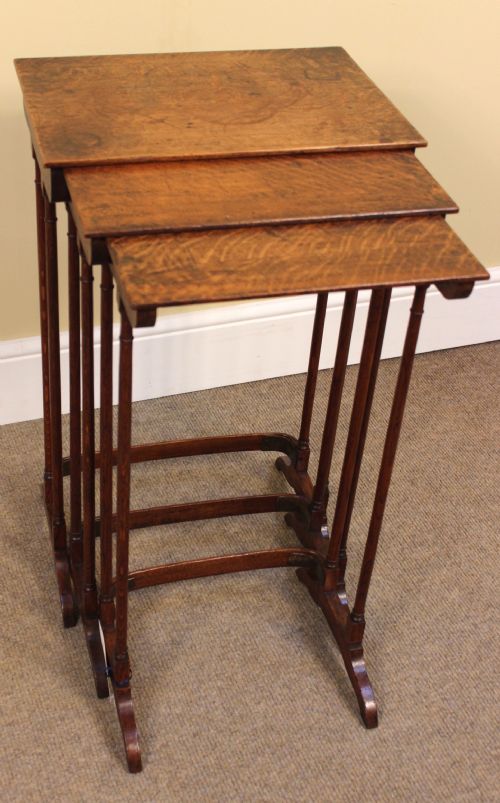


Antique Accent Table Set
An antique accent table set brings together matching surfaces that slide away neatly when floor space matters.
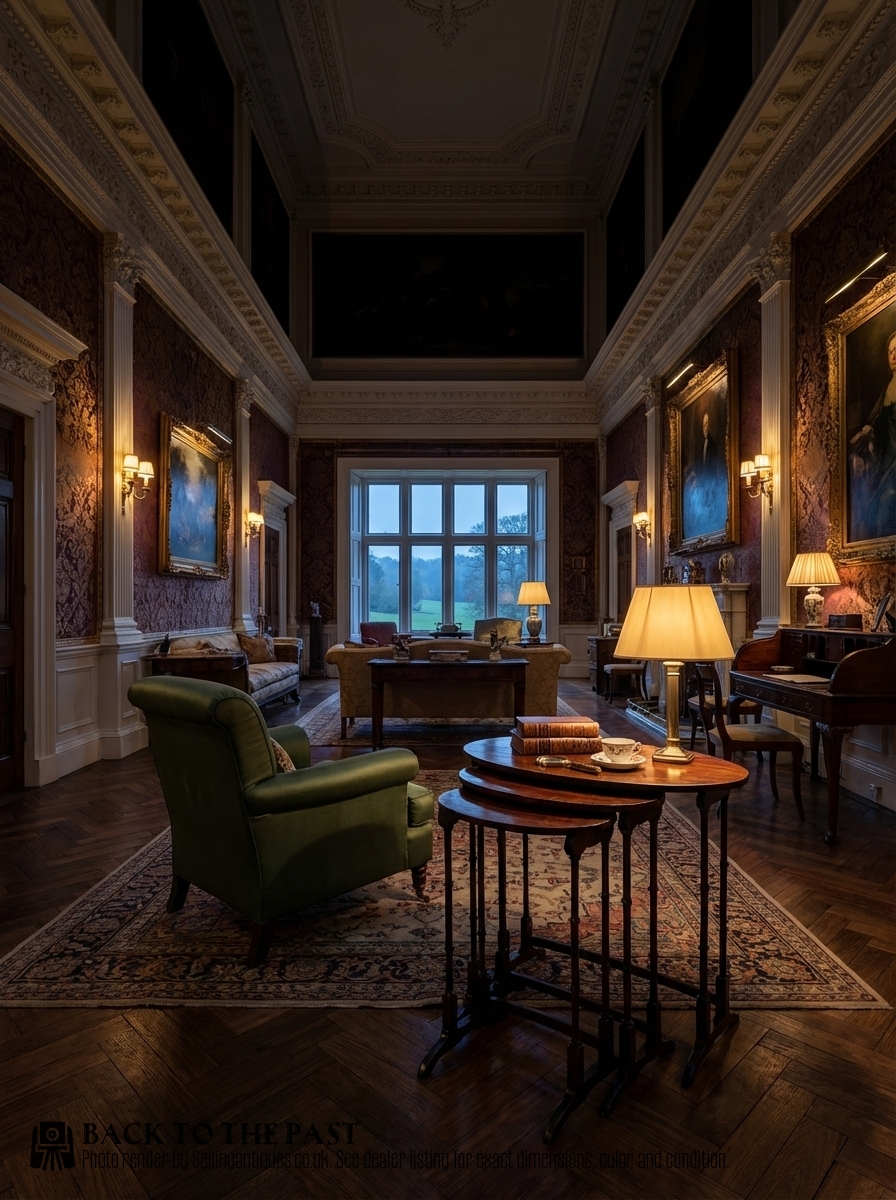
Antique Accent Table Set
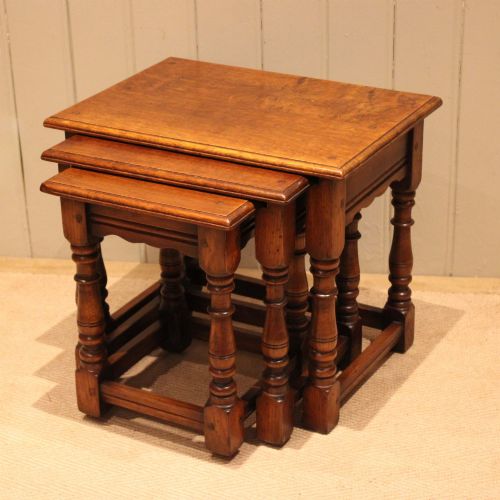
When you search for an antique accent table set, you are looking at nests of tables designed to stack inside one another. These sets originate from periods spanning the nineteenth century through to the Edwardian era and 1920.
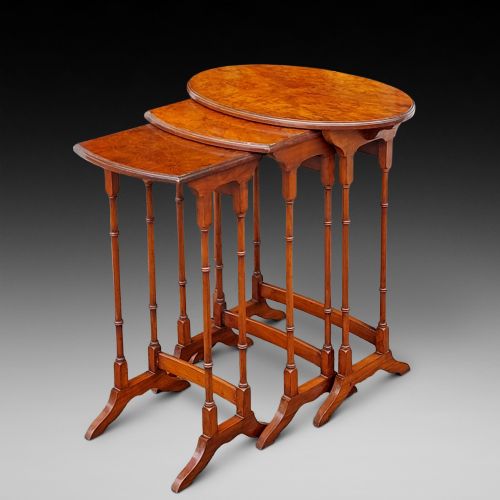
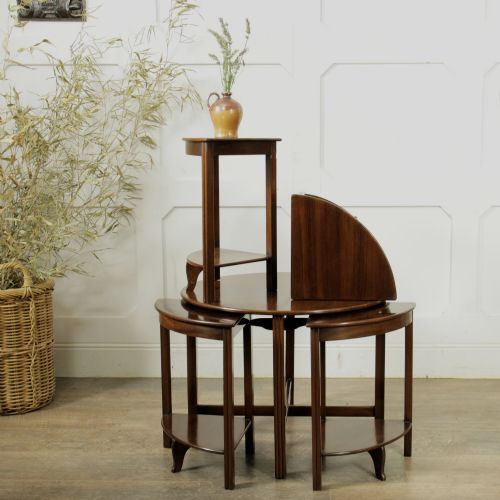
The versions most likely to meet you on this page take the form of nests containing three, four, or five tables. They appear in circular, oval, serpentine, and standard rectangular shapes.
Makers constructed these sets from woods such as mahogany, oak, walnut, teak, burr walnut, and satinwood, occasionally incorporating rosewood inlay or carved hardwood.
How they were made
Cabinet makers utilised solid timbers alongside veneered surfaces to build these nested sets. Walnut and mahogany provide the primary foundation for much of the cabinet work.
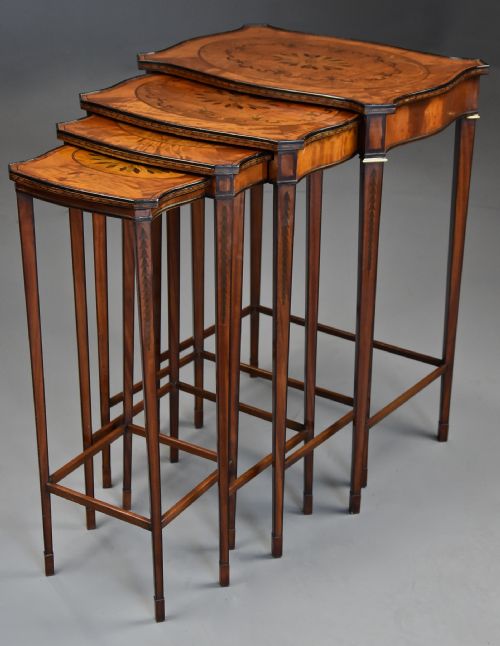
Inlayers applied contrasting woods like satinwood and rosewood to decorate table tops with geometric or floral patterns. Carved hardwood variants rely on detailed hand woodworking rather than flat veneer.
One unexpected set includes a bone-handled knife and fork alongside the wooden tables.
What varies in quality
The standard of timber selection divides simpler pieces from finer examples. Cabinet makers who chose figured burr walnut or rich satinwood created visually striking surfaces that elevate the set.
Construction joints and the precision of the nesting fit determine everyday utility. Tables that slide smoothly without binding demonstrate superior initial craftsmanship.
The Antique Accent Table Set Glossary
- Quartetto
- A set of four tables designed to nest together. This term appears frequently in Edwardian cataloguing.
- Nest of tables
- A group of graduated tables that fit neatly beneath the largest top. They save space in smaller reception rooms.
- Inlay
- A technique where pieces of contrasting wood or bone are inserted into a recess. This adds decorative pattern to table tops.
- Serpentine
- A curved edge that bends outward at the centre and inward at the sides. It creates a flowing outline on table tops.
Antique Accent Table Set: Frequently Asked Questions
What is an antique accent table set used for?
These sets provide extra surfaces for drinks or books when entertaining guests in a drawing room. They stack away into a compact single footprint when floor space is needed.
Their modular design made them popular in formal Victorian and Edwardian interiors where flexibility mattered.
How do I identify an Edwardian table set?
Edwardian sets frequently utilise lighter timbers such as satinwood or burr walnut with delicate inlay work. They often appear as quartetto sets containing four tables.
Proportions tend to be lighter and more slender than earlier Victorian examples.
Are all these tables made of mahogany?
Mahogany is common, but oak, walnut, teak, and burr walnut also appear across these listings. Some regional or overseas pieces utilise carved hardwood or specific regional timbers.
Each wood dictates the natural tone and grain pattern of the individual set.
Where should I place a nest of tables?
They sit easily beside armchairs or sofas where the smaller tables can be pulled out independently. Their compact stacked form fits well in corners or beside fireplaces.
Keep them away from direct heat sources to protect the polished wood surfaces.