



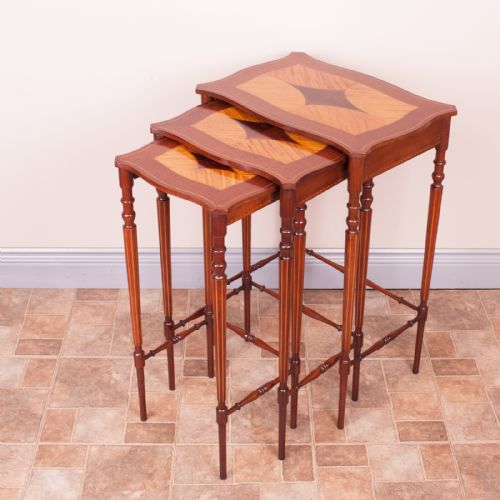


Traditional Mahogany Stackable Tables
Traditional mahogany stackable tables are nesting sets built for flexible surface space, offering compact storage and period charm when pulled apart for tea or guests.
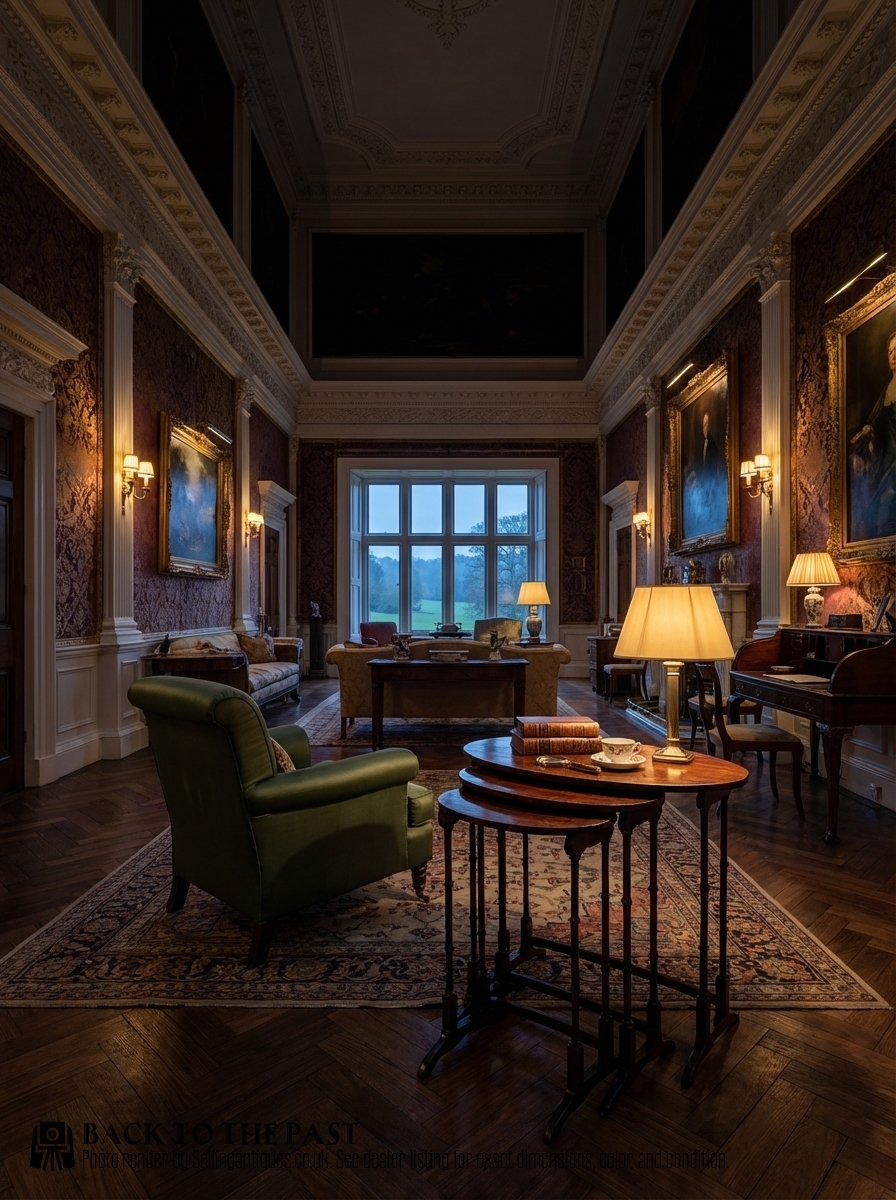
Traditional Mahogany Stackable Tables
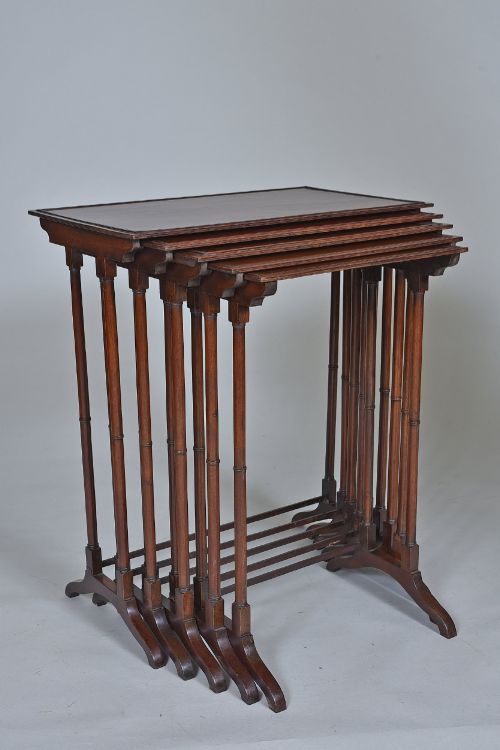
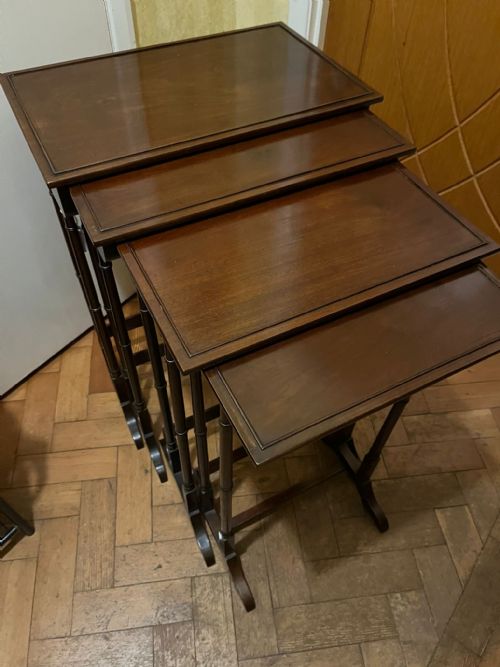
Traditional mahogany stackable tables arrive as sets of three or four individual pieces designed to fit neatly beneath one another when not in use. These nesting tables trace their origins through the Victorian, Edwardian, and early twentieth-century periods, often finished in Georgian or Regency styles.
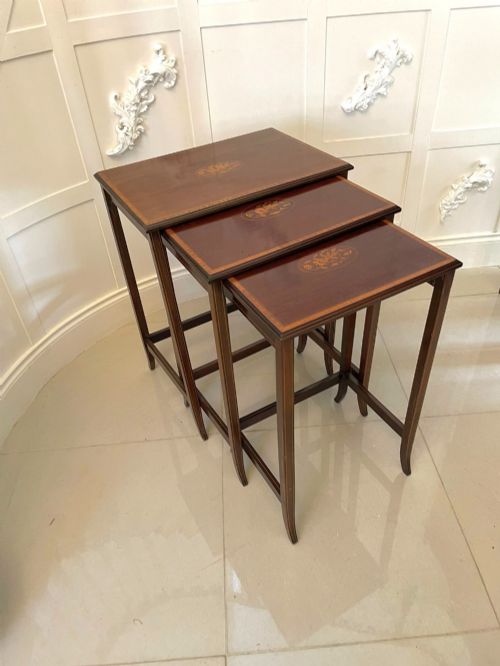
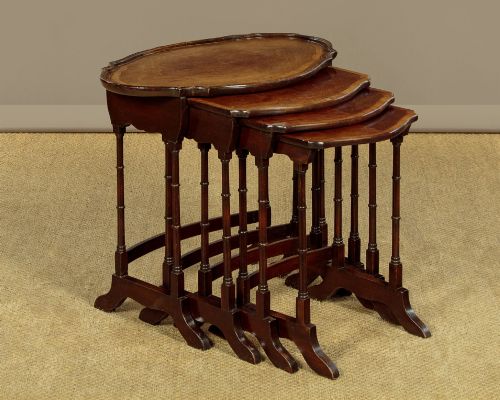
The most common version met on this page is the Edwardian or nineteen-twenties nest of three or four tables, frequently incorporating inlaid details and rectangular or oval tops. Such sets provide practical side or coffee surfaces without cluttering a room, maintaining a tidy profile until called into service.
How traditional mahogany stackable tables were made
Cabinetmakers constructed these sets using solid mahogany and carefully applied mahogany veneer to achieve smooth, consistent surfaces on the tabletops. Secondary woods and framing relied on the stable properties of timber to ensure the tables slid smoothly into their designated positions.
Detailing often included contrasting stringing and inlay work utilising satinwood, burr walnut, and boxwood to create delicate borders or central motifs. This combination of structural timber and precise inlay defined the refined appearance characteristic of the period.
Traditional Mahogany Stackable Tables Retail Price Guide 2026
Typical asking prices for traditional mahogany stackable tables among the pieces listed under this phrase on Sellingantiques today, from the lower quarter to the upper quarter. They describe what is for sale here now, not the wider market.
Some sets of four were historically called quartetto tables, borrowing a musical term for a group of four players.
What varies in quality
The standard of timber selection and the precision of the inlay draw a clear line between standard production pieces and finer examples. High-grade sets exhibit carefully matched grain patterns across the nesting tops and sharp, clean lines in the boxwood and satinwood stringing.
Construction integrity also separates different grades, visible in the snugness of the fit when the tables stack together and the stability of the joints under weight. Better workshops invested greater care in the joinery, ensuring the smaller tables slide effortlessly without scraping or binding.
The Traditional Mahogany Stackable Tables Glossary
- Nest of tables
- A set of graduated tables designed to slide one beneath another for compact storage. They serve multiple purposes as portable surface space.
- Quartetto
- A matched set of four small tables designed for stacking. The term originates from musical groupings applied to furniture sets.
- Inlay
- A technique where pieces of contrasting wood like boxwood or satinwood are fitted into the primary mahogany surface to form decorative patterns. It adds visual depth to the tabletop.
- Veneer
- A thin layer of superior mahogany applied over a sound secondary wood base. This method allows craftsmen to display striking grain figures while maintaining structural stability.
Traditional Mahogany Stackable Tables: Frequently Asked Questions
How were nesting tables used historically?
Historically, these tables remained stacked against a wall or beside a chair until guests arrived or afternoon tea was served. Servants or hosts would then separate the set to place drinks or writing materials beside individuals around the room.
Once the gathering concluded, the tables nested back together into a single compact footprint. This space-saving cleverness made them popular in formal Victorian and Edwardian drawing rooms.
How do I tell Edwardian sets from Victorian ones?
Edwardian examples often feature lighter decorative touches, such as delicate satinwood or boxwood inlay and slender turned legs. They frequently date from the turn of the twentieth century and lean into refined revival styles.
Victorian sets generally present a heavier, sturdier build with simpler timber framing and less surface embellishment. Examining the construction underneath and the weight of the mahogany helps indicate the period.
Are these tables suitable for modern coffee tables?
Individual tables from a set function well as side tables next to sofas or armchairs. When separated, they offer flexible surfaces that can move around a room as needed.
Certain larger or oval variations function effectively as low coffee tables, while keeping the option to expand surface area by pulling out the smaller tiers underneath.