




Mahogany Trio Side Tables
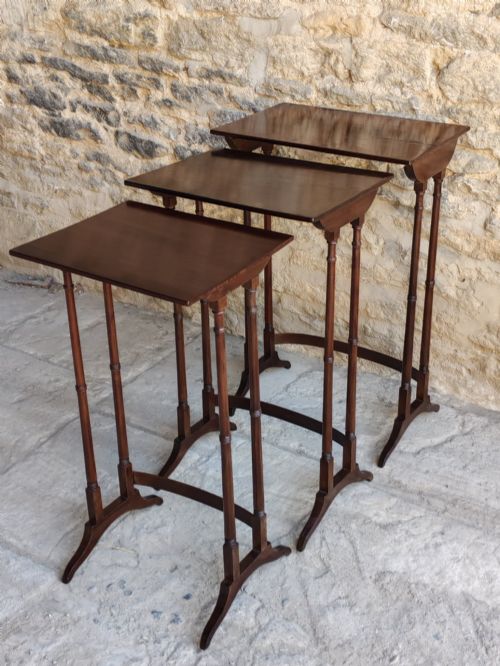
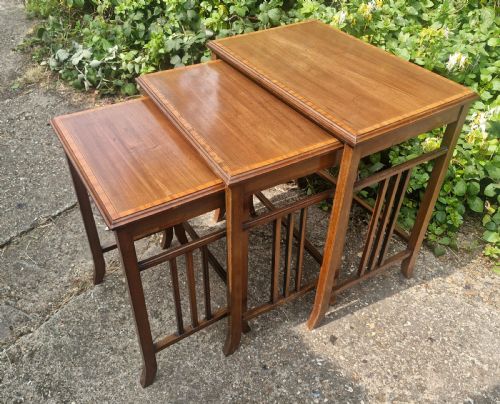
These mahogany trio side tables offer a practical tiered surface, sliding neatly together when floor space matters most.
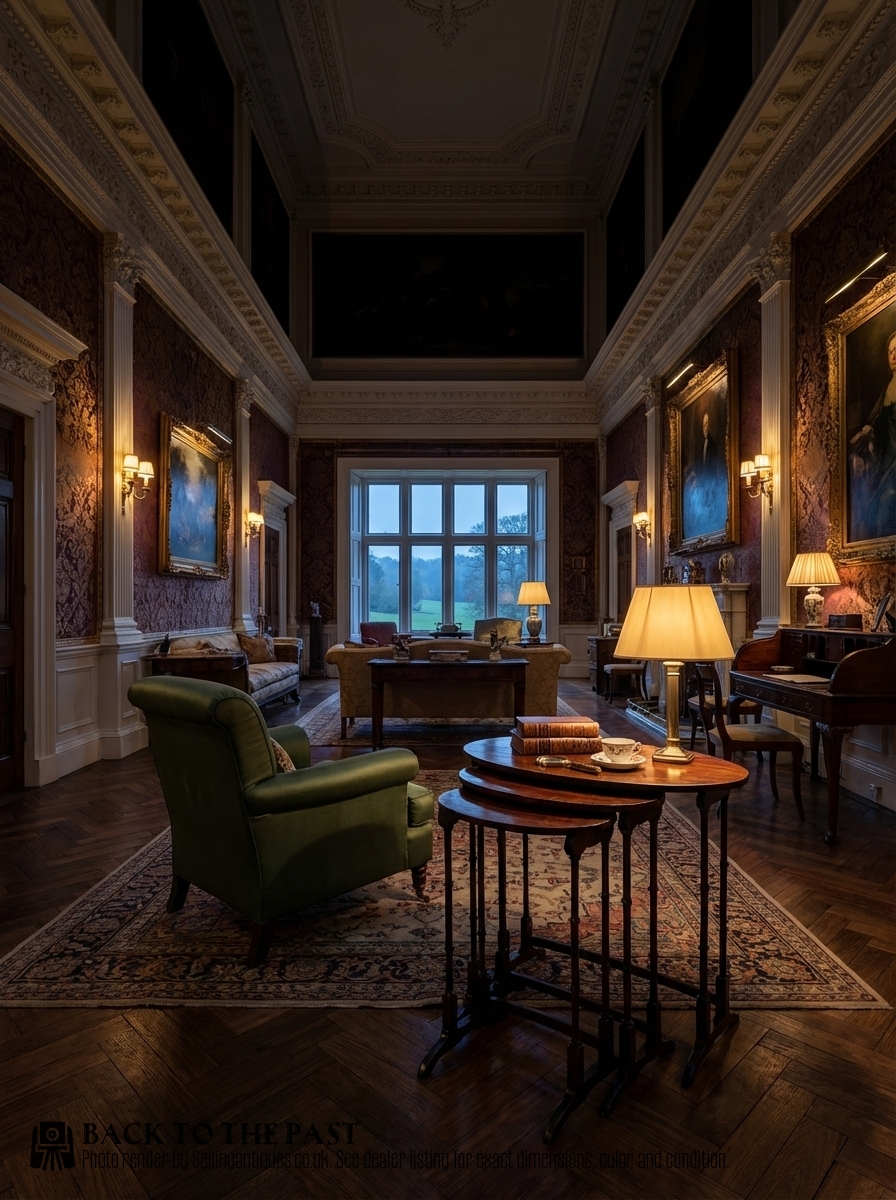
Mahogany Trio Side Tables
Mahogany trio side tables provide a practical arrangement of surfaces that tuck neatly underneath one another when floor space is at a premium. Buyers searching for mahogany trio side tables find sets primarily originating from the Edwardian period and the early twentieth century, alongside occasional Georgian and nineteenth-century examples.
The evidence shows these pieces take the form of nests of tables, occasional tables, and nesting tables. Most examples on this page consist of three graduated tables designed to slide together, though variations with four tables or oval shapes also appear.
Makers and craftsmen throughout the Edwardian and Georgian eras produced these nesting sets to serve multiple functions around the drawing room or parlour. A buyer is most likely to encounter Edwardian interpretations featuring light wood inlays or polished mahogany tops.
How they were made
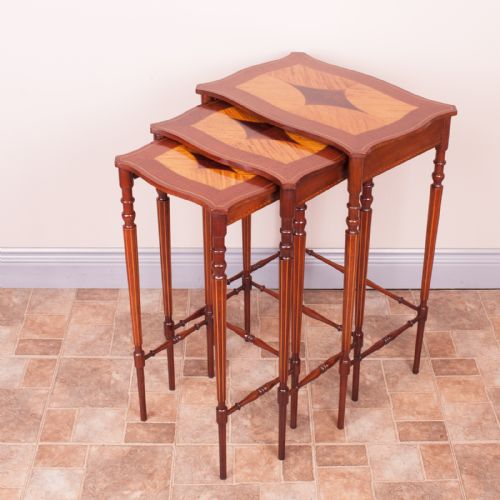
Makers constructed these tables predominantly from solid mahogany and mahogany veneers, selected for deep reddish-brown tones and durability. Workshops frequently incorporated contrasting timbers such as satinwood, boxwood, and amboyna for decorative detailing.
Inlay techniques such as wood inlay and marquetry inlay adorn the tabletops of many Edwardian pieces, creating geometric or floral patterns. Some examples incorporate embossed leather inset panels on the top surface to provide a durable writing or resting area.
Listings span from the Georgian era through Victorian and Edwardian periods, utilising mahogany, satinwood, amboyna, and embossed leather.
What varies in quality
The standard of mahogany trio side tables depends heavily on the crispness of the joinery and the selection of timber figures in the grain. Superior examples display tightly fitted joints that allow the tables to slide smoothly into their nested position without binding.
Decorative elements like fine boxwood stringing, precise satinwood banding, and intricate marquetry distinguish higher-grade pieces from plain utility items. The depth of the hand-polished finish and the retention of original secondary timbers also separate standard production from finer craftsmanship.
The Mahogany Trio Side Tables Glossary
- Nest of tables
- A set of graduated tables designed to fit one beneath another to save space. They pull out individually when extra surfaces are required.
- Marquetry inlay
- Decorative veneer work forming picture patterns using various coloured woods. Craftsmen cut pieces of timber precisely to fit into a prepared recess.
- Satinwood
- A durable, lustrous yellow timber from Sri Lanka and India used extensively for contrasting stringing and banding in Edwardian furniture.
- Boxwood
- A dense, pale yellow wood employed for fine stringing lines and delicate inlay details on mahogany surfaces.
Mahogany Trio Side Tables: Frequently Asked Questions
What is a mahogany trio side table?
A mahogany trio side table typically refers to a set of three graduated tables designed to nest together beneath the largest surface. They provide flexible occasional surfaces that occupy minimal floor space when stored.
These sets appear frequently in Edwardian and Georgian designs, utilising mahogany as the primary timber alongside decorative inlays.
How were nesting tables used historically?
Historically, these tables served multiple purposes in drawing rooms and parlours for holding tea cups, books, or small lamps. Servants or hosts could easily separate the nesting tables to distribute them around a room as guests required.
When entertaining concluded, the tables slid back into a single compact stack against a wall or beside a chair.
How do I identify an Edwardian set?
Edwardian sets often feature lighter wood inlays, such as satinwood or boxwood stringing, set into the mahogany top. The legs tend to be slender and straight, reflecting the revival styles popular at the turn of the twentieth century.
Construction methods from this era often utilise thinner mahogany veneers applied to secondary framing timbers.
Are these tables suitable for daily use?
These stacking tables function well for everyday placement beside armchairs or sofas to hold small items. Their compact nature makes them adaptable to modern rooms where surface space is limited.
Care should be taken with moisture and heat on polished mahogany surfaces, utilising coasters to protect the vintage finish.