
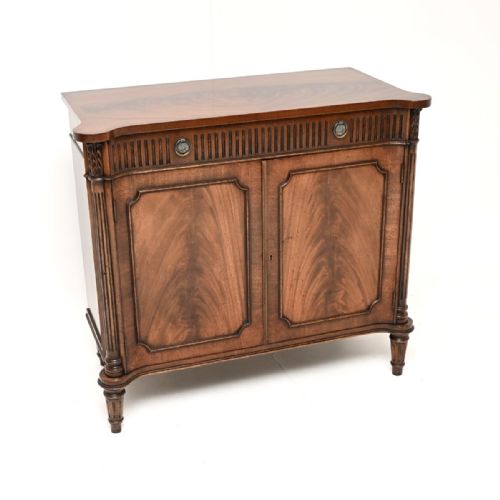
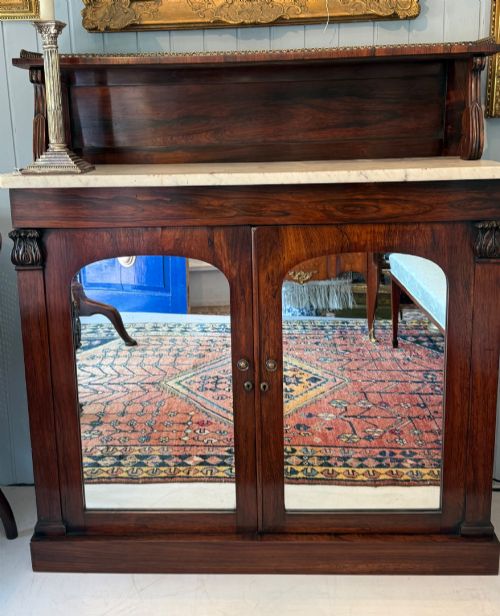
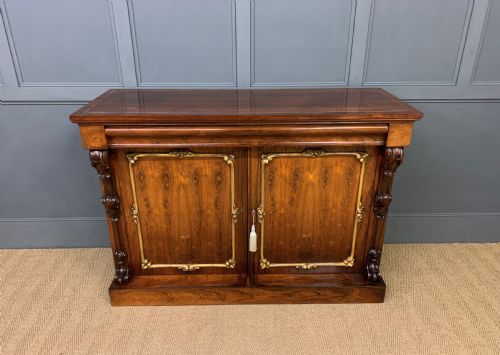
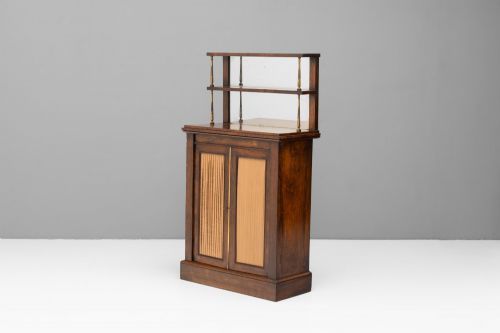
Dark Wood Regency Sideboard
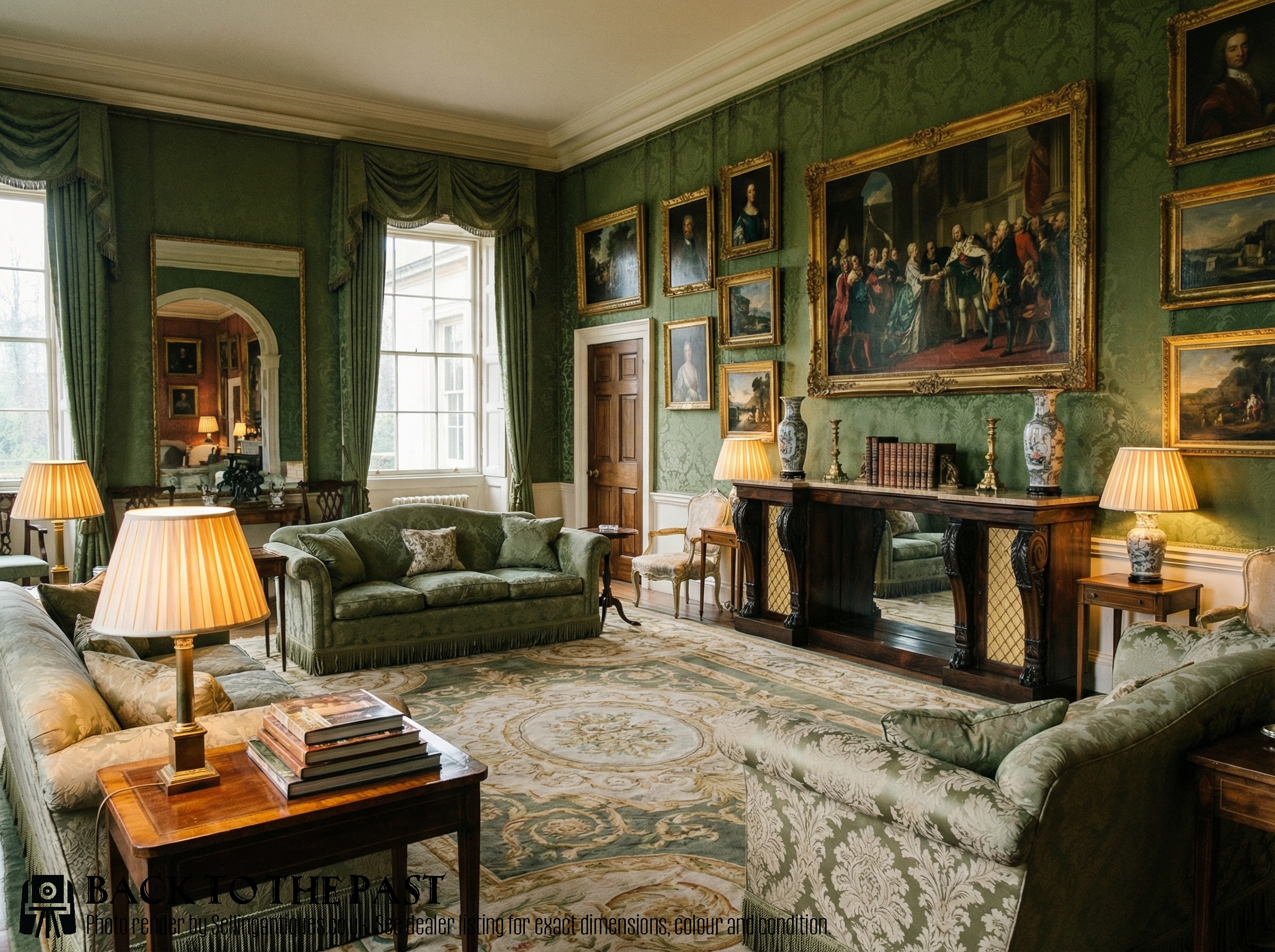
A dark wood regency sideboard anchors a dining room with rich timber, disciplined brass details and severe classical lines.
Dark Wood Regency Sideboard
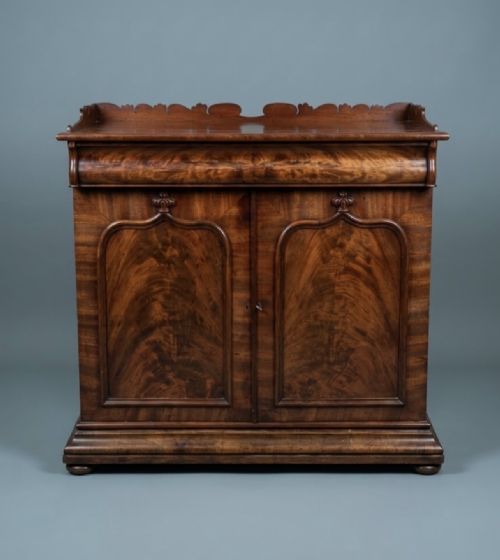
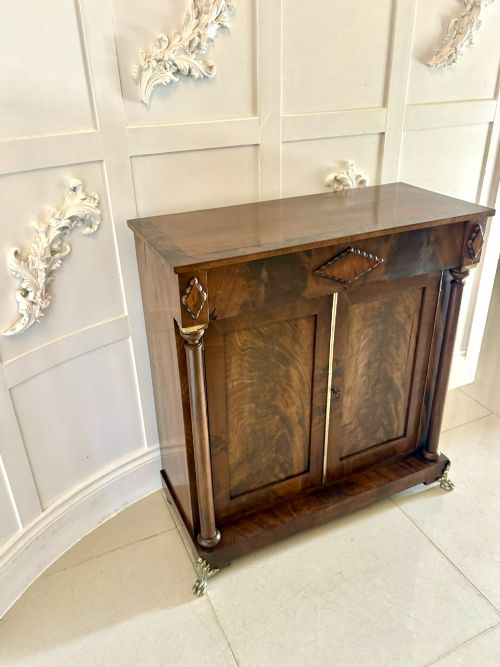
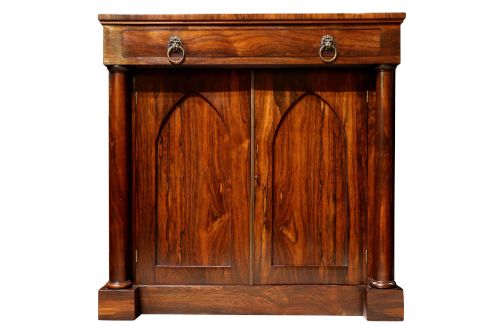
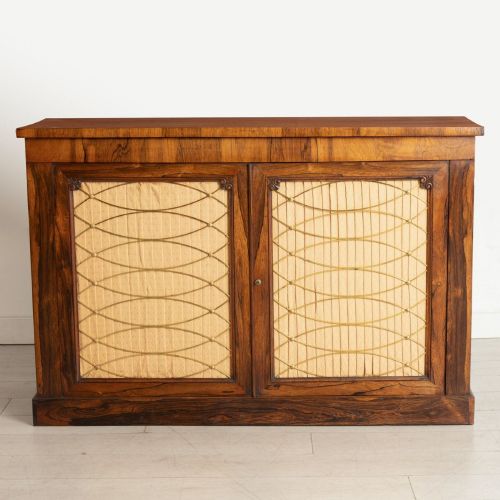
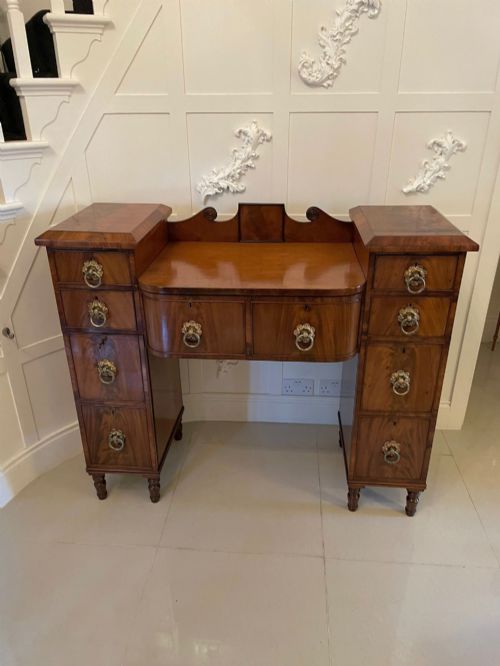
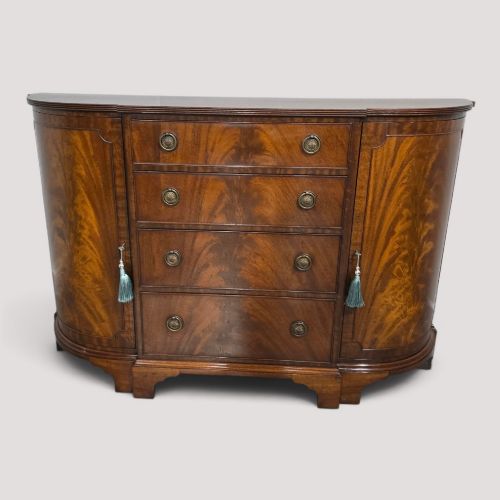
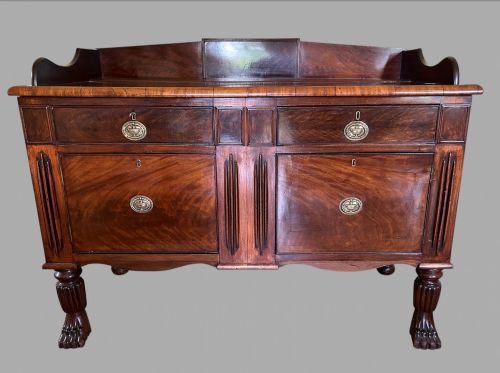
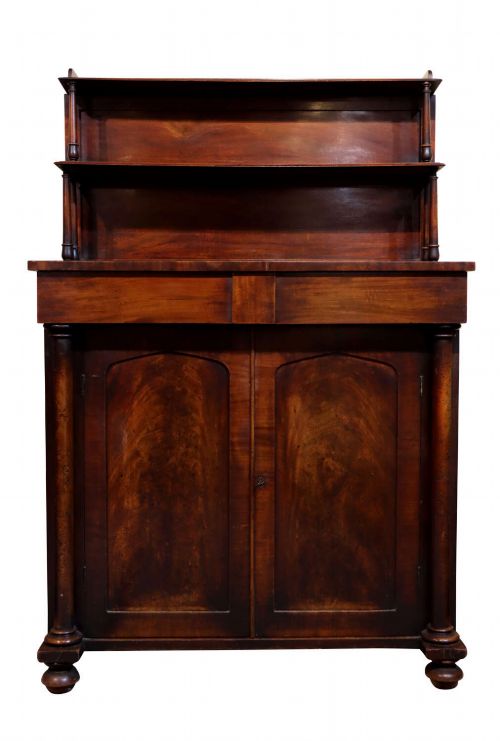
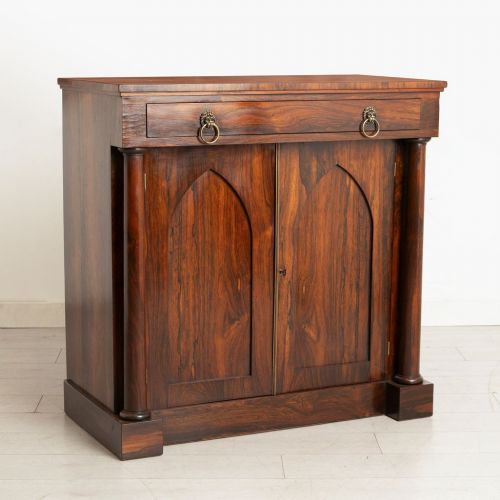
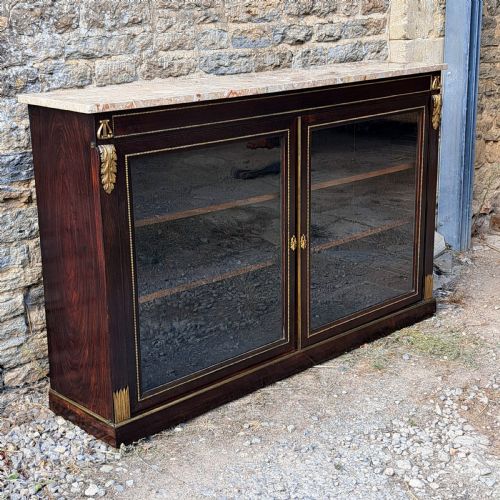
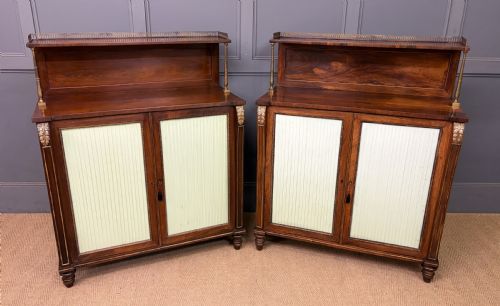
A dark wood regency sideboard gathers low rectangular serving tables, chiffoniers and breakfront cabinets built during the early nineteenth century and later revival periods. These pieces serve dining spaces and drawing rooms, offering surface display above enclosed storage cupboards.
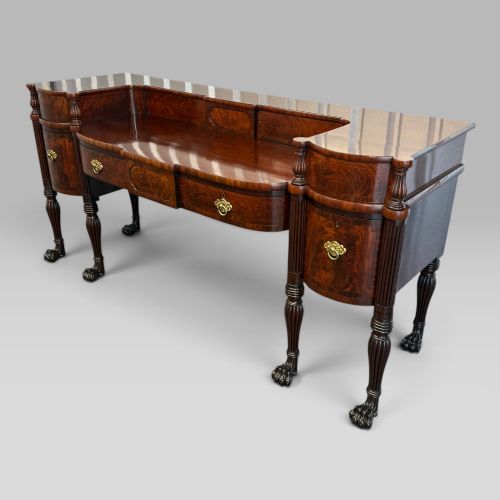
Mahogany and rosewood dominate the selection, appearing alongside flame veneer, goncalo alves and simulated rosewood paint over pine. Cabinet makers configured these timbers into bowed fronts, flat breakfronts and pedestal ends supported by lion paw feet.
The objects span true Regency, George IV and William IV eras alongside later Georgian styles and twentieth-century interpretations. Proportion remains low and architectural, balancing functional storage with understated neoclassical ornament.
Materials and Technique
Workshops laid figured mahogany and dark rosewood veneers over stable secondary woods, aligning grain patterns across drawer fronts and cabinet doors. Flame mahogany creates fluid, flickering patterns while straight-grained timber frames the borders.
Craft and Finish
Distinction lies in the selection of veneer and the precision of structural assembly. Superior examples employ choice cuts of flame mahogany or richly figured rosewood with continuous grain matching across the entire facade.
Refinement appears in the crispness of carved details such as paw feet, reeded columns and brass inlay work. Pieces from premier workshops display interior timber of equal quality to the exterior surfaces.
The Dark Wood Regency Sideboard Glossary
- Chiffonier
- A low compact sideboard or cabinet featuring enclosed shelving beneath, often topped with a shelf or mirrored back. This form gained popularity during the Regency period for smaller drawing rooms.
- Breakfront
- A piece of furniture where the central section projects forward from the flanking cupboards or pedestals. This configuration creates visual depth and breaks the long horizontal line of the serving surface.
- Goncalo Alves
- A dense exotic hardwood with striking dark brown and golden-brown contrasting figuring. Cabinet makers utilised this timber for high-status Regency side cabinets.
- Secretaire
- A cabinet incorporating a drop-down writing drawer fitted with small compartments and pigeonholes. This addition turns a standard serving sideboard into a dual-purpose writing desk.
Dark Wood Regency Sideboard: Frequently Asked Questions
How do I spot a true Regency piece?
Examine the secondary woods inside the drawers and carcase, such as oak or pine, alongside the construction methods used by period joiners. True pieces from the early nineteenth century display hand-cut dovetails and timber movement consistent with age.
Compare the proportions and hardware against documented examples from the era. Stylistic markers like brass lion paw feet, reeded pilasters and flame mahogany veneers provide strong indicators of period origin.
Where should I place a sideboard?
Position the piece against a principal dining room or hallway wall where its length and low profile can balance the room. Ensure adequate clearance around the cabinet doors and drawers for comfortable daily operation.
Keep the timber away from direct sunlight and heat sources to prevent the rosewood or mahogany veneers from drying and cracking. Maintain stable indoor humidity to preserve the polish and wood grain.
What is the difference between a chiffonier and a sideboard?
A chiffonier is typically smaller and more enclosed, designed for drawing rooms with lower storage and display requirements. Sideboards are longer dining room pieces built for serving food and storing heavy tableware.
Many chiffoniers include a raised superstructure with small shelves on the back tier. Sideboards remain flat across the top surface to maximise serving space during meals.
How do I care for dark wood surfaces?
Dust the mahogany or rosewood regularly with a soft, dry cloth to prevent abrasive particles from accumulating on the polish. Apply high-quality beeswax periodically to nourish the timber and maintain a soft sheen.
Avoid using silicone-based commercial polishes or placing damp items directly onto the antique surface. Use coasters and mats to protect the ancient veneer from moisture rings and heat marks.