
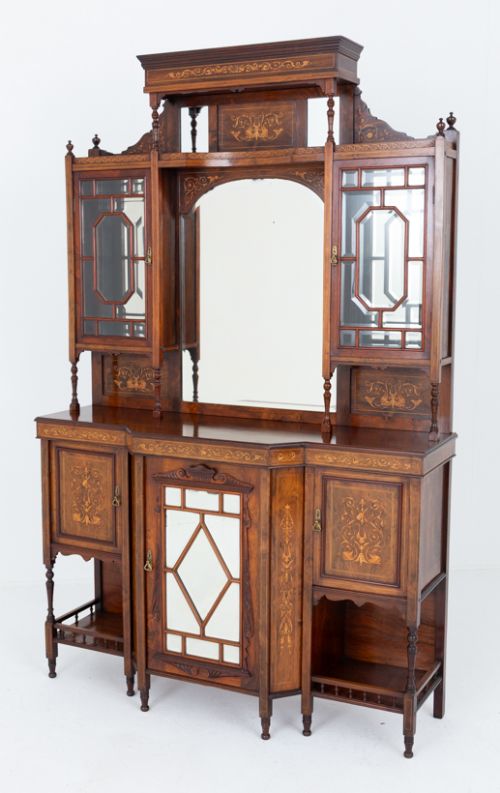


Rosewood Breakfront Chiffonier
A rosewood breakfront chiffonier brings substantial timber and architectural presence to a room, offering both display space and concealed storage.
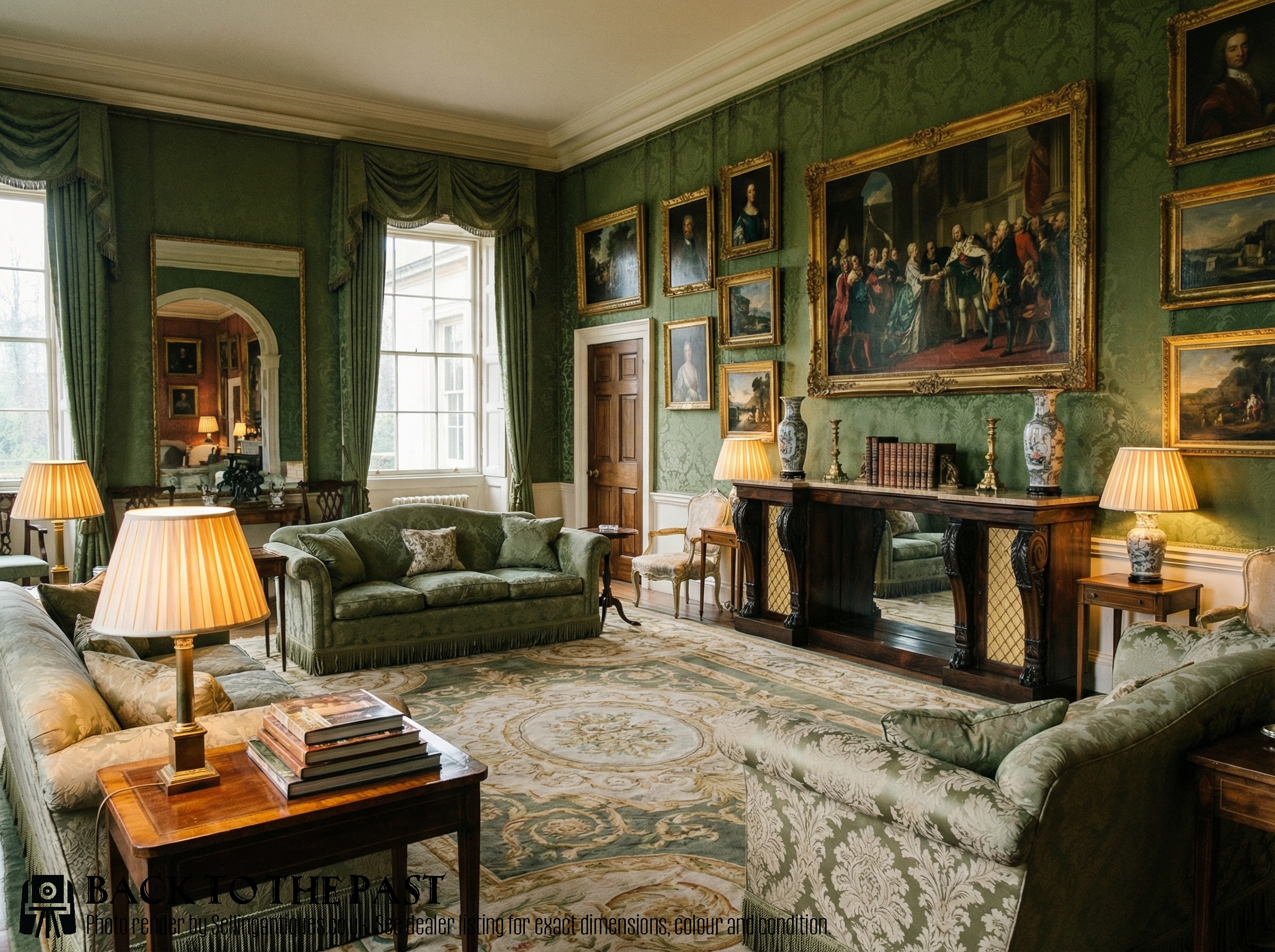
Rosewood Breakfront Chiffonier
When you search for a rosewood breakfront chiffonier, you are looking at substantial timber side furniture designed with a projecting central section flanked by recessed wings. These pieces primarily date from the Regency and Victorian periods, alongside later nineteenth-century interpretations.
The form functions variously as a side cabinet, credenza, or sideboard, frequently incorporating doors with fabric-backed mesh, glass, or solid wood panels. Most examples found here originate from the nineteenth century, reflecting the material preferences of that era.
Materials and Construction
Cabinet makers constructed these pieces using solid rosewood and veneers applied to secondary timbers, often accentuating the design with boxwood inlay, brass stringing, and marquetry details. Metal components such as brass grilles and key escutcheons appear frequently across the Regency and Victorian periods.
Structural embellishments include turned columns, such as barley twist supports, and glazed doors backed with pleated fabric or mirror glass. The breakfront outline required precise joinery to step the central section forward from the side cabinets.
Secret compartments occasionally hide behind the central breakfront doors, waiting for someone to discover where past owners tucked away their visiting cards.
Judging Quality and Execution
Quality in these cabinets rests upon the choice of rosewood veneers and the precision of any boxwood or brass inlay. Superior examples display continuous grain matching across the doors and crisp carving on columns and mouldings.
The integration of secondary materials, from heavy brass grilles to clear mirror glass, dictates the refinement of the piece. Better workshop output shows in the tight fit of breakfront sections and the substantial weight of the timber framing.
Gillow·Howard and Sons·Holland and Sons
The Rosewood Breakfront Chiffonier Glossary
- Breakfront
- A cabinet design where the central section projects forward from the flanking wings. This architectural layout creates depth and shadow across the front elevation.
- Chiffonier
- A low sideboard or cabinet, typically fitted with shelves and doors below. It evolved during the nineteenth century to store tableware and linens.
- Marquetry
- Decorative patterns formed by inserting pieces of contrasting veneer into a wood foundation. Craftsmen utilised this technique to render floral or geometric motifs.
- Simulated Rosewood
- A cheaper softwood or hardwood painted and grained to imitate the appearance of genuine rosewood. This finish appears on specific Regency pieces.
- Credenza
- A sideboard or cabinet lacking high legs, often featuring glass doors and elaborate mounts. The form shares similarities with the broader chiffonier family.
Rosewood Breakfront Chiffonier: Frequently Asked Questions
How do I date a rosewood breakfront chiffonier?
Dating relies upon stylistic markers such as the presence of brass inlay typical of the Regency period or the marquetry and barley twist columns associated with Victorian manufacture. Examining the interior construction and secondary woods also clarifies the period of origin.
Cabinet forms shifted from the restrained architectural lines of the early nineteenth century toward more exuberant ornamentation by the late Victorian era. Comparing these decorative shifts against known regional tendencies helps narrow the decade of production.
Where should I place a breakfront chiffonier?
These large cabinets suit principal reception rooms, dining spaces, or wide hallways where their extended depth can be accommodated without crowding the floor plan. The flat top surface provides a practical area for lamps or decorative objects.
Positioning the piece away from direct sunlight protects the rosewood veneer from fading and prevents the timber from drying out. Adequate clearance is necessary to allow the cabinet doors to open fully.
What is the difference between a chiffonier and a credenza?
A chiffonier traditionally combines enclosed lower storage with a low superstructure or plain top surface, serving functional storage needs in nineteenth-century interiors. A credenza often presents a lower, symmetrical profile with glass-fronted compartments designed primarily for display.
Over time, makers and retailers used these terms interchangeably, leading to overlap in how side cabinets are described. Examining the interior shelving and door configurations reveals the intended domestic use of each specific piece.
How do I care for antique rosewood furniture?
Maintenance involves dusting with a soft, dry cloth and avoiding silicone-based polishes that can degrade the historic finish over time. Keeping the cabinet away from direct heat sources prevents the rosewood veneer from lifting.
Maintaining stable room humidity preserves both the solid timber and any delicate boxwood or brass inlay. Periodic application of appropriate wax feeds the wood without building up heavy residues.