
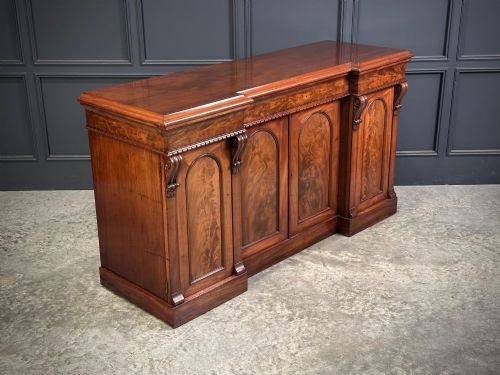
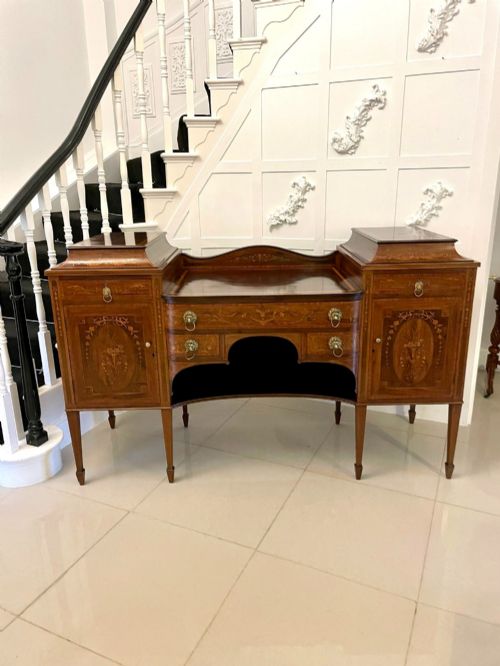
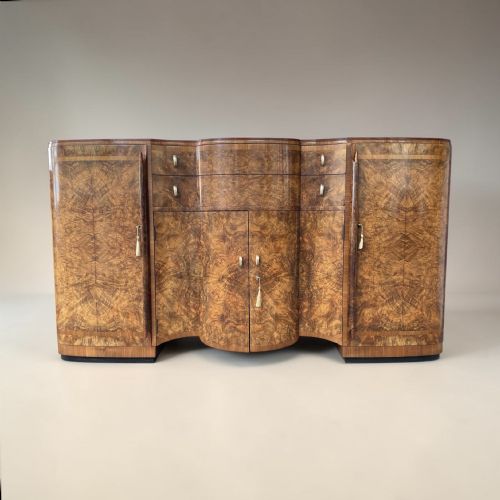


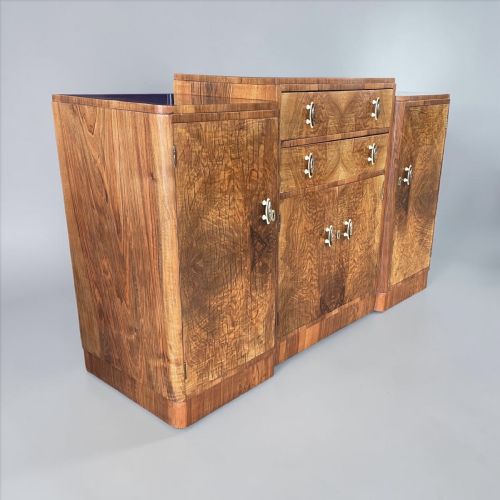
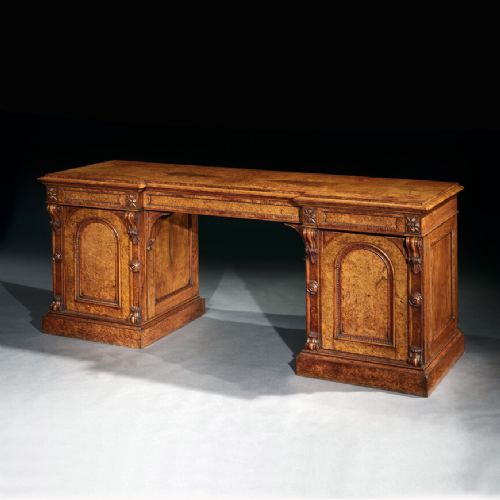
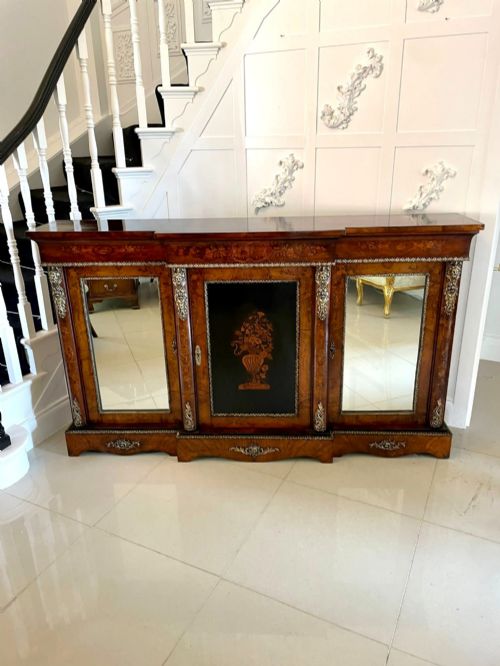
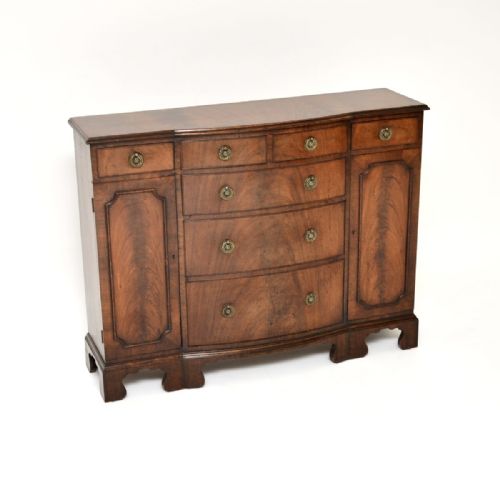
Breakfront Sideboard Cabinet
A breakfront sideboard cabinet offers grand presence and disciplined storage, uniting architectural proportions with fine cabinet-making.
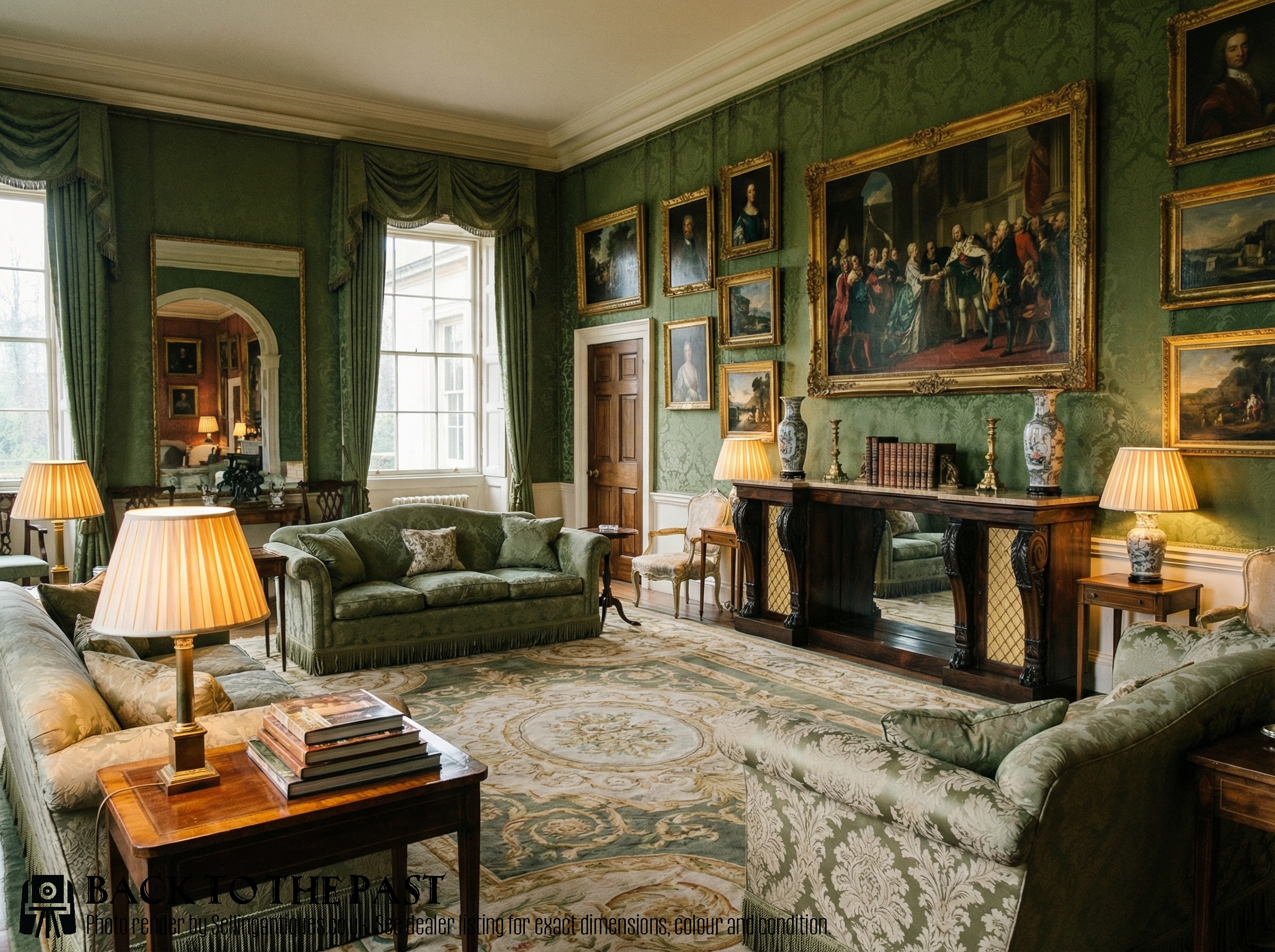
Breakfront Sideboard Cabinet
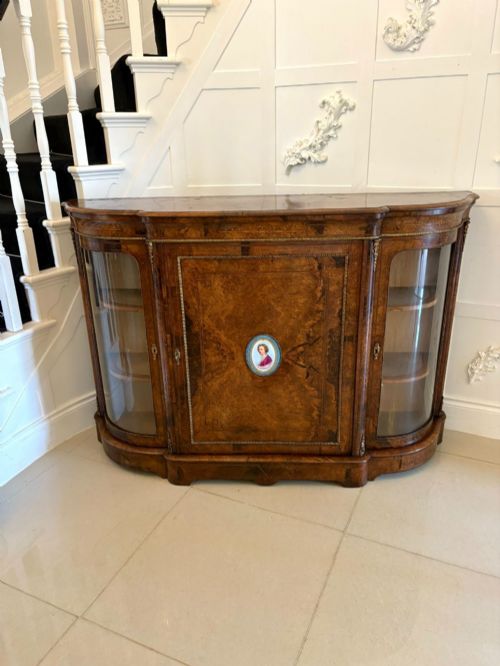
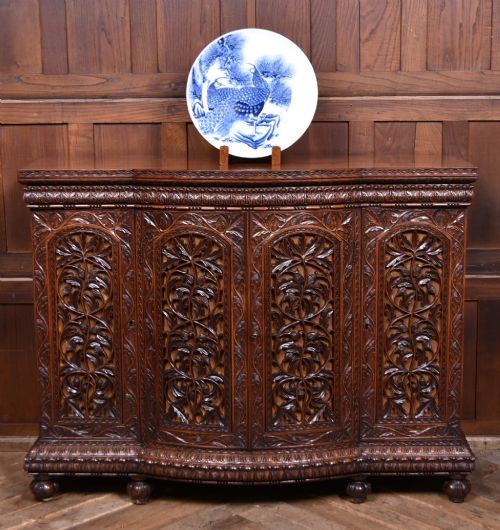
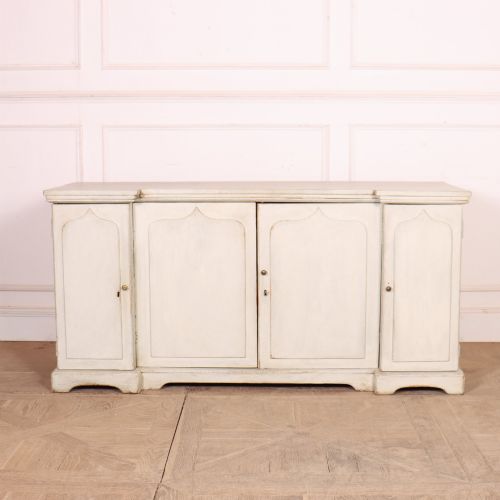
A breakfront sideboard cabinet brings together the extended horizontal surface of a traditional sideboard with a central section that projects forward from the flanking wings. You will encounter these primarily in nineteenth-century incarnations, spanning the Victorian era through to Edwardian interpretations and later Art Deco designs.
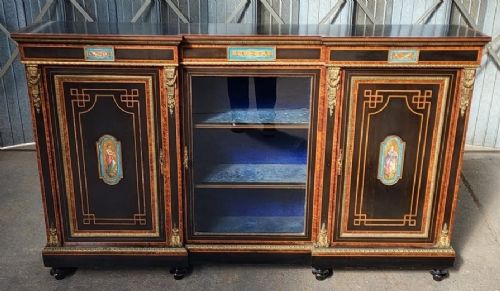
The form encompasses formal credenzas, breakfront bookcases, and large dining room sideboards built to anchor principal reception rooms. Woods such as mahogany, burr walnut, and rosewood dominate the selection, often enriched with marquetry inlay or mounted in ormolu.
Originating in formal English and continental interiors, these substantial items served to display porcelain and silver while concealing dining linen or books behind panelled or glazed doors. They remain practical focal points for large living spaces and dining rooms.
How they were made
Cabinet-makers constructed these carcasses using sturdy secondary timbers faced with high-figure veneers like flame mahogany, amboyna, and burr walnut. Complex curves and the characteristic forward projection required precise joinery and steam-bending techniques.
Decoration relied heavily on marquetry inlay using contrasting light and dark woods, complemented by cast ormolu mounts, brass grilles, and inset marble tops. Ebonised finishes were frequently employed to imitate exotic ebony and to highlight gilt bronze details.
Listings feature nineteen-century periods extensively, incorporating mahogany, burr walnut, and rosewood alongside specialised ormolu and porcelain mounts.
What varies in quality
The distinction between ordinary production and superior work rests on the selection of timber veneers and the crispness of the hand-cut marquetry. Finer examples display continuous grain matching across multiple doors and drawers rather than patched sections.
Hardware and mounts also signal grade, with heavy fire-gilded ormolu and detailed cast brass fittings outperforming stamped sheet metal. Interior construction, including solid mahogany drawer linings and well-fitted original locks, separates standard workshop output from premier commissions.
Hewetsons London·Maurice Adams·Collinson and Lock·Edwards and Roberts·Gillows
The Breakfront Sideboard Cabinet Glossary
- Breakfront
- An architectural arrangement where the central section of a cabinet projects forward past the flanking wings. This creates depth and shadow play across the facade.
- Credenza
- A low dining or reception room cabinet, frequently fitted with glass doors and ormolu mounts. It evolved from a simple serving table into a display piece.
- Ormolu
- Gilt bronze mounts applied to furniture for decorative accent. High-grade pieces utilise fire-gilding techniques that produce a durable, rich lustre.
- Marquetry
- The art of forming decorative patterns using thin veneers of different woods. Artisans cut intricate floral or geometric motifs to fit flush into the primary timber ground.
- Boulle
- A form of marquetry employing tortoiseshell and brass inlay. It takes its name from a celebrated French cabinet-maker.
Breakfront Sideboard Cabinet: Frequently Asked Questions
Where should I place a breakfront cabinet?
These imposing items require a substantial wall with adequate clearance to accommodate their projecting central sections and wide door swings.
They function best as the principal architectural anchor in a dining room, library, or large drawing room.
How do I care for wood veneers?
Keep these cabinets away from direct sunlight and heat sources to prevent the underlying glues from drying out and the veneers from lifting.
Apply a microcrystalline wax periodically rather than modern silicone sprays to nourish the timber safely.
Can I store heavy items inside?
The interior shelving is generally sturdy, particularly in nineteenth-century mahogany and oak carcasses, but weight should be distributed evenly.
Adjustable wooden shelves will handle standard china and glassware easily, though heavy volumes require solid support.
How do I distinguish Victorian from Edwardian pieces?
Victorian examples often favour dense, dark timbers with heavy ormolu mounts and formal porcelain panels, reflecting a taste for rich ornamentation.
Edwardian interpretations tend to be lighter in scale, frequently utilising satinwood and refined Sheraton Revival stringing.