
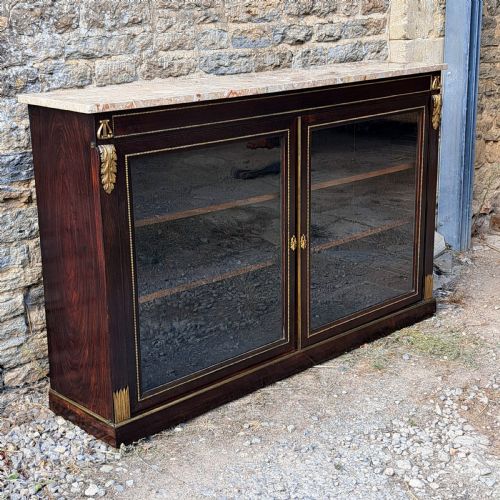
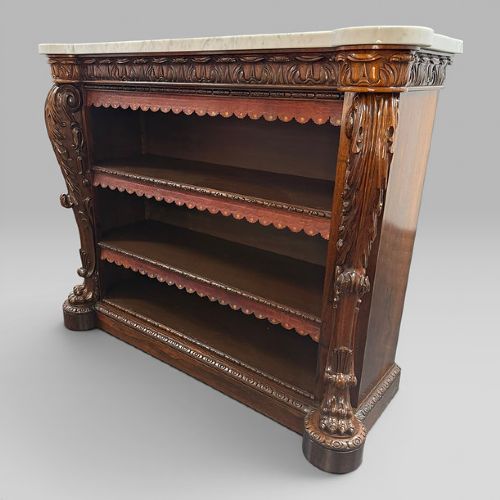


Marble Top Rosewood Credenza
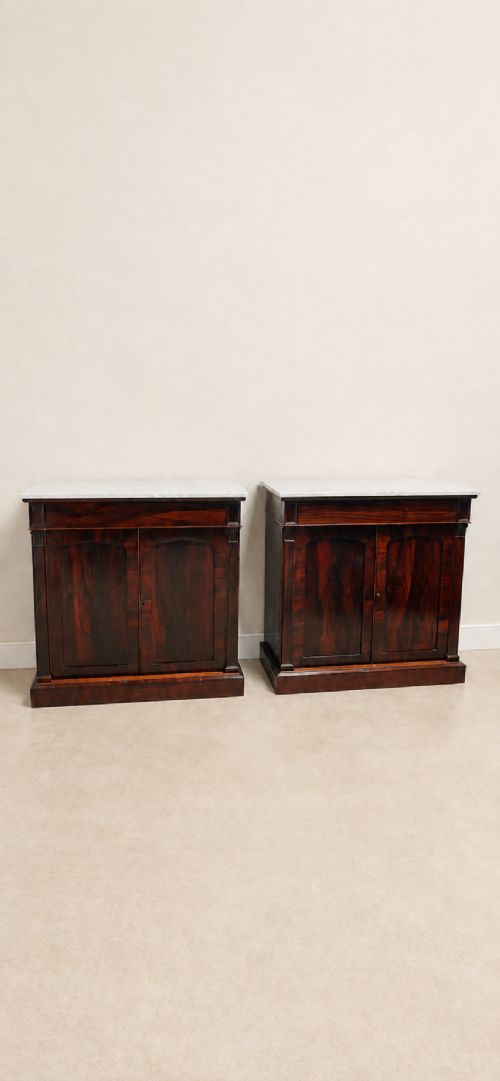
A marble top rosewood credenza brings heavy timber and cool stone together in a grand storage piece built to anchor a formal interior.
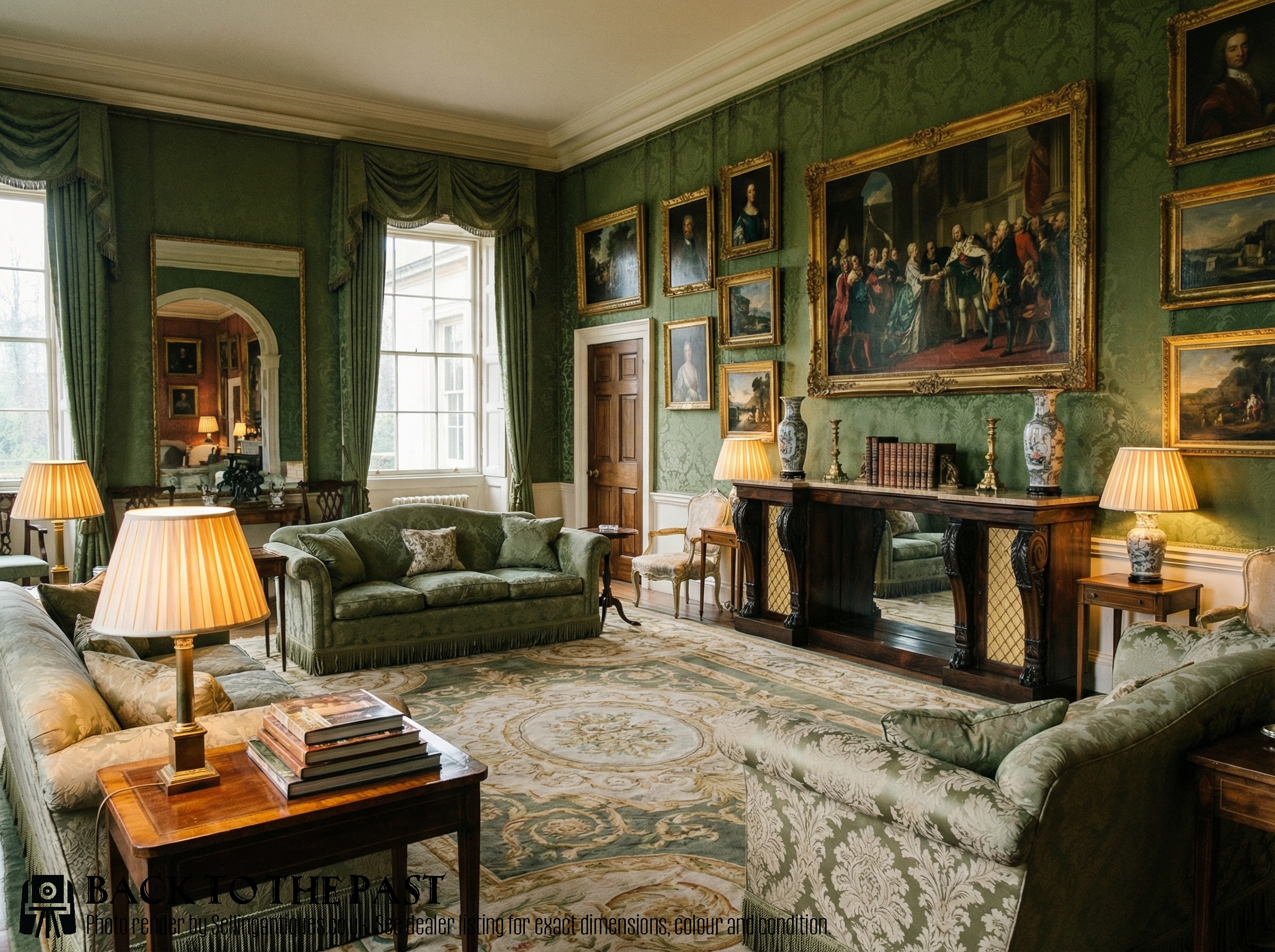
Marble Top Rosewood Credenza
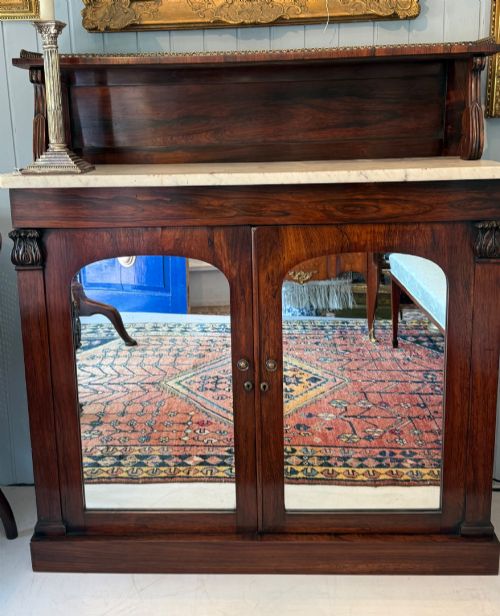
A marble top rosewood credenza represents a sophisticated form of nineteenth century furniture designed primarily for formal reception rooms and drawing rooms. When searching for this phrase, a buyer looks at substantial side cabinets, chiffoniers, and low bookcases constructed from rich rosewood and finished with heavy stone tops. These pieces often feature glass doors, brass inlays, or open shelving used to display porcelain and decorative objects.
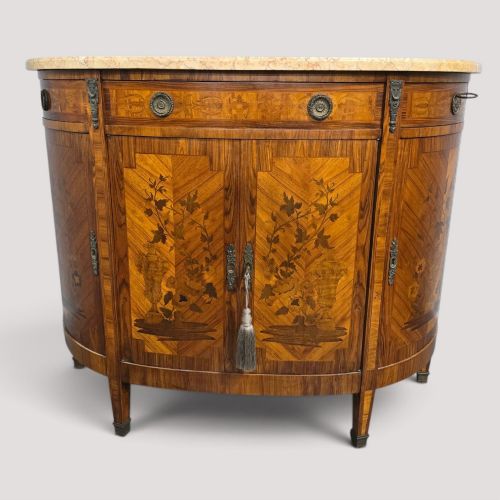
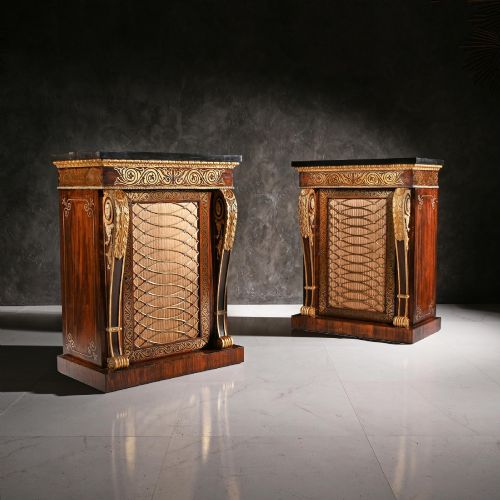
The versions met most frequently on this page originate from the Regency, William IV, and Victorian periods, alongside French revival styles. English makers favour architectural breakfront designs and brass grillwork, while French workshops lean towards marquetry inlay, ormolu mounts, and shaped marble slabs. Pieces range from compact pier cabinets to expansive breakfront sideboards equipped with adjustable shelving.
Object types span various configurations of low-level storage, including open bookcases with marble tops and enclosed cupboards with fabric-backed doors. The inclusion of stone surfaces marks a practical shift, providing a durable platform for serving or display that resisted the stains of lamps and plants. Rosewood provides a dense, dark ground that contrasts sharply against white or pink marble slabs.
Materials and construction methods
Cabinet makers constructed these pieces using dense tropical rosewood veneers laid over stable secondary pine or oak carcasing, frequently accented with solid mouldings. The timber displays strong dark grain patterns that makers accentuated through careful book-matching on doors and drawer fronts. Ormolu mounts, brass stringing, and gilt bronze details were cast and hand-chased before being fixed to the timber surfaces.
Marble slabs fitted to the upper surfaces were selected for their colour and veining, ranging from simple white Carrara to striking pink varieties. These stone tops rest directly upon the timber carcase, sometimes secured with plaster or hidden brackets. Glazing bars on bookcase doors were fashioned by hand to create intricate geometric or arched apertures for glass panels.
The listings show pieces spanning from the Regency era through to the late Victorian period, incorporating both English cabinet work and French revival styles.
Distinctions in quality and execution
The calibre of a piece rests heavily on the selection of the rosewood veneer and the precision of its grain alignment across large expanses. Superior examples exhibit continuous pattern matching and immaculate hand-cut brass inlay rather than stamped metal glued to the surface. Carved wooden elements, whether foliage on a William IV chiffonier or gilt mounts on a French cabinet, show crisp depth and clean undercutting.
Internal construction details also separate standard commercial production from master workshops. High-quality pieces utilise solid mahogany or oak for drawer linings and internal shelving, alongside robust mortise and tenon joinery. The thickness and finish of the marble top, along with its precise edge moulding, reflect the original budget and ambition of the commission.
Louis Constantin Le Gaigneur·Gillows·Mercier Frères
The Marble Top Rosewood Credenza Glossary
- Credenza
- A low cabinet or sideboard used for display and storage, typically fitted with doors enclosing shelves. This form evolved during the nineteenth century to serve dining rooms and drawing rooms.
- Chiffonier
- A compact sideboard featuring a lower enclosed cupboard, frequently topped with a raised shelf supported by small pillars. They often incorporate fabric panels behind brass grilles in the doors.
- Ormolu
- Gilded bronze used for decorative mounts and furniture trim. French makers utilised this technique extensively to edge marble tops and highlight corners.
- Marquetry
- The art of applying pieces of veneer to a structure to form decorative patterns and pictorial designs. Craftsmen employed various exotic woods to achieve contrasting tones.
- Breakfront
- A piece of furniture whose central section projects forward from the flanking wings. This architectural arrangement creates depth and shadow across large cabinets.
Marble Top Rosewood Credenza: Frequently Asked Questions
What is a marble top rosewood credenza?
A low storage cabinet made from rosewood timber and finished with a heavy stone slab across the top surface. These units served grand reception rooms for both display and practical storage.
They combine the dark, figured grain of exotic wood with the cool durability of marble, making them central focal points in nineteenth century interiors.
How do I identify a Regency period piece?
Regency pieces often display classical architectural motifs, such as brass inlay, column supports, and restrained gilt mounts. The lines tend to be clean and geometric.
Look for fine brass stringing set directly into the dark rosewood grain and simpler proportions compared to later Victorian designs.
Were these cabinets used in dining rooms?
While many occupied drawing rooms for displaying porcelain, larger breakfront versions functioned as sideboards in formal dining spaces. They held linens, silver, and serving ware.
The marble surface provided a practical, wipe-clean station for placing dishes and lighting during large gatherings.
How should I care for rosewood furniture?
Keep wooden furniture away from direct sunlight and extreme temperature shifts to prevent the rosewood veneer from drying out or splitting. Dust regularly with a soft, dry cloth.
Treat the marble top with care by wiping spills immediately, as acidic liquids can etch the polished stone surface over time.
What is the difference between English and French styles?
English designs from the Regency and William IV periods emphasise architectural form, rich timber grain, and subtle brass work. They focus on structural balance.
French pieces incorporate elaborate marquetry, shaped serpentine fronts, and heavy ormolu mounts that reflect continental revival tastes of the nineteenth century.