


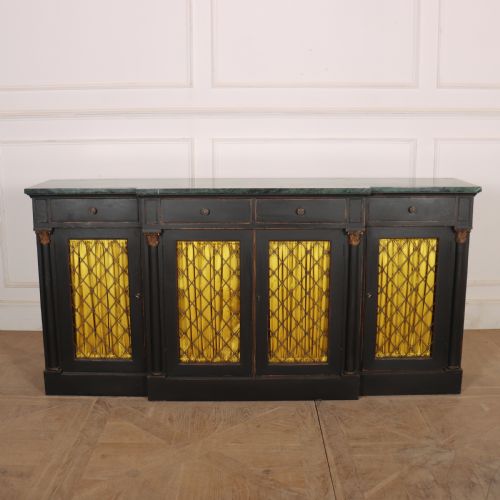


Regency Marble Top Sideboard
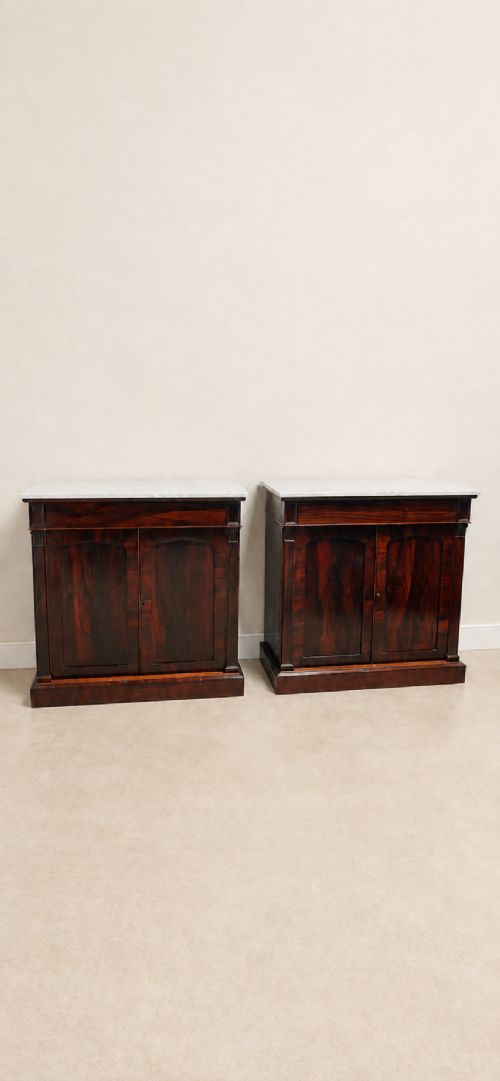
These regency marble top sideboards combine cool stone surfaces with warm timbers to anchor a room.
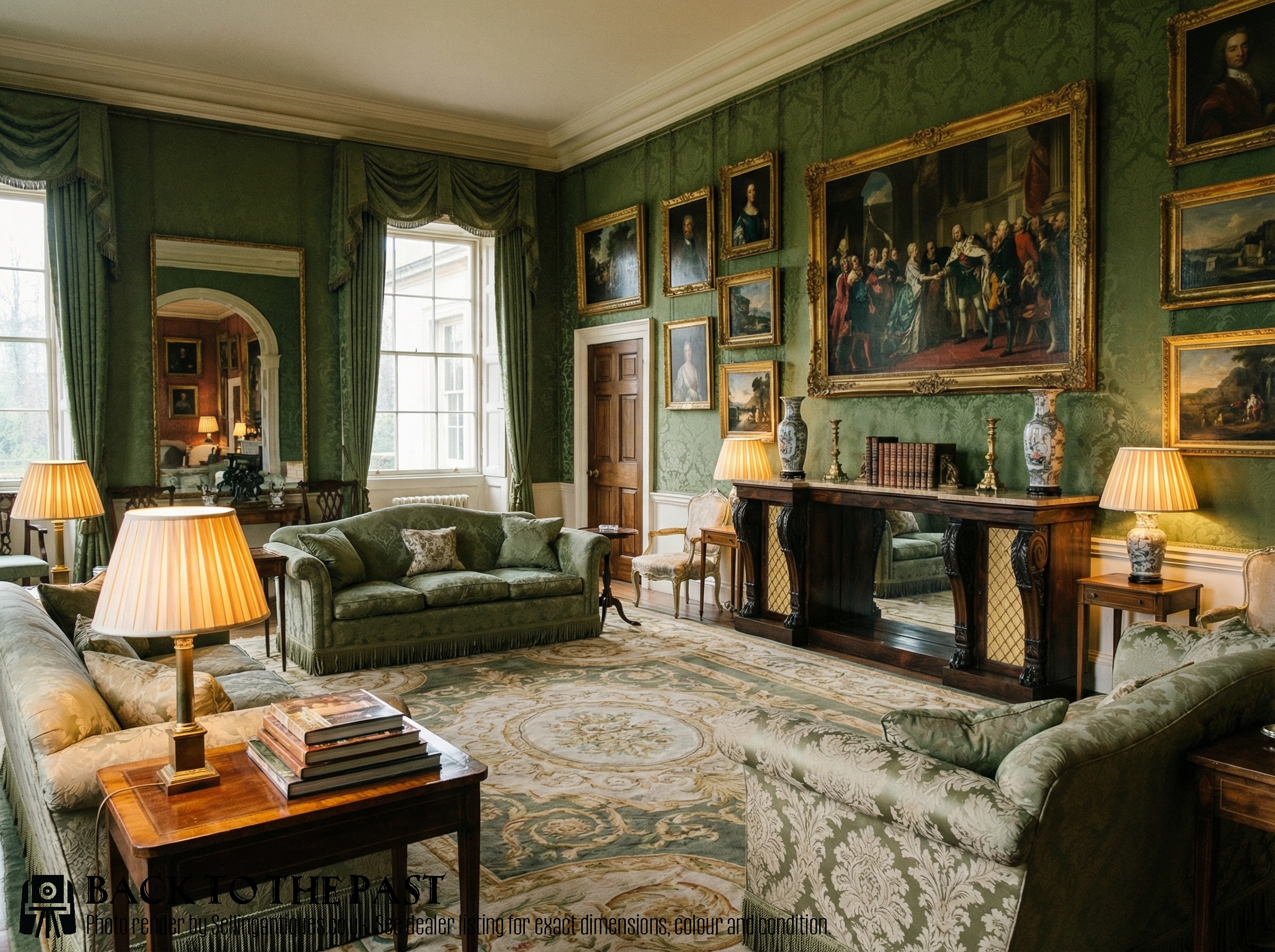
Regency Marble Top Sideboard
A regency marble top sideboard brings together heavy stone surfaces and rich timbers like rosewood and mahogany. Pieces on this page span the nineteenth century, including Georgian and William IV eras, along with later Victorian and Louis XV style interpretations.
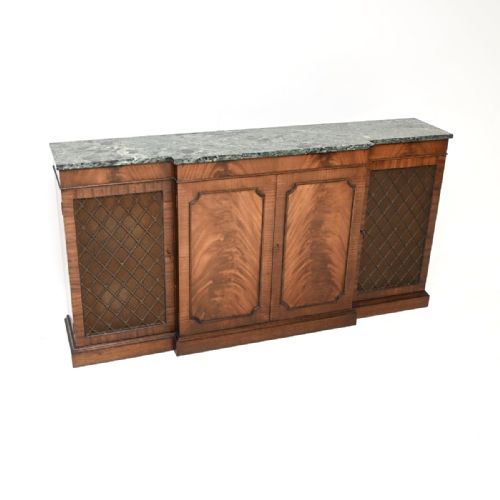
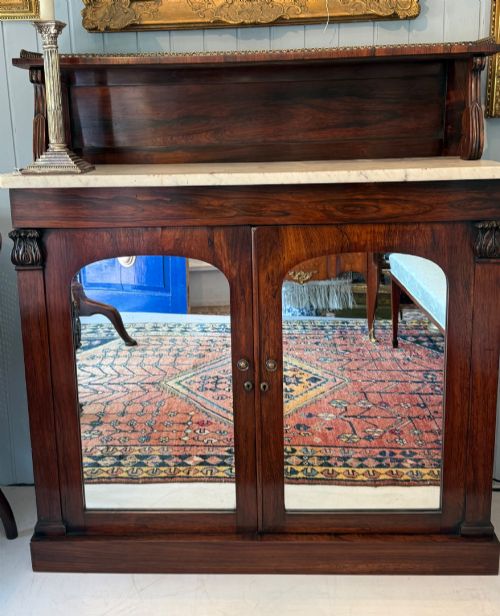
Forms range from breakfront cabinets and chiffoniers to console tables and demi-lune side cabinets. Buyers encounter varying configurations, from grill front doors to secretaire compartments and brass-mounted commodes.
How They Were Made
Cabinet makers utilised dense hardwoods including rosewood and mahogany as the structural carcasses for these pieces. Marble slabs were fitted to the upper surfaces to provide a durable and cool counter.
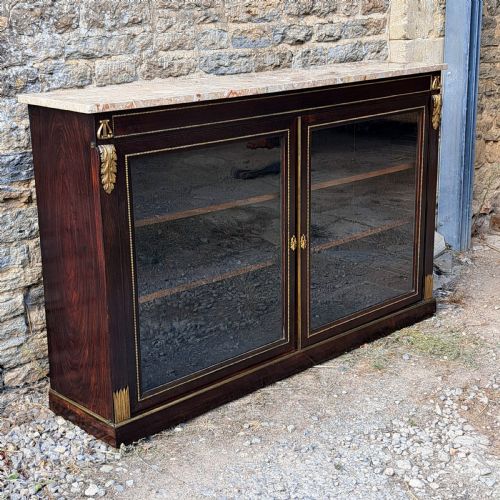
Gilt brass mounts, ormolu details, and fine fabric or silk linings were added to elevate the visual weight of the cabinets. Cabinetmakers shaped these timbers into breakfront profiles, bow fronts, and demi-lune curves.
The archive and active listings demonstrate diverse forms ranging from chiffoniers to breakfront cabinets and demi-lune commodes.
What Varies in Quality
The distinction between tiers rests on the selection of timber veneers and the handling of the stone tops. Superior examples display tightly figured rosewood grains and precisely fitted marble slabs without heavy repairs.
Attribution to notable workshops like Gillows elevates certain cabinets above standard commercial output of the period. The integration of cast brass ormolu mounts and internal fittings also marks the graduation in craftsmanship.
Gillow
The Regency Marble Top Sideboard Glossary
- Chiffonier
- A low cabinet featuring shelving or doors beneath, popular during the Regency and William IV periods. They frequently incorporate marble tops and silk-backed grille doors.
- Breakfront
- A cabinet design where the central section projects forward from the flanking wings. This configuration creates visual depth and architectural presence.
- Demi-lune
- A half-moon shape used for console tables and side cabinets designed to sit flat against a wall. This profile softens linear room layouts.
- Ormolu
- Gilded bronze mounts applied to furniture for decorative effect. The technique was particularly favoured in French-influenced Regency pieces.
- Secretaire
- A desk form integrated into a cabinet or chest, featuring a drop-down writing flap. It conceals small drawers and pigeonholes within the main structure.
Regency Marble Top Sideboard: Frequently Asked Questions
What is a regency marble top sideboard used for?
These cabinets served primarily for serving food or displaying decorative objects in dining rooms and parlours. The stone surface provided a robust plate warmer and serving counter.
Inside the lower cupboards, owners stored glassware, linens, and dining accessories out of sight. Their shallow depth allowed them to sit along dining room walls without blocking circulation.
How do I clean the marble top?
Wipe the stone surface regularly with a soft cloth dampened in warm water and mild dish soap. Avoid acidic cleaners, vinegar, and abrasive scouring pads that etch or scratch the polish.
Dry the marble thoroughly after wiping to prevent water spots. A specialised stone soap or sealer helps maintain the sheen over time.
How do I tell Regency from Victorian pieces?
Regency pieces lean toward neoclassical restraint, utilising clean architectural lines and refined brass inlay or gilt mounts. Rosewood and mahogany predominate in this earlier phase.
Victorian interpretations often show heavier proportions and more ornate carving, drawing on Louis XV styles. The timeline extends through the mid to late nineteenth century.
Will a sideboard fit in a modern room?
Many examples offer relatively shallow depths that suit contemporary hallway and living room proportions. Their flat backs allow them to sit flush against partition walls.
The combination of dark timber and light stone contrasts well with plain modern plaster walls. Measuring floor clearance and doorway widths before purchase ensures smooth placement.