
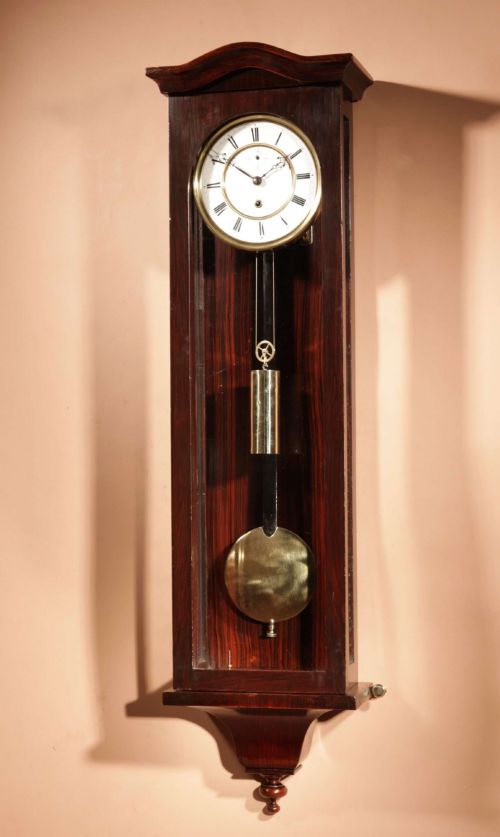
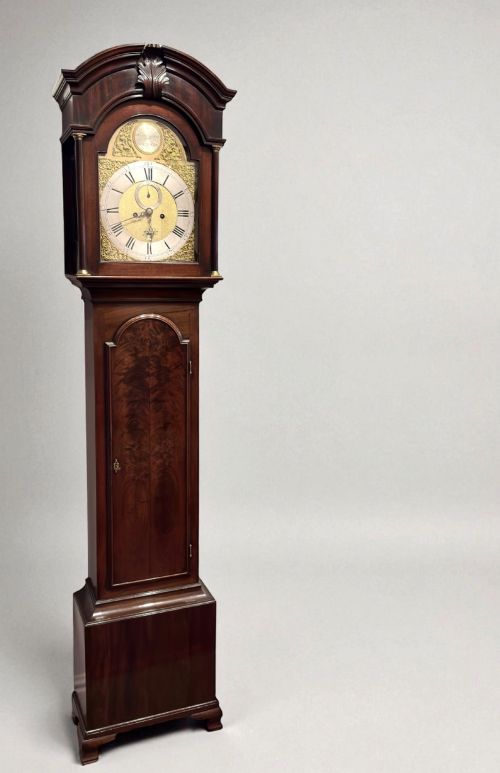
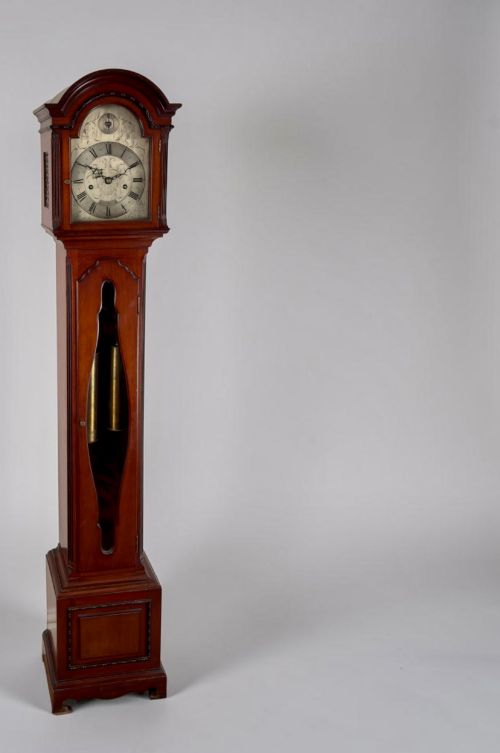

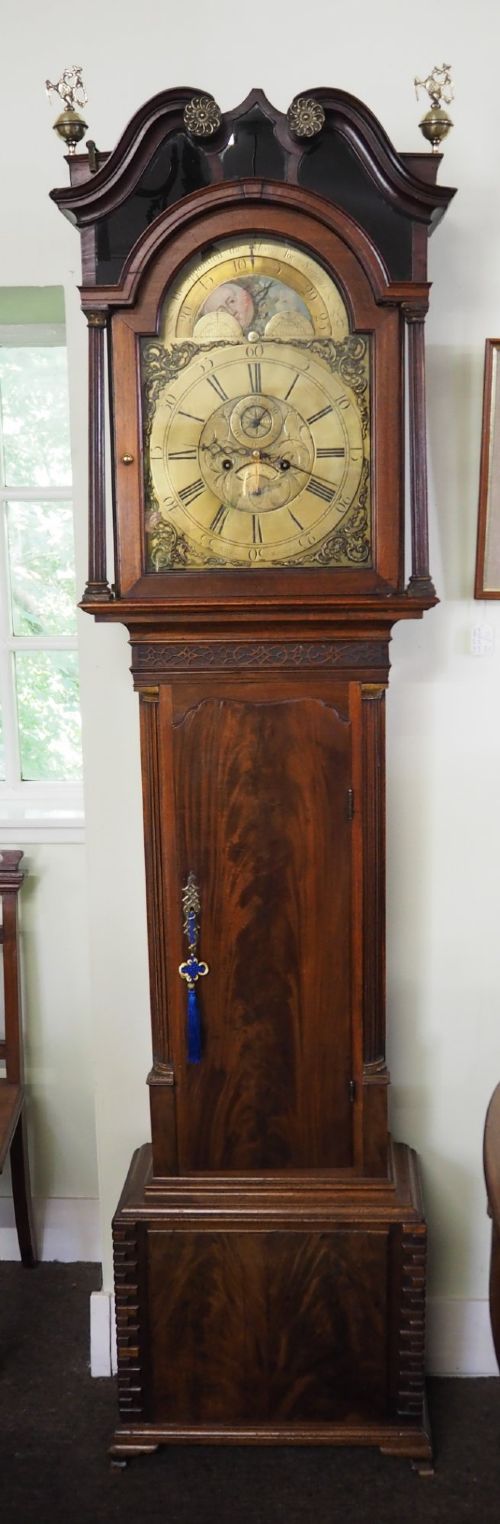
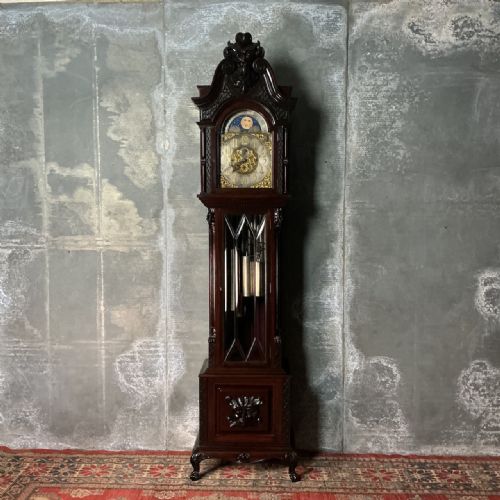
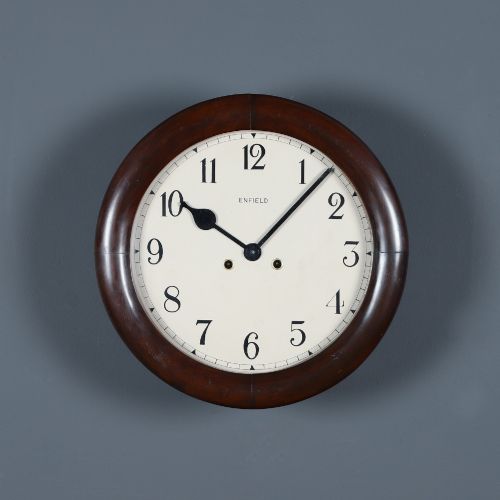
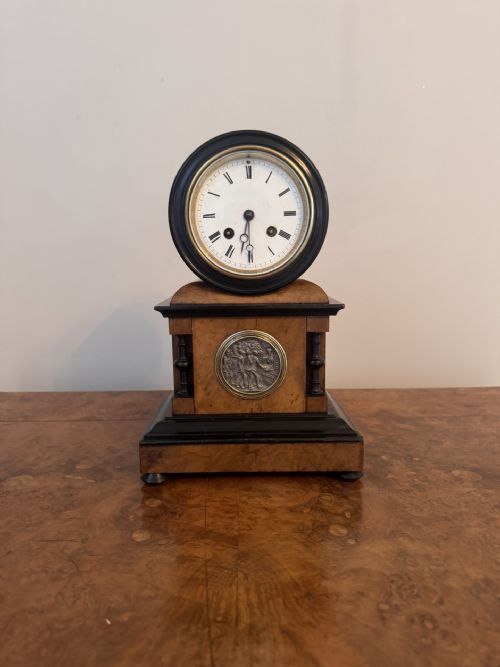
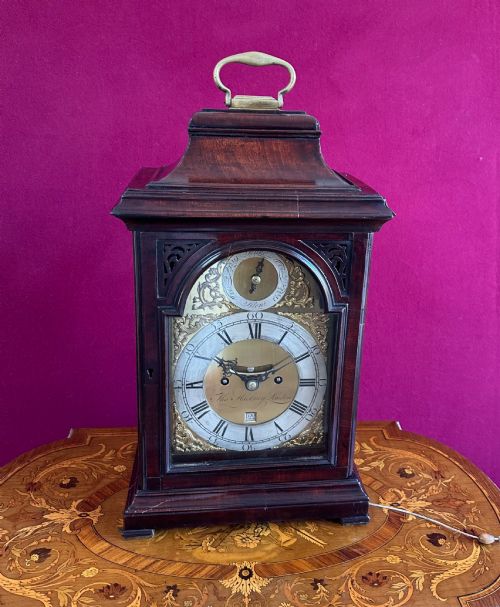
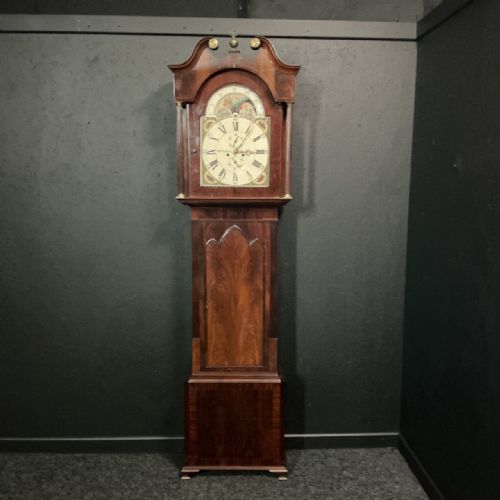
Dark Wood Dial Clock
A dark wood dial clock brings architectural gravity to a room, driven by the steady rhythm of a mechanical movement.
Understanding the Dark Wood Dial Clock
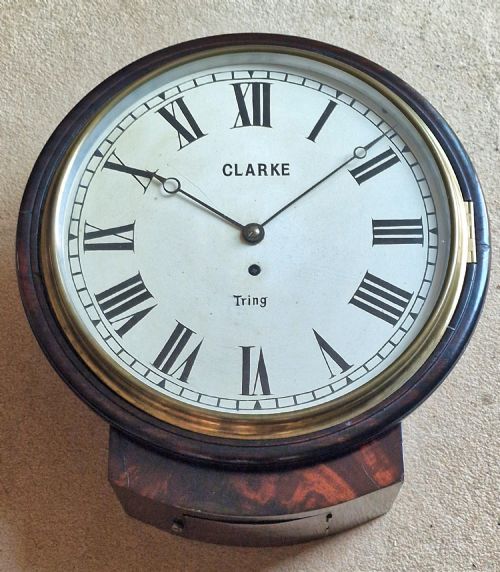
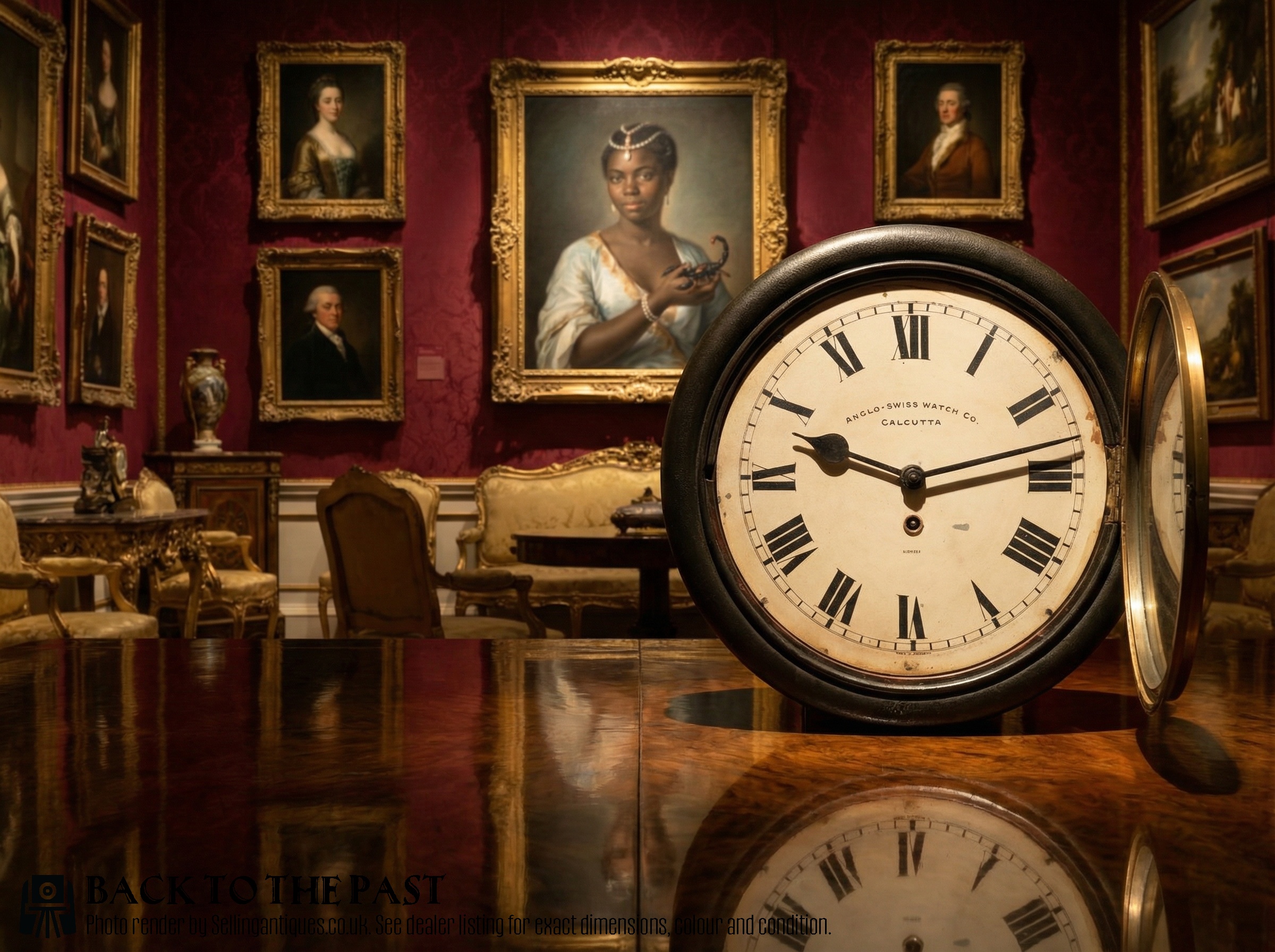
A dark wood dial clock is a wall-mounted timepiece designed for clear legibility in public spaces, offices and domestic rooms. These pieces combine robust timber surrounds with prominent circular faces protected by glass fronts.
Most examples found in this category belong to the Victorian era and the late nineteenth century, spanning various regional English workshops. Formats range from plain circular school clocks to refined fusee movements housed in carved mahogany or rich rosewood cases.
Makers utilised dense tropical hardwoods to construct sturdy frames capable of housing precise internal mechanisms. The dial itself remains the visual focal point, contrasting sharply against the surrounding dark timber case.
Construction and Materials
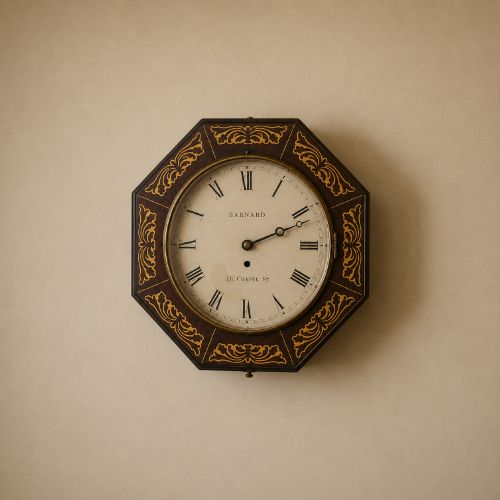
Craftsmen built the outer surrounds of these timepieces using solid mahogany and rosewood, often enhancing the timber with brass inlay or mother of pearl details. Carved wooden bezels and hinged side doors provided secure access to the delicate paper or painted dials within.
The internal architecture typically relies on a fusee mechanism, which ensures an even distribution of power from the mainspring as it unwinds. Heavy brass plates and precision-cut wheels govern the movement, regulated by a pendulum swinging within the drop box or trunk.
Retail Price Guide 2026
Typical UK retail prices for dark wood dial clock, calculated from the Sellingantiques database of over a million retail prices indexed since 2003. This retail price guide relies exclusively on Sellingantiques data; no external sources or auction records are used, so the figures do not describe the wider market.
Materials utilised across the selection include mahogany, rosewood, brass, glass, iron, and mother of pearl.
Evaluating Quality
Distinctions in quality rest upon the crispness of the timber carving and the sophistication of the internal movement. A superior fusee mechanism demonstrates refined engineering compared to standard spring-driven alternatives.
The choice of cabinet timber and decorative embellishments, such as brass inlay, defines the upper tier of production. Cases featuring well-figured rosewood or deeply carved mahogany reflect greater attention from the original maker.
Anglo Swiss Watch Co.·Sly Weymouth
The Dark Wood Dial Clock Glossary
- Fusee
- A conical pulley connected to the mainspring by a cord or chain, designed to equalise the torque as the spring unwinds. This mechanism improves the timekeeping accuracy of the clock throughout its running period.
- Timepiece
- A clock that indicates the time without striking any hours or quarters. These movements focus solely on the precise motion of the hands.
- Dial
- The face of the clock upon which the numerals and minutes are marked. On these wall models, it is usually protected by a heavy brass bezel and glass door.
- School clock
- A common term for a simple round wall clock with a clean dial, historically used in classrooms and railway stations for easy reading at a distance.
Frequently Asked Questions
How do I wind a fusee wall clock?
Winding requires a specialised key inserted into the dial aperture to tension the mainspring via the fusee chain. Care must be taken not to over-wind the mechanism.
Most traditional movements require weekly attention to maintain accurate timekeeping and keep the pendulum swinging reliably.
Where should I hang a heavy dial clock?
These dense mahogany and rosewood clocks require secure fixing directly into wall studs or masonry using appropriate load-bearing screws. Hanging them securely prevents vibrations that might interfere with the pendulum.
Placement should also avoid damp walls and direct sunlight to protect the wooden case and delicate paper or painted dial.
What is the difference between a school clock and a fusee clock?
A school clock refers to the functional style designed for institutional legibility, whereas a fusee clock describes the specific type of mechanical movement housed inside.
Many school clocks actually utilise fusee movements, combining utilitarian design with high-grade internal engineering.
How do I identify a Victorian dial clock?
Victorian examples are distinguished by their solid mahogany or rosewood surrounds, brass bezels, and traditional painted or paper dials marked with Roman numerals. Makers often incorporated hinged side doors and secure bottom boxes for pendulum access.
Examining the fusee movement and timber grain helps confirm the nineteenth-century origins of the piece.