

Dark Wood Credenza Dresser
These dark wood credenza dresser pieces combine sturdy storage and display surfaces, drawing on centuries of cabinet-making traditions to anchor a dining room or hallway.
Dark Wood Credenza Dresser
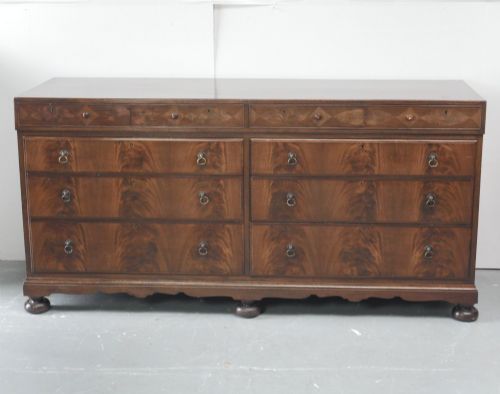
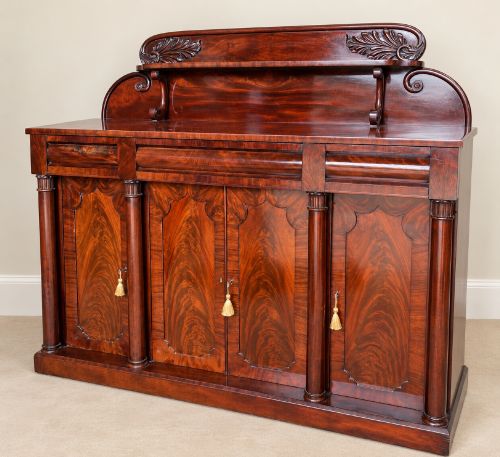
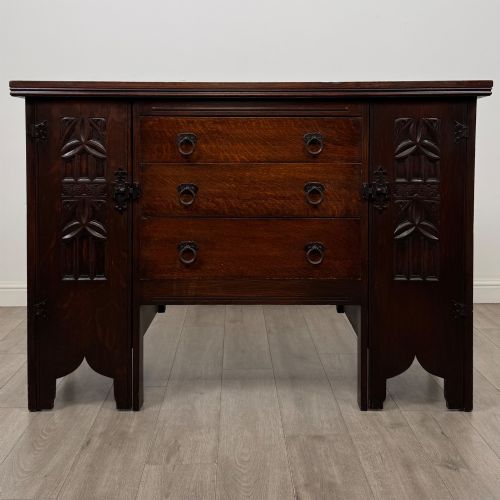
When searching for a dark wood credenza dresser, buyers encounter a diverse selection of heavy storage furniture spanning the eighteenth, nineteenth, and early twentieth centuries. Sideboards, dresser bases, and side cabinets dominate the offerings, originating from periods such as the Georgian, Victorian, and Edwardian eras.
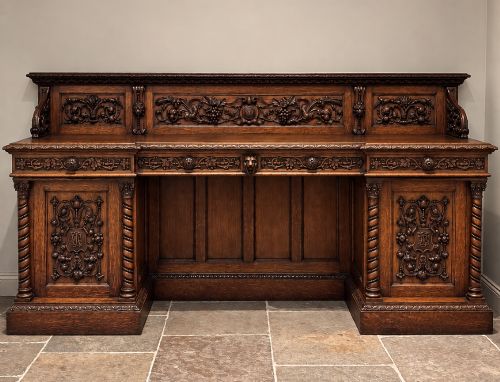
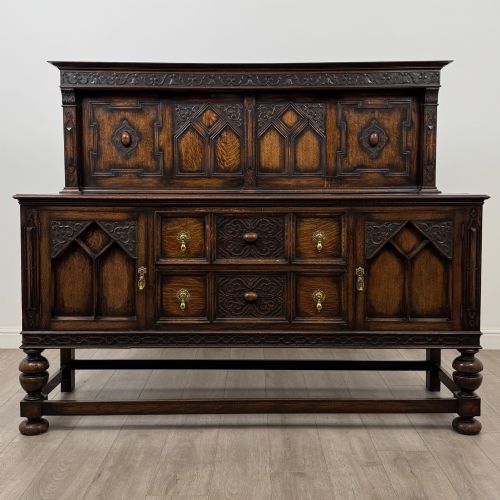
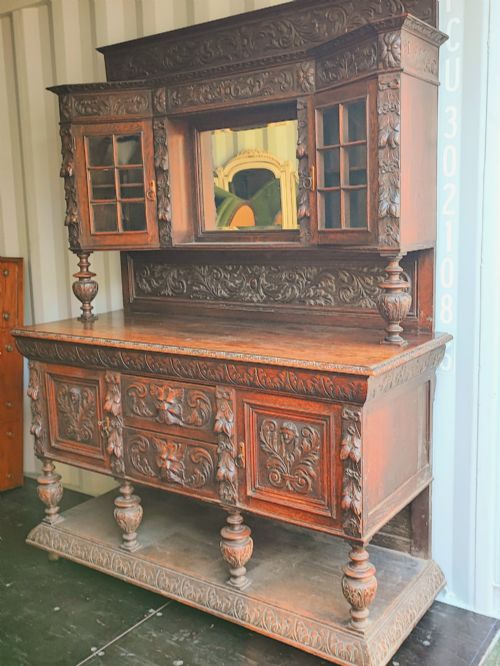
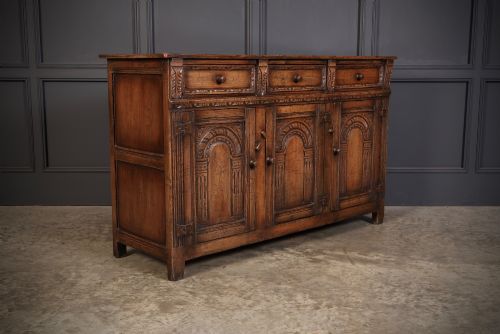
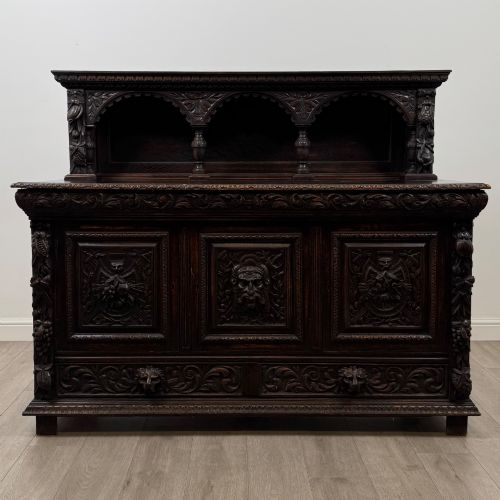
Makers utilised robust timbers to construct pieces influenced by Jacobean Revival, Gothic Revival, and Arts and Crafts styles. Buyers frequently meet large carved oak sideboards or simpler timber dresser bases featuring practical drawer arrangements and lower potboards or panelled cupboards.
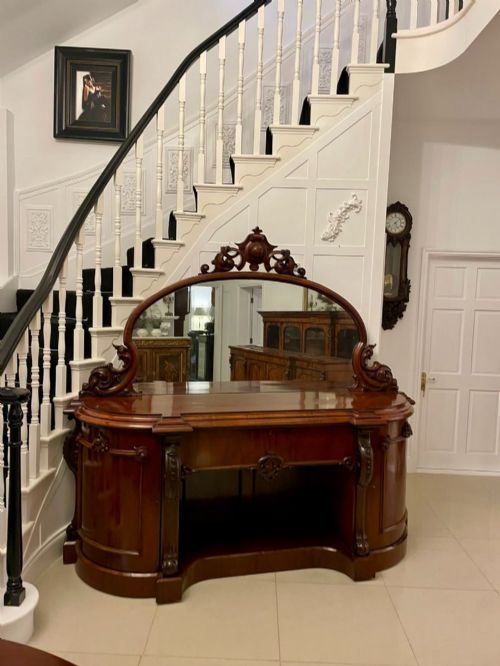
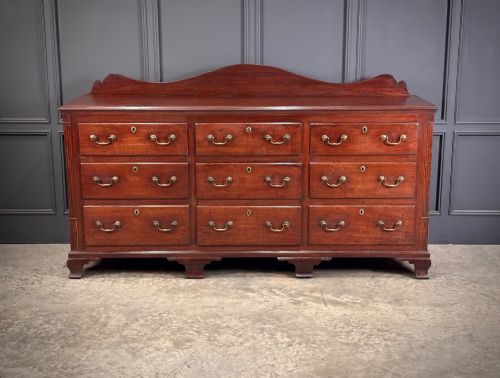
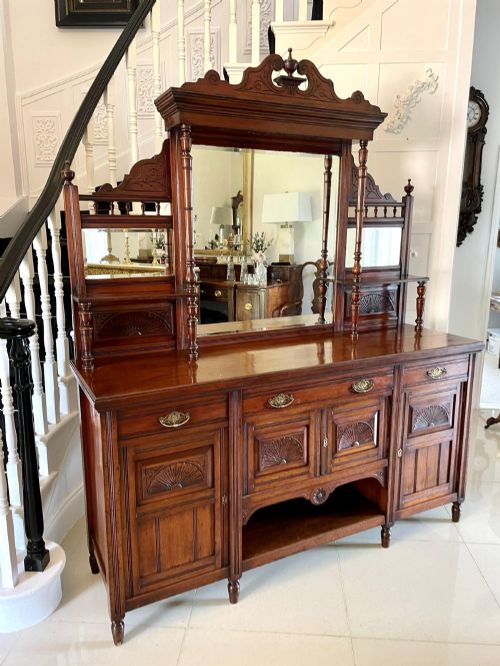
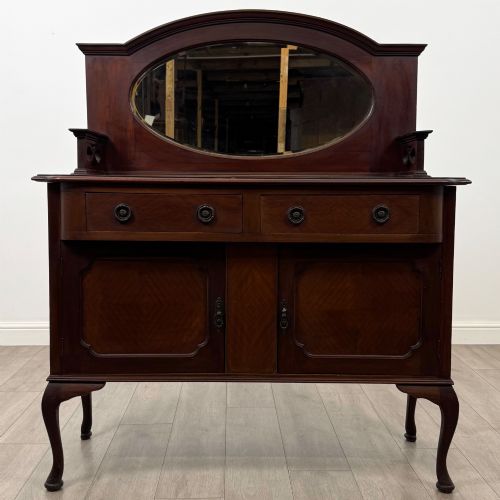
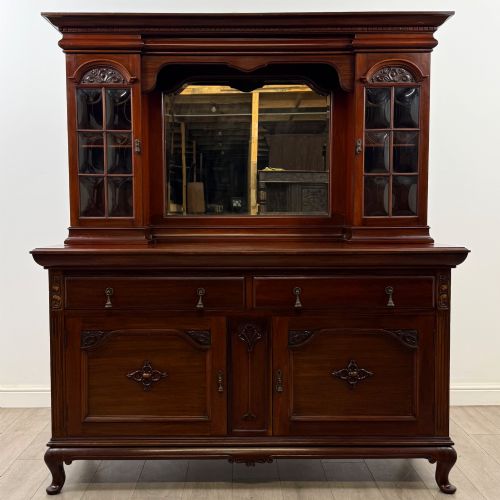
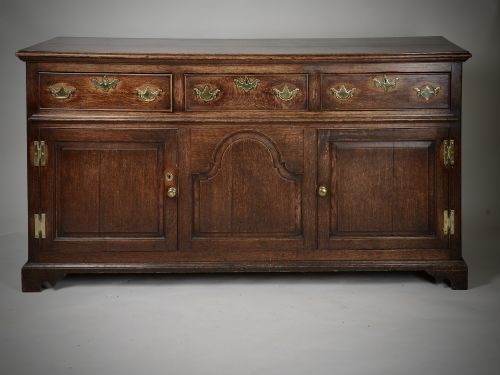
The inventory ranges from eighteenth-century oak and elm examples to late-Victorian carved walnut and mahogany mirror-back sideboards. These forms served utilitarian dining room functions originally, evolving from low serving tables into substantial cupboards with integrated shelving and display capacity.
Materials and Construction Techniques
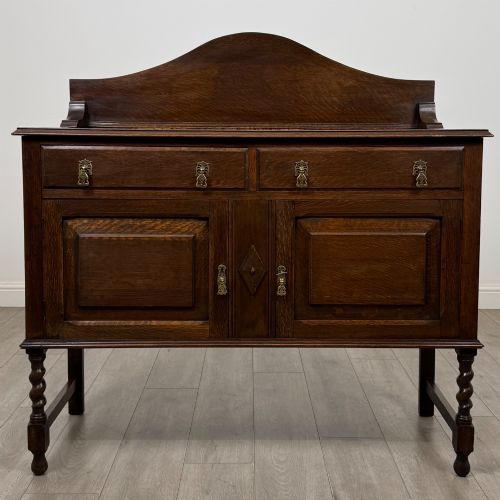
Cabinet makers built these forms primarily using solid oak, mahogany, and walnut, often pairing denser hardwoods with secondary timbers like elm, pine, or chestnut for internal framing and drawer linings. Surface decoration relied heavily on deep hand carving, barley twist turnings, and applied mouldings rather than applied veneers.
Hardware elements typically include cast brass handles, drop pulls, and escutcheons, alongside fitted glass panels in display doors and integrated mirror plates within later nineteenth-century backboards. Joinery methods combined traditional mortise and tenon frames with hand-dovetailed drawer construction to ensure structural longevity.
Listings feature oak, mahogany, and walnut timbers across Georgian, Victorian, and Edwardian periods.
Distinguishing Quality in Period Cabinetry
The distinction between standard utility furniture and superior examples rests upon the depth and crispness of the hand carving, particularly on decorative motifs such as Green Man panels or linenfold detailing. Finer pieces display tighter timber grain selection, balanced proportions, and careful alignment of drawer linings and door panels.
Construction integrity determines the upper tier of the range, visible in the precision of the joinery and the original retention of brass hardware and glass elements. Pieces demonstrating unified stylistic execution across revival movements command greater appreciation among collectors.
Whytock and Reid
The Dark Wood Credenza Dresser Glossary
- Dresser base
- A low wooden storage unit featuring multiple drawers above cupboards or an open potboard shelf, traditionally used in kitchens and dining spaces.
- Sideboard
- A long piece of furniture designed for dining rooms to store tableware, linen, and serving dishes.
- Barley twist
- A decorative turning technique resembling a spiralling rope, commonly found on furniture legs and supports during the seventeenth and early twentieth centuries.
- Green Man
- A sculptural architectural motif depicting a human face emerging from or entwined with foliage and vines.
- Potboard
- An open slatted lower shelf fitted beneath a dresser base for storing heavy earthenware and cookware.
Dark Wood Credenza Dresser: Frequently Asked Questions
What is a dresser base?
A dresser base is a low, sturdy wooden storage unit typically equipped with a row of drawers above lower cupboards or an open shelf. These pieces originated in domestic kitchens and dining rooms to hold culinary equipment and serving utensils.
Unlike tall kitchen dressers, the base unit stands alone as a self-contained cabinet with a flat top surface suitable for display or serving food during meals.
How do I identify a Victorian sideboard?
Victorian sideboards generally feature heavy proportions, substantial timber construction in oak or mahogany, and deep hand-carved ornamentation. Many examples incorporate high mirrored backboards or heavily panelled doors reflecting Gothic and Renaissance revival tastes.
Examining the internal drawer construction, timber selection, and hardware style helps distinguish these nineteenth-century pieces from later twentieth-century reproductions or earlier Georgian forms.
Where were these cabinets used?
These storage pieces primarily served dining rooms, serving as functional furniture for organising silver, linen, glassware, and serving platters. Large surface areas allowed hosts to arrange food and drinks before bringing them to the main dining table.
Today, buyers frequently place them in hallways, living rooms, and large dining spaces to provide substantial concealed storage while displaying lamps, books, or decorative objects.
How do I care for dark wood furniture?
Maintain antique dark wood surfaces by dusting regularly with a soft, dry cloth and avoiding harsh chemical cleaning sprays or silicone polishes. Keep the timber away from direct heat sources and strong sunlight to prevent the natural wood from drying out or fading over time.
Occasional application of traditional beeswax helps nourish the grain and protects the polished finish without building up heavy residue.