
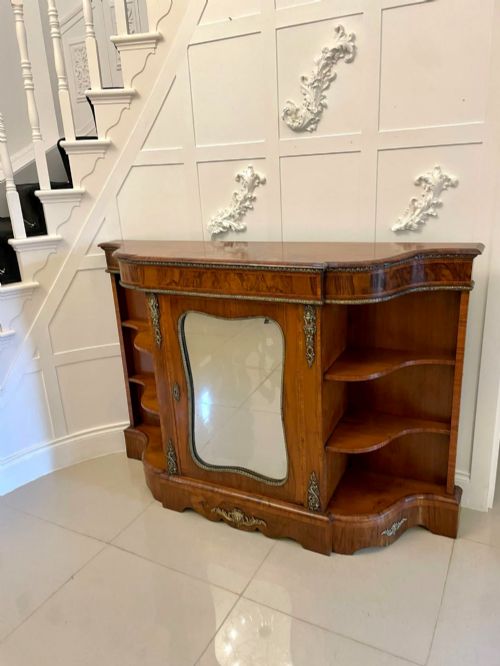
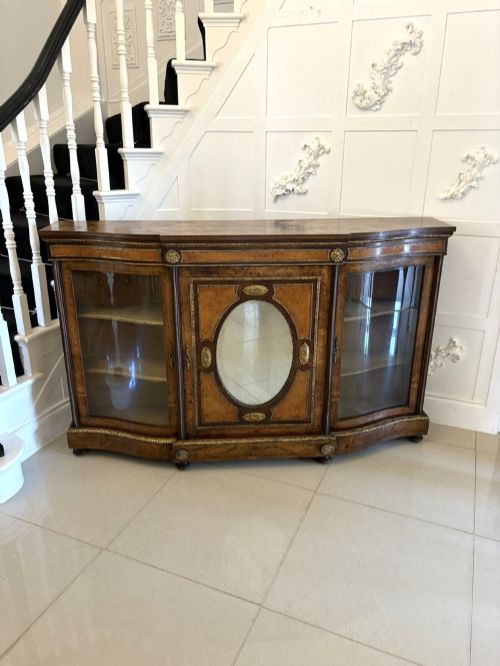
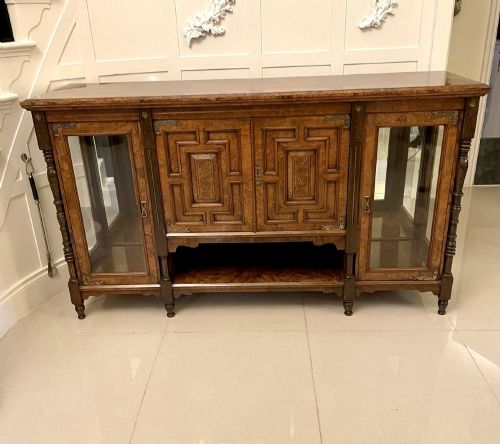
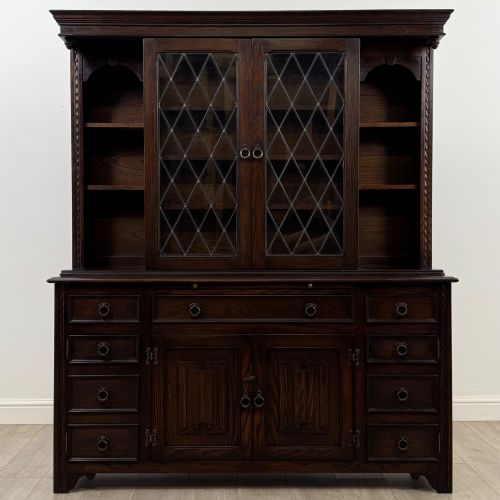
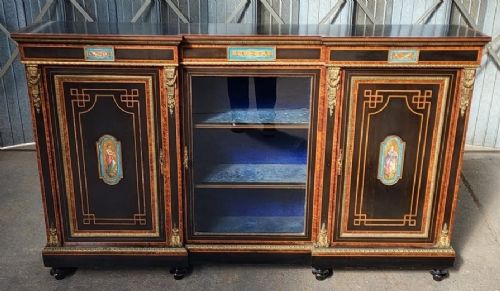


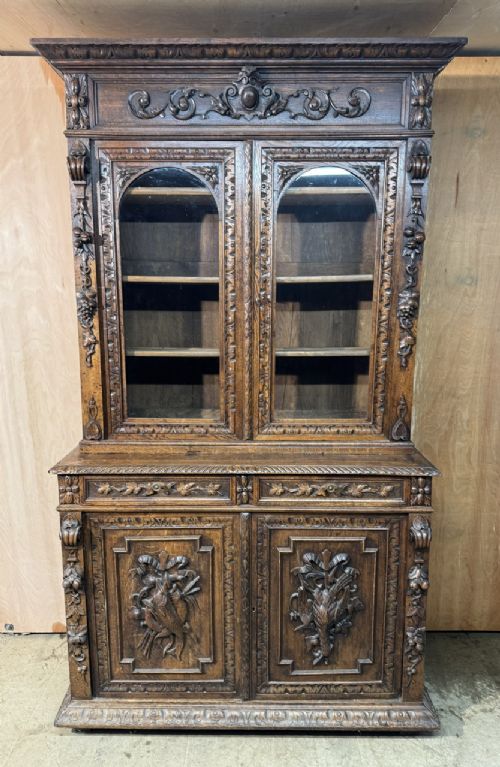
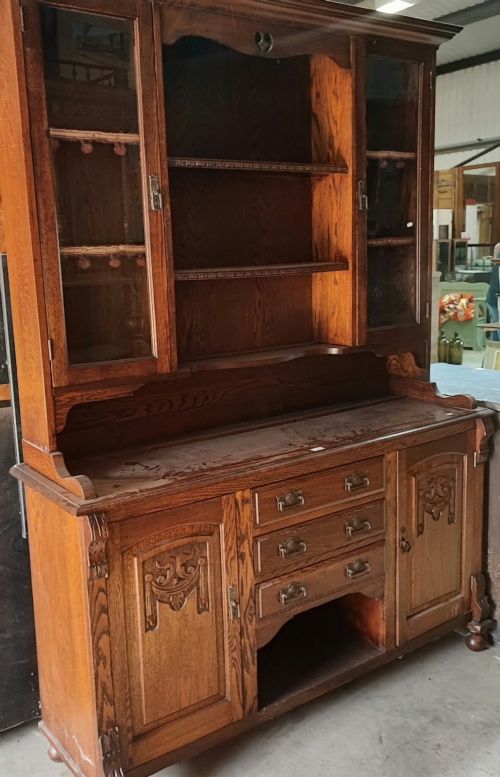
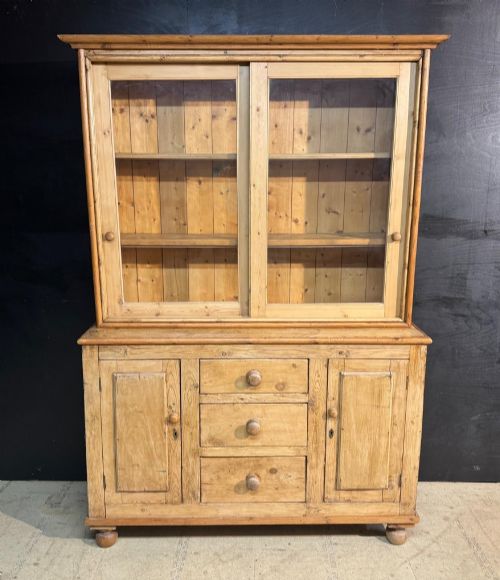
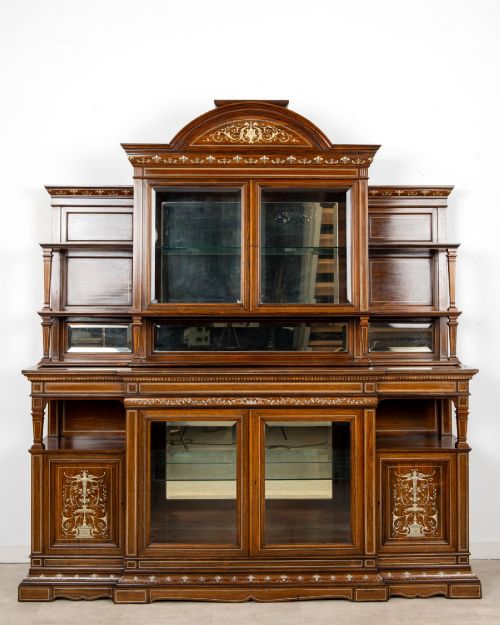
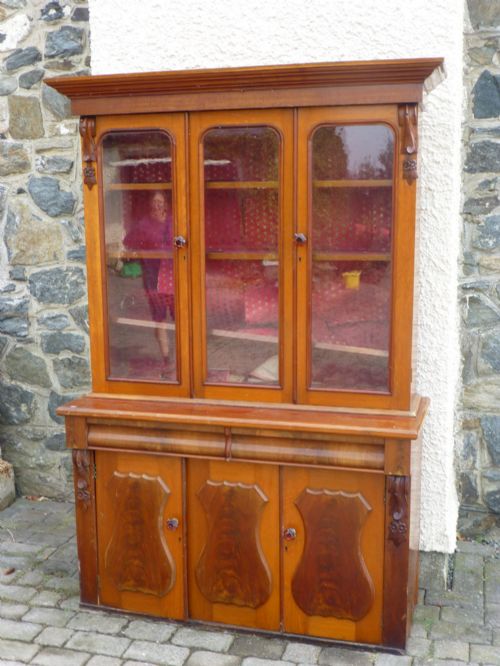
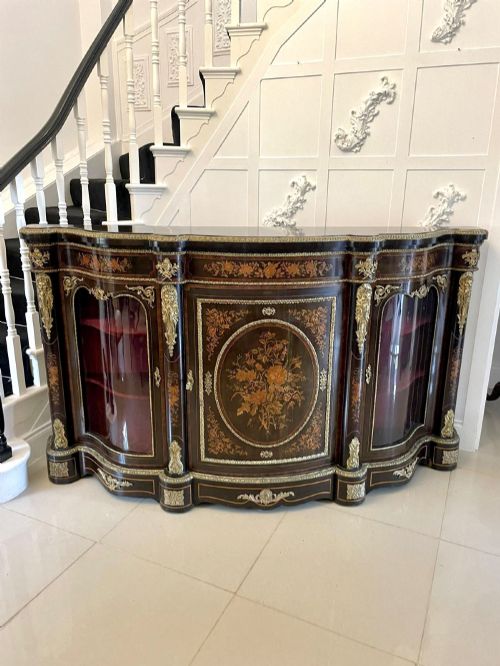
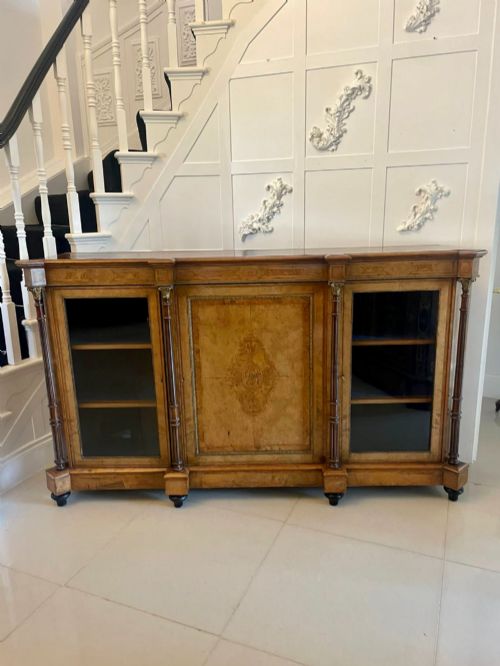
Glazed Display Sideboard
A glazed display sideboard offers the structural presence of a traditional base cabinet combined with glass-fronted shelving for displaying precious objects.
Glazed Display Sideboard
A glazed display sideboard bridges the functional storage of a credenza or sideboard with the elevated visibility of a display cabinet or bookcase.
Most examples encountered on this page stem from the 19th Century and the Edwardian period, spanning Victorian, Sheraton Revival, and Arts and Crafts styles.
These pieces range from walnut credenzas fitted with glass doors to oak and pine kitchen dressers featuring upper glazed sections.
Materials and Construction
Cabinet makers utilised dense hardwoods such as burr walnut, mahogany, oak, and rosewood, often applying intricate marquetry, satinwood inlay, and ebonised details.
Many refined 19th-century examples incorporate cast brass and ormolu mounts, ceramic plaques, and marble tops to accentuate the primary timbers.
Glass panels are integrated into wooden frames or leaded stained glass structures, whilst secondary timbers like pine appear in kitchen dressers and internal shelving.
The furniture forms on this page include credenzas, pier cabinets, breakfront bookcases, and kitchen dressers originating from the 19th Century onward.
Judging Quality
The standard of a glazed display sideboard rests on the selection of timber veneers, such as richly figured burr walnut or figured mahogany, and the precision of the marquetry.
Superior items feature finely cast ormolu mounts, intact original glass, and sophisticated internal cabinetry rather than plain structural framing.
The integrity of the joinery and the balance between the lower sideboard base and the upper glazed compartment dictate the overall architectural harmony.
Collinson & Lock·Edwards & Roberts·August Ungethüm
The Glazed Display Sideboard Glossary
- Credenza
- A low cabinet or sideboard, frequently featuring glass-fronted side cupboards and central doors, popular during the Victorian era.
- Ormolu
- Gilded bronze mounts applied to furniture for decorative enrichment, often seen framing panels on high-status cabinets.
- Marquetry
- Decorative veneer patterns formed by fitting together small pieces of wood, ivory, or shell to create pictorial or floral designs.
- Pier Cabinet
- A narrow freestanding display cabinet designed specifically to fit the wall space between windows.
- Burr Walnut
- A highly prized timber grain characterised by swirling patterns and knot clusters, utilised extensively for fine veneering.
Glazed Display Sideboard: Frequently Asked Questions
What is a glazed display sideboard?
A glazed display sideboard is a hybrid furniture form combining a lower storage base with upper or central glass-fronted compartments designed to exhibit ceramics, books, or decorative objects.
These pieces developed across the Victorian and Edwardian periods, adapting traditional sideboards and credenzas to include transparent viewing areas.
How were these cabinets used historically?
In Victorian and Edwardian dining rooms and morning rooms, these cabinets served to store and display fine china, glassware, and silver collections.
The enclosed glass shelves kept dust away from valued possessions while allowing hosts to showcase their household refinement to visitors.
How do I identify a Victorian piece?
Victorian examples often feature dark dense timbers like burr walnut and mahogany, frequently enhanced with ormolu mounts, intricate marquetry, and ebonised details.
Stylistic cues range from heavy Gothic Revival carvings to refined Sheraton Revival inlays characteristic of the later nineteenth century.
How do I style a sideboard in a modern interior?
A glazed display sideboard functions well in a dining room or living space as a focal point for storing tableware while exhibiting curated collections behind the glass.
The warm tones of walnut, mahogany, or oak provide a strong textural contrast against plain neutral walls.