



Walnut Mirrored Sideboard
A walnut mirrored sideboard brings rich timber and reflected light into a room, combining display and storage in pieces spanning the Victorian era to the Art Deco period.
Walnut Mirrored Sideboard
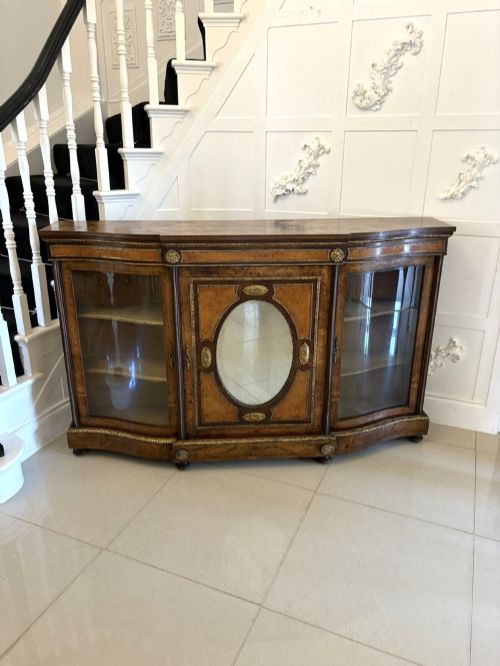
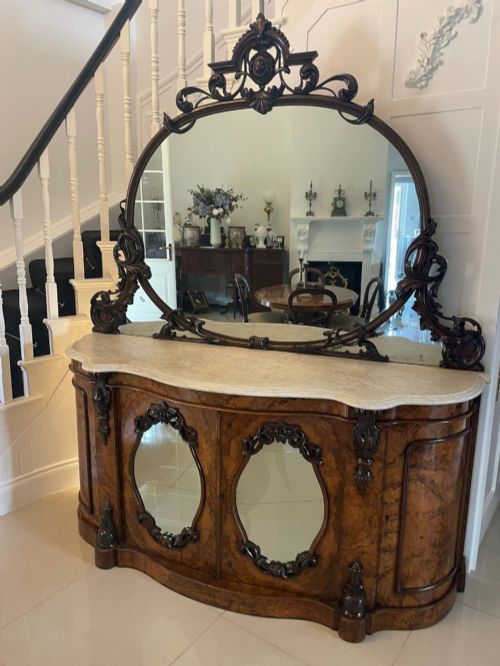
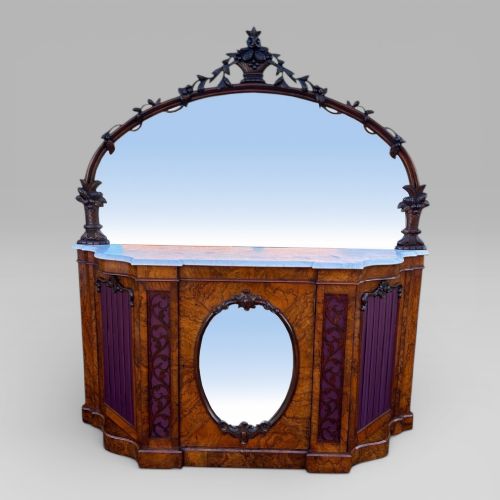
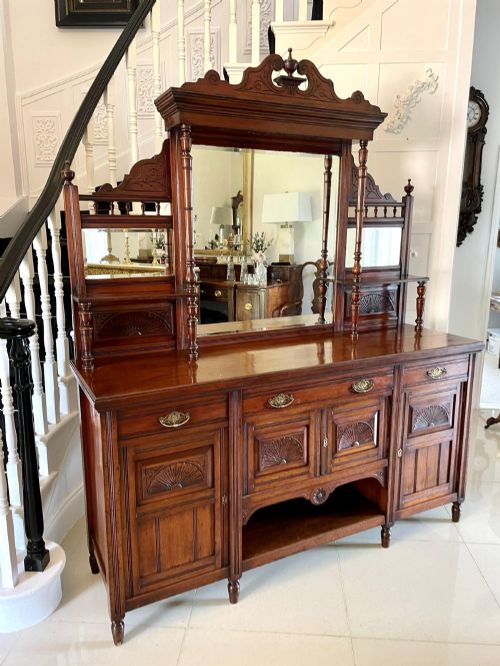
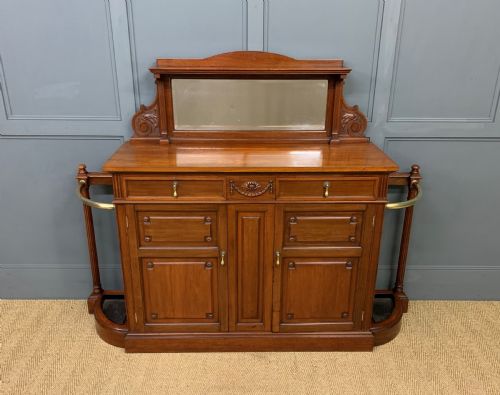
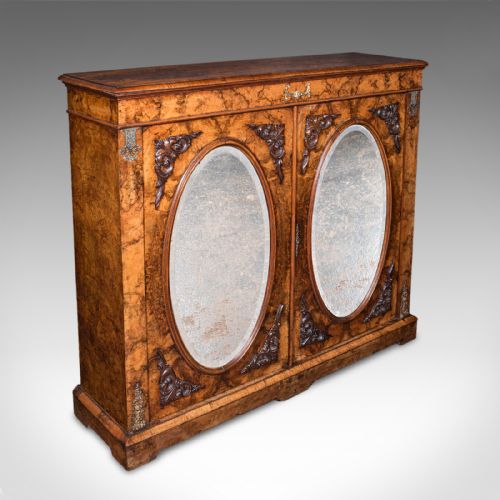
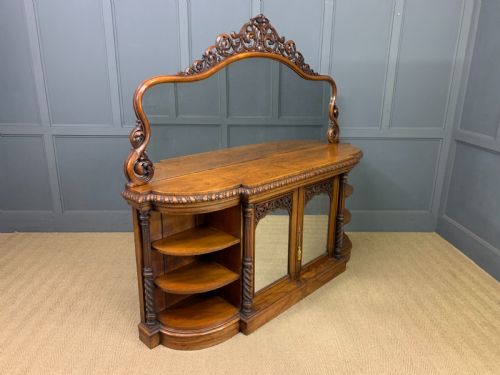
When searching for a walnut mirrored sideboard, buyers encounter a variety of substantial nineteenth-century and early twentieth-century furniture forms, including credenzas, chiffoniers, and display cabinets. The Victorian examples dominate, often featuring large mirror backs designed to brighten Victorian interiors by reflecting light from oil lamps or daylight.
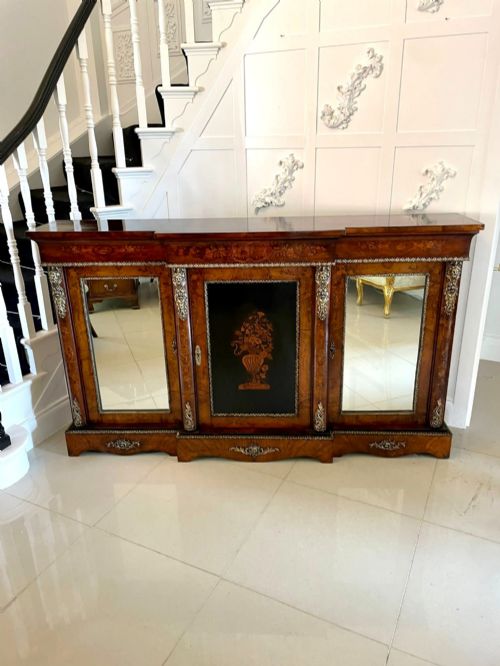
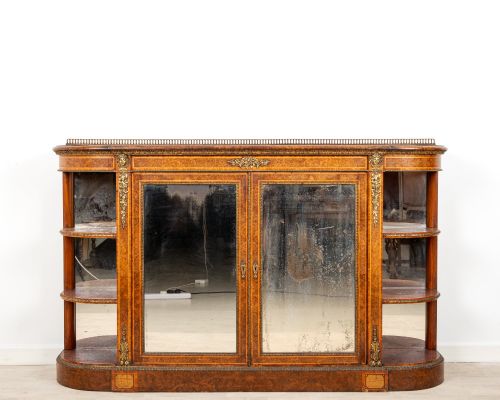
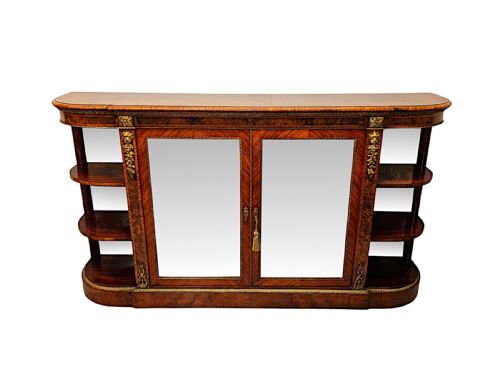
Many of these items double as credenzas or sideboards with mirrored doors or carved mirror backs, incorporating marble tops, brass mounts, or marquetry inlay. Later additions from the Edwardian and Art Deco periods introduce drinks cabinets and cocktail cabinets in figured walnut.
Makers such as Gillows and Shoolbred & Co. produced high-end iterations alongside unmarked London workshop pieces, while proportions range from small cabinets to large serpentine-fronted sideboard combinations.
Materials and construction
Cabinet makers utilised figured timber veneers, specifically burr walnut and plain walnut, applied over solid secondary woods to create decorative grain patterns on door fronts and panels. Ormolu mounts, brass details, and marquetry inlay in satinwood or amboyna add surface ornamentation to the carcasses.
Mirror glass forms a central component, set into carved wooden frames above the sideboard surface or integrated directly into cabinet doors. Marble slabs frequently top the bases of credenzas and washstands, providing a durable and polished counter surface.
Walnut Mirrored Sideboard Retail Price Guide 2026
Typical asking prices for walnut mirrored sideboard among the pieces listed under this phrase on Sellingantiques today, from the lower quarter to the upper quarter. They describe what is for sale here now, not the wider market.
Listings feature walnut, burr walnut, marble, ormolu, and mirror glass across Victorian, Edwardian, and Art Deco periods.
Distinctions in execution
The degree of refinement in the marquetry inlay and the choice of highly figured burr walnut veneers separate standard production furniture from exhibition pieces. Superior examples incorporate gilt bronze or ormolu mounts, serpentine fronts, and substantial marble tops.
Cabinetwork precision, such as the tightness of dovetail joints and the clarity of the mirror glass, dictates the overall standard. Pieces carrying stamps from recognised cabinetmakers demonstrate superior workshop provenance compared to anonymous equivalents.
Shoolbred & Co.·Gillows·Epstein
The Walnut Mirrored Sideboard Glossary
- Credenza
- A low cabinet or sideboard, frequently featuring mirrored doors and ormolu mounts. These pieces originated in the Victorian period for the display of ornaments.
- Burr Walnut
- A veneer taken from the growth excrescences of a walnut tree, prized for its swirling, highly figured grain patterns. It forms the decorative surface on many high-grade Victorian cabinets.
- Ormolu
- Gilded bronze mounts applied to the corners and panels of furniture. This decorative technique appears on mid-nineteenth-century credenzas.
- Marquetry
- The art of applying pieces of veneer to a structure to form decorative patterns. Craftsmen utilised contrasting woods like satinwood and amboyna for floral and geometric designs.
- Chiffonier
- A compact sideboard or cabinet equipped with shelving and sometimes a mirror back. These items served functional storage roles in nineteenth-century reception rooms.
Walnut Mirrored Sideboard: Frequently Asked Questions
What rooms suit a walnut mirrored sideboard?
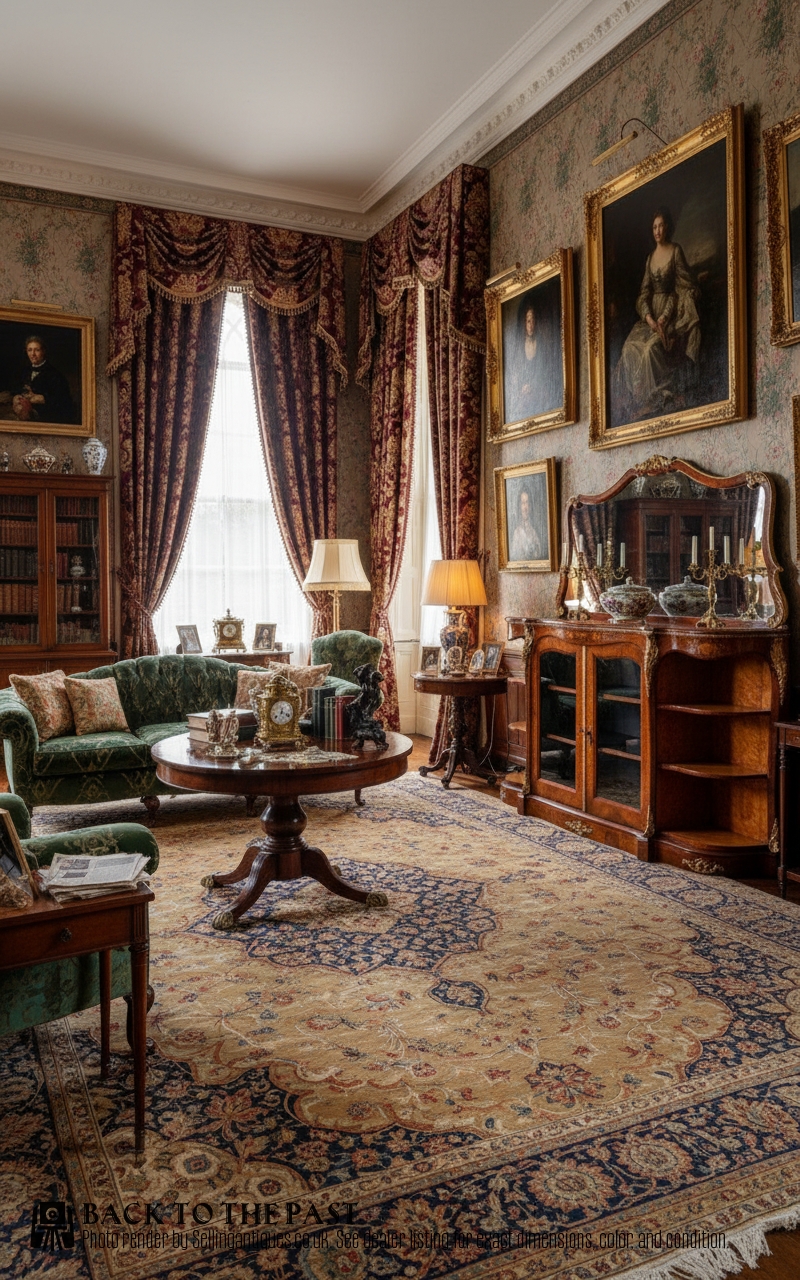
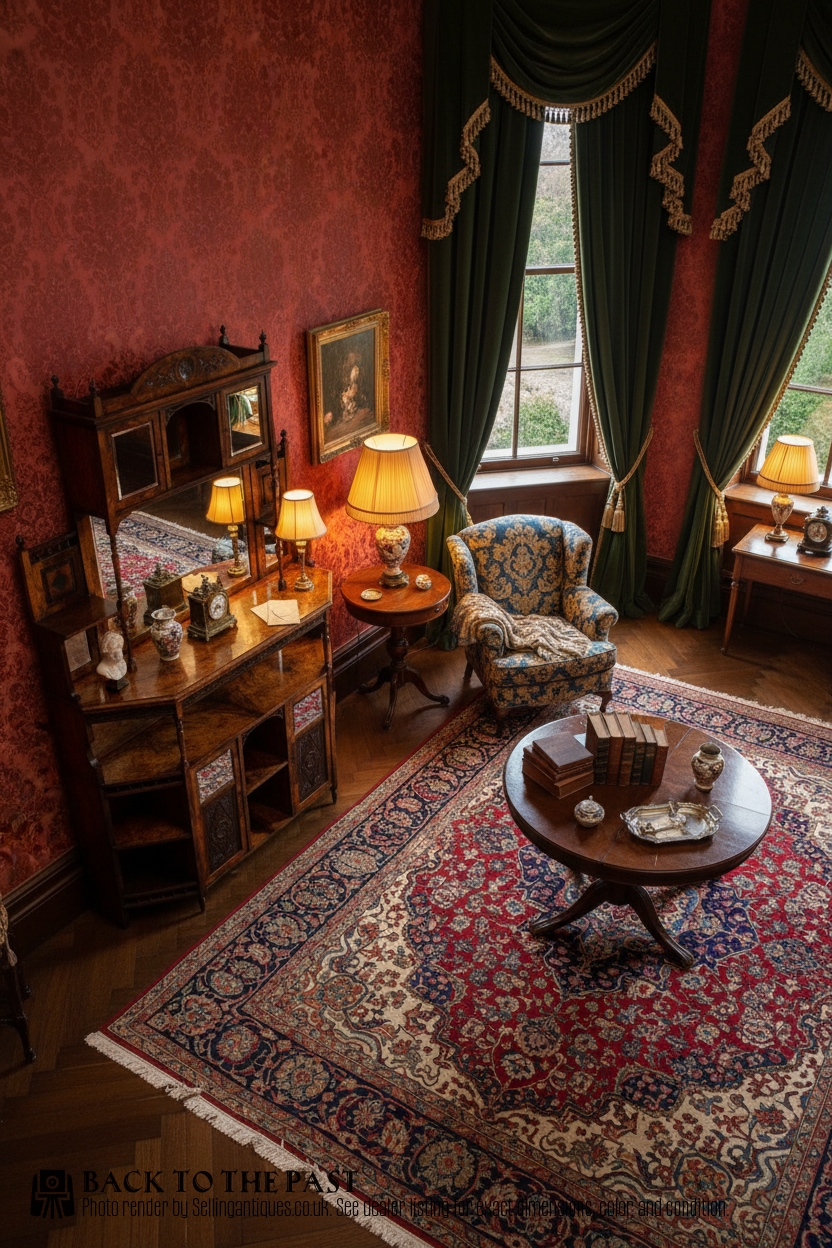
These large cabinets sit well in dining rooms, living rooms, and large hallways where their surface space and storage capacity serve practical purposes.
The mirror back helps brighten darker corners by reflecting natural light across the room.
How do I date a Victorian walnut credenza?
Dating relies on stylistic markers such as serpentine fronts, ormolu mounts, and the presence of marquetry inlay, which became popular during the mid-nineteenth century.
Cabinet construction methods and stamped maker signatures provide further chronological clues.
What is the difference between a credenza and a chiffonier?
A credenza typically lacks upright superstructure other than a mirror back, focusing on low cupboard space and display surfaces.
A chiffonier often includes raised shelving or compartments alongside mirrored panels and smaller proportions.
Did Art Deco makers produce walnut mirrored sideboards?
Makers in the Art Deco period produced walnut cocktail and drinks cabinets featuring mirrored interiors and streamlined geometric fronts.
These twentieth-century examples adapt traditional walnut materials to modern entertaining needs.