
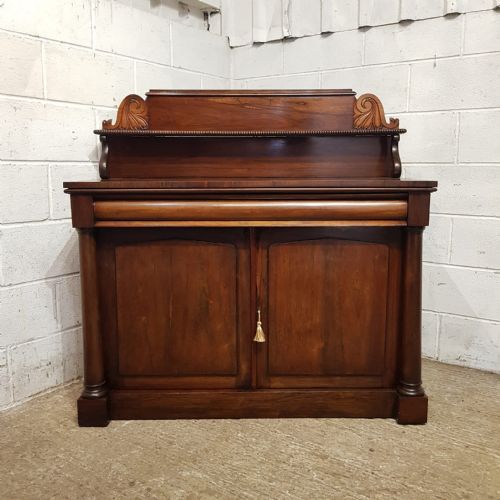


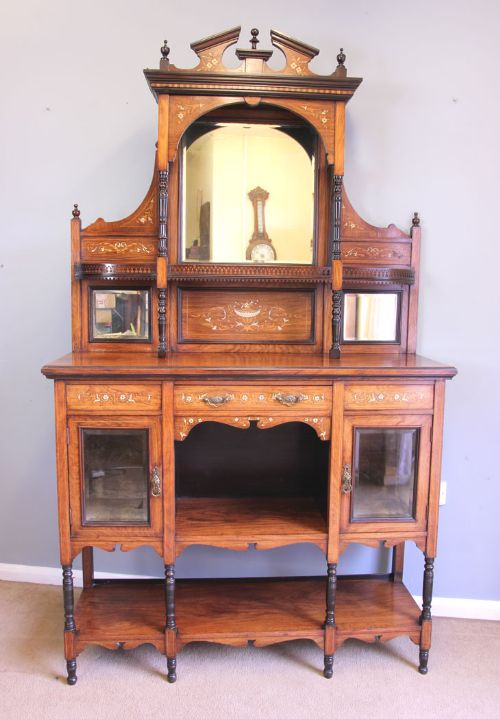


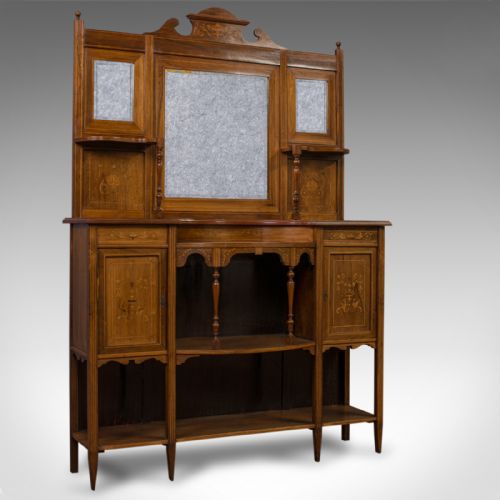

Rosewood Dining Room Cabinet
A rosewood dining room cabinet grounds a formal interior, offering deep grain and brass details that hold the eye.
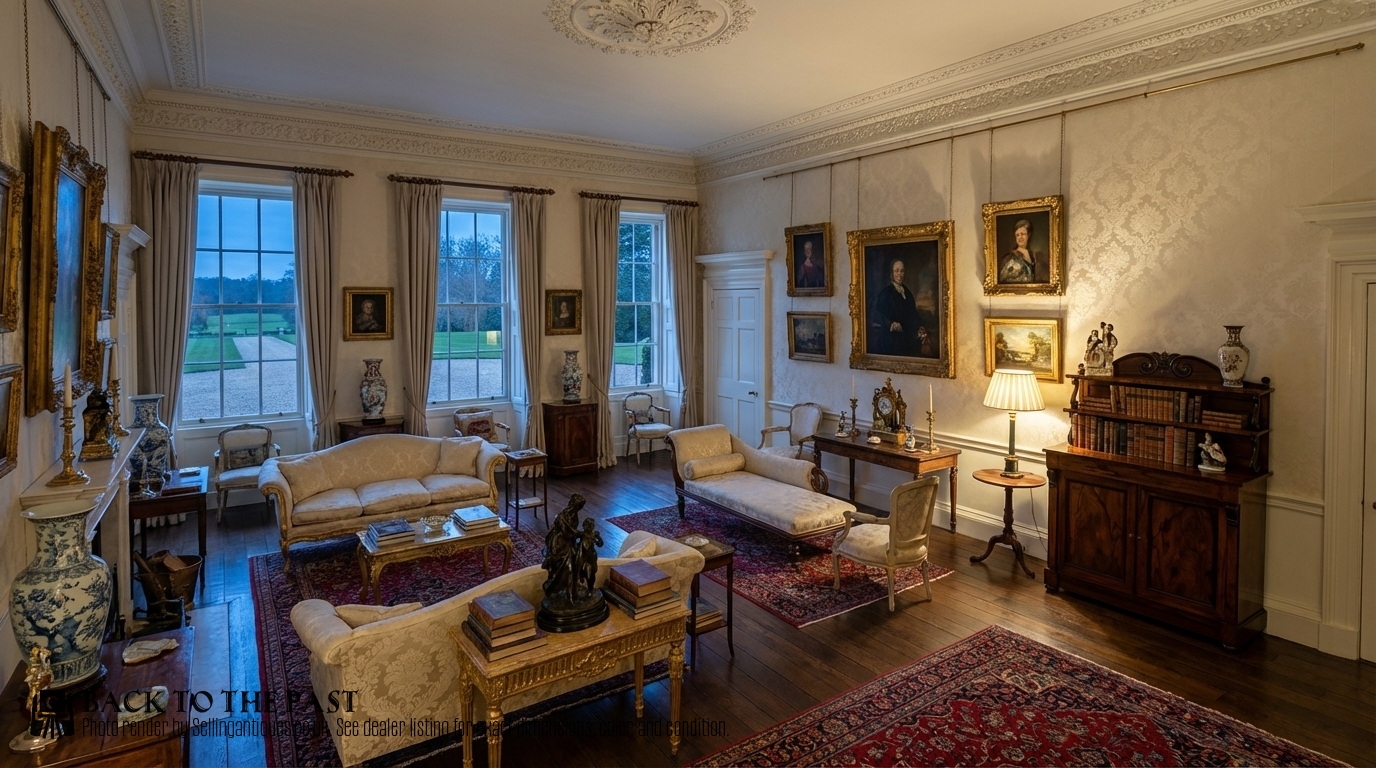
Rosewood Dining Room Cabinet
Buyers seeking a rosewood dining room cabinet encounter versatile forms spanning Regency, Victorian, and later nineteenth-century periods. These pieces serve primarily as sideboards, chiffoniers, credenzas, and display cabinets designed to anchor a formal dining space.
Chiffoniers and sideboards dominate the listings, frequently incorporating lower cupboards beneath tiered shelving or mirrored backs. Each piece reflects the formal dining requirements of its period through enclosed storage and display surfaces.
Materials and Construction
Cabinet makers constructed these pieces using solid rosewood and palisander veneers over secondary timbers, selecting stock for prominent grain patterns. Craftspeople applied contrasting boxwood and satinwood inlay to linear panels and friezes.
Workshops integrated cast brass mounts, grilles, and stringing to punctuate the dark timber surfaces. Mirrored glass panels and fabric-backed interiors appear frequently in later Victorian examples to increase light reflection within the dining room.
Listings span the Regency period through to the late nineteenth century, predominantly utilising rosewood, palisander, and brass.
Factors of Quality
Quality rests upon the selection of figured rosewood veneer and the precision of boxwood or brass inlay. Superior examples display seamless matching of grain across drawer fronts and door panels.
The refinement of brass mounts and the integrity of internal cabinetry distinguish workshop output. Pieces attributed to documented makers demonstrate tighter joinery and more ambitious architectural proportions.
Gillows·Edwards and Roberts·Howard and Sons
The Rosewood Dining Room Cabinet Glossary
- Chiffonier
- A low sideboard or cabinet, typically featuring enclosed cupboards below and a shelf or mirrored superstructure above. This form became popular during the Regency and Victorian periods for dining room storage.
- Credenza
- A grand sideboard or cabinet, often serpentine or breakfront in plan, designed for display and service. Victorian makers decorated these with elaborate inlays and brass mounts.
- Palisander
- A dense tropical timber synonymous with rosewood, valued for its deep purple-brown colour and striking dark grain. Makers used this interchangeably with rosewood across nineteenth-century cabinets.
- Breakfront
- A piece of furniture whose central section projects forward from the flanking wings. This architectural arrangement creates depth and shadow on large sideboards.
- Stringing
- A narrow strip of contrasting timber, such as boxwood, inlaid flush into the surface to form geometric borders. Cabinet makers used this technique to outline panels and drawers.
Rosewood Dining Room Cabinet: Frequently Asked Questions
What is a chiffonier?
A chiffonier is a low cabinet designed for dining rooms, typically combining lower cupboards with an upper shelf or mirror. These pieces served to store tableware and display decorative objects.
First appearing in the Regency period, they remained popular throughout the nineteenth century as formal dining room furniture.
How do I date a cabinet?
Dating relies upon stylistic markers, hardware, and construction methods characteristic of periods like Regency or Victorian. Regency pieces often feature brass inlay and architectural lines, while Victorian examples lean towards heavier proportions and elaborate carving.
Examining secondary timbers and internal construction provides further clues to the decade of manufacture.
Where were these cabinets placed?
These cabinets stood against the main dining room walls, serving as ancillary surfaces during meals. They held serving dishes, cutlery, and glassware close to the dining table.
Their decorative fronts and mirrored backs also contributed to the overall reception room interior.
What is palisander timber?
Palisander is a heavy exotic hardwood belonging to the rosewood family, known for its rich colour and dark grain. Nineteenth-century cabinet makers used the terms rosewood and palisander interchangeably.
Its striking figure made it the primary choice for high-status dining room furniture.