


Victorian Wooden Breakfront Sideboard
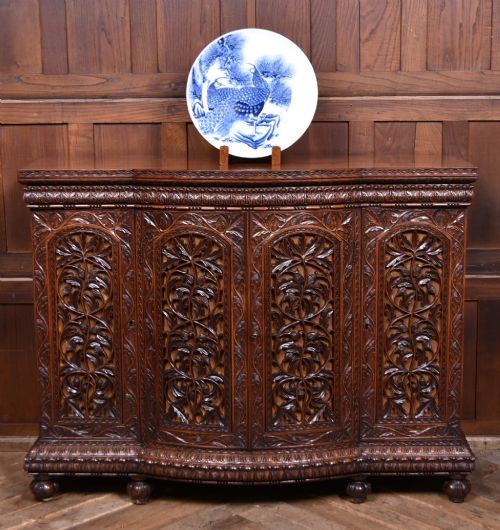
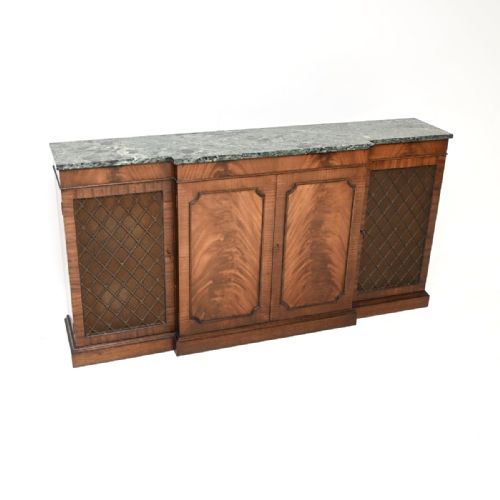
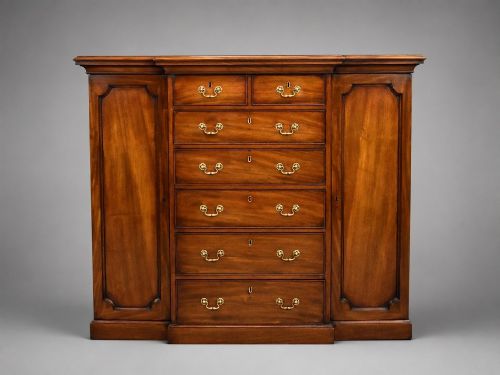
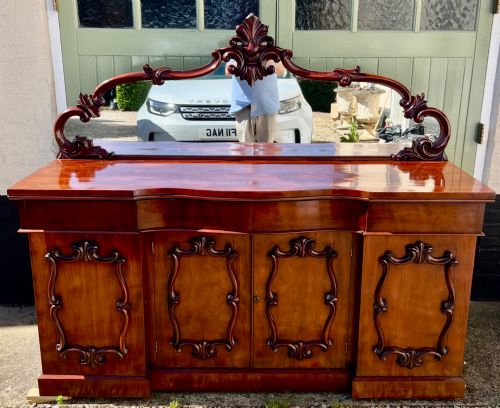
A victorian wooden breakfront sideboard anchors a dining room with generous proportion, deep figured timber, and disciplined architectural presence.
Victorian Wooden Breakfront Sideboard
A victorian wooden breakfront sideboard presents a projecting central section flanked by recessed pedestals or doors, creating a disciplined architectural rhythm in nineteenth-century interiors. These substantial pieces serve grand dining rooms and formal reception spaces with ample capacity for serving ware and linen.
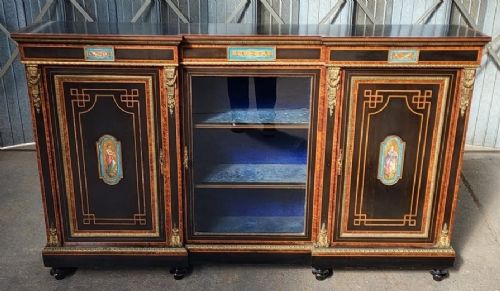
The selection ranges from robust mahogany and padouk examples to ebonised and walnutcred一度 style carcasses bearing brass, glass, or ormolu mounts. Makers utilised mahogany, burr walnut, and rosewood veneers, framing the grain to catch the light across three or four doors.
While bearing the hallmarks of nineteenth-century craftsmanship, occasional pieces stretch from William IV foundations into the early twentieth century. The layout accommodates large formal spaces demanding heavy timber and carved details.
Materials and Techniques
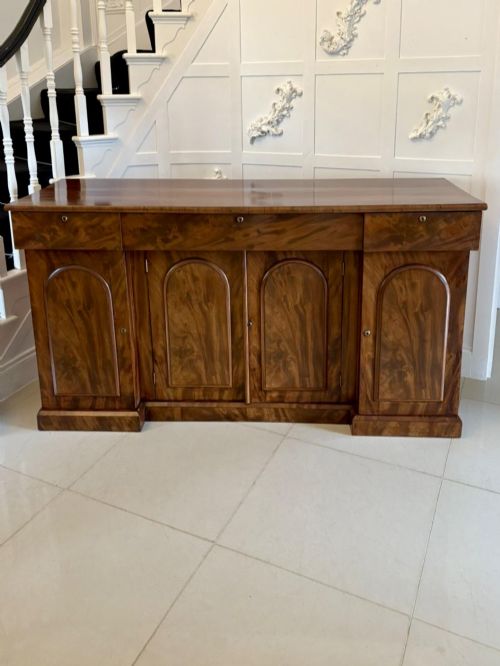
Cabinet makers built these heavy frames from solid mahogany, walnut, and padouk, frequently applying flame mahogany veneer to large expanses to highlight natural figure. Structural integrity relied on dense timber carcasses designed to support marble tops or heavy raised backs.
Surface ornamentation involved intricate hand-carving, brass inlay, and applied ormolu mounts, paired with ebonised wood to create sharp contrast. Glazed doors and mirror backs further augmented the visual weight of these large architectural furnishings.
Markers of Distinction
The distinction between standard utility and exceptional execution rests in the selection of timber figure, such as flame mahogany or burr walnut, matched symmetrically across doors and drawers. Superior examples feature crisp hand-carved mouldings rather than cast plaster substitutes.
Hardware integrity, thickness of timber veneers, and the sophistication of internal cabinetry divide basic storage from masterworks. The presence of documented workshop signatures or specialised woods like padouk elevates the standing of a piece.
Lamb of Manchester·Howard and Sons
The Victorian Wooden Breakfront Sideboard Glossary
- Breakfront
- An architectural facade where the central section projects forward from the flanking wings. This configuration creates dynamic shadow lines and visual weight.
- Pedestal sideboard
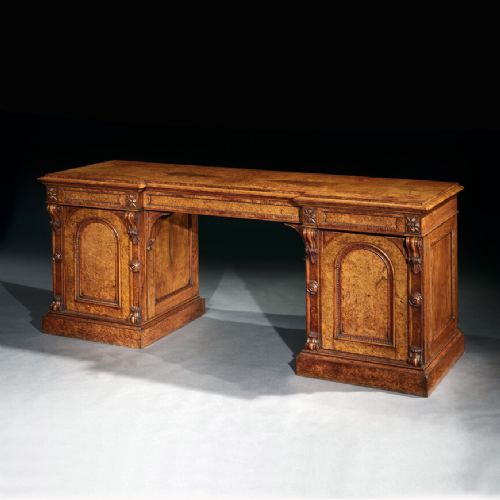
- A heavy form featuring two distinct columnar pedestals supporting the main sideboard body. These often house cellarets or deep storage bins.
- Ormolu
- Gilded bronze ornamentation applied to furniture carcasses for decorative contrast. It provides a metallic highlight against dark timbers like ebonised wood or mahogany.
- Flame mahogany veneer
- Thin slices of mahogany cut to reveal a flickering, flame-like grain pattern. Cabinet makers laid these across large surfaces for decorative impact.
- Credenza
- A low cabinet form frequently featuring mirrored backs and glazed doors. It shares floor space with traditional sideboards in nineteenth-century rooms.
Victorian Wooden Breakfront Sideboard: Frequently Asked Questions
What is a breakfront sideboard?
A breakfront sideboard is a large dining room cabinet where the central section projects forward from the side doors. This architectural layout breaks up the linear mass and creates formal presence.
Cabinet makers used this design throughout the nineteenth century to house heavy silver, linen, and dining accessories within formal rooms.
How do I style a large sideboard?
Place the piece against a substantial dining room wall where its deep proportions can command the space without crowding walkways. Balance the heavy timber top with simple ceramic vessels or mirrors.
Allow sufficient clearance for doors and drawers to open fully, acknowledging the substantial footprint typical of nineteenth-century case furniture.
How are different wood types identified?
Inspect the grain pattern and natural colour under strong light, looking for the reddish-brown depth of mahogany or the lighter tone of satinwood. Padouk displays a distinctive reddish hue while walnut offers rich dark figuring.
Veneers often show repeating symmetrical patterns across cabinet doors where timber was booked and matched during construction.
What distinguishes a pedestal sideboard?
A pedestal sideboard utilises two structural columns or cupboards supporting a central board, often incorporating deep cellaret drawers for bottles. This layout emphasises verticality and weight.
These pieces typically date to the earlier part of the nineteenth century and offer specialised interior fittings for formal dining.