



Antique Rosewood Dresser
These antique rosewood dresser options offer richly grained timber and classical proportions, making them prized centrepieces for refined interior schemes.
Antique Rosewood Dresser
When searching for an antique rosewood dresser, buyers encounter a variety of forms ranging from traditional chests of drawers and side cabinets to chiffoniers and display cabinets. These pieces span multiple eras including the Regency, Victorian, and eighteenth century periods, reflecting diverse stylistic influences from English craftsmanship to French revival designs.
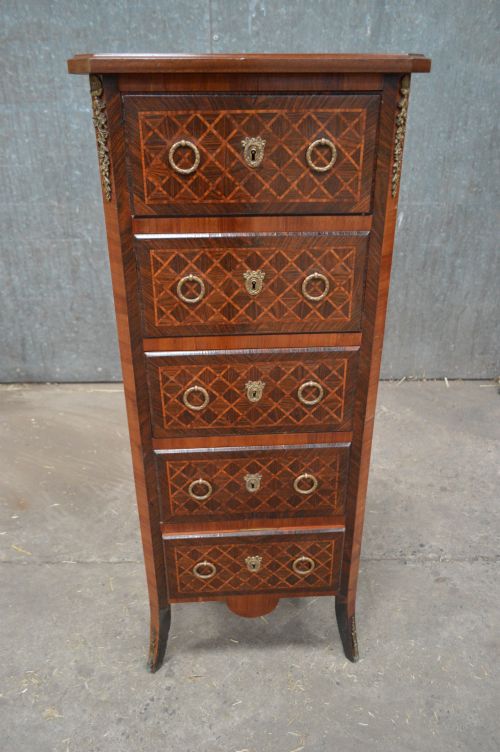
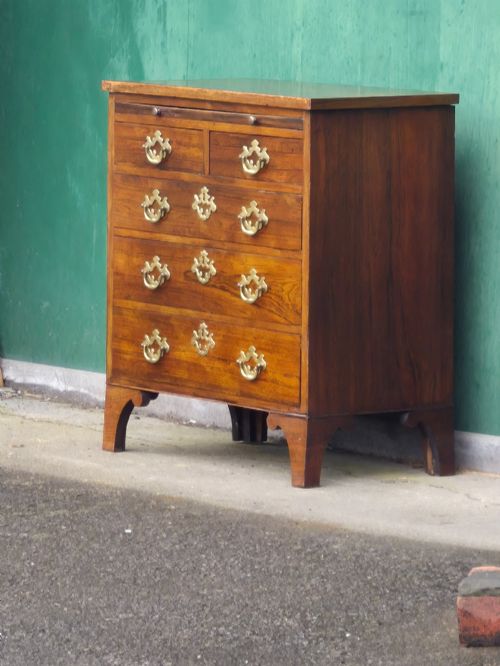
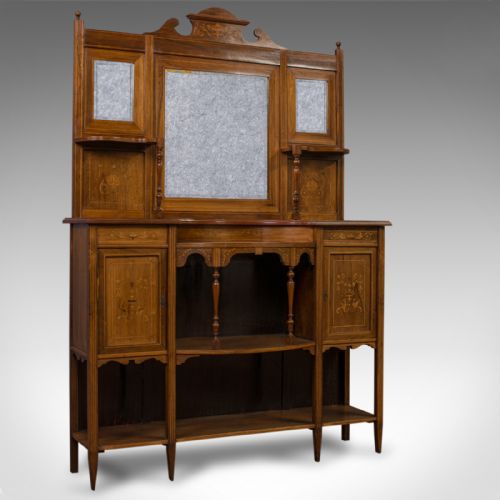
The most common forms on this page include compact chests of drawers and low side cabinets, often enhanced with marquetry, parquetry, or brass inlay. Many examples incorporate functional compartments, marble tops, or mirrored backs, demonstrating the adaptability of rosewood furniture across different domestic settings.
How they were made
Cabinet makers utilised dense rosewood timbers, frequently applied as veneers over secondary woods to display striking grain patterns, alongside exotic contrasting woods like boxwood for delicate stringing and inlay work. Brass components, including fine stringing, handles, and mounts, were meticulously integrated into the carcasses to accent the dark timber.
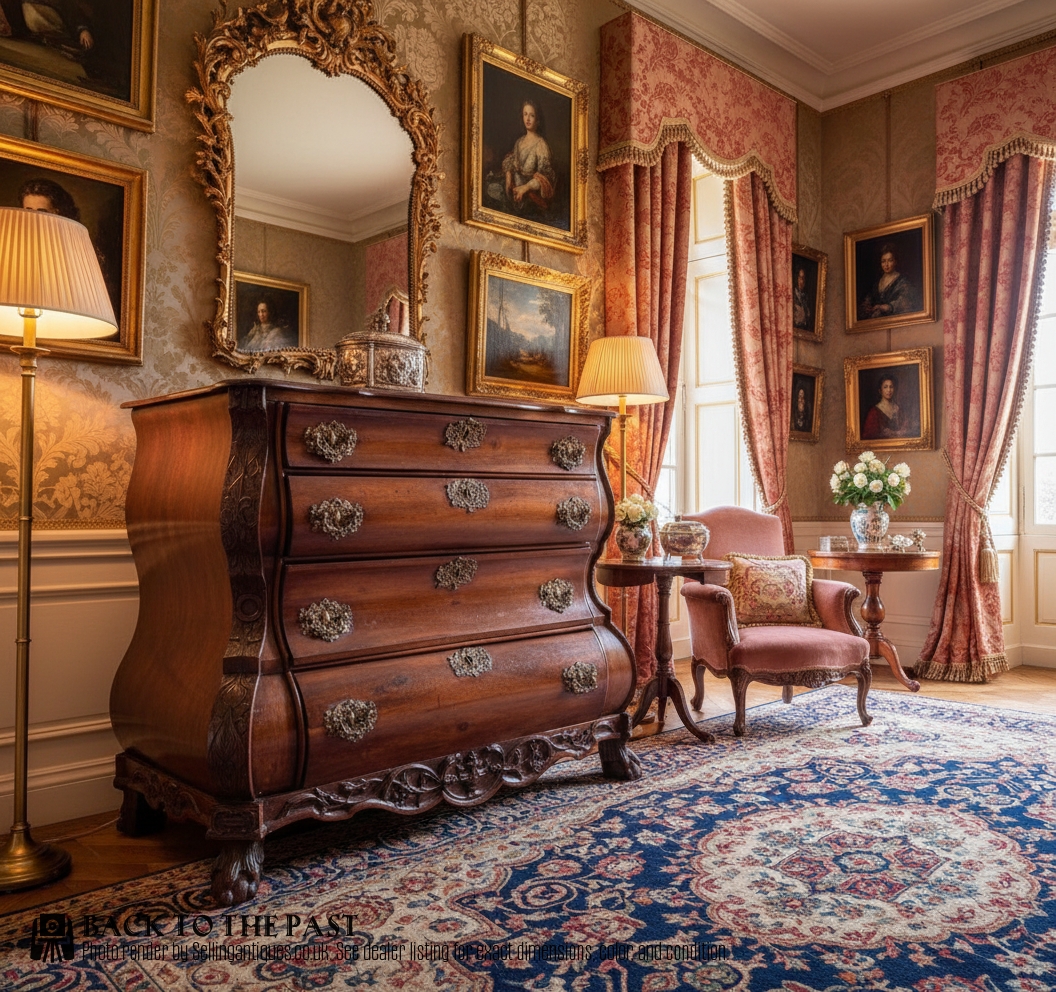
Many of the French and English pieces feature intricate marquetry and parquetry geometric patterns, requiring high levels of joinery skill. Heavy marble tops were carefully fitted to serpentine and bombé commodes, while traditional dovetail construction anchored the internal drawer structures.
Listings feature pieces from the eighteenth and nineteenth centuries, utilising rosewood, kingwood, marble, glass, and brass.
What varies in quality
The distinction between standard examples and the finest works lies in the precision of the timber matching and the intricacy of the inlay. Superior pieces exhibit seamless parquetry or marquetry panels where the natural figuring of the rosewood is deliberately composed across the surfaces.
Hardware integrity and the original condition of integrated marble tops or bronze mounts also define the grade of a piece. Finer examples retain crisp brass inlay and structurally sound carcase work without excessive veneer lifting or crude timber replacement.
Sigmund Jaray Wien·Howard and Sons
The Antique Rosewood Dresser Glossary
- Marquetry
- Decorative veneer work arranged in pictorial or floral patterns. Master craftsmen cut thin slices of various coloured woods to fit together precisely within a panel.
- Parquetry
- Geometric wood inlay forming repeating patterns like cubes or herringbone. This technique highlights the contrasting tones of rosewood and other exotic timbers.
- Bombe
- A swelling, outward-curved commode or cabinet shape associated with eighteenth-century continental furniture. It requires advanced shaping of both timber and drawer fronts.
- Chiffonier
- A low nineteenth-century cabinet equipped with shelves or drawers, often featuring glazed doors or a raised superstructure. It serves as a decorative storage piece in reception rooms.
- Wellington chest
- A tall, slender chest of drawers secured by a hinged locking stile on one side. This design originates from the nineteenth century and maximises vertical storage space.
Antique Rosewood Dresser: Frequently Asked Questions
What periods do these pieces date from?
The listings span several centuries, including eighteenth-century continental works, Regency pieces from the early nineteenth century, and later Victorian examples up to nineteen-twenty.
Each era brings distinct stylistic traits, such as French marquetry, brass inlay, or simpler English cabinet forms.
How should I care for rosewood furniture?
Rosewood benefits from stable indoor humidity and protection from direct sunlight, which can alter the rich dark tones of the timber. Regular dusting with a soft, dry cloth preserves the polished surface.
Avoid placing damp items directly onto wood or marble tops to prevent staining and veneer damage.
Are marble tops original to these pieces?
Many French commodes and cabinets feature fitted marble tops that were integral to the original design, providing a durable and decorative surface. They often follow the serpentine or shaped contours of the timber carcase below.
Checking the fit against the wood helps confirm authenticity.
How do I distinguish Regency from Victorian pieces?
Regency items often display classical restraint with precise brass inlay and clean architectural lines inspired by antiquity. Victorian pieces tend to be heavier in proportion, sometimes incorporating elaborate carving or revival styles.
Examining the construction methods inside the drawers provides further clues to the date.