


Dutch Rococo Bureau
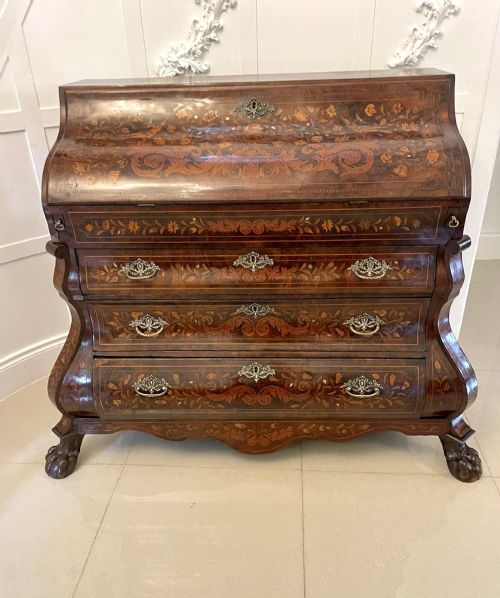
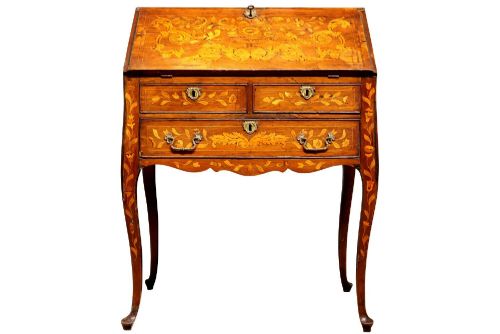
A dutch rococo bureau brings exuberant 18th-century craftsmanship into a room, offering sloping drop-front desks wrapped in rich floral marquetry and dramatic swelling curves.
Dutch Rococo Bureau
A dutch rococo bureau combines a sloping writing flap with storage drawers below, frequently appearing with towering bookcase cabinets or vitrines overhead. These pieces originate primarily from the 18th century, spanning the Georgian era and surrounding decades up to 1800, alongside occasional 19th-century interpretations.
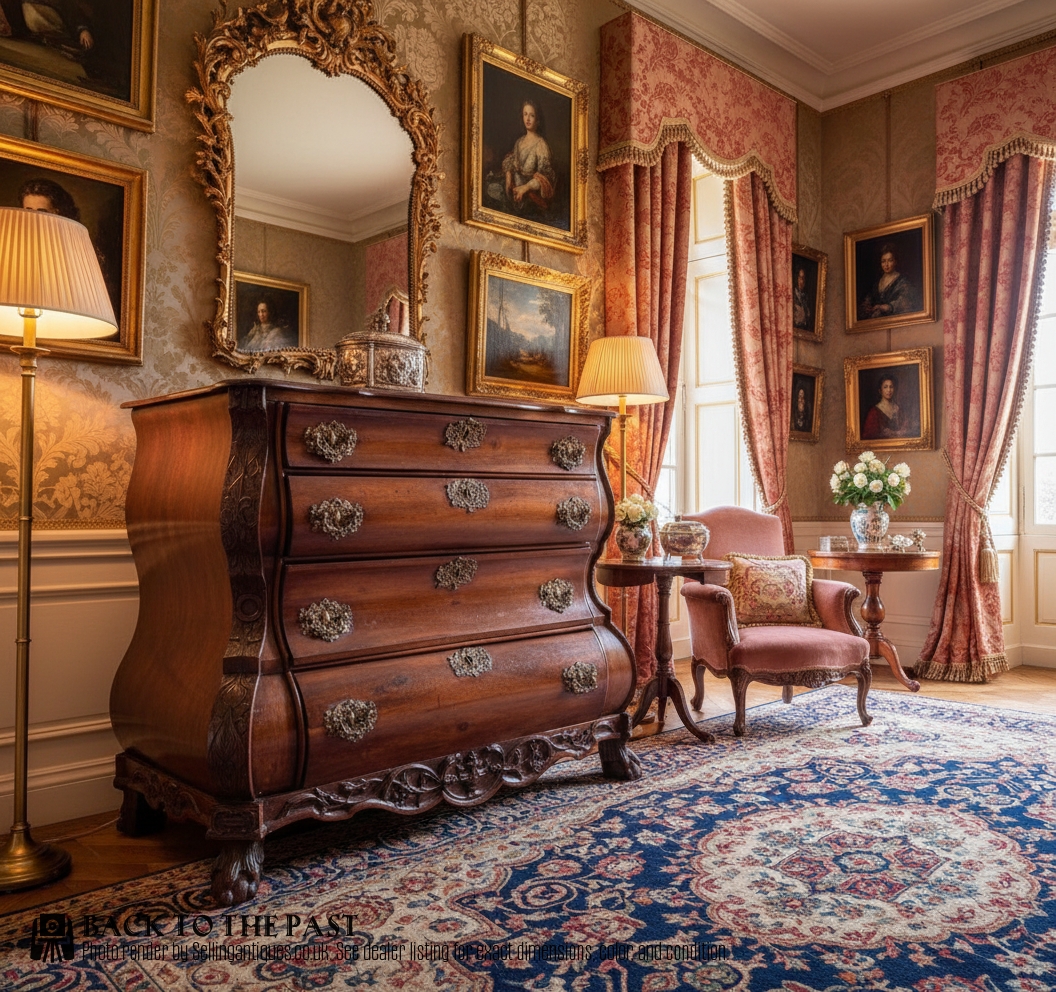
The most prevalent forms on this page include bureau bookcases, bureau cabinets, and distinctive bombe shapes that swell outwards toward the base. Buyers encounter variations ranging from compact writing desks to magnificent, tall multi-tiered furniture pieces designed to dominate a formal interior.
Makers and makers' workshops of the period utilised sophisticated silhouettes, pairing the characteristic slanted fall-front writing surface with interior pigeonholes and secret compartments. Every example reflects the opulent aesthetic movements of Dutch baroque and rococo revival design.
Materials and construction methods
Walnut and burr walnut form the primary structural timbers, providing a heavily figured, warm background for intricate decorative schemes. Cabinetmakers applied elaborate fruitwood marquetry and fruitwood inlay to render floral motifs across the curved drawer fronts and sloping desks.
The signature bombé shape required advanced joinery techniques to achieve continuous swelling curves without compromising the structural integrity of the carcase. Craftsmen integrated cast brass hardware, including key escutcheons and drawer pulls, to complement the figured timber and detailed floral inlay.
Listings feature 18th century, 19th century, and Georgian periods, alongside 1800 and 1920 examples.
Understanding quality differences
The refinement of the floral marquetry dictates the upper tiers of quality, separating basic geometric patterns from dense, exquisitely shaded fruitwood blooms that cascade across the entire exterior. Superior examples display meticulous alignment of the marquetry grain across moving drawer joints and fall-front panels.
The execution of the bombe contour reveals the carmaker's skill, where gentle, unified bulging lines demonstrate superior mastery over abrupt or uneven shaping. Additionally, the depth of figure within the burr walnut veneer and the sophistication of the fitted interior compartments separate standard pieces from masterworks.
The Dutch Rococo Bureau Glossary
- Bombe
- A bulging, swelling contour found on the lower portion of chests and bureaux, curving outwards towards the feet. This silhouette requires specialised shaping of the timber framework.
- Marquetry
- Decorative patterns formed by fitting small pieces of veneer into a backing panel, creating pictorial designs of flowers and foliage. Fruitwood is frequently employed for this contrasting work.
- Bureau Bookcase
- A dual-component furniture piece combining a sloping desk base with enclosed shelving or cabinet doors above. These tall structures maximise storage and display capabilities.
- Fall-front
- The hinged writing flap of a desk that drops down into a horizontal position for writing. It conceals small drawers, pigeonholes, and document slots inside.
- Escutcheon
- A protective brass plate surrounding a keyhole. These elements provide both a functional guard against wear and a decorative accent on drawer fronts.
Dutch Rococo Bureau: Frequently Asked Questions
How do I use a bureau daily?
The sloping fall-front lowers to create a convenient writing surface supported by extendable wooden lopers. Inside, you find a collection of small drawers and pigeonholes designed for organising correspondence.
When writing is finished, the flap lifts upward to secure your papers out of sight. The lower drawers provide substantial storage for household items or linens.
Where should I place a bureau cabinet?
These tall, imposing pieces require adequate wall space and substantial ceiling height, particularly the bureau bookcases topped with display cabinets. Placing them in a study or living room allows the figured burr walnut and marquetry to catch natural light.
Keep them away from direct heat sources and strong sunlight to protect the fragile fruitwood inlay and aged veneer.
How do I date an antique bureau?
Dating relies on examining the structural timbers, construction techniques, and stylistic markers such as the transition from baroque straight lines to rococo curves. Pieces from the 18th century typically show hand-cut dovetails and native woods beneath the walnut surfaces.
Later 19th-century revivals often incorporate mechanical consistency in the joinery and slightly different finishing methods on the interior secondary woods.