




Bombe Drawer Bureau
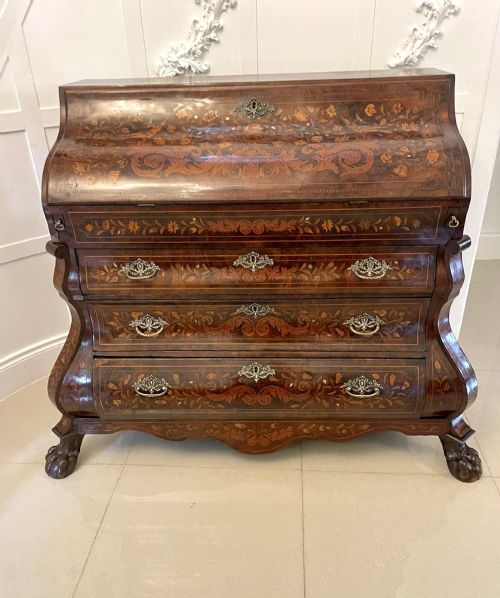
These bombe drawer bureau pieces bring sweeping, swelling fronts and intricate marquetry straight into a room, offering both hidden desks and grand presence.
Bombe Drawer Bureau
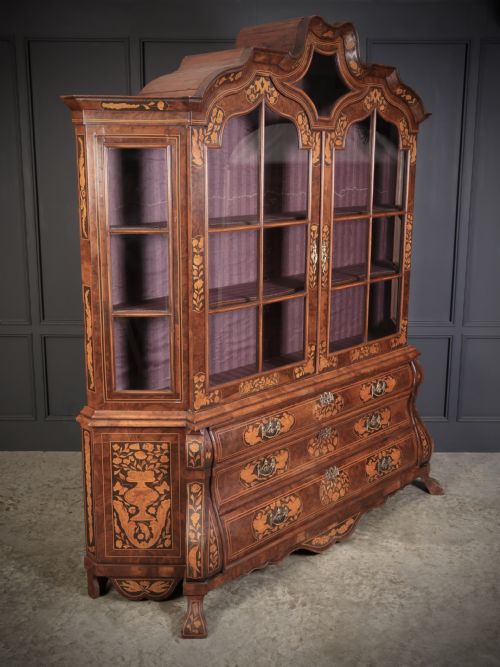
The dominant forms on this page include bureau desks and chests of drawers featuring dramatic serpentine or bulging profiles. These pieces originate predominantly from 18th century Dutch workshops, though later revival periods also contribute cabinet and commode variants.
Makers utilised rich timber veneers and intricate inlays to accentuate the curved surfaces of each bombe drawer bureau. The resulting forms serve as both practical writing furniture and striking decorative focal points within traditional interiors.
How they were made
Cabinetmakers constructed these forms using solid secondary timbers overlaid with decorative veneers of walnut, burr walnut, fruitwood, and mahogany. Skilled artisans then shaped the carcase timbers to achieve the signature outward-swelling profile of the lower drawers.
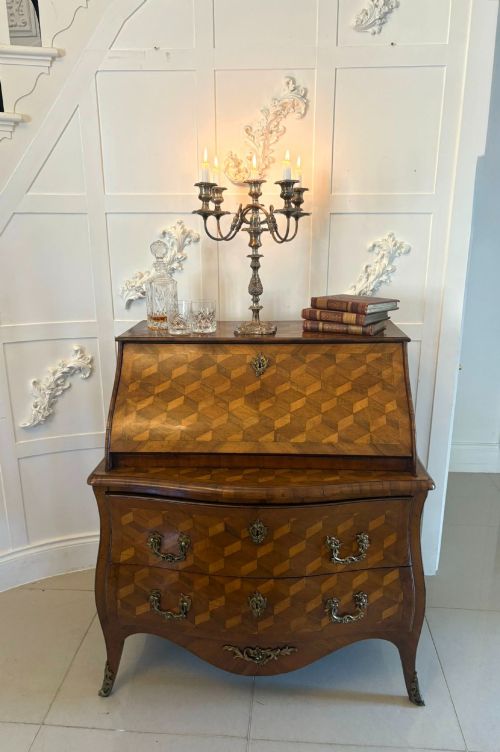
Surface decoration relies heavily on elaborate marquetry and parquetry, incorporating fruitwood inlay and floral motifs across the fall-fronts and drawer faces. Brass handles and escutcheons complete the construction, secured to complement the sweeping contours of the woodwork.
Some floral marquetry panels hide secret compartments behind the pigeonholes, designed for keeping love letters safe from prying eyes.
What varies in quality
The visual success of these pieces depends upon the fluidity of the swelling curves and the symmetry of the wood grain across the facade. Finer examples display meticulously matched burr walnut or complex floral marquetry that wraps seamlessly around the compound angles of the bombe shape.
Construction standards appear in the precision of the dovetailed drawer joints and the crispness of the inlaid details. Superior execution ensures that the fall-front and internal pigeonholes integrate harmoniously with the heavy, rounded proportions of the lower carcase.
Morison of Edinburgh
The Bombe Drawer Bureau Glossary
- Bombe
- A French term describing furniture with outward-swelling, convex fronts and sides. This undulating profile requires advanced woodworking skill to execute across drawers and cabinet doors.
- Marquetry
- Decorative veneer work forming pictorial or geometric patterns using various coloured woods. Artisans meticulously cut thin pieces of fruitwood and walnut to create floral and foliage designs.
- Parquetry
- Geometric mosaic woodwork arranged in repeating patterns such as cubes or chequers. This technique provides a structured contrast to curving floral marquetry panels.
- Fall-front
- A hinged writing flap that drops down to create a horizontal desk surface. It conceals an interior arrangement of small drawers, compartments, and pigeonholes.
Bombe Drawer Bureau: Frequently Asked Questions
What is a bombe drawer bureau?
A bombe drawer bureau is a writing desk featuring a sloping fall-front above bulging, convex lower drawers. These pieces rely on sweeping curves and rich wood veneers for their distinctive aesthetic.
Originating largely in 18th century Europe, particularly through Dutch craftsmanship, they combine practical desktop space with ample storage within a dramatic sculptural form.
How do I date a bureau?
Dating involves examining the construction methods, timber choices, and secondary woods used inside the carcase. Eighteenth century examples often feature hand-cut dovetails and native European hardwoods like walnut and fruitwood.
Later revival pieces from the 19th or 20th centuries may display different internal framing techniques and machine-sawn components while imitating earlier Dutch Baroque styles.
Where should I place one?
These substantial pieces require adequate floor space to allow their swelling profiles and drop-front desks to function properly. They suit principal reception rooms or studies where their decorative marquetry can be fully appreciated.
Keeping them away from direct sunlight and extreme temperature fluctuations protects the delicate wood veneers and historic polish from drying out.
How do I care for the wood?
Maintenance involves gentle dusting with a soft, dry cloth and occasional application of traditional microcrystalline wax to nourish the timber. Avoid liquid polishes and silicone sprays, which can damage aged veneer surfaces.
Maintaining stable indoor humidity prevents the walnut and fruitwood veneers from shrinking, warping, or lifting away from the primary carcase.