



Dutch Marquetry Secretary Cabinet
These dutch marquetry secretary cabinet pieces bring monumental floral inlay and clever fall-front writing desks into a room.
Dutch Marquetry Secretary Cabinet
A dutch marquetry secretary cabinet is a substantial bureau bookcase, bureau cabinet, or fall-front escritoire designed for storage and private writing. You will most frequently meet walnut, burr walnut, and mahogany bureau bookcases dating from the eighteenth century, alongside occasional nineteenth-century examples and twentieth-century interpretations.
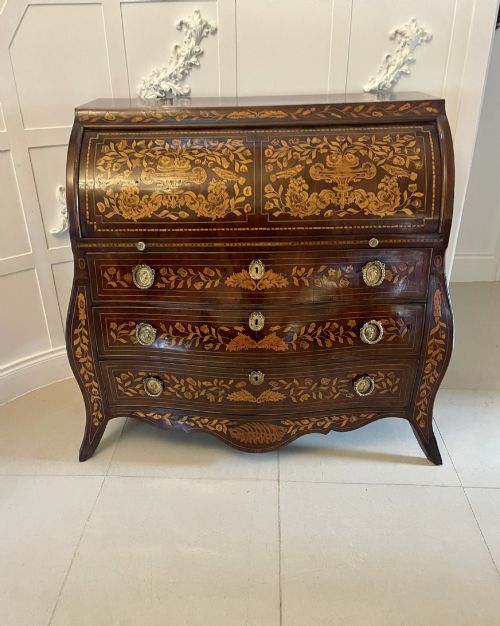
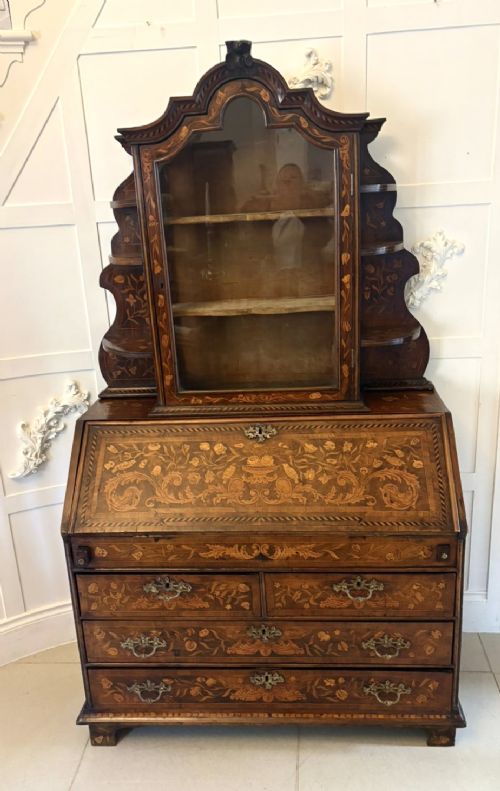
The form combines a lower writing desk, often featuring a sloping fall front or cylinder top and sometimes a bombe or block front, with an upper glazed or panelled bookcase. These large writing cabinets served wealthy households as practical repositories for correspondence and prized possessions.
Makers utilised various timber carcasses before applying intricate floral marquetry and fruitwood inlay across the exterior surfaces. The resulting pieces range from tall bureau bookcases to more compact writing desks.
How they were made
Cabinet makers constructed the primary carcasses using solid oak, walnut, or mahogany to ensure structural stability for the heavy bureau and bookcase sections. These foundational woods provided a sturdy framework capable of supporting the extensive weight of stacked shelving and fitted desk interiors.
Craftsmen then applied veneering techniques over walnut, burr walnut, and fruitwood bases, laying down elaborate floral marquetry using contrasting fruitwood inlay and brass hardware accents. This meticulous surface ornamentation required cutting delicate floral motifs and fitting them tightly into the background veneer before polishing.
Secret compartments hidden behind dummy pigeonholes in the bureau interior allowed owners to stash their most private letters safely.
What varies in quality
The fidelity and complexity of the floral marquetry dictate the upper tiers of craftsmanship, where floral arrangements display subtle shading and precise botanical detail. Lesser examples feature repetitive, coarse inlay work with minimal variation in the fruitwood tones.
Structural configuration also separates standard pieces from superior specimens, particularly when artisans executed challenging forms like bombe shaping or block fronts. The quality of the internal pigeonholes, secret drawers, and timber selection within the carcass completes the distinction.
The Dutch Marquetry Secretary Cabinet Glossary
- Marquetry
- Decorative veneer work forming pictures and floral patterns by fitting together small pieces of tinted wood, fruitwood, and other materials.
- Bombe
- A bulging or swelling convex contour found on the lower fronts and sides of eighteenth-century furniture carcasses.
- Escritoire
- A writing cabinet or desk featuring a fall-front writing flap that conceals small drawers and pigeonholes.
- Block front
- A furniture front divided vertically into three equal sections, with the two outer sections projecting forward and the central section recessed.
- Burr walnut
- Timber taken from walnut tree growths that produces intricate, swirling grain patterns highly prized for cabinet veneers.
Dutch Marquetry Secretary Cabinet: Frequently Asked Questions
What is a dutch marquetry secretary cabinet?
It is a large wooden writing cabinet that combines a desk with a shelved upper bookcase, decorated all over with detailed floral wood inlay.
These pieces were built to store books and writing materials while serving as grand decorative furniture in domestic interiors.
How do I use a bureau bookcase daily?
You lower the fall-front writing flap to reveal a flat surface for writing, alongside small drawers and pigeonholes for storage.
The upper glass doors swing open to display books or collections on internal shelves.
How can I tell an eighteenth century piece apart?
Eighteenth century examples rely on construction methods like hand-cut dovetails, native oak secondary timbers, and traditional walnut or burr walnut veneers.
Later nineteenth and twentieth century reproductions often display standardised fixings and different secondary woods behind the marquetry.
Where should I place a large cabinet?
These tall cabinets require a substantial wall space away from direct sunlight and strong heat sources to protect the delicate fruitwood veneers.
Ensure the room maintains stable humidity so the timber carcass and marquetry remain secure.