






Dutch Marquetry Bureau Bookcase
A dutch marquetry bureau bookcase brings elaborate floral inlay and rich timber surfaces into a room, offering both concealed writing space and generous display shelving.
Dutch Marquetry Bureau Bookcase
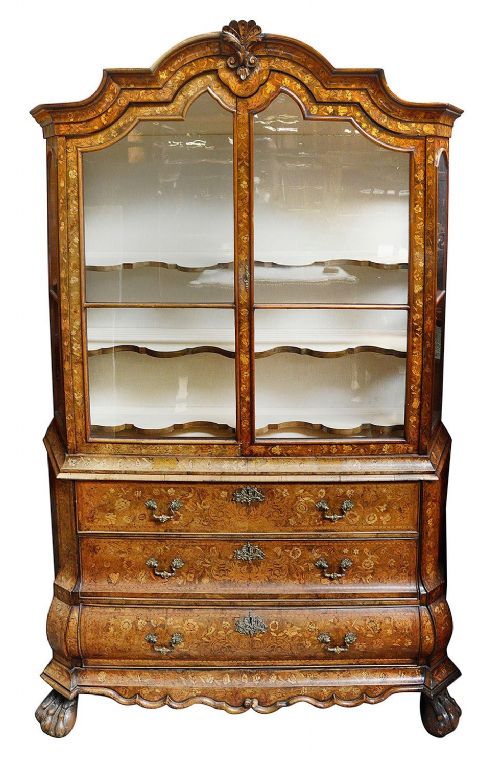
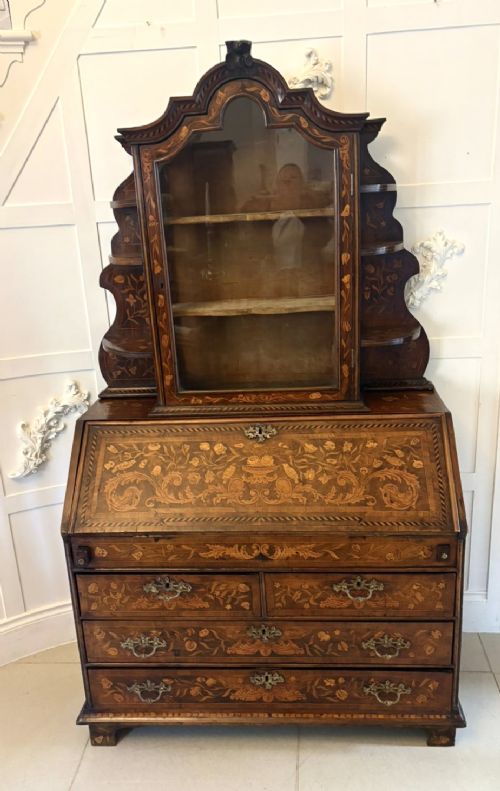
A dutch marquetry bureau bookcase combines a sloping desk compartment with upper display shelving, creating a substantial piece of furniture designed for both storage and presentation. These items appear primarily in walnut, burr walnut, and various fruitwoods, featuring complex floral and foliate inlay across their facades.
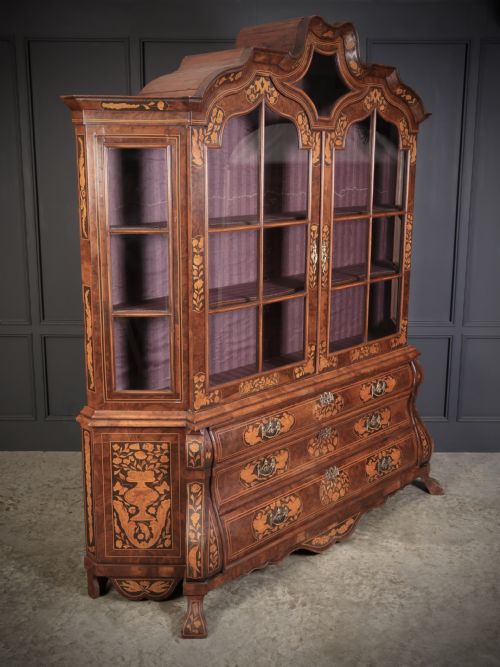
Buyers browsing this selection encounter examples predominantly from the eighteenth century, alongside pieces dating to the nineteenth century and around nineteen-twenty. Forms range from straight-sided cabinet designs to bombé shaped lower chests with curved profiles.
The objects serve as focal points in traditional interiors, providing glass-fronted cabinet doors for books or porcelain above a fitted bureau desk. The combination of intricate marquetry work and functional compartmentalised storage defines the core of this group.
How they were made
Cabinetmakers constructed these pieces using pine or secondary timbers as a carcase foundation, onto which they applied fine veneers of walnut and burr walnut. Detailed pictorial designs were created by cutting and fitting fruitwood inlay and fruitwood marquetry directly into the primary surfaces.
Makers shaped the lower sections of certain cabinets into pronounced bombé curves, requiring specialist bending and joinery techniques for the drawer fronts and side panels. Glazed doors on the upper display sections incorporated brass hardware and fitted interior shelving.
Listings span the eighteenth century, eighteen-fifty, and nineteen-twenty, demonstrating enduring demand for walnut and fruitwood marquetry.
What varies in quality
The precision and density of the floral marquetry dictate much of the visual hierarchy across these cabinets, with superior examples displaying finely shaded fruitwood veneers that create a convincing sense of depth. The choice of timber also separates standard builds from those utilising highly figured burr walnut across every surface.
Structural harmony in the bombé shaping determines the architectural success of the piece, as well-balanced curves require advanced woodworking skill. The preservation of original brass mounts and the crispness of the carving further distinguish the finer examples in the field.
The Dutch Marquetry Bureau Bookcase Glossary
- Marquetry
- Decorative veneer work arranged in pictorial patterns using different woods and tinted materials. This technique covers the exterior surfaces of the bureau bookcase in elaborate floral designs.
- Bombe
- A swollen or convex outward curve applied to the sides and fronts of furniture chests. This profile appears on several of the eighteenth-century lower cabinet sections.
- Burr walnut
- Timber taken from the abnormal growth growths of a walnut tree, producing highly twisted and decorative grain patterns. Makers utilised this material to create richly textured panel surrounds.
- Vitrine
- A glass-fronted cabinet designed for the display of curiosities or porcelain. These display enclosures form the upper portion of many bureau bookcase combinations.
- Fruitwood
- Dense timber sourced from fruit-bearing trees such as pear or apple, traditionally used for contrasting inlay work. Artisans employed these woods to render the lighter petals and stems within the marquetry motifs.
Dutch Marquetry Bureau Bookcase: Frequently Asked Questions
What is a dutch marquetry bureau bookcase?
A dutch marquetry bureau bookcase is a dual-purpose furniture form featuring a sloping desk flap for writing above or below shelving enclosed by glass doors. The entire exterior displays intricate floral and foliate marquetry executed in fruitwood veneers over walnut.
These pieces were built to serve as both functional secretaries and grand display cabinets for the home. Their elaborate ornamentation reflects the decorative standards of eighteenth-century Dutch cabinetmaking.
How do I date an 18th century bureau bookcase?
Dating relies on examining the construction methods, secondary timbers like pine, and stylistic markers such as the presence of bombé shaping versus straight sides. Eighteenth-century examples typically show hand-cut dovetails and older veneer application techniques.
Later nineteenth-century and nineteen-twenty interpretations often incorporate subtle shifts in timber selection and hardware styling. Comparing the specific fruitwood inlay patterns against known period motifs helps clarify the timeline.
Where should I place a large bureau bookcase?
These tall cabinets require a substantial wall space in a study, drawing room, or hallway where their height and decorative facades can be fully appreciated. Because they incorporate glass display shelves and a writing desk, positioning them near natural light helps illuminate the interior.
Allowance must be made for the clearance of the fall-front writing desk and the swing of the upper cabinet doors. Keeping them away from direct heat sources protects the walnut veneers and delicate fruitwood marquetry.
How do I care for antique marquetry furniture?
Maintenance involves protecting the polished walnut and fruitwood surfaces from direct sunlight and sudden humidity changes that can cause veneer lifting. Regular dusting with a soft, dry cloth preserves the finish without requiring heavy polishes.
Applying occasional appropriate wax feeds the timber and maintains the subtle sheen of the marquetry inlay. Careful handling of the brass hardware and glass doors ensures the longevity of the moving components.