




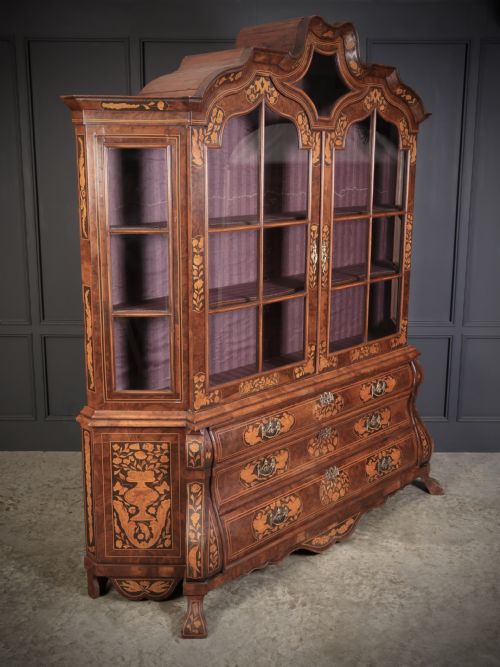


Antique Dutch Bureau Cabinet
An antique dutch bureau cabinet brings together serious writing space and monumental cabinetry, wrapped in rich marquetry.
Antique Dutch Bureau Cabinet
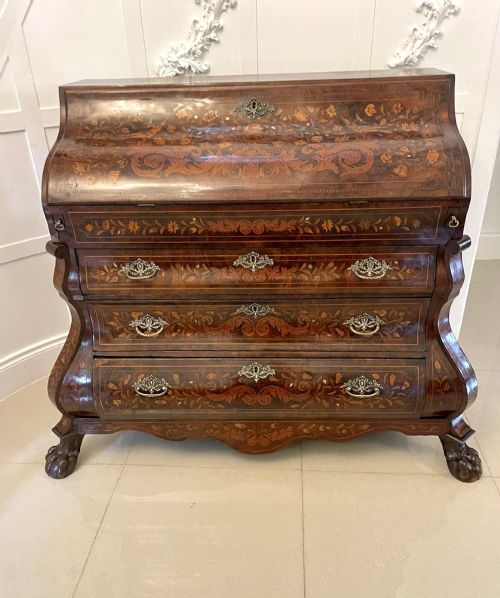
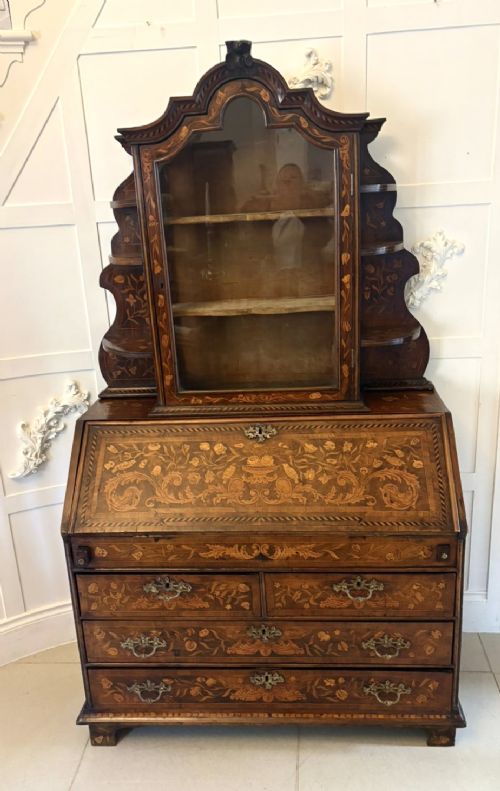
An antique dutch bureau cabinet combines a sloping writing desk with a shelved upper bookcase or display section, forming a substantial dual-purpose piece of furniture. These items originate predominantly from the eighteenth century, though pieces from later periods also appear.
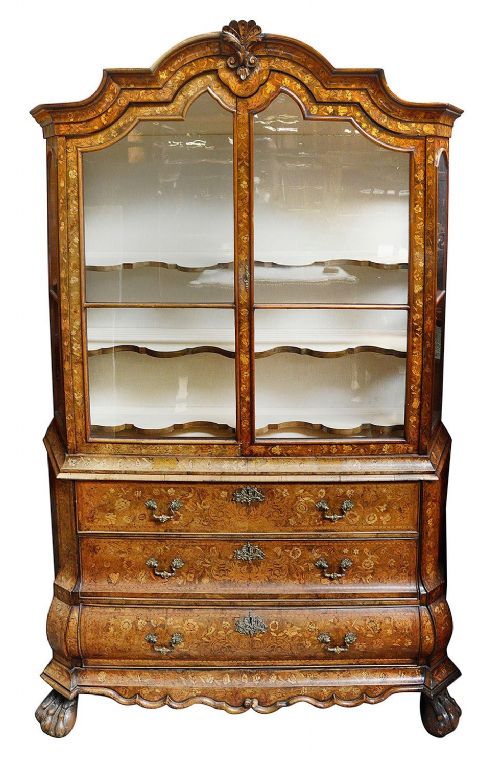
The most common formats on this page pair a lower bureau, often featuring a bombe or block front, with an upper bookcase enclosed by glass or wooden doors. Walnut, burr walnut, and various fruitwoods form the primary carcases for these tall combinations.
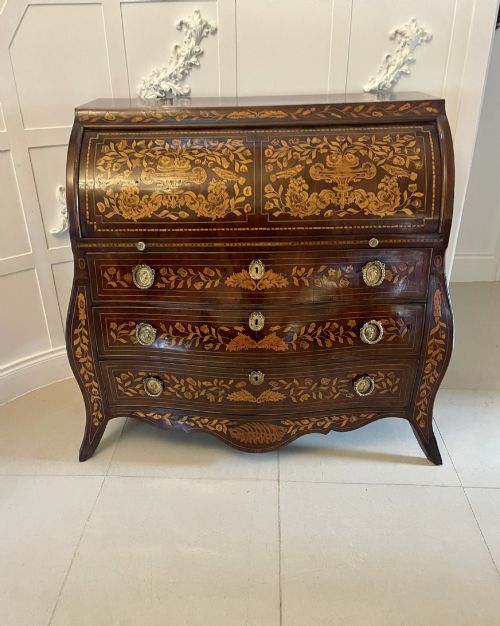
Makers utilised elaborate floral marquetry to cover nearly every visible surface of the wood. Bureau bookcases, display cabinets, and secretaires represent the main functional variations found within this search.
How they were made
Craftsmen built these cabinets using solid oak or mahogany frames, subsequently applying veneered surfaces of walnut, burr walnut, and fruitwood. Intricate floral marquetry was meticulously cut and inlaid into the timber panels, creating elaborate pictorial designs across the fall fronts and cabinet doors.
Curved bombe shapes required advanced timber-bending techniques and skilled carcase construction to achieve the characteristic swelling profile. Brass handles, escutcheons, and hinges were fitted to drawers and doors to complete the hardware.
Listings feature eighteenth-century pieces alongside items from the nineteenth and early twentieth centuries, constructed in walnut, fruitwood, and oak.
What varies in quality
The precision and complexity of the floral marquetry dictate much of the visual standard, with denser and more naturalistic inlay representing superior artistry. The choice of burr walnut veneer also influences the richness of the finished surface.
Structural harmony in bombe forms separates standard cabinet work from exceptional pieces, particularly in how smoothly the fall front or cylinder mechanism operates alongside the drawers. The depth of the timber figuring and the integration of the upper bookcase section relative to the lower chest define the overall presence.
The Antique Dutch Bureau Cabinet Glossary
- Bombe
- A bulging or swelling convex shape characteristic of advanced continental cabinetry. This profile requires significant skill to veneer and construct.
- Marquetry
- Decorative inlay work using various woods to create pictorial patterns or floral motifs. It covers the entire exterior of many pieces.
- Secretaire
- A writing cabinet featuring a fall front or pull-down desk drawer concealing small compartments. It functions as a compact writing desk.
- Vitrine
- A glass-fronted display cabinet designed for showing porcelain or precious objects. These form the upper section of several combined pieces.
Antique Dutch Bureau Cabinet: Frequently Asked Questions
How do I spot bombe furniture?
Look at the front and sides of the lower chest to see if the wood swells outward in a rounded curve. This curved profile is a hallmark of continental design.
Bombe furniture requires specialised carpentry to shape the timber and fit the drawers correctly within the curved carcase.
Where should I place a bureau cabinet?
These pieces require substantial wall space and height due to their monumental proportions. Placing them away from direct sunlight protects the delicate marquetry and walnut veneers.
Ensure the room has stable humidity to preserve the older timbers and prevent movement in the wood.
What is floral marquetry?
Floral marquetry is an inlay technique where thin slices of fruitwood and other timbers are cut into flower and leaf patterns. These wooden segments fit together like a puzzle before being glued to the cabinet surface.
Craftsmen often engraved fine details into the wood veneer using hot sand or a grave tool to add depth to the petals.
How do cylinder bureaux differ?
Cylinder bureaux feature a curving quarter-circle roll top that slides backward to uncover the writing surface. This mechanism conceals the desk interior when closed.
Unlike traditional fall-front desks with hinged writing flaps, the cylinder mechanism operates on internal tracks.