






Dutch Floral Inlaid Bookcase
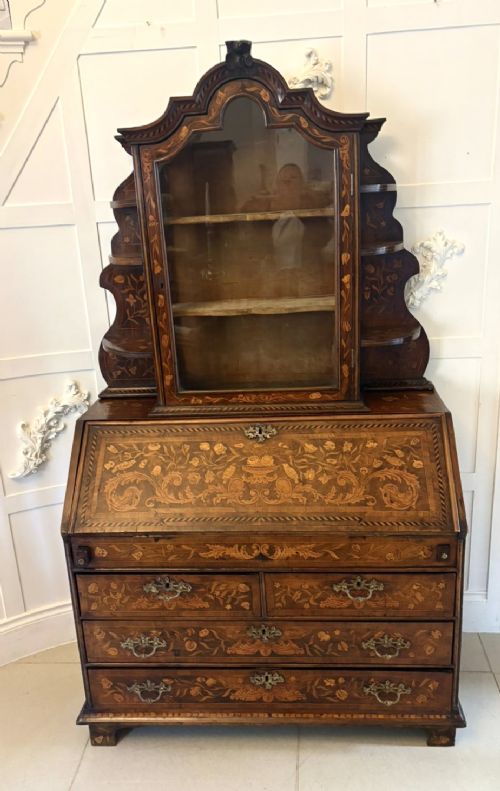
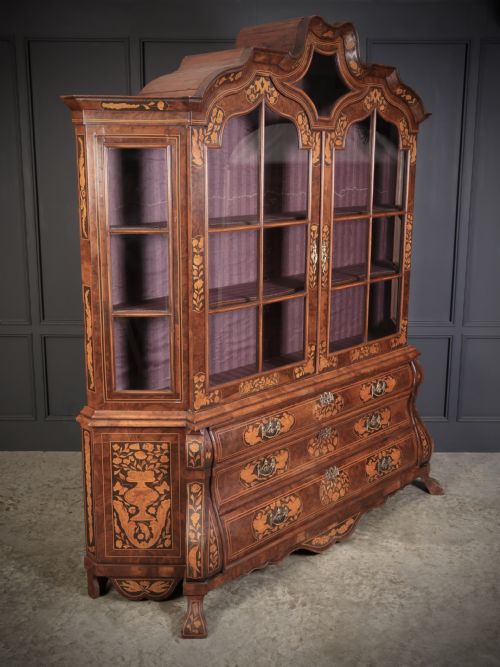
A dutch floral inlaid bookcase brings together rich walnut and intricate marquetry for a commanding presence in a room.
Dutch Floral Inlaid Bookcase
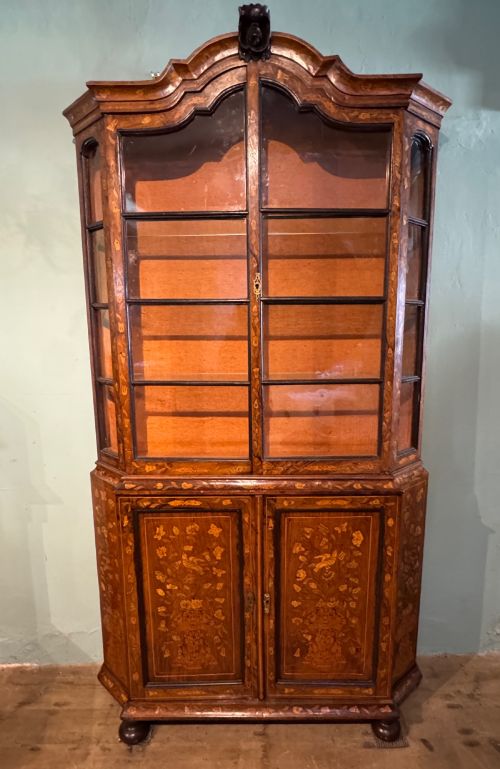
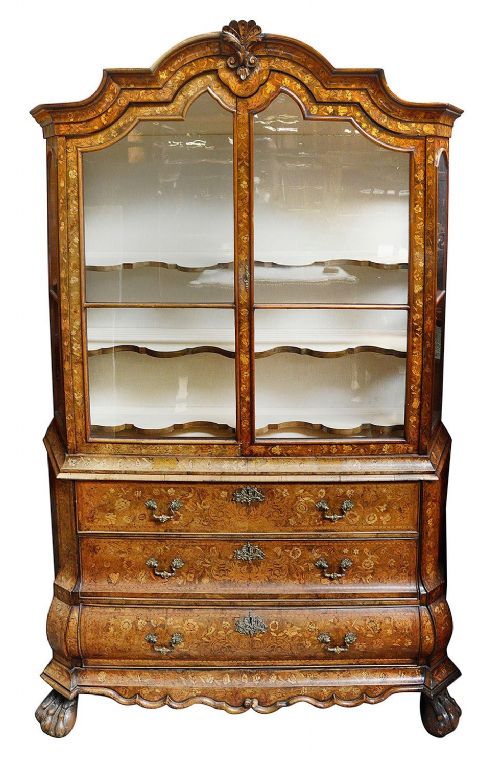
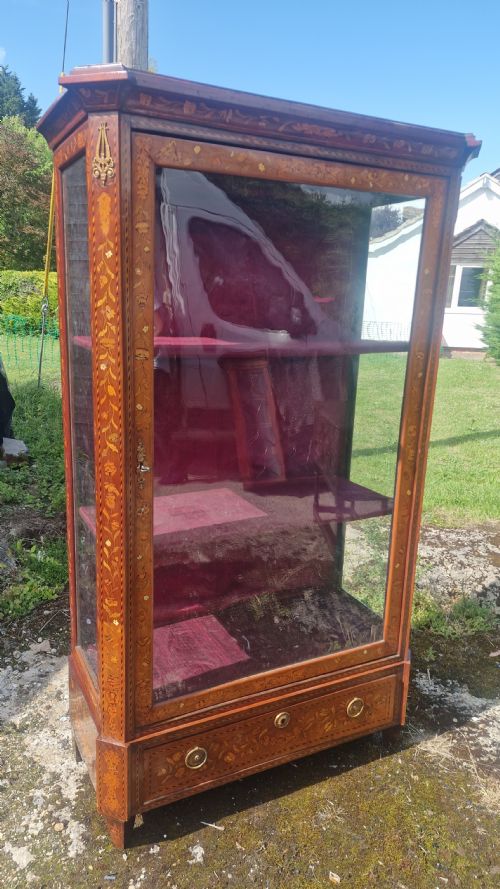
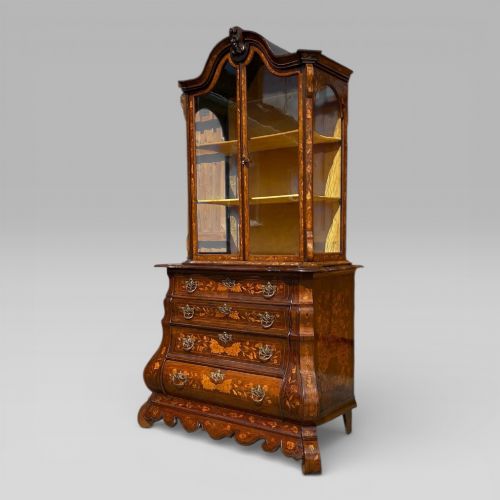
A dutch floral inlaid bookcase combines functional storage with elaborate cabinetry, taking the form of bureau bookcases, vitrines, and display cabinets on chests. These pieces emerge chiefly from the eighteenth and nineteenth centuries, alongside revival pieces from the early twentieth century.
The characteristic form pairs a glazed upper bookcase or display section with a lower bureau or cabinet base, often featuring bombé shaping. Walnut and burr walnut serve as the primary timber, enriched with detailed fruitwood inlay depicting floral motifs.
Buyers most commonly encounter eighteenth-century bureau bookcases and nineteenth-century display cabinets displaying full floral marquetry across the entire exterior surface. The integration of glazed doors allows for the dual purpose of displaying collections while storing volumes safely.
How they were made
Cabinet makers utilised solid walnut and oak for the primary carcase construction, applying burr walnut veneers to large flat surfaces to create movement and depth. Fruitwoods including various tinted varieties were cut into thin veneers for the marquetry panels.
Craftsmen hand-cut floral and botanical designs using the packet method, assembling the mosaic of woods before pressing it onto the walnut ground. Brass handles, escutcheons, and keyplates completed the hardware, while glass was fitted into wooden astragals for the upper cabinet doors.
Some floral marquetry panels include tiny inlaid butterflies hovering just out of reach among the tulips.
What varies in quality
The distinction between tiers rests upon the density and precision of the floral marquetry and the choice of primary timber. Burr walnut grounds with heavily figured grain command greater visual weight than plainer walnut surfaces.
Proportion and execution define the upper echelon, particularly where bombé curves maintain structural grace and the marquetry flows seamlessly across drawers and doors. The integration of original brassware and properly proportioned glass panels further separates standard production from superior examples.
Edwards and Roberts
The Dutch Floral Inlaid Bookcase Glossary
- Marquetry
- Decorative veneer work forming pictures or patterns using various woods and fruitwoods. This technique covers the entire facade of these pieces with floral displays.
- Bombé
- A swelling or bulging outline on the lower section of furniture cabinets and chests. This curved profile adds substantial visual volume to the base.
- Vitrine
- A glass-fronted cabinet designed for the display of curiosities or books. These glazed enclosures protect contents while offering visibility from multiple angles.
- Bureau bookcase
- A combination of a sloping desk flap and a shelving unit above. It provides a dedicated writing surface alongside upper storage.
- Burr walnut
- Timber taken from a tree growth featuring intricate, swirling grain patterns. It provides a highly decorative surface for cabinet doors and drawer fronts.
Dutch Floral Inlaid Bookcase: Frequently Asked Questions
How do I date a dutch floral inlaid bookcase?
Dating relies on timber choice, construction methods, and the style of the marquetry and hardware. Eighteenth-century examples often feature solid carcase construction and distinct floral arrangements compared to later nineteenth-century or revival pieces.
Examining the secondary woods inside drawers and the type of brass fittings provides further clues to the exact period of manufacture.
Are these bookcases suitable for everyday use?
These cabinets function well for storing books and displaying collections when handled with reasonable care. The shelving within the upper glazed sections accommodates standard volumes safely.
Environmental stability is important because walnut and delicate fruitwood veneers react to extreme changes in humidity and temperature.
What is the difference between a bureau bookcase and a vitrine?
A bureau bookcase includes a folding writing flap that conceals small pigeonholes and drawers for correspondence. A vitrine focuses entirely on display with glazed doors and fixed shelving.
Both incorporate upper bookcase sections, but the lower portion determines the primary historical function of the piece.
How should I care for walnut and marquetry surfaces?
Maintenance involves dusting with a soft, dry cloth and avoiding direct sunlight to prevent the fruitwood inlay from fading. Applying appropriate wax feeds the timber and protects the veneer.
Keeping the piece away from direct heat sources prevents the walnut carcase and applied veneers from shrinking or cracking.
What distinguishes bombé cabinets from straight-sided ones?
Bombé cabinets feature an outward-curving profile on the lower chest portion, requiring advanced woodworking skill to shape the timber and fit the marquetry. Straight-sided cabinets maintain flat planes across the front and sides.
The curved bombé form creates a heavier, more sculptural silhouette typical of advanced Dutch baroque design.