


Floral Marquetry Writing Desk
A floral marquetry writing desk brings together elaborate floral timber inlay and practical workspace, appealing directly to collectors of period European furniture.
Floral Marquetry Writing Desk
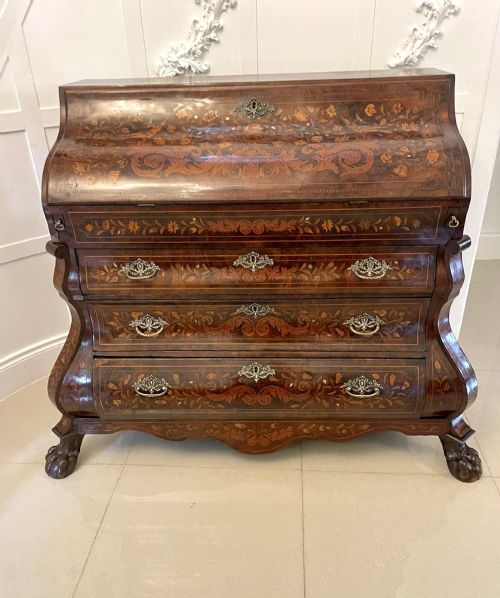
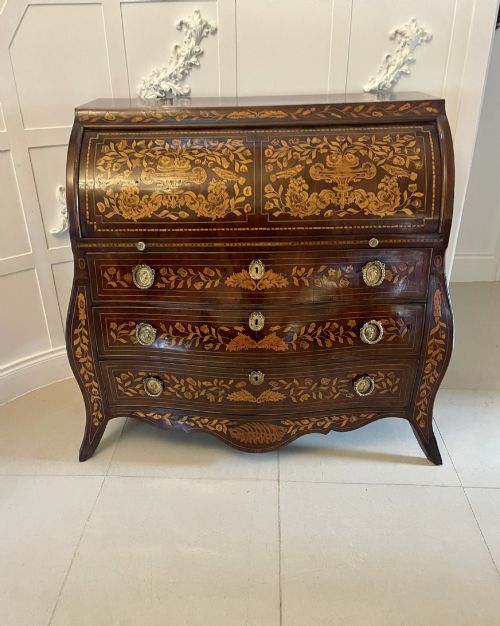
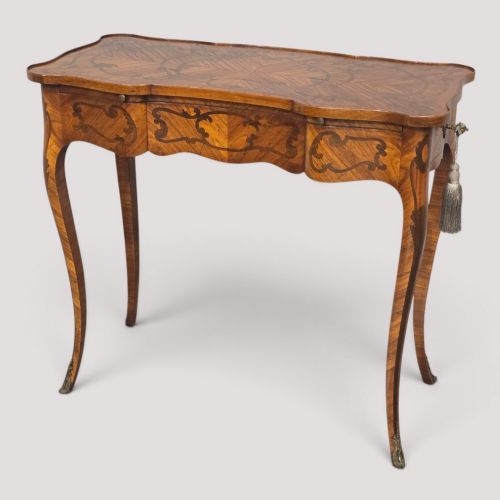
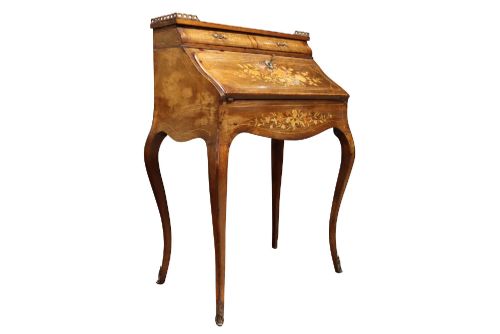
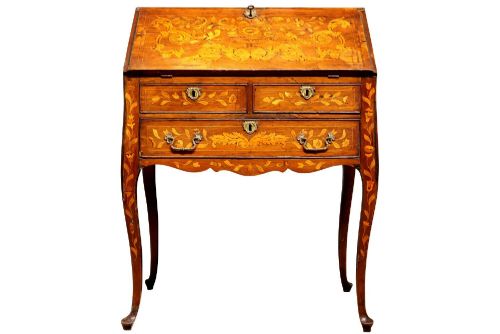
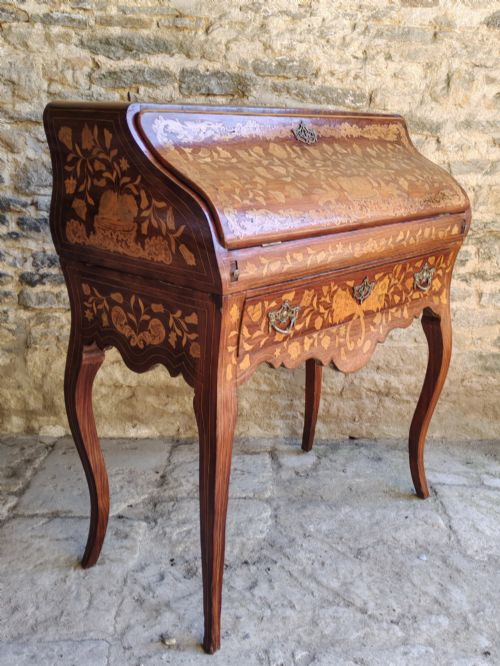
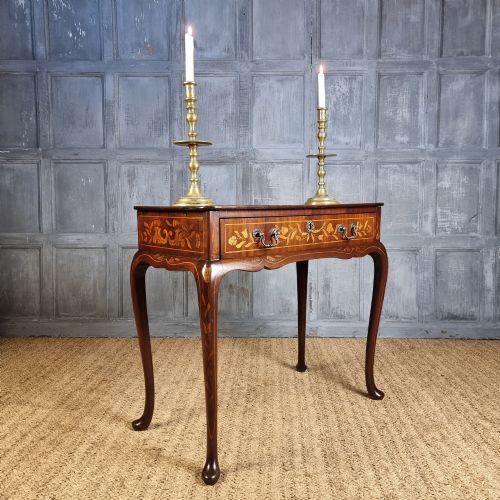
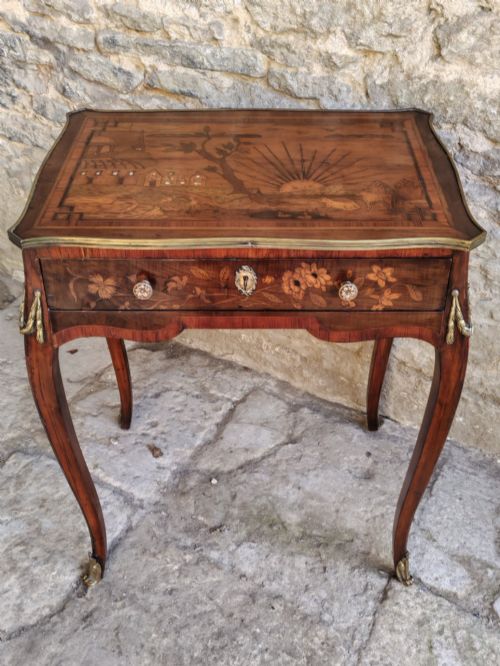
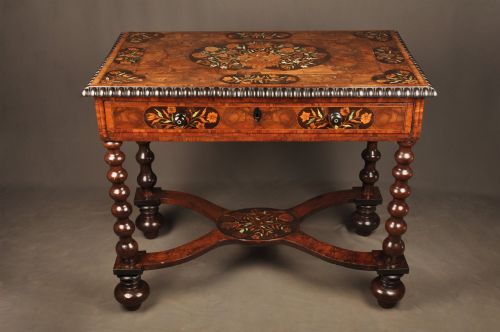
A floral marquetry writing desk spans several distinct centuries and regional furniture traditions, most notably appearing in Dutch and French workshops. Pieces on this page typically take the form of burr walnut bureaux, cylinder desks, bureau bookcases, and freestanding writing tables.
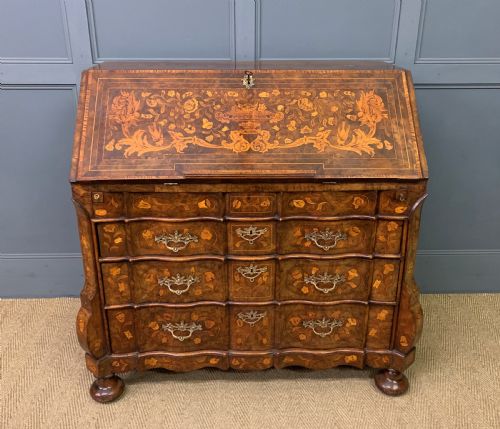
The aesthetic leans heavily toward Dutch Baroque, Dutch Rococo, and various Louis XV Revival styles originating across the eighteenth and nineteenth centuries. Buyers frequently encounter bombé fronts, kidney-shaped writing surfaces, and elaborately fitted writing cabinets from these periods.
Materials and construction methods
Cabinetmakers constructed these pieces using solid carcases of mahogany, walnut, or fruitwood, applied with choice veneers of burr walnut, rosewood, kingwood, and satinwood. The intricate floral motifs are created through meticulous marquetry, cutting and fitting contrasting timber veneers into designated channels.
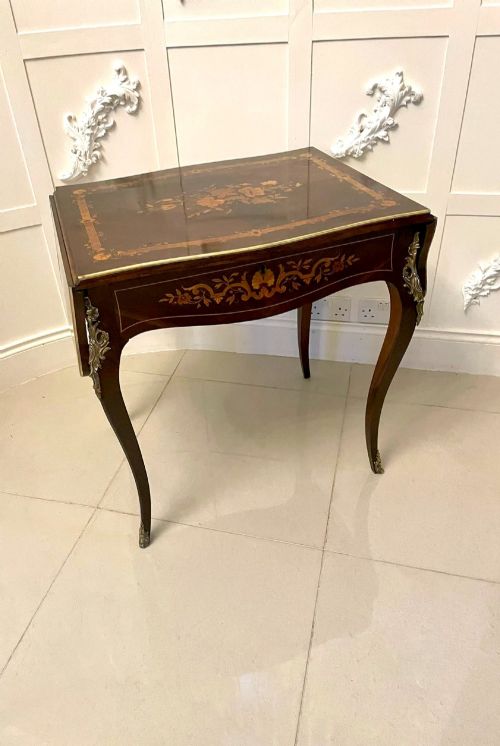
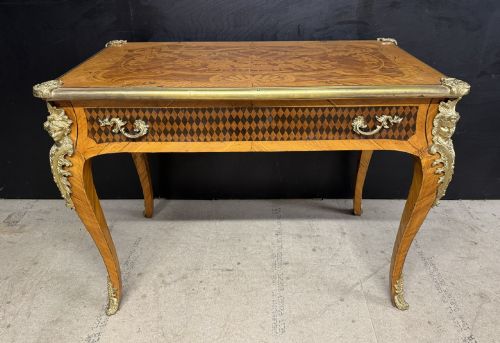
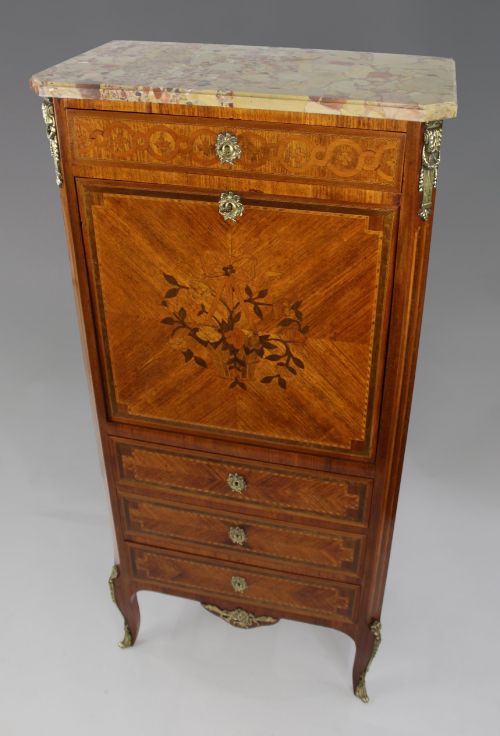
Many French examples incorporate gilt bronze or ormolu mounts to accent the corners, handles, and sabots, while certain nineteenth-century variants feature inset marble tops. The integration of cylinder lids, fall fronts, and interior pigeonholes required advanced joinery skills to ensure smooth mechanical operation.
Floral Marquetry Writing Desk Retail Price Guide 2026
Typical asking prices for floral marquetry writing desk among the pieces listed under this phrase on Sellingantiques today, from the lower quarter to the upper quarter. They describe what is for sale here now, not the wider market.
Materials appearing across current inventory include burr walnut, kingwood, mahogany, rosewood, satinwood, and ormolu mounts.
Evaluating craftsmanship and execution
The distinction between ordinary and superior examples lies in the depth and precision of the marquetry cutting, where tighter joints between disparate veneers create a more cohesive botanical design. Wood selection plays a major role, with highly figured burr walnut or richly grained kingwood marking out the superior end of the market.
Structural integrity and the retention of original mounts, handles, and internal fittings dictate the standing of an individual desk. Subtle details such as secondary timbers used in drawer linings and the crispness of chased ormolu mounts indicate workshop pedigree.
The Floral Marquetry Writing Desk Glossary
- Marquetry
- The art of forming decorative patterns by fitting together small pieces of wood veneer onto a structural carcase. This technique allows for complex pictorial floral arrangements.
- Bombe
- A swelling, outward-curving contour found on the front and sides of certain eighteenth-century furniture. It requires considerable skill from the cabinetmaker to veneer accurately.
- Bureau Plat
- A freestanding writing table fitted with drawers across the frieze, lacking a superstructure. These pieces usually feature leather writing surfaces and elaborate gilt metal mounts.
- Ormolu
- Gilded bronze used extensively for decorative mounts, handles, and feet on nineteenth-century French furniture. The process involves applying a gold amalgam to cast brass or bronze.
- Bonheur-du-Jour
- A small, light ladies writing desk featuring a cabinet or set of pigeonholes and drawers on the upper surface. These delicate pieces became popular during the Louis XV period.
Floral Marquetry Writing Desk: Frequently Asked Questions
How do I clean floral marquetry?
Dust surfaces regularly with a soft, dry cloth to prevent particulate buildup in the veneer joints. Apply occasional coats of appropriate furniture wax to nourish the timber without dampening the inlay.
Avoid placing these desks near direct sunlight or heat sources, which cause timber to shrink and veneers to lift. Excess moisture damages the historical polish, so keep liquids well away from the writing surface.
Where should I place my desk?
Position the piece away from radiators, fireplaces, and south-facing windows to protect the delicate wood veneers from cracking and fading. Maintaining a stable room temperature preserves both the timber and the internal mechanics.
Freestanding centre tables and bureau plats benefit from placement where the marquetry on all sides remains visible. Ensure the floor level is even so that fall-fronts and drawers align correctly in their frames.
How do I distinguish Dutch from French pieces?
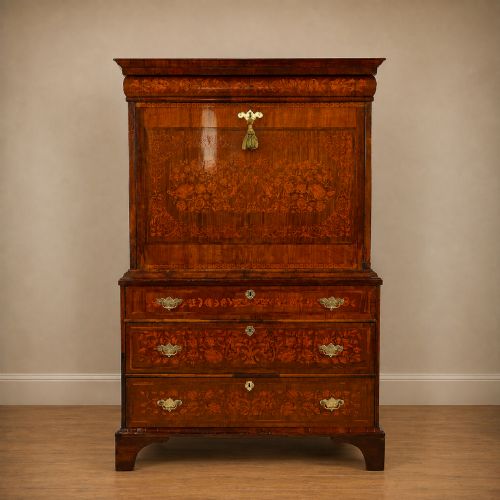
Dutch pieces from the eighteenth century frequently display darker walnut carcases, pronounced bombé fronts, and dense, multi-coloured floral marquetry that often covers the entire exterior. Their proportions tend to feel robust and architectural.
French pieces, particularly those in the Louis XV Revival style, often utilise kingwood or rosewood veneers paired with gilt ormolu mounts and serpentine lines. They lean towards lighter, more decorative proportions suited for boudoirs and salons.
Are these desks suitable for daily work?
Many period writing desks offer functional surfaces, but historic leather inserts and delicate veneer require mindful use. A protective glass top or a blotter helps prevent accidental scratches and ink stains on antique leather.
Consider the interior layout, such as pigeonholes and small drawers, which accommodate modern stationery differently than historical correspondence. Ensuring smooth drawer runners prevents excessive wear on original side guides.