
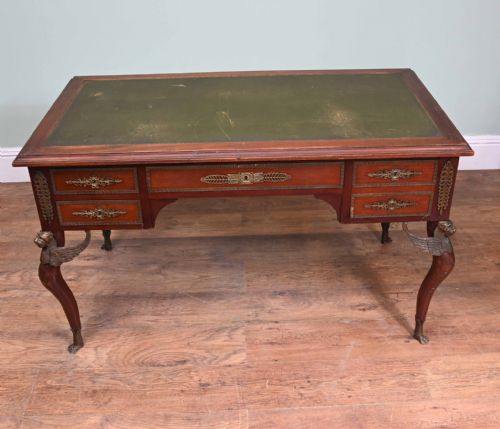


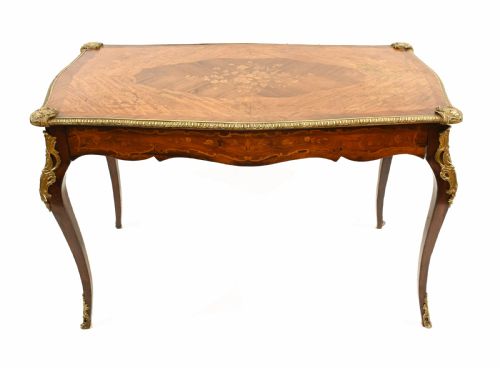
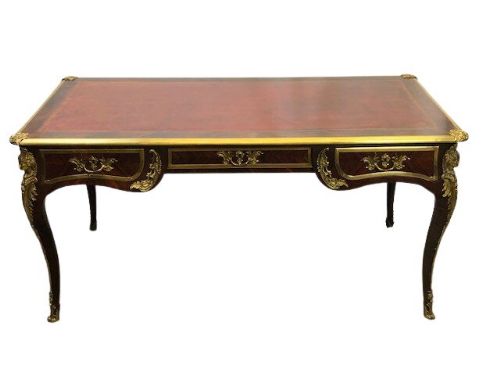
Napoleon III Bureau Plat
These pieces of napoleon iii bureau plat are formal writing tables and centre tables characterised by rich veneers and gilt bronze mounts.
Napoleon III Bureau Plat
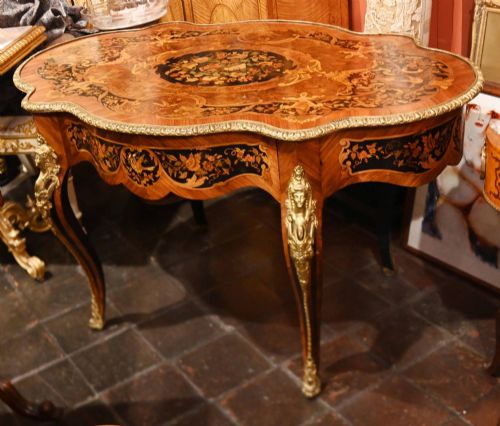
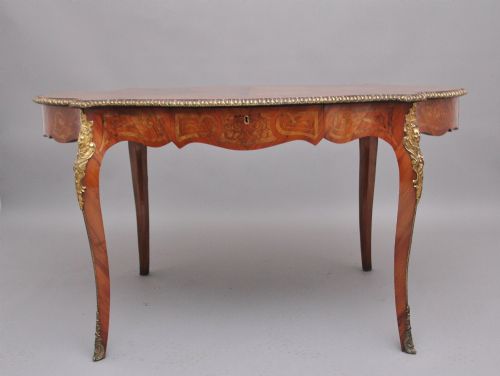
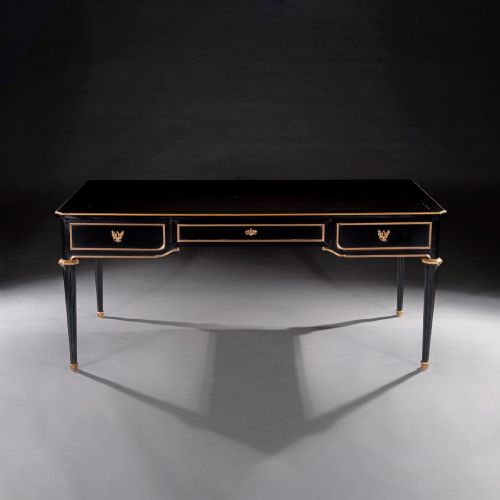
A napoleon iii bureau plat is a French freestanding desk designed to sit proudly in the middle of a room rather than against a wall. The form follows classical French revival tastes, frequently adopting the sweeping curves of Louis XV or the geometric restraint of Louis XVI.
Most examples encountered on this page date from the nineteenth century, spanning decades such as eighteen sixty, eighteen seventy, and eighteen ninety. They function as both grand writing desks and decorative centre tables within period interiors.
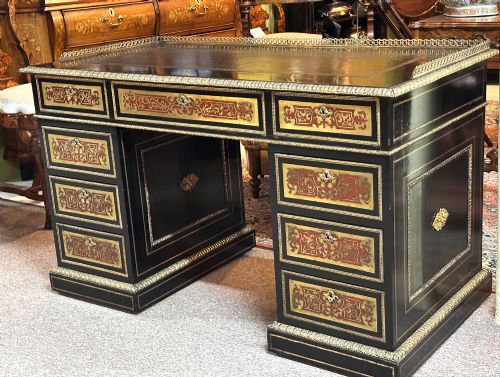
Makers utilised various timber foundations including walnut, rosewood, mahogany, and ebonised wood to create dark, polished surfaces. These are regularly framed by intricate marquetry or traditional Boulle work inlay.
How they were made
Cabinet makers built the carcase from timbers like walnut, mahogany, and rosewood, often applying ebonised wood finishes for a dense, dark tone. Surfaces were then decorated using marquetry patterns or elaborate Boulle work brass and tortoiseshell inlay.
Gilt bronze and ormolu mounts were cast and chased to accentuate the corners, legs, and drawer edges of the desk. Writing surfaces were typically inset with panels of supple leather to provide a suitable medium for penmanship.
Listings feature periods spanning from eighteen hundred to nineteen forty, with eighteen sixty and eighteen seventy appearing most frequently.
What varies in quality
The refinement of the cast ormolu and gilt bronze mounts dictates much of the visual hierarchy among these desks. Crisply chased detailing and substantial weight in the metalwork distinguish superior examples from simpler production.
The complexity and precision of the marquetry or Boulle work inlay also separate standard pieces from exceptional ones. Finer desks display intricate timber selection and meticulous alignment within the veneer patterns.
The Napoleon III Bureau Plat Glossary
- Bureau plat
- A flat-topped writing table, usually freestanding with one or more rows of drawers beneath the writing surface.
- Ormolu
- Gilded bronze used extensively for decorative mounts on nineteenth-century furniture.
- Boulle work
- A style of marquetry using brass and tortoiseshell inlay developed in France.
- Marquetry
- Decorative patterns formed by fitting together thin veneers of various coloured woods.
- Centre table
- A table finished on all sides designed to stand in the middle of a room.
Napoleon III Bureau Plat: Frequently Asked Questions
What is a bureau plat?
A bureau plat is a freestanding writing desk characterised by a flat top and finished decoration on all sides. It was traditionally used in the centre of a room rather than pushed against a wall.
These tables typically feature drawers set into the frieze and are supported by cabriole or tapered legs adorned with gilt bronze mounts.
How do I date these desks?
Dating relies on examining the timber construction, the style of the mounts, and the specific revival motifs employed. Pieces from this tradition largely emerge from the nineteenth century.
Evidence in the listings shows dates ranging from eighteen sixty through to eighteen ninety, reflecting the revival periods popular in France.
Where should I place a centre table?
A centre table requires a prominent position in a room where all four sides remain visible. Because these pieces are finished with decorative veneers and mounts all around, pushing them against a wall hides their primary aesthetic merit.
They function well as focal points in studies, libraries, or large reception rooms.
What materials were used?
Cabinet makers utilised a foundation of hardwoods such as mahogany, walnut, and rosewood. Ebonised wood was also frequently employed to achieve a deep black finish.
Surfaces are often enhanced with leather writing inserts, brass Boulle work, and cast ormolu mounts.