


Victorian Carved Rosewood Buffet
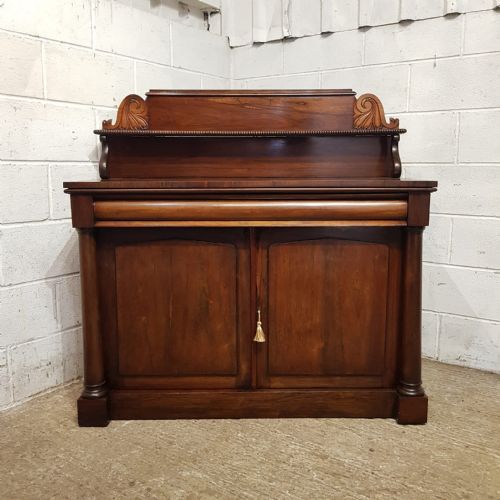
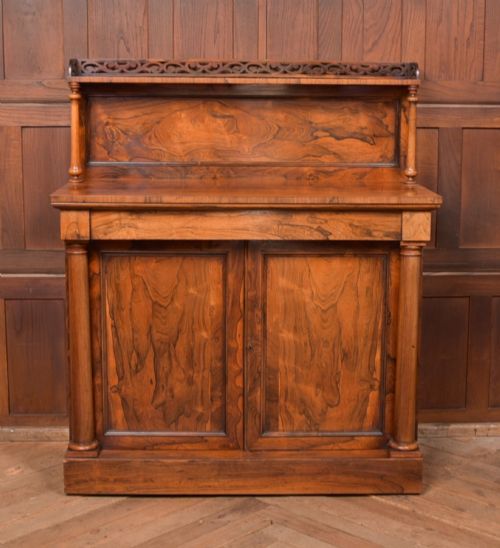
A victorian carved rosewood buffet offers substantial timber grain and mirrored display space, grounding a dining room or hall with deep Victorian presence.
Victorian Carved Rosewood Buffet
When you search for a victorian carved rosewood buffet, you encounter large dining room and parlour storage items spanning the nineteenth century. These forms include chiffoniers, side cabinets, credenzas, and breakfront sideboards dating from the Regency era through to the early twentieth century.
The version you meet most often on this page is the Victorian rosewood chiffonier or side cabinet, frequently featuring mirrored backs and glazed or panelled doors. Makers during this period utilised rich tropical hardwoods to create functional display furniture for formal reception rooms.
How they were made
Constructed primarily from dense rosewood, palisander, and padouk wood, these cabinets rely on heavy timber framing for structural integrity. Selected boards display prominent figuring, while secondary timbers line the internal shelving and carcase structures.
Joinery methods incorporate hand-cut framing and boxwood inlay work, supplemented by cast brass hardware and fitted mirror glass. Carved decorative elements are applied directly to the solid timber mouldings and architectural door panels.
Several pieces quietly hide tea caddies inside their lower cupboards, ready for an impromptu Victorian afternoon brew.
What varies in quality
The grade of timber figure and the depth of carved detail distinguish standard utility furniture from pieces produced by notable makers. Selected tropical hardwoods exhibit superior grain contrast and richer natural colouration across the primary display surfaces.
Structural refinement shows in the execution of boxwood inlay, the integration of original mirror glass, and the stability of the large panelled doors. Finer examples maintain crisp mouldings and cohesive stylistic design across the entire cabinet carcase.
Sigmund Jaray Wien·Howard and Sons·James Plunckett
The Victorian Carved Rosewood Buffet Glossary
- Chiffonier
- A low sideboard or cabinet, typically featuring a raised mirrored back and enclosed shelving storage below. This form served as a principal serving and display station in Victorian dining rooms.
- Palisander
- A dense tropical timber often grouped with rosewood, valued for its dark purple-brown hue and prominent contrasting grain patterns. Makers utilised this material for high-status cabinet work.
- Breakfront
- A furniture facade where the central section projects forward from the flanking cabinet wings. This architectural arrangement creates varied depth and visual weight across large sideboards.
- Credenza
- A low-standing cabinet designed without legs, frequently enclosed by multiple glazed or panelled doors. These pieces provided formal storage for silver and porcelain.
- Dumb waiter
- A tiered shelving unit or small sideboard used for holding serving dishes during meals. Examples from this period combine rosewood tiers with turned upright supports.
Victorian Carved Rosewood Buffet: Frequently Asked Questions
What is a Victorian rosewood buffet?
A Victorian rosewood buffet is a heavy wooden storage cabinet designed for nineteenth-century dining rooms and reception spaces, built using dense exotic hardwoods.
These pieces combine enclosed cupboard space with display surfaces, and frequently incorporate mirrored backs and carved decorative mouldings.
How do I identify a chiffonier?
A chiffonier is defined by its compact sideboard proportions, lower enclosed cupboards, and a raised superstructure that often holds a mirror or small shelf.
They served as versatile serving stations and display furniture in Victorian parlours rather than primary dining tables.
Where were these cabinets placed?
These large cabinets stood against primary interior walls in dining rooms, entrance halls, and formal reception spaces to store glassware and ceramics.
Their mirrored backs helped reflect natural light around nineteenth-century rooms while displaying decorative porcelain.
What woods were used?
Makers utilised dense exotic hardwoods including rosewood, palisander, and padouk wood, often enhanced with contrasting boxwood inlay.
Internal framing and secondary components frequently utilised softer lining timbers to support the heavy exterior construction.