


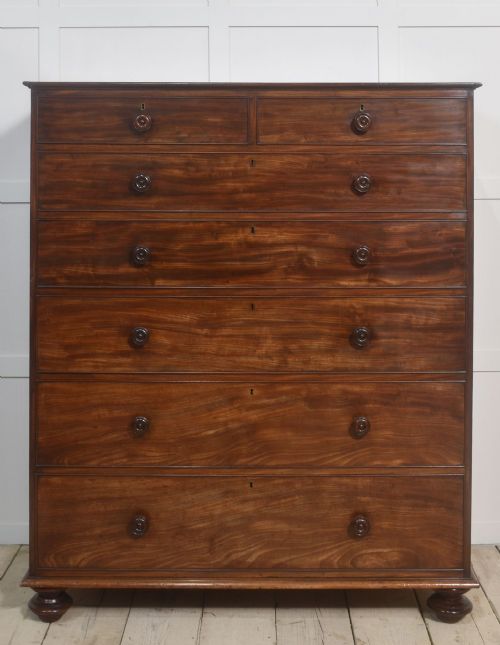
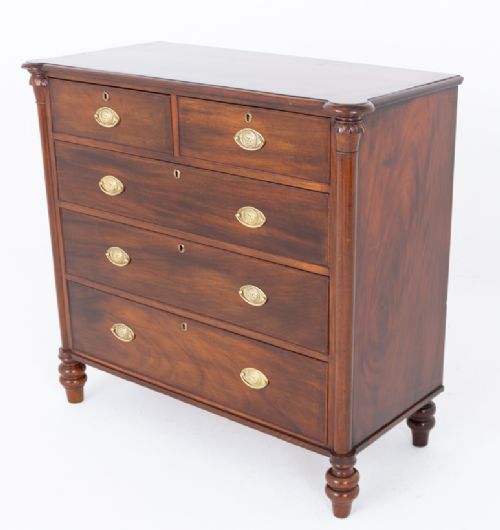


Dark Timber Commode
These dark timber commodes are substantial storage pieces in mahogany, oak, and rosewood, offering deep drawers and period character for a traditional interior.
Dark Timber Commode
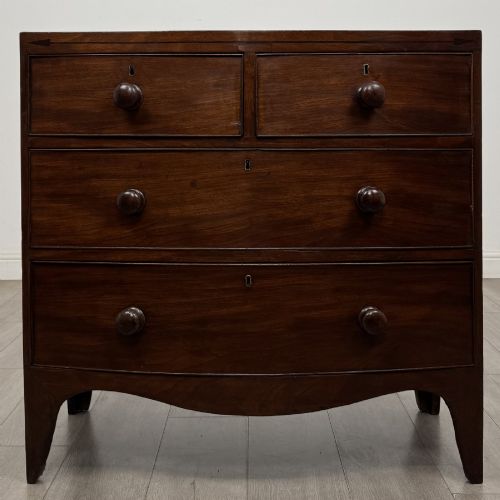
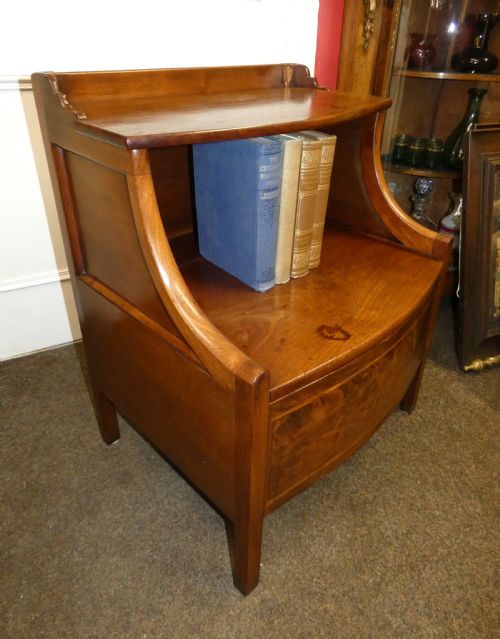
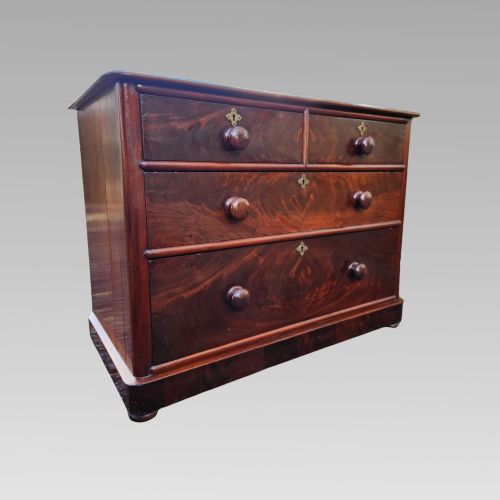
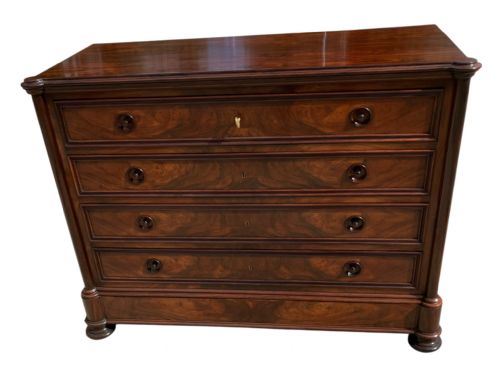
A dark timber commode typically takes the form of a robust chest of drawers or a bedside night table cupboard. These pieces serve as practical storage items while anchoring a room with rich, dark wood tones.
The selections available here span several distinct eras, including 18th Century examples, Georgian pieces, and later Victorian or Edwardian interpretations. Buyers most frequently encounter mahogany and oak forms, often built with generous proportions and functional compartmentalisation.
Originating from periods defined by master cabinetmaking, these items include regional variants such as South African block front chests and red walnut George II designs. Each piece reflects the functional requirements of its original domestic setting.
Materials and construction methods
Cabinetmakers utilised dense timbers such as mahogany, oak, and rosewood, selecting them for structural integrity and deep natural grain. These woods were often polished to a high finish, highlighting the natural figure of the material.
Hardware played a functional and decorative role, with brass handles and escutcheons fitted securely to drawer fronts. Joinery techniques from the periods ensured the heavy frames could withstand daily use without warping.
Dark Timber Commode Retail Price Guide 2026
Typical asking prices for dark timber commode among the pieces listed under this phrase on Sellingantiques today, from the lower quarter to the upper quarter. They describe what is for sale here now, not the wider market.
Listings feature timbers including mahogany, oak, rosewood, pine, and red walnut, spanning the eighteenth to early twentieth centuries.
Assessing quality in dark timber furniture
Quality rests upon the selection of timber and the precision of the joinery rather than surface ornamentation alone. Superior examples display careful matching of wood grain across drawer fronts and solid timber construction throughout.
Proportion and execution distinguish finer items from standard utility pieces. A balanced silhouette, original brass hardware, and cleanly cut dovetail joints indicate a higher standard of workshop production.
C. Hindley
The Dark Timber Commode Glossary
- Commode
- A low chest of drawers or cabinet. In earlier periods, the term described various forms of decorative storage furniture.
- Block front
- A piece of furniture with a front divided vertically into three panels, where the central panel is recessed and the outer two project. This technique requires considerable skill from the woodworker.
- Dovetail
- A joint formed by interlocking wedge-shaped fingers, used extensively in drawer construction. Hand-cut dovetails are a hallmark of older cabinetmaking.
- Escutcheon
- A flat plate of brass surrounding a keyhole. It protects the surrounding wood from wear caused by the key.
Dark Timber Commode: Frequently Asked Questions
What is a dark timber commode?
A dark timber commode is a functional storage unit, typically structured as a chest of drawers or a side cabinet, constructed from dense woods like mahogany, oak, or rosewood. These pieces were designed to hold clothing and household items.
Originating across the eighteenth and nineteenth centuries, they provide substantial storage capacity while serving as focal points within traditional room schemes.
How do I date a commode?
Dating requires examining the construction methods, such as the cut of the dovetails and the choice of secondary woods. Stylistic cues like bracket feet or specific brass hardware also indicate particular eras.
Comparing the timber grain and finish to known period examples helps narrow down the decade of manufacture.
Where should I place it?
These pieces suit bedrooms, hallways, or living rooms where their surface top and deep drawers offer practical utility. Their dark wood tones anchor a room visually.
Ensure the placement avoids direct sunlight and significant humidity changes to protect the timber and finish.
Are these pieces suitable for daily use?
Most antique chests and cabinets remain entirely functional for daily storage needs. Their solid construction often surpasses modern flat-pack alternatives.
Routine dusting and occasional waxing keep the timber conditioned and resilient against everyday wear.