
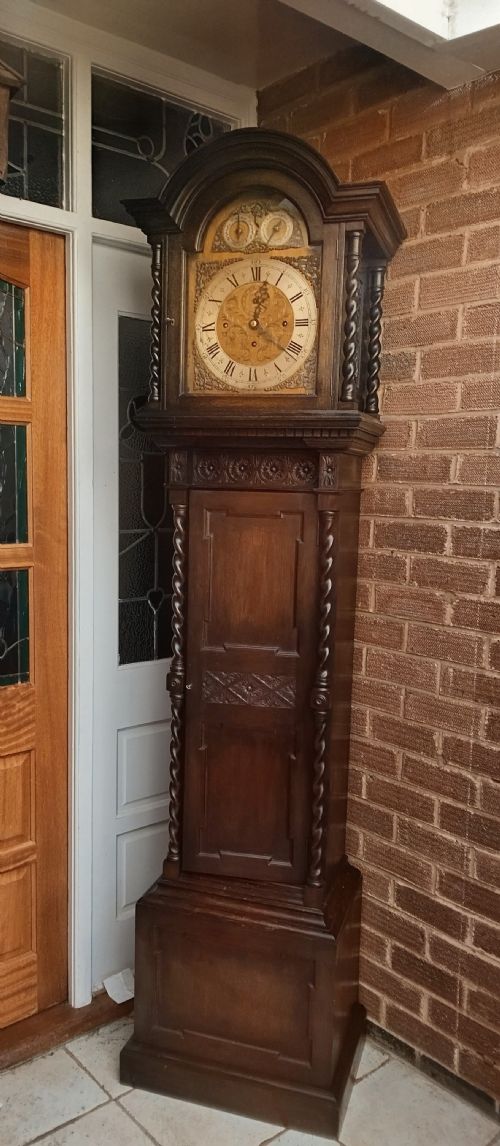
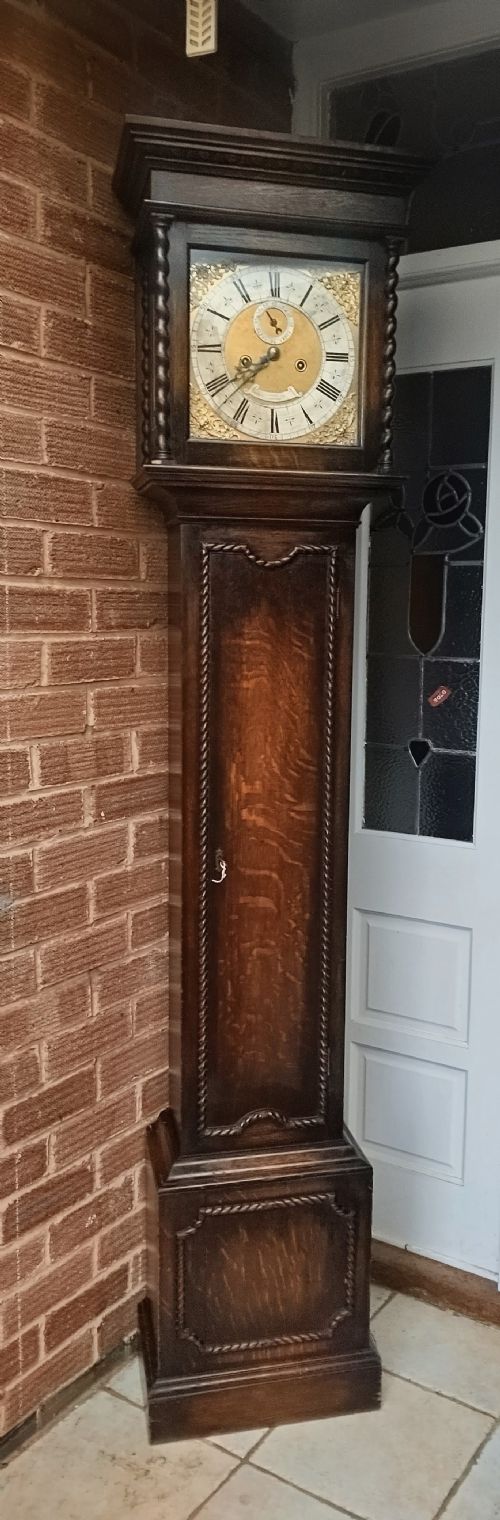
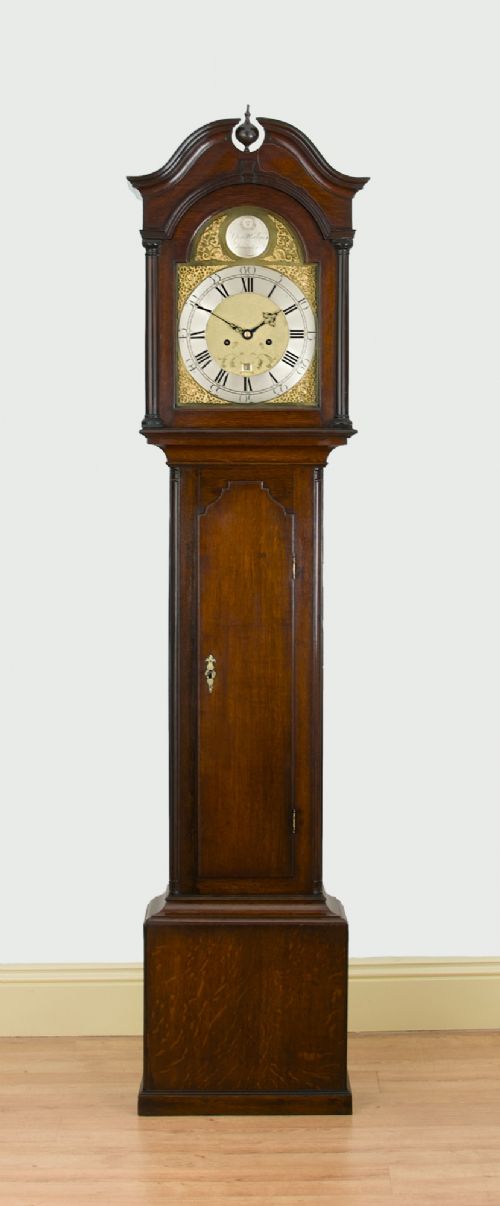


Dark Oak Tallcase Clock
A dark oak tallcase clock brings the steady tick of centuries into a hallway, housed in timber that gains depth with every decade.
Dark Oak Tallcase Clock
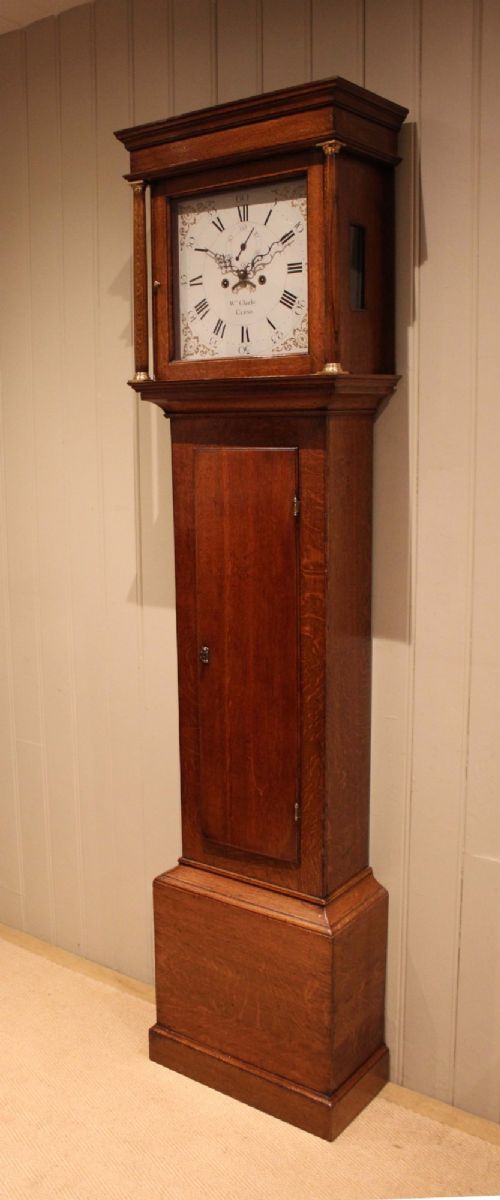
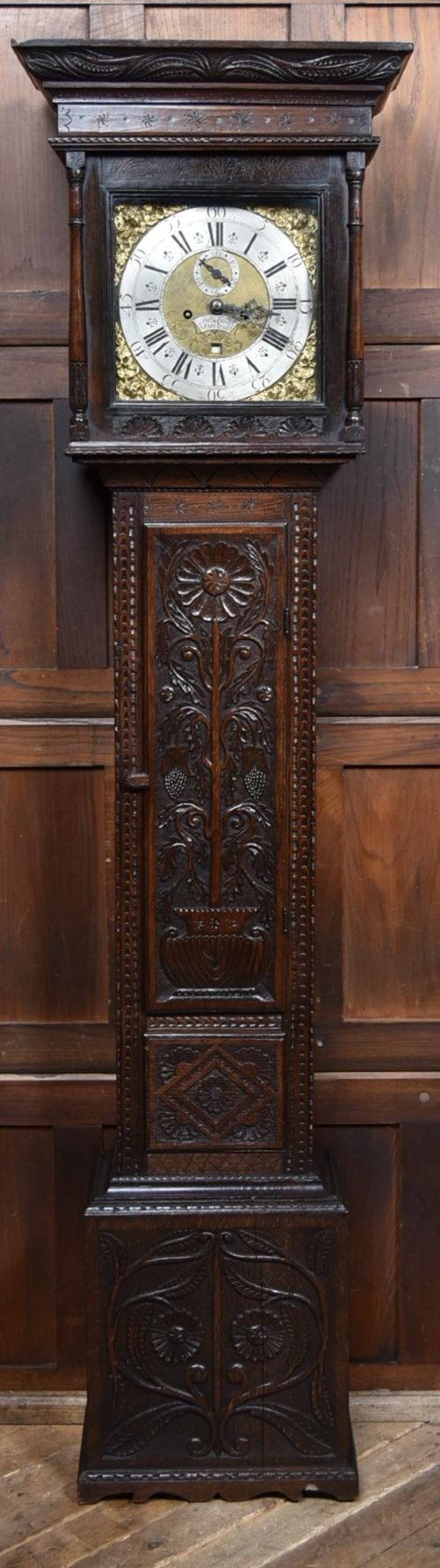
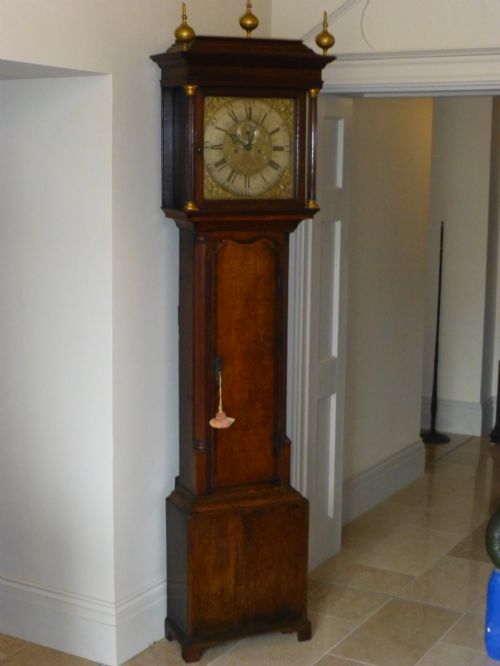
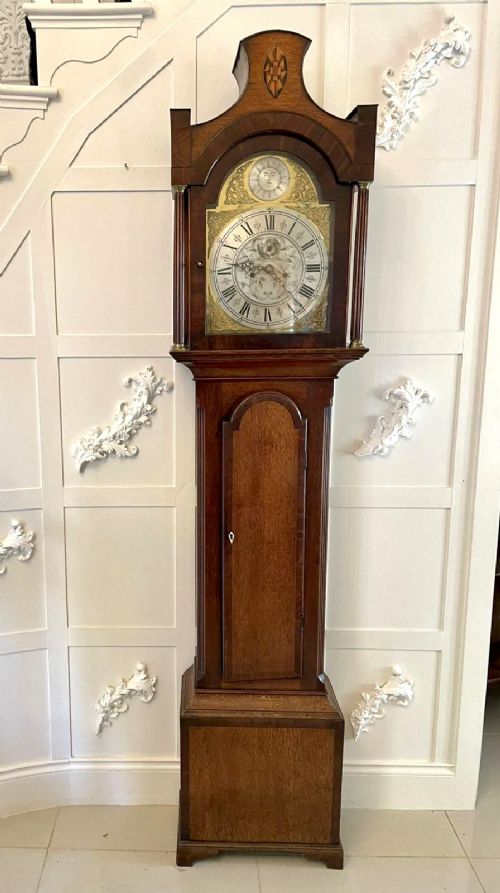
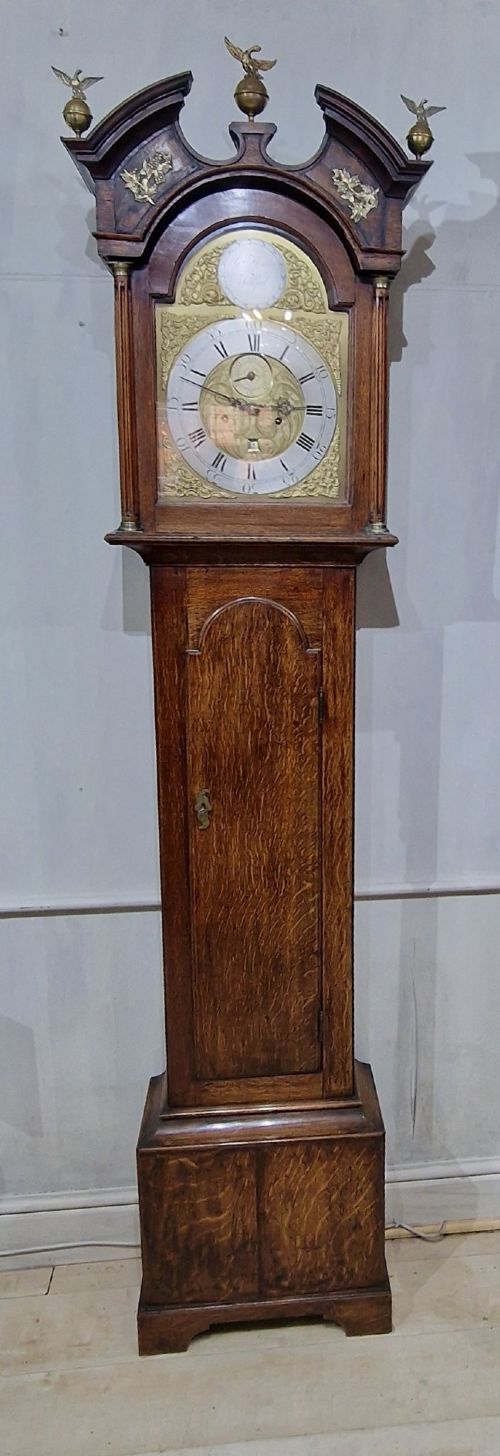
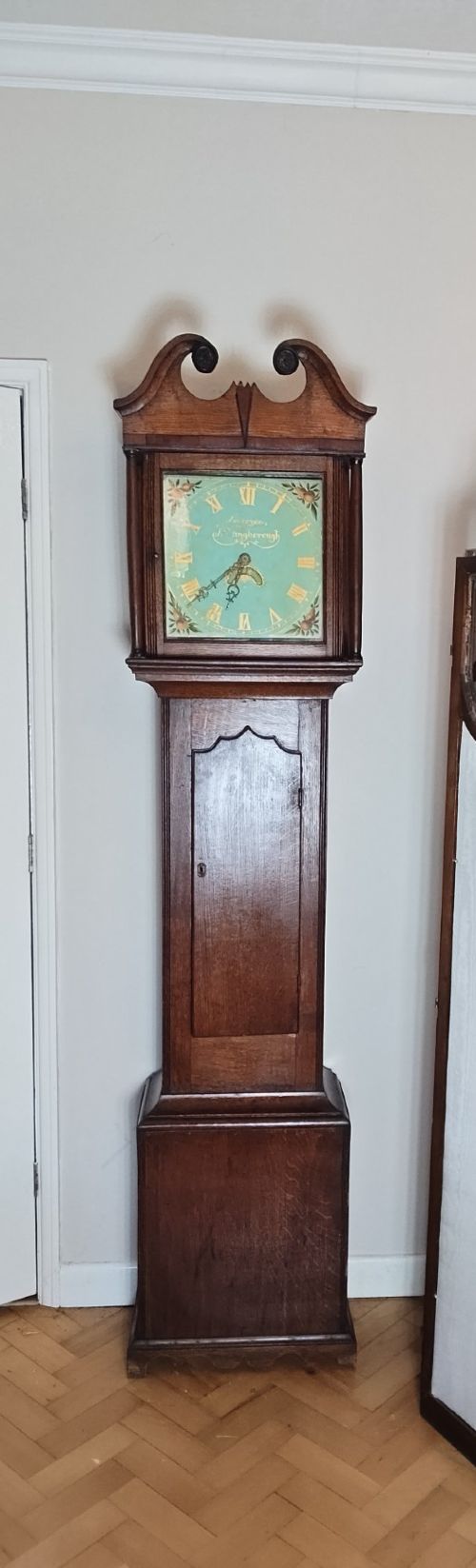
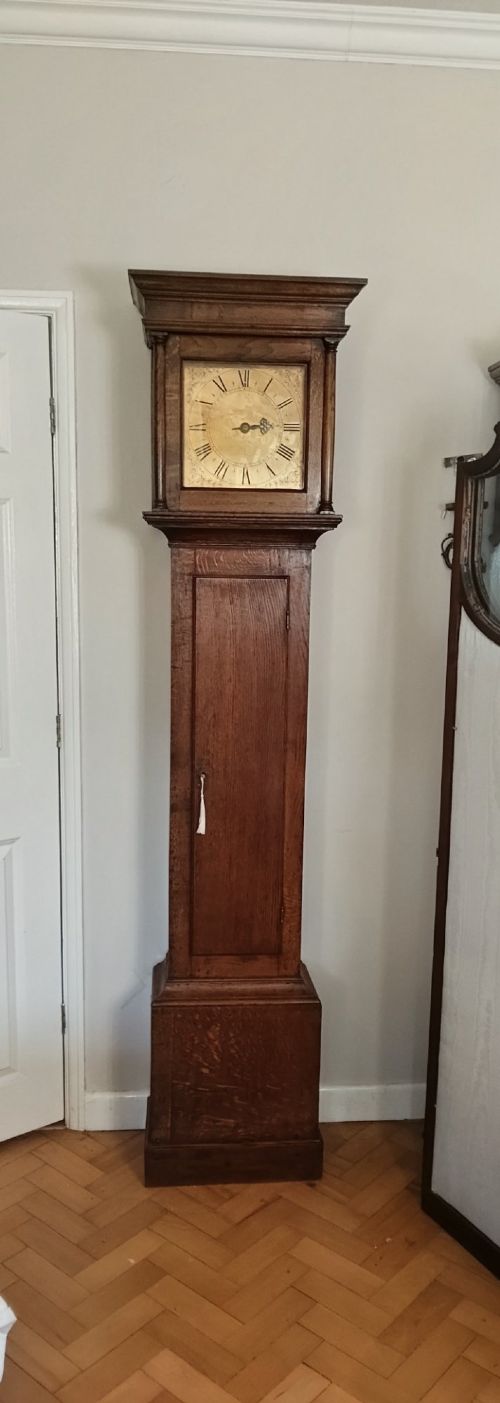
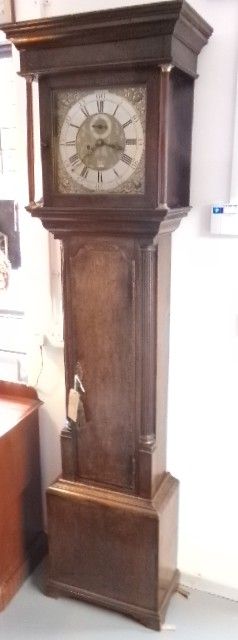
A dark oak tallcase clock stands as a floor-standing timekeeper, widely known as a grandfather clock, longcase clock, or long case clock. When searching for a dark oak tallcase clock, buyers encounter examples originating primarily from the Georgian and eighteenth century periods, alongside later nineteenth century and twentieth century revivals.
The dominant forms on this page pair sturdy timber cases with brass or painted iron dials. Makers ranging from regional West Country and northern horologists to London firms constructed these tall floor clocks to house weight-driven movements.
Examples span from modest country pieces to elaborate models featuring moon phase indicators, musical chimes, and subsidiary seconds dials. Buyers select these tallcase timepieces to anchor a room with architectural presence and historical horology.
Distinctions in Quality
The sophistication of the internal movement dictates much of the standing within the range, distinguishing simple thirty-hour weight-driven clocks from complex eight-day movements with quarter-chiming capabilities, moon phases, or multiple tunes. Maker attribution also plays a role, with signed dials from documented provincial or metropolitan clockmakers elevating the work.
Cabinet proportion and timber selection set individual pieces apart, separating plain country vernacular cases from examples featuring rich grain, intricate carving, architectural hoods, and secondary woods like mahogany or walnut. The crispness of brass dial engraving and the preservation of original components further separate standard utility pieces from high-grade horological examples.
Some provincial clockmakers signed their brass dials with charming abbreviations, packing entire towns and workshops into cramped engraved lettering.
Jn° Smith Macclesfd·Smith of Chester·James Hendrie Falkirk·George Hallifax Doncaster·Bravingtons London·Edward White Birmingham·Enfield·Thomas Utting Yarmouth·John Wylde Nottingham·Mappin & Webb London·Haythornwaite Kirkby Lonsdale·Richard Alexander Devizes·Grocott Holywell·Walker of Nantwich
The Dark Oak Tallcase Clock Glossary
- Longcase clock
- A tall, weight-driven pendulum clock housed in a wooden floor-standing case. These instruments are frequently called grandfather clocks.
- Moon phase
- A dial mechanism tracking the lunar cycle through a rotating disk behind the clock face. This complication appears on higher-grade George III examples.
- Eight day movement
- A mechanical clock movement requiring winding once a week. This system uses two weights suspended by lines or chains.
- Hood
- The upper glazed section of the case that encloses and protects the dial. It typically lifts off or opens via a door to allow access to the movement.
Dark Oak Tallcase Clock: Frequently Asked Questions
How do I wind a tallcase clock?
Winding involves using a crank key to draw up the weights suspended inside the trunk. Care must be taken not to overwind the movement.
Most eight-day clocks require winding once a week, while thirty-hour models need attention daily or twice weekly.
Where should I place a tallcase clock?
These clocks require a stable, dry interior wall away from direct sunlight and heavy foot traffic vibrations. Placing them on a solid floor ensures the pendulum swings evenly.
Sufficient vertical clearance is essential, as these floor clocks reach heights well over six feet.
What is the difference between a grandfather and a grandmother clock?
Grandfather clocks are standard full-sized tallcase clocks standing over six feet tall. Grandmother clocks are scaled-down versions produced in the twentieth century, measuring significantly shorter while retaining weight-driven or spring movements.
Both styles share similar oak construction and dial layouts but occupy different spatial footprints in a home.