

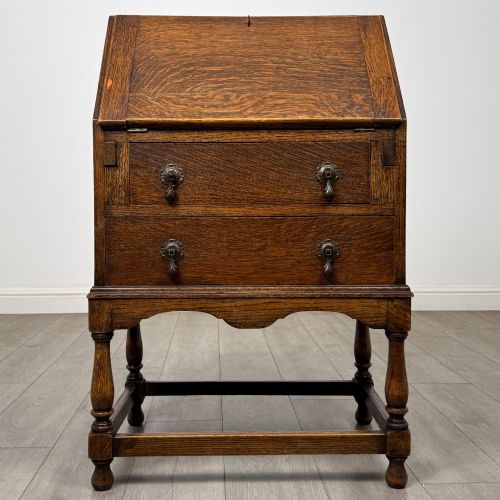
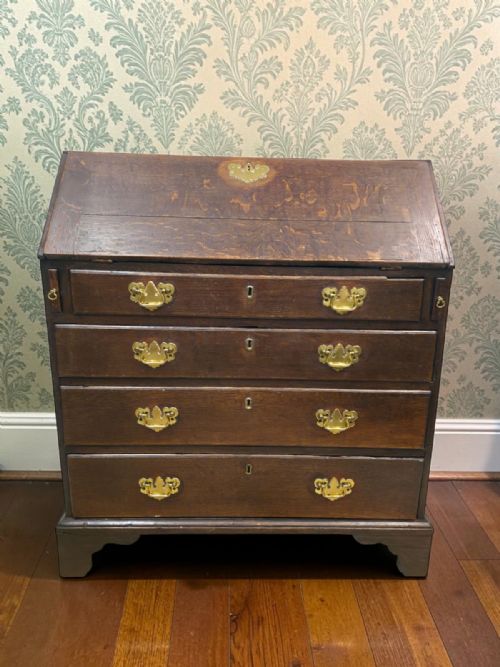
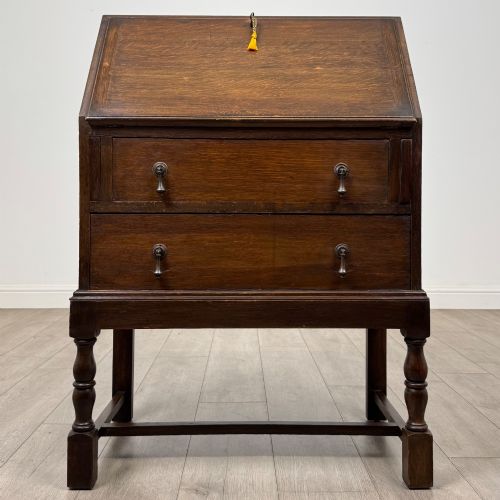
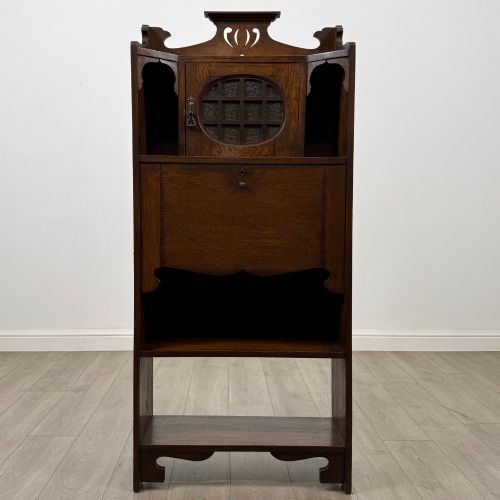

Dark Oak Secretary Cabinet
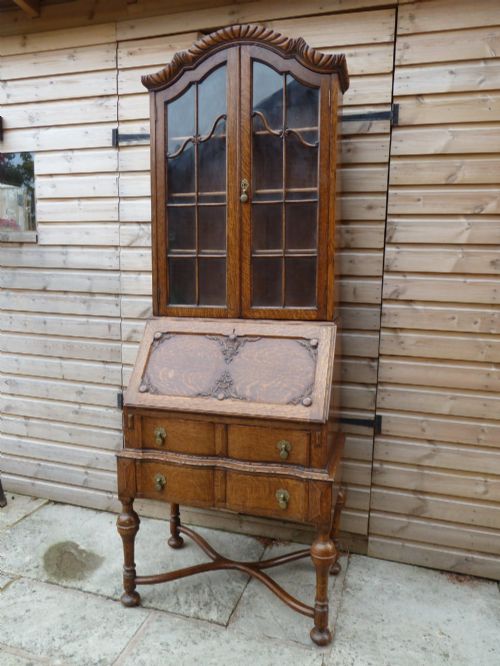
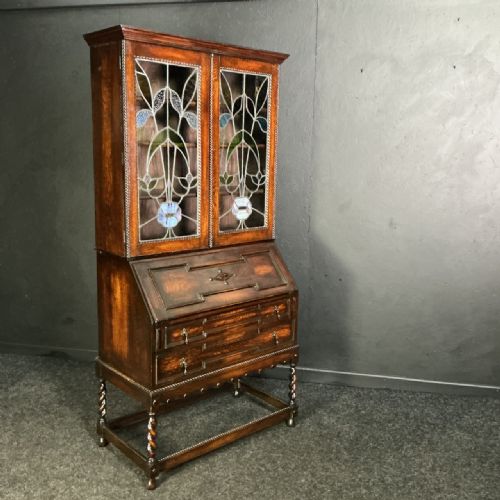
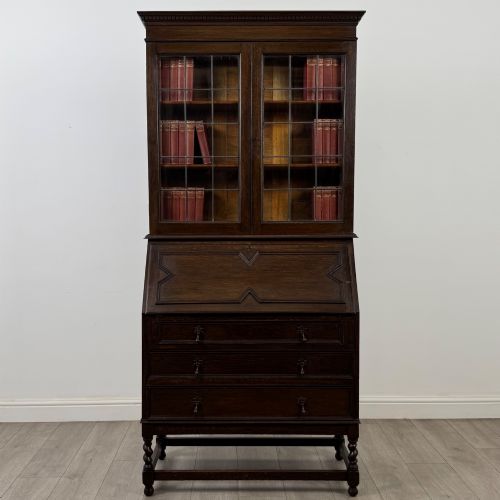
A dark oak secretary cabinet brings centuries of disciplined writing space and shelved storage into a room.
Dark Oak Secretary Cabinet
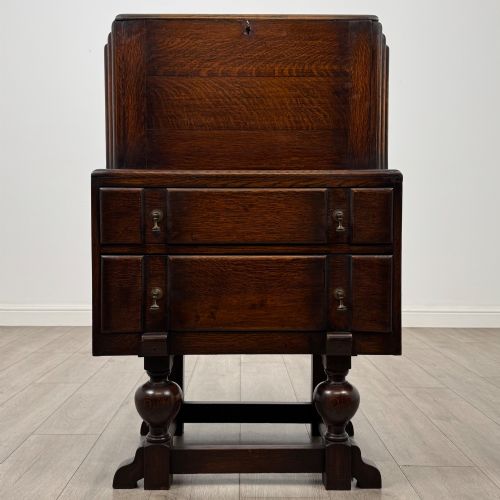
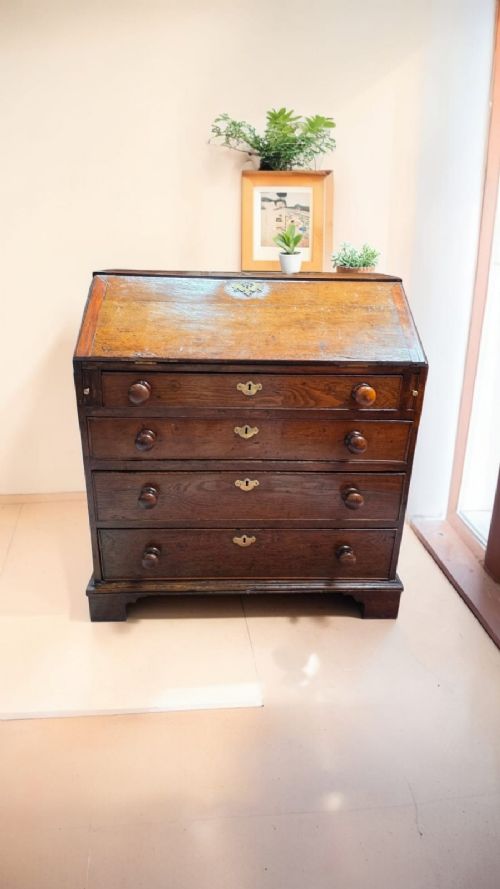
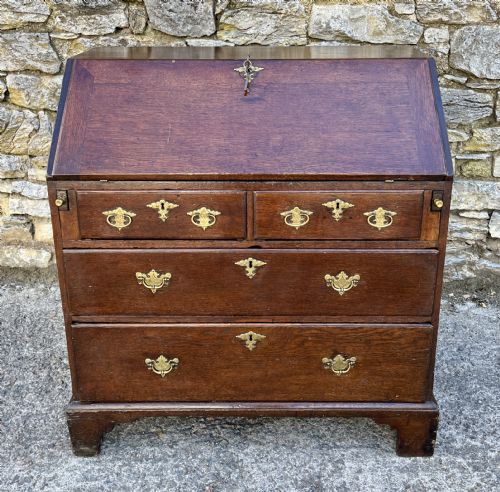
A dark oak secretary cabinet combines a fall-front writing desk with enclosed shelving, serving generations of households as a practical workstation and display unit. Buyers searching for a dark oak secretary cabinet encounter forms ranging from compact writing desks to towering bureau bookcases spanning the eighteenth, nineteenth, and twentieth centuries.
The material palette centres firmly on solid oak and oak veneer, often enriched by brass hardware, glass doors, and occasional wood inlay. Stylistic influences draw heavily from Georgian proportions, Edwardian utility, and revivals of Jacobean and Tudor motifs.
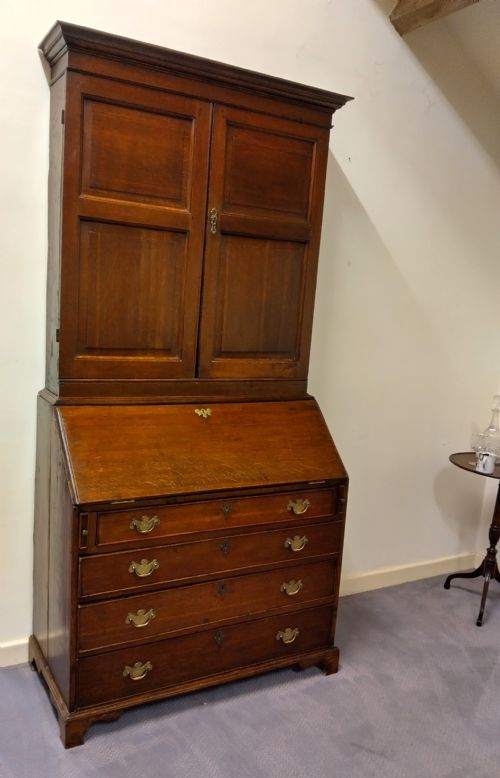
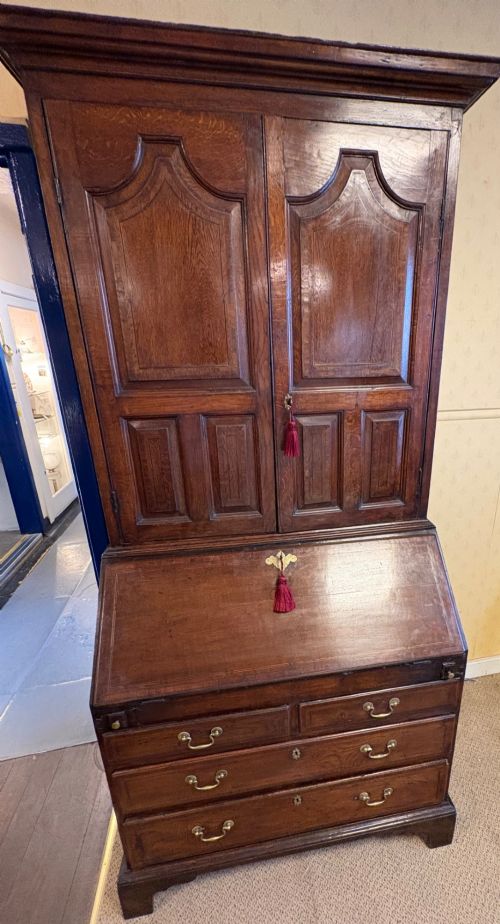
Pieces on this page frequently appear as bureau bookcases with glazed upper sections or as standalone writing desks featuring fitted internal pigeonholes. Origins span local British workshops as well as continental examples, demonstrating robust construction traditions across different eras.
Assessing quality in construction and detail
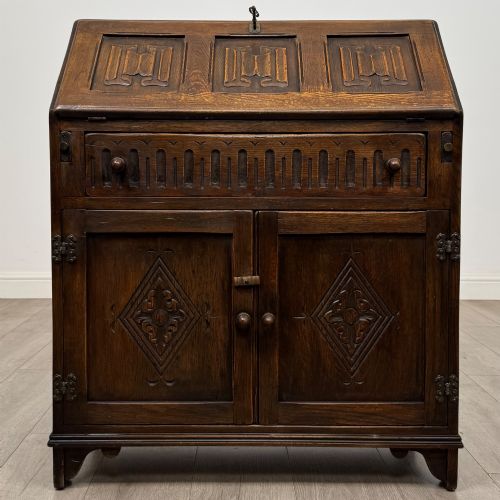
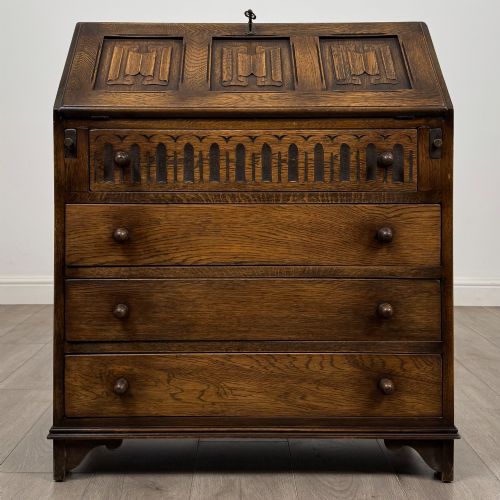
Quality rests upon the selection of timber, the crispness of carved details such as linenfold panels or geometric mouldings, and the integrity of the internal writing compartment. Superior examples display thoughtful proportions, seamless movement in fall fronts and drawers, and original brass hardware.
Later adaptations or heavily restored pieces distinguish themselves from untouched period examples through timber patination and internal joinery methods. The presence of specialised configurations, such as stepped interiors or moving mechanisms, elevates the standing of an individual piece.
Some desks hide secret compartments behind tiny drawers, offering a private spot for love letters or stray paperclips.
Liberty of London
The Dark Oak Secretary Cabinet Glossary
- Bureau bookcase
- A combined piece of furniture featuring a sloping writing flap above drawers, surmounted by a glazed or panelled shelving cabinet. This dual function made it a staple for home administration and library storage.
- Fall front
- A hinged writing surface that folds down to provide a horizontal desk area and conceals internal pigeonholes when closed. It requires sturdy brass hinges and proper support stays to bear writing pressure.
- Linenfold
- A carved wooden panel motif imitating folded parchment or linen, frequently seen on pieces from revival styles and Edwardian production. This decorative technique adds texture to flat cabinet doors and drawer fronts.
- Pigeonhole
- A small, open compartment within the desk interior designed for sorting letters and documents. These compartments often sit above miniature drawers inside the fall-front writing section.
- Secretaire
- An alternative term for a writing cabinet or bureau, often incorporating a pull-out drawer with a drop-front desk fitted inside. It provides enclosed workspace while maintaining the external appearance of a chest of drawers.
Dark Oak Secretary Cabinet: Frequently Asked Questions
What is a dark oak secretary cabinet?
A dark oak secretary cabinet is a dual-purpose piece of furniture that pairs a sloping writing desk with storage shelves or drawers. It provides a dedicated workspace while keeping books or household papers neatly organised behind closed doors.
These pieces typically feature a fall-front flap that opens to reveal small drawers and pigeonholes. The upper section often includes glazed doors for displaying volumes or collectibles.
How do I date an oak bureau bookcase?
Dating relies on examining construction techniques, hardware, and stylistic details such as cornices and bracket feet. Eighteenth-century examples often display hand-cut dovetails and pegged frame construction.
Later Victorian and Edwardian pieces frequently incorporate machine-sawn timber and standardised brass fittings. Revival styles borrow motifs from earlier centuries but employ nineteenth or twentieth-century workshop methods.
Where were these cabinets placed historically?
Historically, these cabinets sat in studies, libraries, and drawing rooms where estate management and correspondence took place. Their enclosed storage kept sensitive documents secure from household dust and prying eyes.
In modern rooms, they function effectively as home office desks that close away clutter at the end of the working day. They fit comfortably in living spaces or bedrooms where floor space is at a premium.
Are the writing surfaces flat?
The writing surface is formed by the inside of the fall-front flap when lowered into a horizontal position. It is supported by wooden sliders or internal arms to create a stable desk.
Over long periods of use, hinges and supports can develop slight play, though well-maintained examples remain level and firm for everyday writing.