

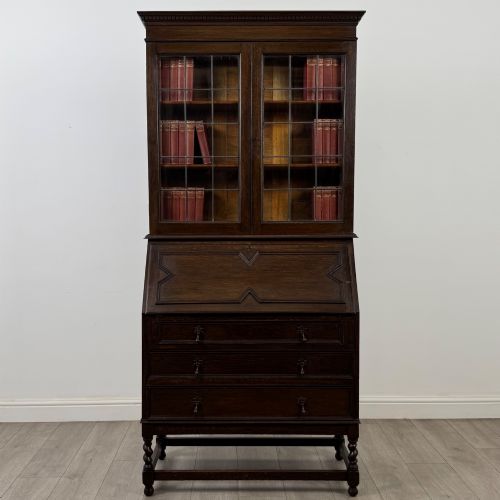


Jacobean Writing Cabinet
A jacobean writing cabinet is a sturdy timber storage piece designed for correspondence, bringing solid craftsmanship and historic presence into a room.
Jacobean Writing Cabinet
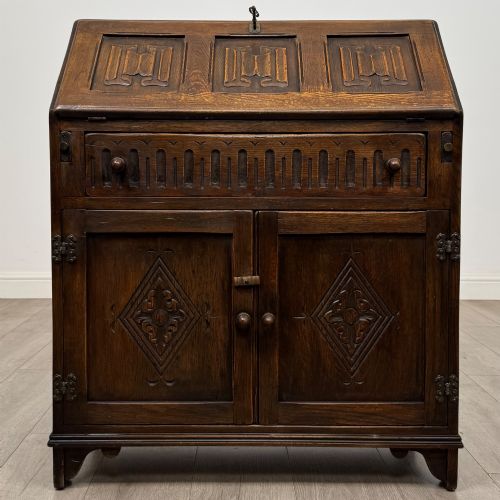
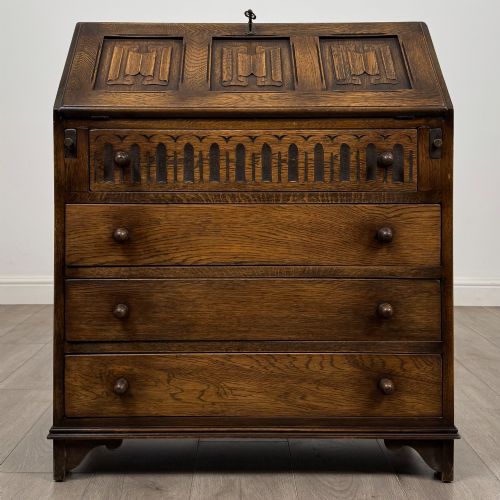
A jacobean writing cabinet encompasses a range of bureau bookcases, desks, and strong boxes originating from the seventeenth century through to revival periods in the early twentieth century. Buyers searching this phrase most commonly encounter Edwardian and 1920s revival pieces built in dark oak, often carrying linenfold carving or Jacobean styling.
Original seventeenth-century vernacular examples appear alongside robust reproductions from the 1910s, 1920s, and 1930s. This mix allows buyers to choose between genuine age and the heavier revival interpretations popular in the early twentieth century.
What varies in quality
Quality reveals itself in the choice of timber and the depth of carving, moving from plain surfaces to richly detailed linenfold panels and crisply turned details. Solid oak construction generally marks a higher standard than simpler veneered alternatives, reflecting greater material substance.
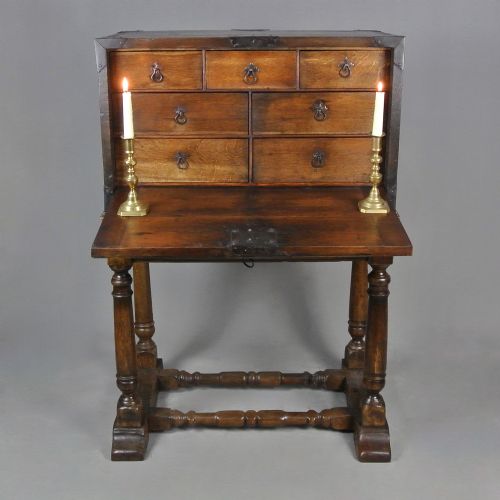
The sophistication of the interior fitments - such as moving interior compartments, pigeonholes, and secret drawers - distinguishes standard utility pieces from superior examples. Hardware execution, including the weight of brass handles and the snugness of drawer joints, also signals the standard of workshop production.
Listings feature oak as the primary timber, complemented by brass, glass, and iron fittings across Edwardian and 1920s revival periods.
The Jacobean Writing Cabinet Glossary
- Linenfold
- A style of wood carving that mimics folded fabric, commonly seen on panels of early twentieth-century revival furniture. This technique adds vertical texture to cabinet doors and fall-front desks.
- Bureau bookcase
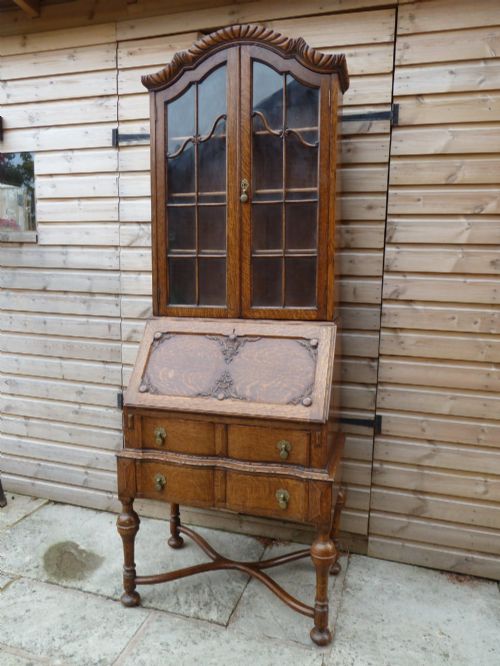
- A dual-purpose furniture form combining a writing bureau with an upper bookcase enclosed by doors. These units provide both concealed writing surfaces and display shelving.
- Vernacular
- Describing objects made by regional craftsmen following local traditions rather than metropolitan academic designs. These pieces often display straightforward construction and honest materials.
- Oak veneer
- A thin layer of oak timber applied over a secondary wood base to provide a figured surface appearance. It allowed makers to achieve decorative grain patterns while managing material costs.
- Strong box
- A heavy timber container reinforced with iron straps or brackets for secure storage. Early examples served to protect documents and valuables before the widespread use of modern safes.
Jacobean Writing Cabinet: Frequently Asked Questions
How do I date a Jacobean style bureau?
Dating depends on examining the construction methods, timber preparation, and secondary woods used inside the drawers. Seventeenth-century originals display hand-split boards and vernacular joinery, whereas Edwardian and 1920s revivals show machine-sawn components and standardised hardware.
Revival pieces often utilise dark oak finishes and applied linenfold carving that imitate earlier eras but reveal twentieth-century manufacturing techniques upon closer inspection of the interior framing.
Can I use a writing bureau as a daily desk?
These cabinets function well as daily writing desks because the drop-front surface provides adequate space for modern notebooks and laptops. The internal pigeonholes and small drawers keep stationery organised and out of sight when the flap is closed.
Consider the height of the writing surface and the chair clearance, as older desks were occasionally built lower than modern office furniture. Adding a supportive chair ensures comfort during extended writing sessions.
What is the difference between a bureau and a bureau bookcase?
A standard bureau consists of a desk base with a fall-front writing flap and drawers below. A bureau bookcase adds an upper shelving section, usually enclosed by glass or wooden doors, for storing books and display items.
Choosing between the two depends on vertical space and storage requirements in the room. Bureau bookcases offer substantially more display capacity while occupying a similar floor footprint.
How do I care for antique oak furniture?
Maintain oak surfaces by dusting regularly with a soft, dry cloth and avoiding silicone-based polishes that build up over time. Applying traditional beeswax occasionally nourishes the timber and preserves the natural sheen of the wood.
Keep the cabinet away from direct heat sources and strong sunlight to prevent the oak from drying out or splitting. Stable room humidity protects both the solid timber and any decorative veneers.