
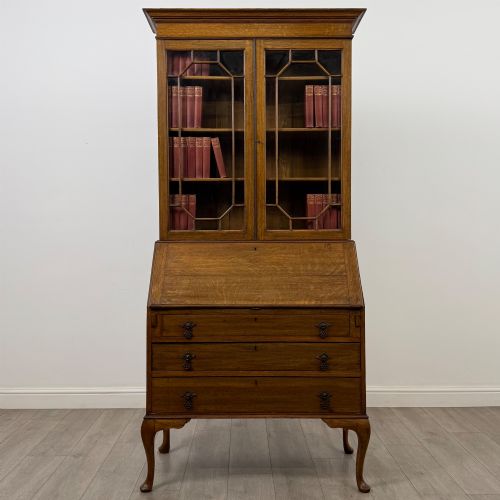

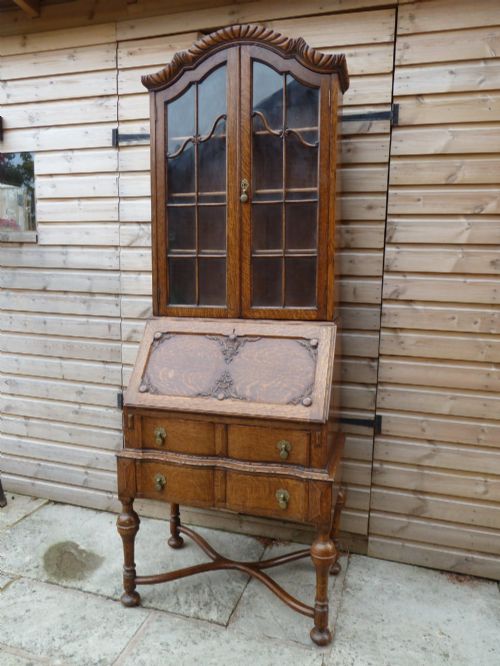
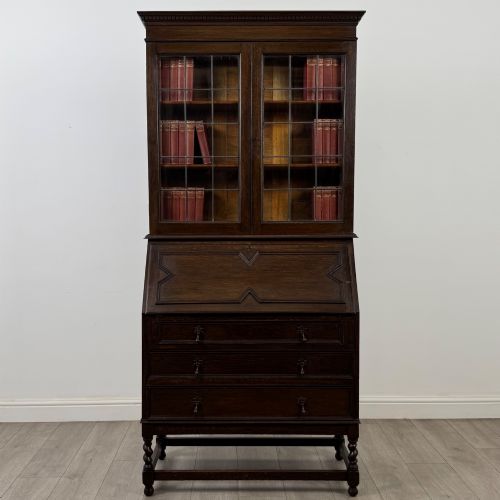


Glazed Oak Bookcase Bureau
A glazed oak bookcase bureau combines a writing slope and a shelved cabinet behind glass doors, offering practical storage and workspace in one solid piece of furniture.
Glazed Oak Bookcase Bureau
When you examine a glazed oak bookcase bureau, you typically encounter two-part constructions that pair an upper cabinet with glazed doors above a lower fall-front desk or drawers. The pieces seen span from the 16th century through the Georgian and Victorian eras, stretching into Edwardian and 1920s revivals.
Edwardian and 1920s examples appear most frequently on this page, often rendered in golden oak or dark oak with fitted interiors and bun handles. Georgian and earlier pieces emerge less often, displaying heavier mouldings and distinct regional timbers such as Welsh oak.
Stylistic influences range from Jacobean Revival and Arts and Crafts to straightforward Victorian utility. Bureau bookcases, secretaire bookcases, and cabinet desks all serve the dual purpose of displaying volumes while concealing correspondence behind panelled or glazed frames.
Differentiating quality in oak bureau bookcases
Quality reveals itself in the selection of timber and the execution of the fitted interior. Superior pieces employ figured oak grains and feature meticulously arranged stationery compartments, small drawers, and secret pigeonholes inside the drop-down writing flap.
The integration of the upper glazed doors with the lower chest determines structural harmony. Finer examples balance the weight of leaded or plain glass panels securely within robust frames, maintaining smooth operation of drawers and writing slopes without sagging.
Many pieces still retain their original working keys, though finding the secret compartment inside usually requires a bit of gentle exploration.
Morris & Co·George W Jack·Harris Lebus
The Glazed Oak Bookcase Bureau Glossary
- Bureau
- A desk with a sloping hinged lid that covers compartments for papers. It provides a convenient writing surface that folds away when not in use.
- Secretaire
- A piece of furniture containing a drawer or compartment that pulls out to form a writing desk. It often conceals a sophisticated arrangement of small drawers and pigeonholes.
- Pollard oak
- Oak timber taken from trees that have been pollarded, producing a heavily knotted and highly decorative grain. Makers reserved this prized material for prominent panels and drawer fronts.
- Astragal
- A small moulding attached to glass doors to hold individual window panes in place. In glazed bookcases, these form supportive wooden grids across the front.
- Bun handle
- A small, rounded wooden knob used on drawers. These turned pulls appear frequently on Edwardian and later drawer fronts.
Glazed Oak Bookcase Bureau: Frequently Asked Questions
What is a bureau bookcase?
A bureau bookcase combines a lower writing desk with a hinged sloping lid and an upper shelving unit enclosed by glass doors. This dual function allowed owners to store their library above while maintaining a private workspace below.
Most versions separate into two distinct sections for easier transport and placement within a room.
How do I date an oak bureau bookcase?
Dating relies on observing stylistic markers, hardware, and construction methods. Edwardian and 1920s pieces often display lighter golden oak finishes, simple bun handles, and Arts and Crafts or Jacobean revival motifs.
Earlier Georgian and Victorian examples tend to feature darker patination, hand-cut dovetails in the drawers, and heavier architectural mouldings around the cornice and glass doors.
Where should I place a glazed bookcase bureau?
These tall pieces require a stable wall with sufficient vertical clearance and enough floor space to drop the writing flap comfortably. Keep them away from direct sunlight and strong heat sources to protect the oak timber and historical glass.
Positioning them in a study, library, or living room allows the glazed doors to showcase book collections while the internal desk remains accessible.
How do I care for antique oak furniture?
Maintain oak surfaces by dusting regularly with a dry, soft cloth and applying a quality beeswax sparingly to nourish the timber. Avoid liquid polishes containing silicones that can build up and damage the finish over time.
Ensure the room maintains stable humidity levels to prevent the solid oak panels and internal writing slides from warping.