
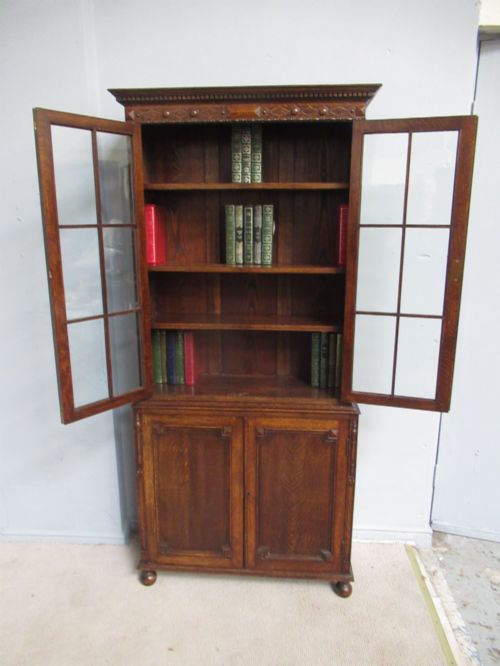
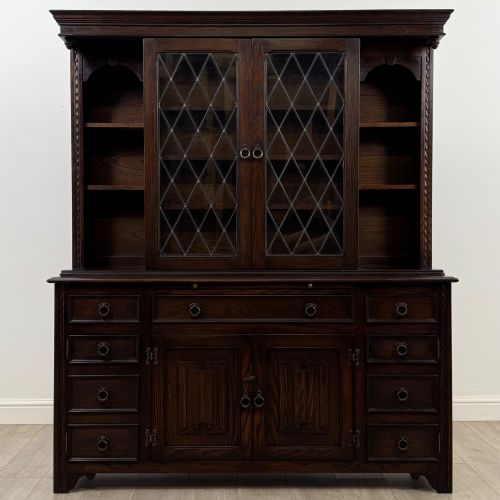
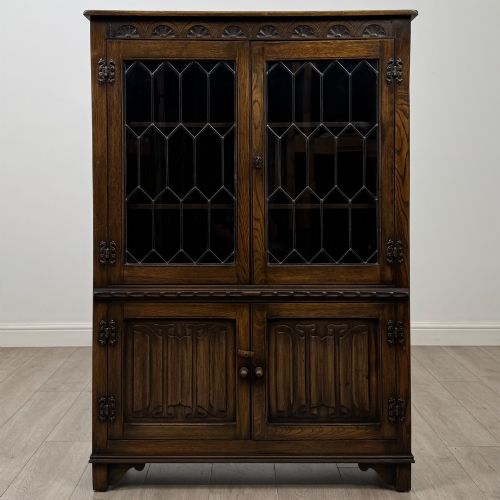
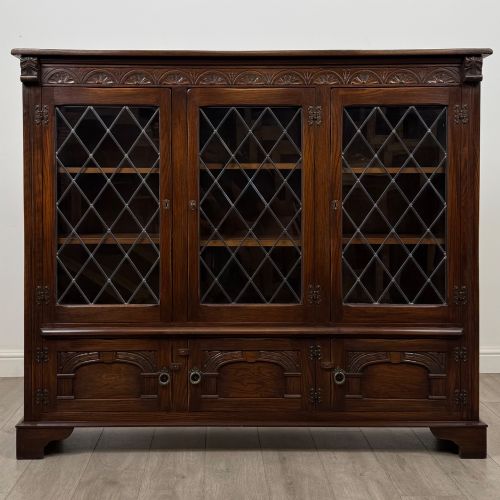
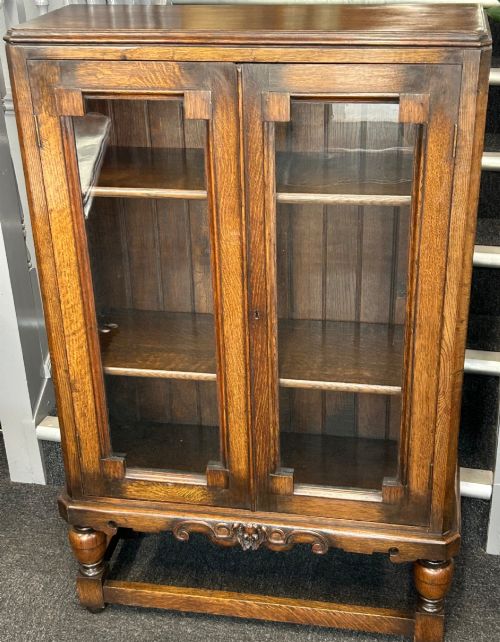


Jacobean Display Cabinet
Jacobean display cabinet pieces bring substantial dark timber presence and carved detail into a room, offering practical storage with historic character.
Jacobean Display Cabinet
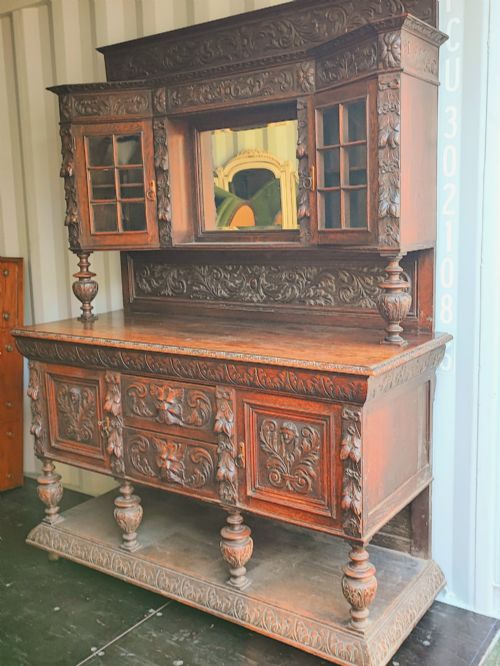
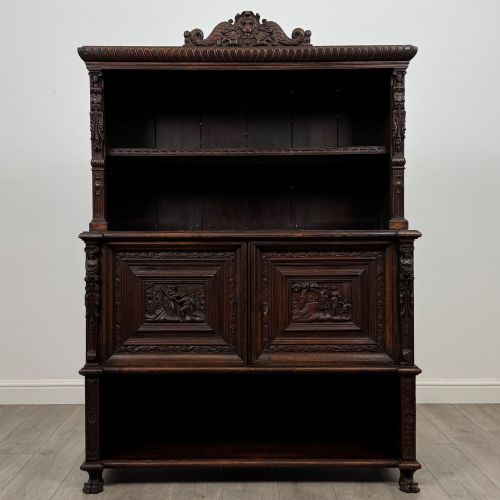
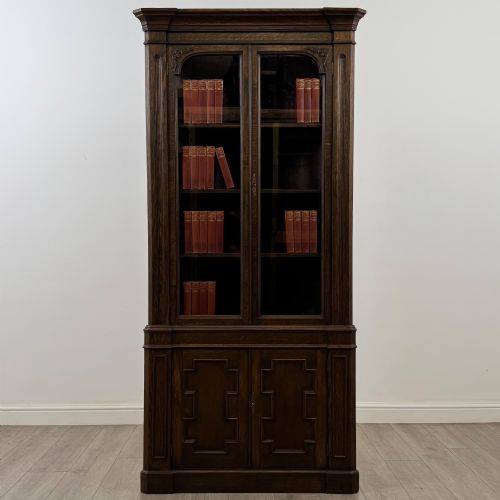
A jacobean display cabinet gathers the heavy proportions and dark timber characteristic of revival furniture from the nineteenth and early twentieth centuries. These items frequently appear alongside related forms such as bookcases, dressers, and sideboards sharing the same revival aesthetic.
Most examples found in the selection date from the late nineteenth century through the nineteen-thirties, spanning Victorian, Edwardian, and later periods of revival interest. Makers drew upon seventeenth-century motifs to construct substantial storage units for domestic interiors.
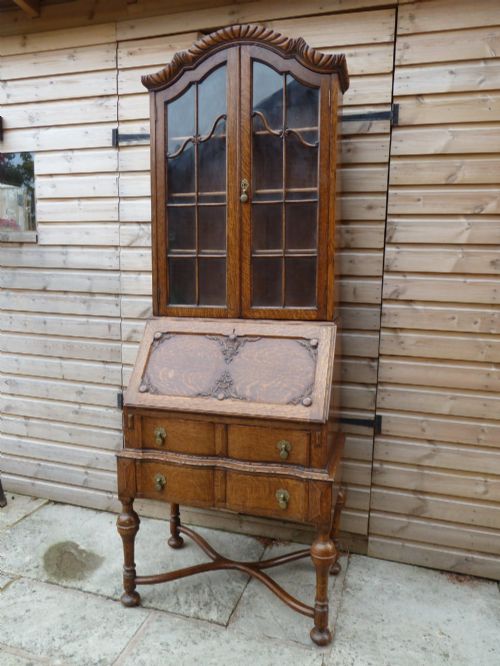
The assortment includes corner cabinets, two-door glazed units, and bureau bookcases alongside traditional display furniture. Oak serves as the primary structural medium across these varied formats, often enriched with linenfold carving or geometric mouldings.
Materials and construction methods
Oak forms the essential substrate for nearly every piece, selected for its durability and suitability for deep relief carving. Cabinet makers utilised solid timber panels alongside framed construction to build sturdy cupboards and bookcases.
Glazing takes multiple forms, incorporating plain glass, leaded panels, and mirrored backs within timber doors. Brass and iron hardware such as hinges and drop handles secure the heavy doors and drawers typical of these revival pieces.
The listings on this site feature oak as the exclusive wood material, paired with glass, leaded glass, and mirror elements.
Factors of design and execution
Quality reveals itself in the crispness and depth of the carved ornamentation applied to the oak surfaces. Pieces showing sharp, hand-finished detailing on panels and mouldings stand apart from simpler production items.
Construction integrity distinguishes better examples, visible in the tight joinery of glazed doors and the weight of the timber used throughout the cabinet or dresser base. The integration of leaded glass and period brass fittings further elevates the standing of an individual piece.
The Jacobean Display Cabinet Glossary
- Jacobean Revival
- A nineteenth and twentieth-century style imitating the geometric panels, heavy mouldings, and dark finishes of early seventeenth-century English furniture. This aesthetic defines the primary character of the pieces on this page.
- Linenfold
- A carved wooden panel motif resembling folded fabric, frequently seen on cabinet doors and panels. It represents a traditional Gothic and Tudor decorative technique adopted by later revival makers.
- Bureau Bookcase
- A dual-purpose item combining a sloping desk flap for writing with upper shelving enclosed by doors. These units often feature carved oak surfaces matching standalone display cabinets.
- Leaded Glass
- Small panes of glass held together by strips of lead to form decorative window patterns in cabinet doors. This technique allows for traditional light diffusion within the display section.
- Court Cupboard
- A traditional form of heavy wooden storage furniture featuring an enclosed upper section supported by pillars. These sturdy oak pieces form part of the broader range of revival cupboards.
Jacobean Display Cabinet: Frequently Asked Questions
What periods do these cabinets represent?
The selection spans pieces made from the mid-nineteenth century through the nineteen-thirties, encompassing Victorian, Edwardian, and later revival eras.
Craftsmen during these decades reproduced earlier seventeenth-century styles using traditional oak and carved detailing.
How were these cabinets originally used?
These units served as prominent dining room or parlour furniture designed to store china, books, and household valuables behind protective glass.
Lower cupboards and drawers provided concealed storage for heavier items like table linen and silverware.
Are all these pieces made from solid oak?
Oak is the predominant timber across the listings, utilised for frames, panels, carved doors, and internal shelving.
Some pieces incorporate supplementary materials such as glass, mirror plates, and brass or iron hardware for doors and drawers.
How do I identify a revival style?
Revival furniture displays historic motifs like linenfold carving, geometric mouldings, and cup-and-cover supports applied to later nineteenth or twentieth-century carcasses.
The condition of the timber, interior construction methods, and modern hinge fixings generally point to these later manufacturing dates.