
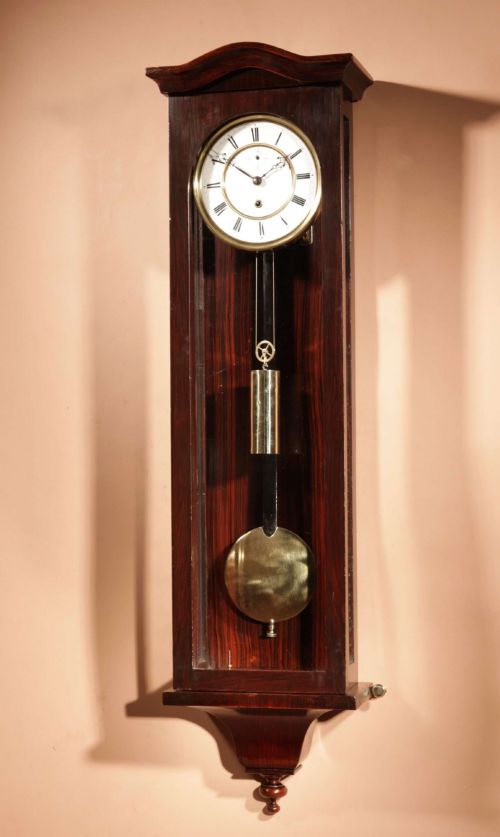
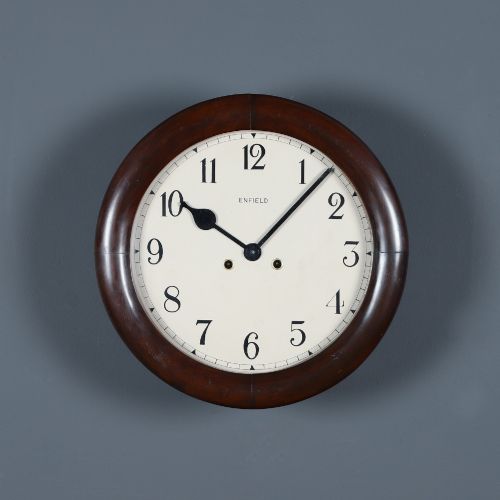
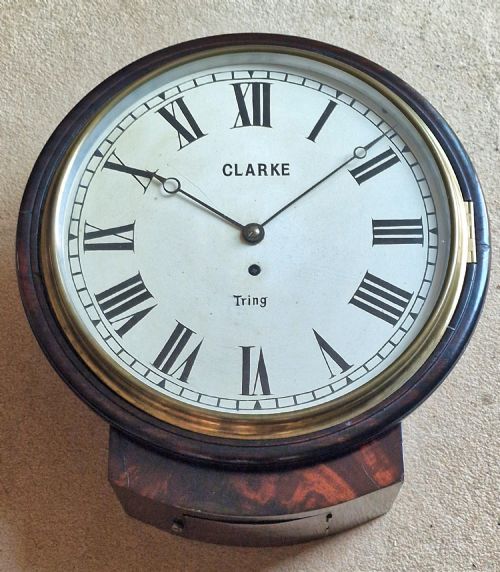
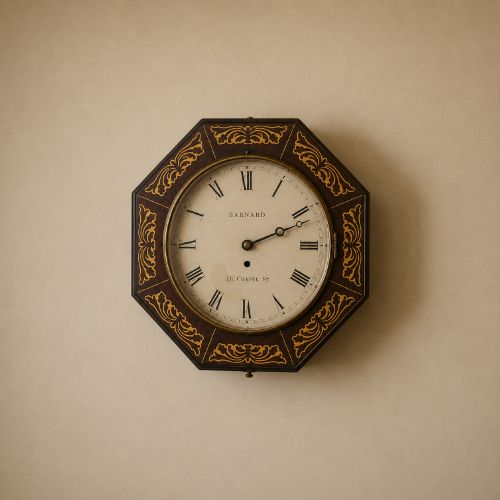
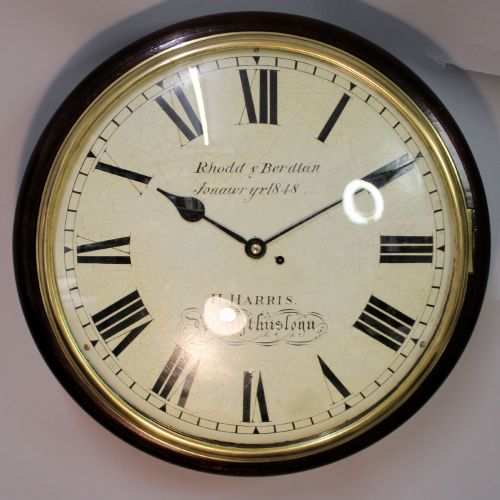
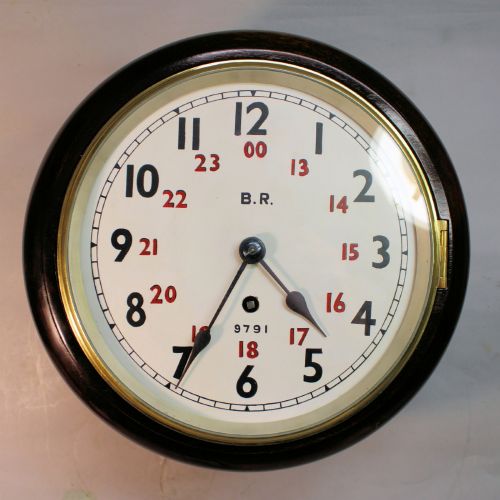
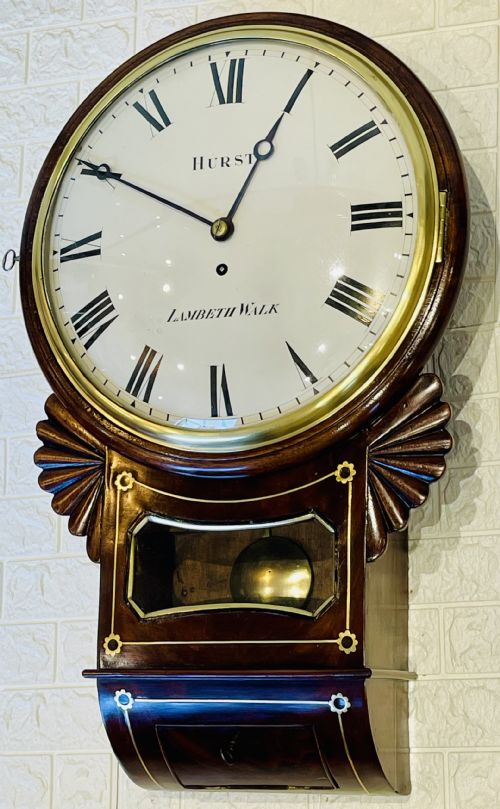

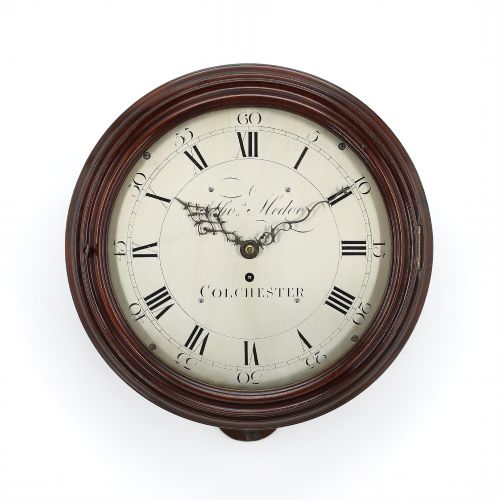

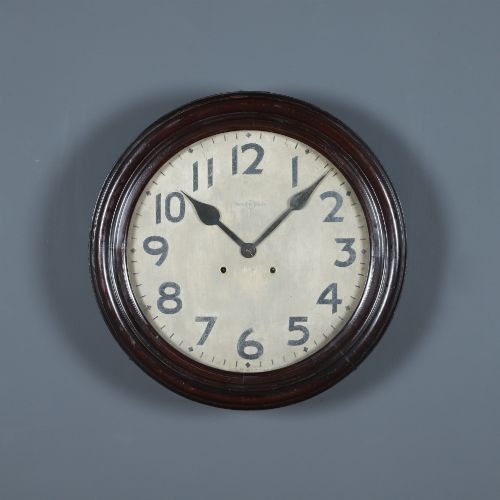

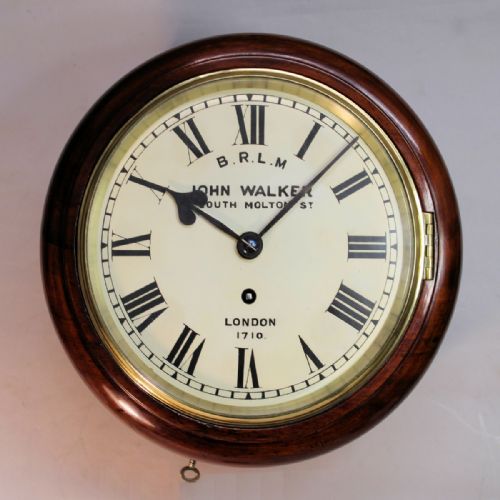
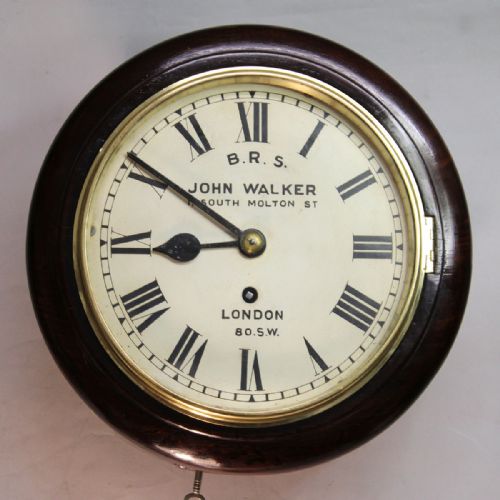


Dark Mahogany Wall Clock
A dark mahogany wall clock brings architectural timber and steady railway timekeeping straight into a room.
What these pieces are
A dark mahogany wall clock serves as a functional timepiece shaped by nineteenth-century railway and municipal use. These circular dial instruments were hung in stations, offices, and boardrooms where reliable timekeeping mattered above all else.
Most examples found here date from the nineteenth century into the mid-twentieth century, with Victorian and Regency stylistic roots visible in the timber surrounds. Forms range from simple drop-dial fusee clocks to combined clock and barometer instruments.
Originating largely from British workshops and utilitarian contexts, these wall clocks display the deep reddish-brown tones of polished mahogany. They bridge the gap between heavy industrial utility and domestic interior decoration.
How they were made
Cases are constructed from solid mahogany timber, turned or joined to form robust circular dial surrounds and drop boxes. Brass bezels and thick protective glass protect the paper or painted dials from dust and damage.
Inside the timber housing, mechanical movements rely on fusee mechanisms to maintain even tension as the mainspring unwinds. This mechanical arrangement ensures steady timekeeping across the duration of each wind.
Retail Price Guide 2026
Typical UK retail prices for dark mahogany wall clock, calculated from the Sellingantiques database of over a million retail prices indexed since 2003. This retail price guide relies exclusively on Sellingantiques data; no external sources or auction records are used, so the figures do not describe the wider market.
Listings feature mahogany, brass, and glass across Victorian, Regency, and British Utilitarian styles.
What varies in quality
Quality rests in the crispness of the timber turning and the precision of the underlying fusee movement rather than surface adornment. Maker attribution also shapes interest, particularly when marked by notable firms or associated with specific railway companies.
The visual balance between the mahogany case and the dial proportions dictates the aesthetic success of each piece. Untouched original movements and authentic station provenance elevate an example far above standard utility models.
Dent of London·Russell of Liverpool
The Dark Mahogany Wall Clock Glossary
- Fusee
- A conical pulley connected to the mainspring by a chain or cord, designed to equalise the power delivered to the movement as the spring unwinds. This device is fundamental to accurate nineteenth-century timekeeping.
- Drop-dial
- A clock case featuring a circular upper section for the dial and an extended lower trunk, often used to house a pendulum swing. The drop case became a standard format for British railway and office clocks.
- Bezel
- The metal ring, usually made of brass, that holds the protective glass in place over the clock face. It often opens on a hinge to allow hand-setting.
- Mahogany
- A durable, deep brown tropical hardwood valued for its rich colour and stable grain, frequently utilised for quality clock cases during the Victorian and Regency periods.
Frequently Asked Questions
How do I wind a fusee wall clock?
Use the appropriate key inserted into the dial aperture to turn the movement until resistance is felt. Care should be taken not to overwind the mainspring.
Most fusee movements require attention once a week to maintain correct time.
Where were these clocks originally used?
These clocks hung in railway stations, post offices, and municipal offices across Britain where keeping accurate time was essential for operations.
Their robust construction and clear dials were designed for public visibility in busy public spaces.
How do I date a mahogany wall clock?
Dating relies on examining the case timber, dial construction, and movement characteristics such as fusee design and maker signatures. Victorian and Regency examples show distinct joinery methods and dial proportions.
Railway provenance often provides specific deployment dates through company records or dial inscriptions.
How should I hang a heavy wall clock?
Secure the clock directly to a wall stud or use heavy-duty fixings rated for the weight of solid mahogany and brass movements. Hang the case firmly so the pendulum swings without striking the interior.
Level the case carefully on the wall to ensure the beat remains even and the movement does not stop.