
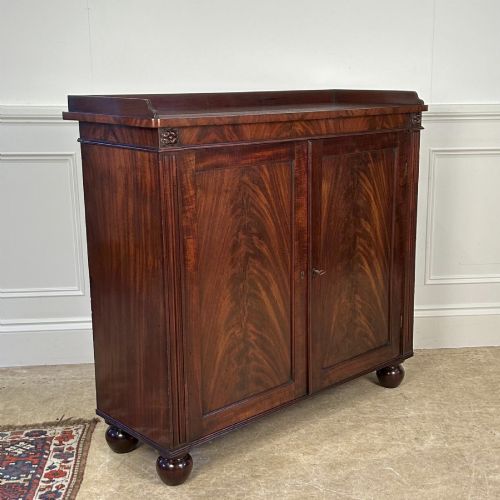
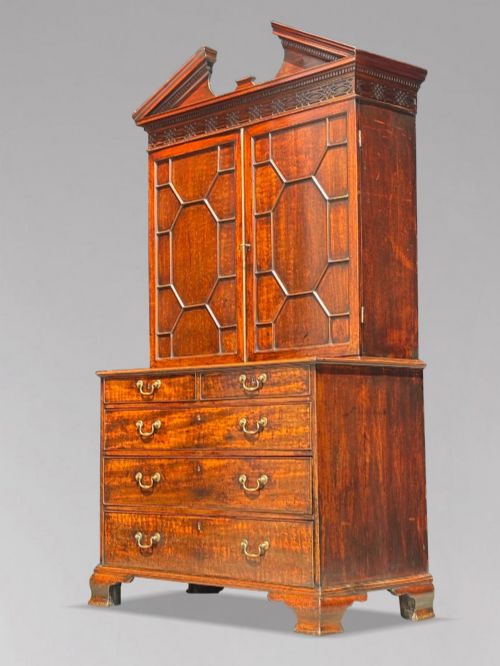
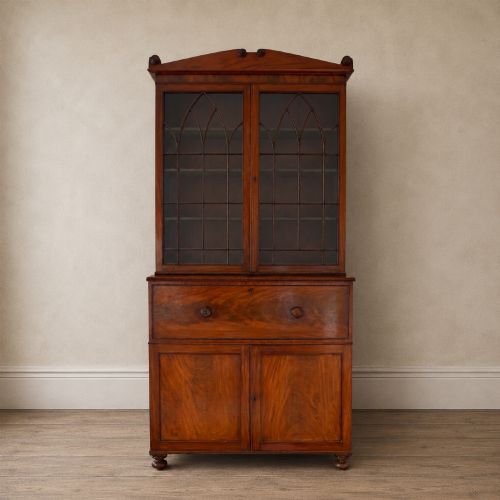
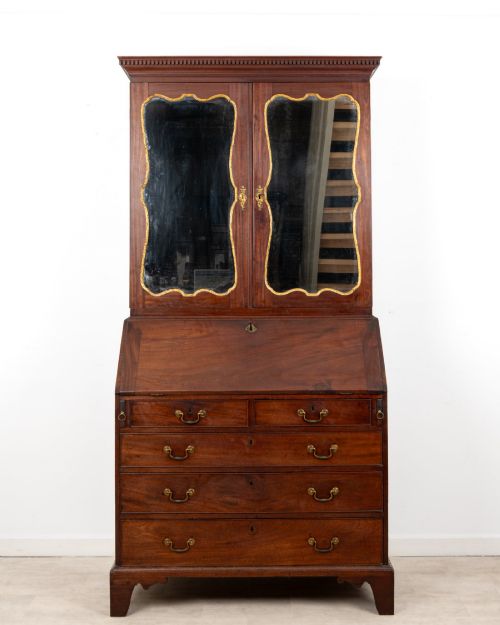
Dark Mahogany Bureau Bookcase
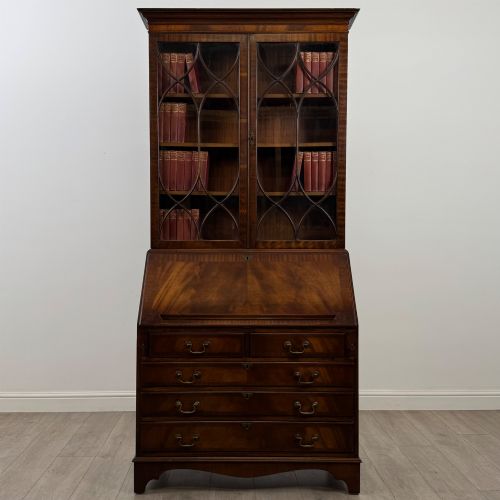
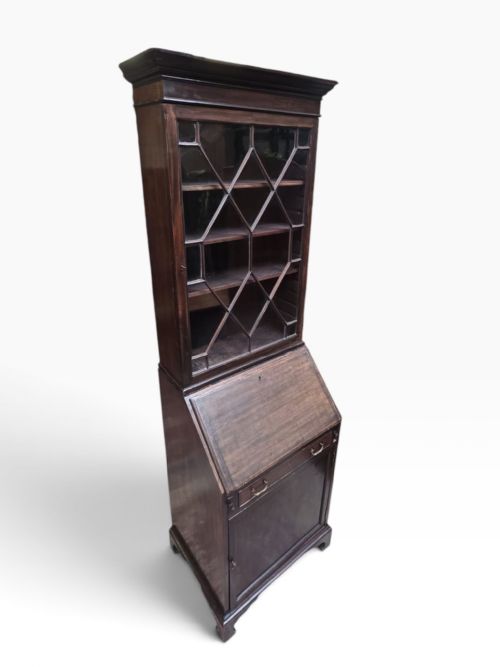
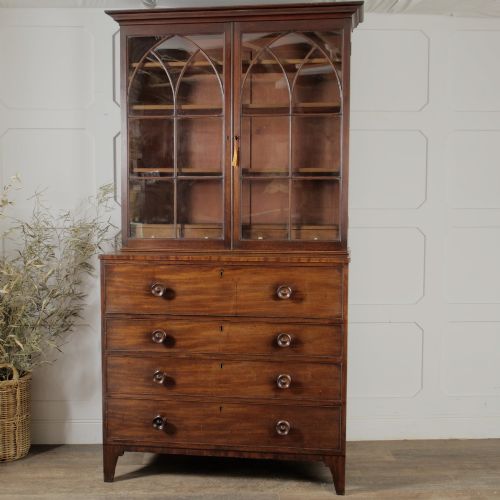
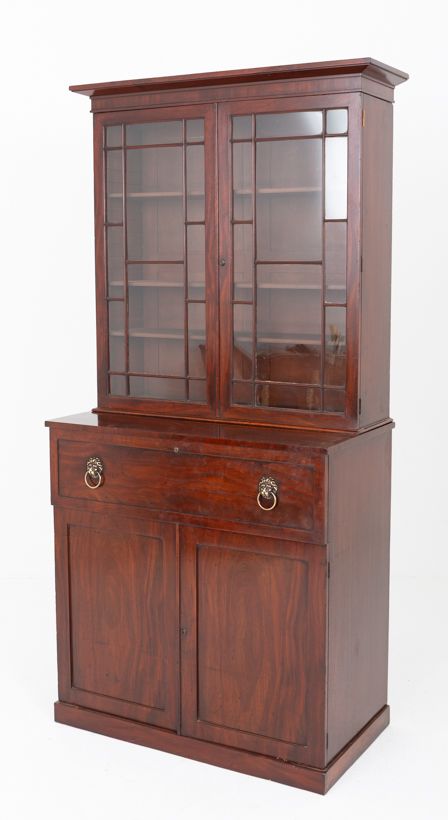
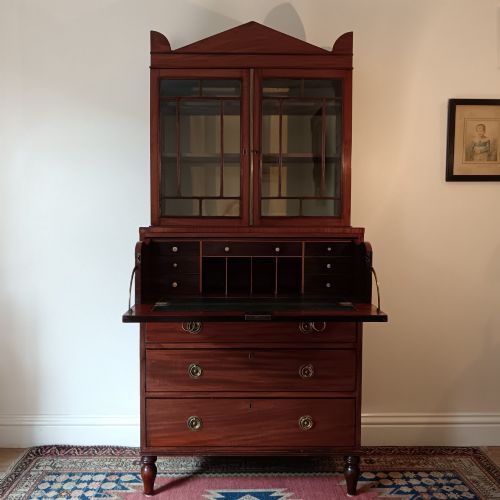
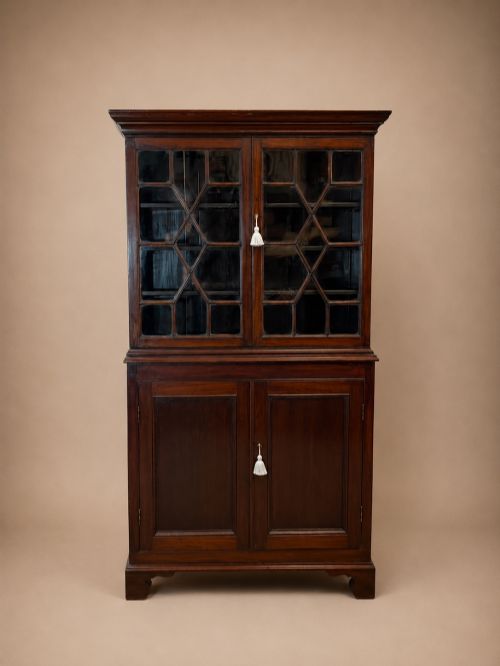
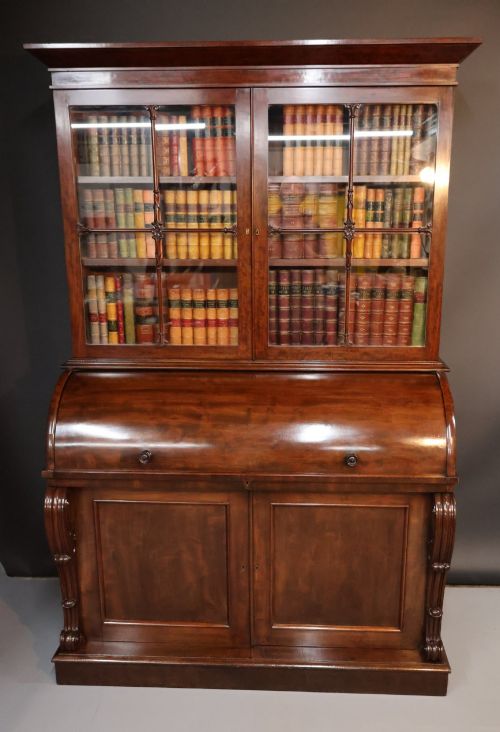
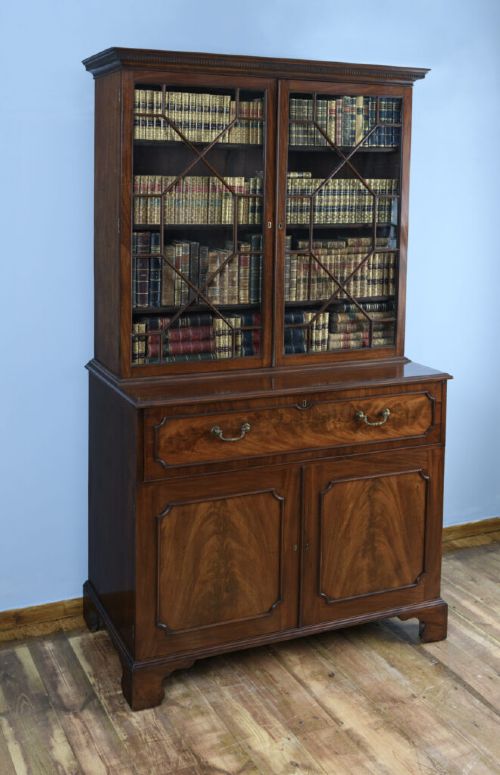
A dark mahogany bureau bookcase combines a fitted writing desk and a glazed upper cabinet in one substantial piece of furniture.
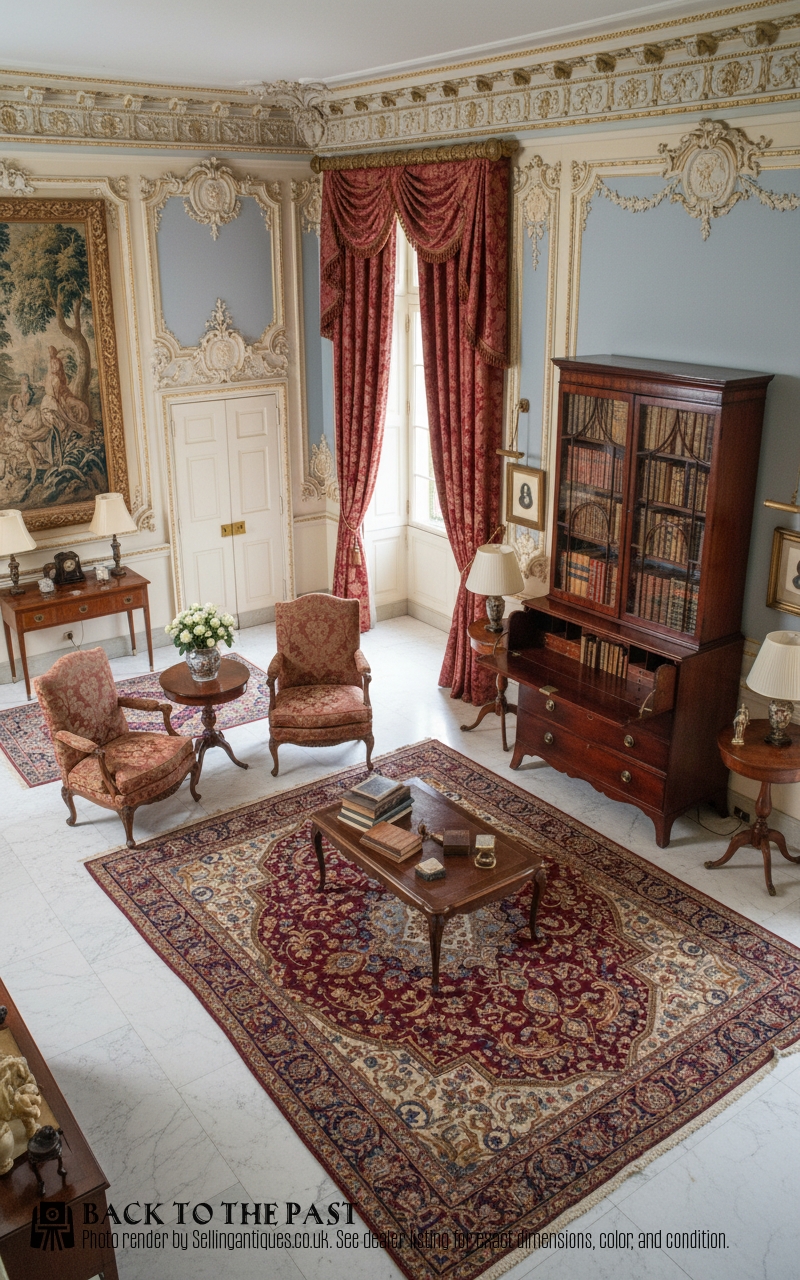
Dark Mahogany Bureau Bookcase
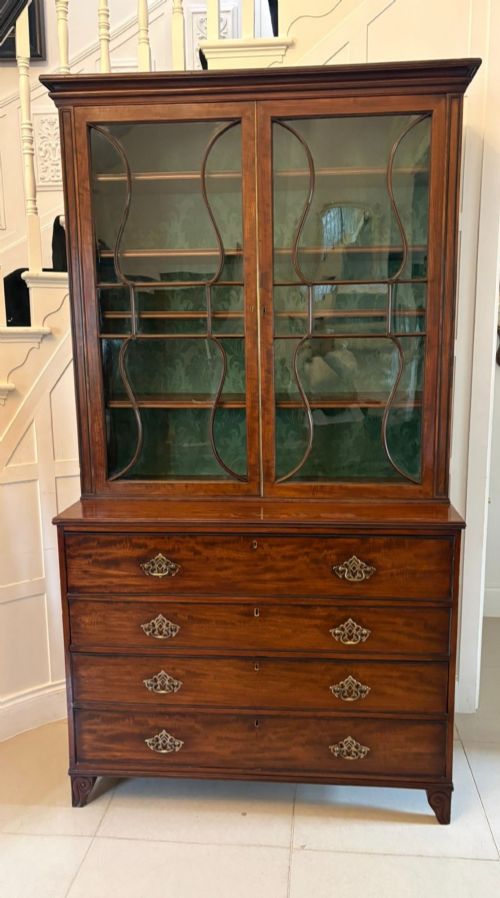
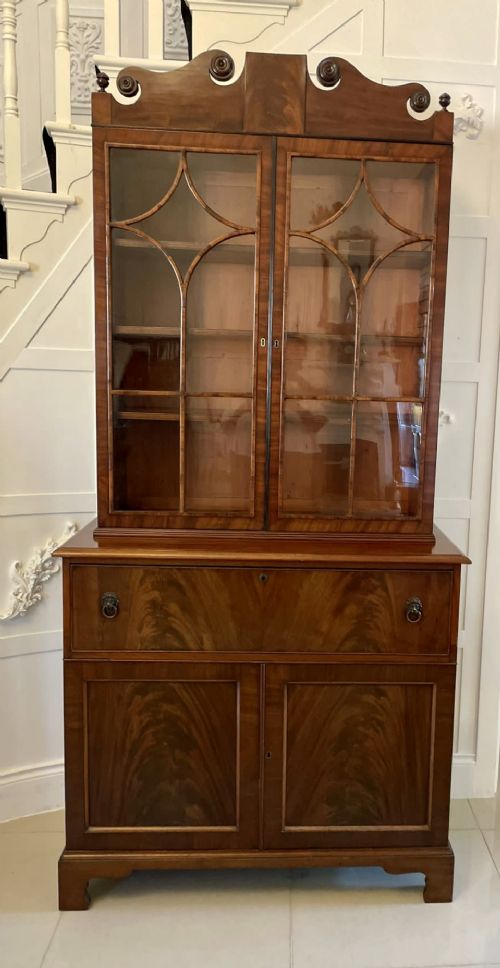
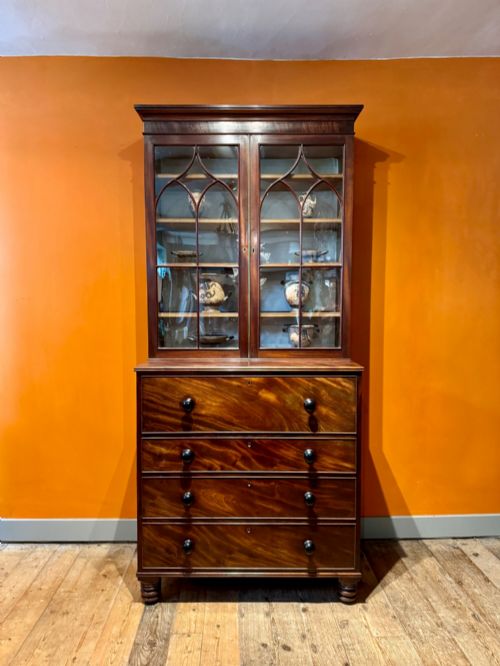
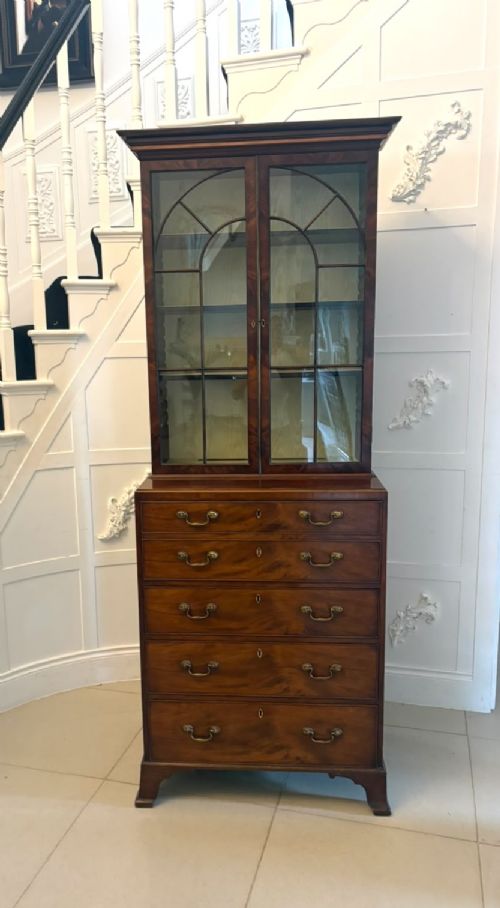
A dark mahogany bureau bookcase serves as a dual-purpose piece for storage and writing, appearing frequently across Georgian, Regency, and Victorian periods. Buyers examining this page encounter pieces that pair upper glass doors with lower drop-front desks or pull-out secretaire drawers.
The dominant forms span from grand scale library cabinets to compact Edwardian examples. Cabinetmakers constructed these items using dense timbers, arranging shelves behind astragal glazed doors above fitted desk interiors.
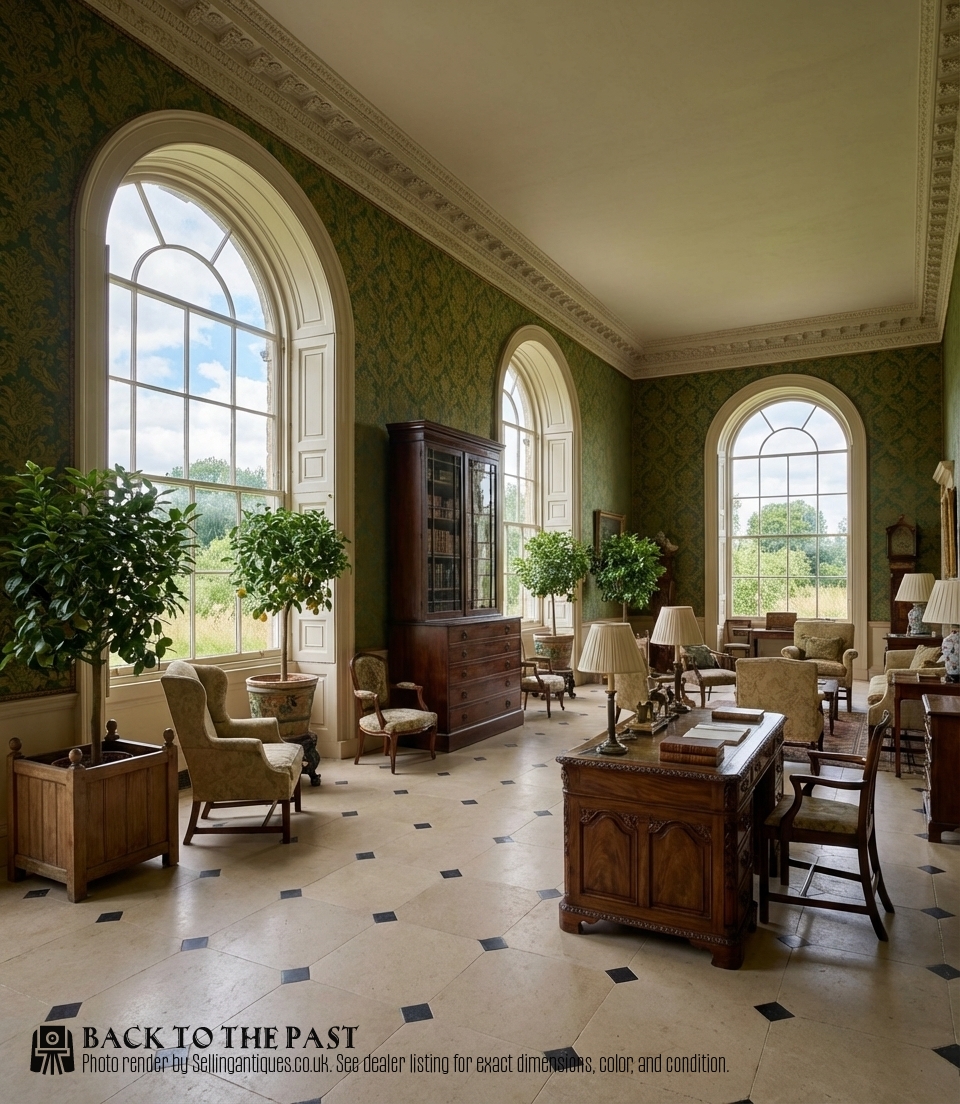
Materials and Construction
Craftsmen utilised solid mahogany alongside flame mahogany veneer and Cuban mahogany, often incorporating satinwood inlay and brass hardware. Glass formed the upper door panels, while leather frequently lined the writing surfaces of the pull-out drawers.
Joiners built the upper bookcase and lower bureau sections separately before uniting them into a single tall cabinet. Structural stability depended on dense timber framing and careful matching of wood figures across the front facades.
Materials recorded across the available inventory include flame mahogany veneer, brass fittings, clear glass, and leather writing surfaces.
Evaluating the Build
Excellence in a dark mahogany bureau bookcase rests on the selection of timber figures and the precision of the cabinetwork. Grain matching across large surfaces and the fineness of inlay work separate standard pieces from high workshop productions.
Interior fittings reveal the standard of construction, notably the complexity of small drawers, pigeonholes, and secret compartments within the desk section. Original glass panes, brass handles, and working locks elevate the integrity of the piece.
George Oakley·Gillows·Thomas Chippendale
The Dark Mahogany Bureau Bookcase Glossary
- Secretaire
- A desk form featuring a pull-out drawer with a drop front that conceals small compartments and pigeonholes. This component replaces a traditional slanted bureau flap in many Regency and Victorian variants.
- Astragal glazed
- A method of dividing glass door panels into smaller panes using narrow wooden mouldings called glazing bars. These grids often form geometric or Gothic patterns across the upper bookcase doors.
- Flame mahogany veneer
- A thin slice of wood cut from the fork of the tree where branches meet, displaying a fiery, undulating grain pattern. Cabinetmakers applied this expensive timber to prominent exterior surfaces for decorative effect.
- Satinwood inlay
- A contrasting light-coloured exotic wood set flush into the darker mahogany surface to create decorative borders and motifs. This technique highlights the edges of drawers and cabinet doors.
- Fitted interior
- The collection of miniature drawers, central cupboards, and arched pigeonholes revealed when the bureau flap or secretaire drawer opens. These compartments often include hidden spring-loaded compartments.
Dark Mahogany Bureau Bookcase: Frequently Asked Questions
What is a dark mahogany bureau bookcase?
A dark mahogany bureau bookcase is a tall standing furniture piece that combines a display cabinet with a functional writing desk. The upper section houses shelves behind glass doors, while the lower portion provides a sloping flap or pull-out drawer for correspondence.
These combination items evolved to serve home libraries and studies where floor space remained at a premium. They allowed owners to store volumes above and conduct writing tasks below within a unified timber structure.
How do I tell Georgian from Victorian examples?
Georgian pieces, particularly those from the reign of George III, often display restrained classical proportions, fine bracket feet, and delicate astragal glazing bars. The mahogany timbers tend to have a rich, mellow patina developed over centuries of polish.
Victorian and later nineteenth-century versions typically present heavier proportions, grand scale mouldings, and darker finishes. Cabinetmakers of this later era utilised machine-sawn veneers and more robust structural elements to support larger glass panels.
Where were bureau bookcases placed?
These tall cabinets traditionally stood in private libraries, drawing rooms, and studies of large townhouses and country residences. Their dual role made them central fixtures for estate management and personal correspondence.
Today, they function well in living rooms, home offices, and hallways where height and vertical storage are required. The display section houses books or collections, while the desk area manages everyday papers.
How should I care for mahogany furniture?
Maintain mahogany surfaces by dusting regularly with a soft, dry cloth and avoiding modern silicone sprays. Keep the timber away from direct sunlight and heat sources to prevent the wood veneers from drying out and cracking.
Apply a traditional beeswax polish sparingly to nourish the grain and preserve the deep reddish-brown tone. Leather writing inserts benefit from occasional specialised conditioning to keep the material supple.