
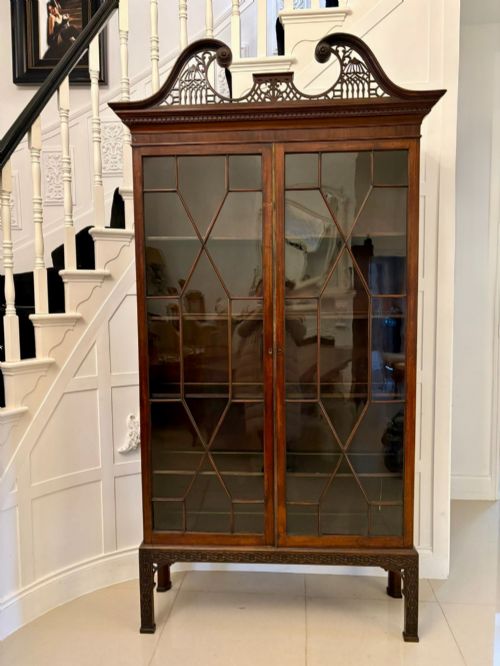
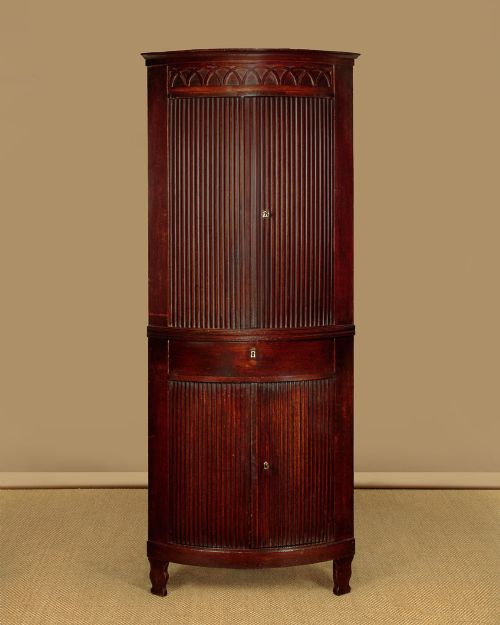
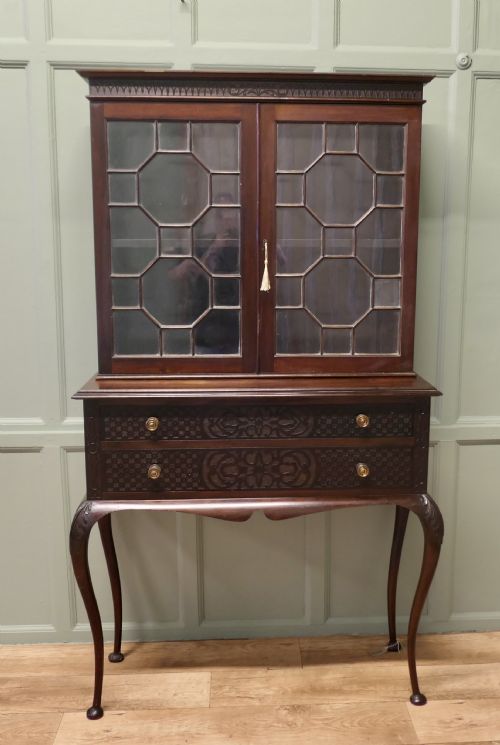
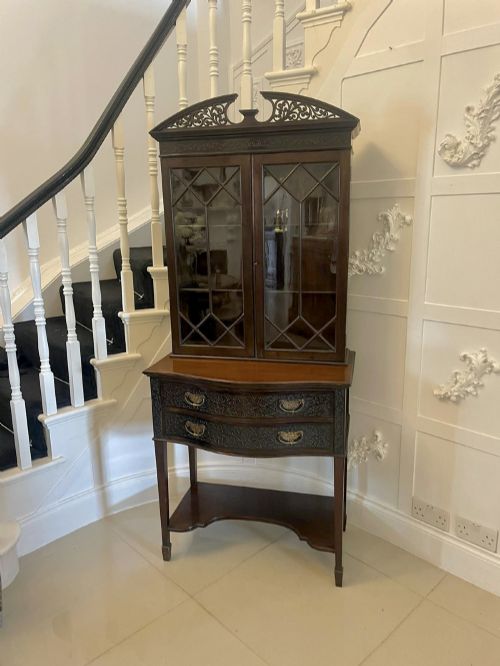
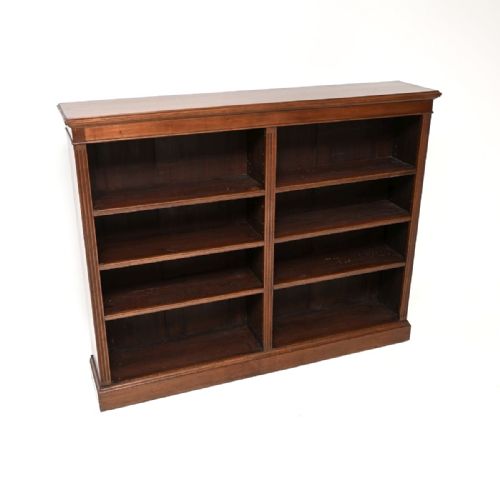
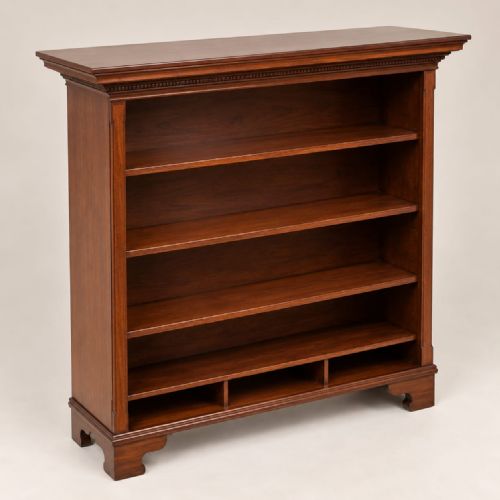

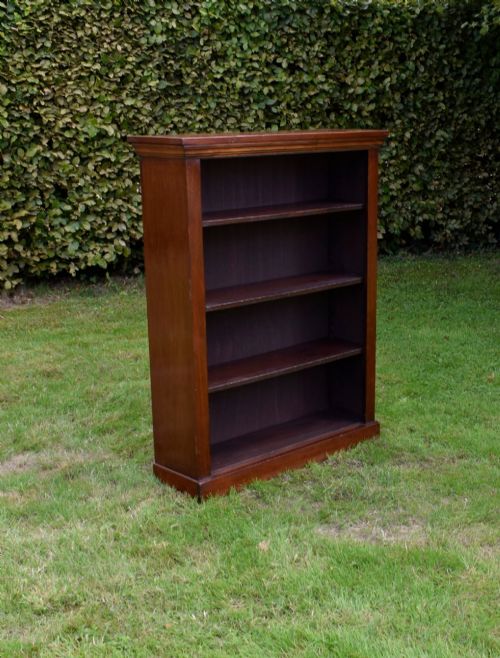
Dark Mahogany Bookcase Cabinet
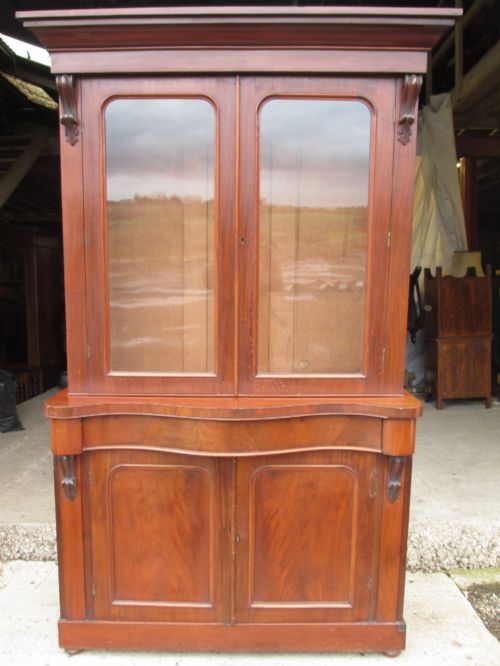
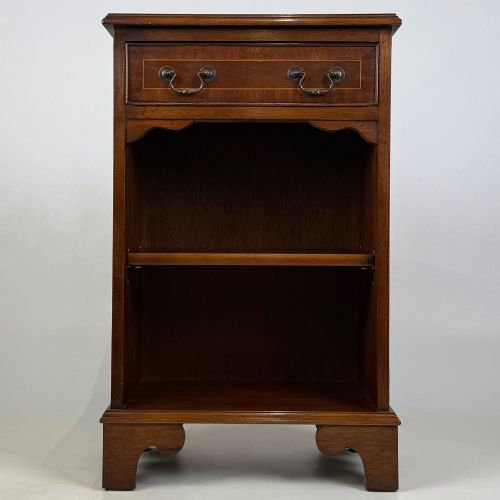
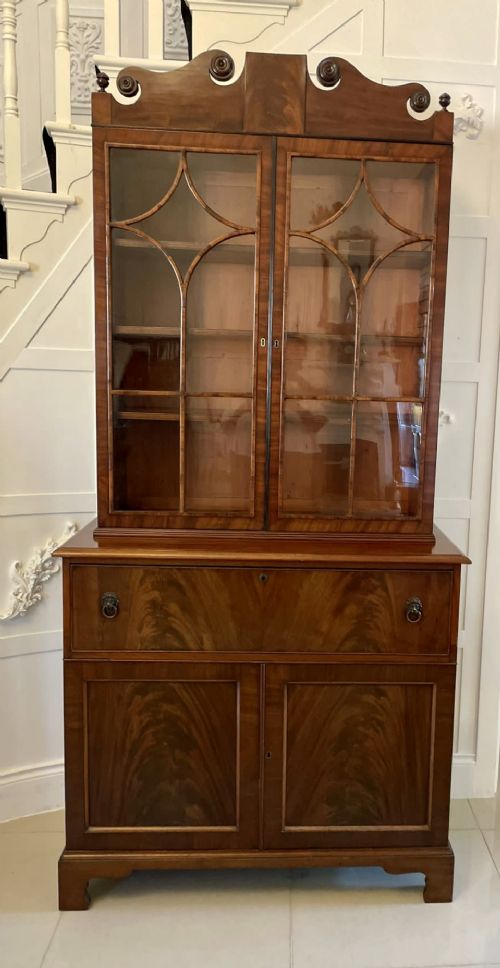
Dark mahogany bookcase cabinet pieces combine practical storage with rich timber surfaces, offering a traditional centrepiece for any study or library.
Dark Mahogany Bookcase Cabinet
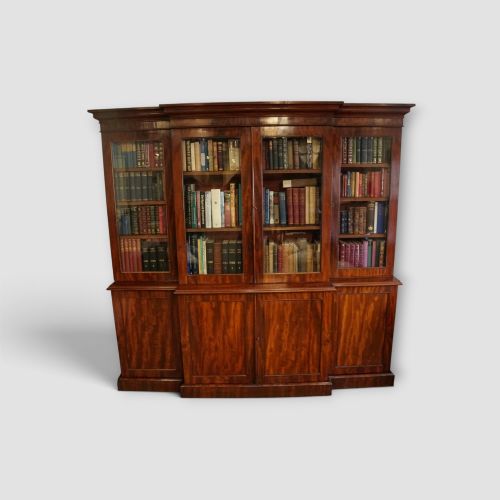
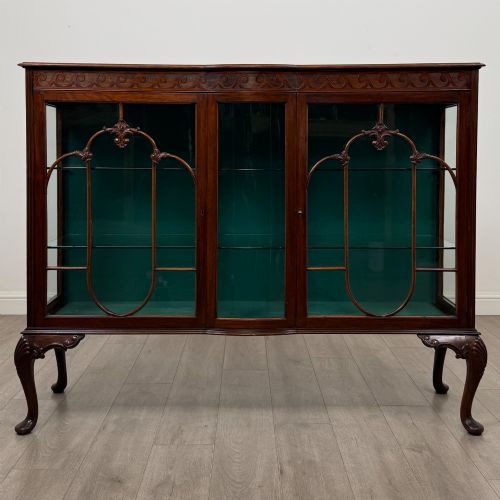
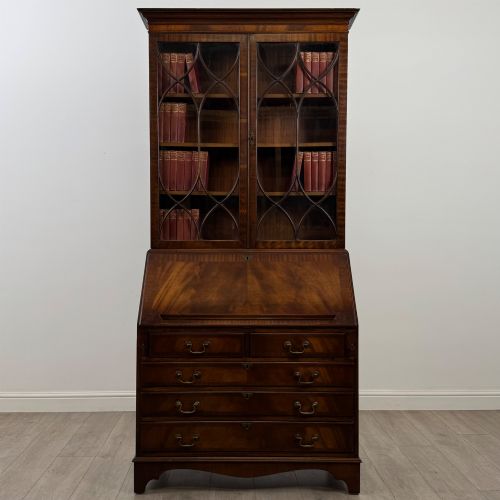
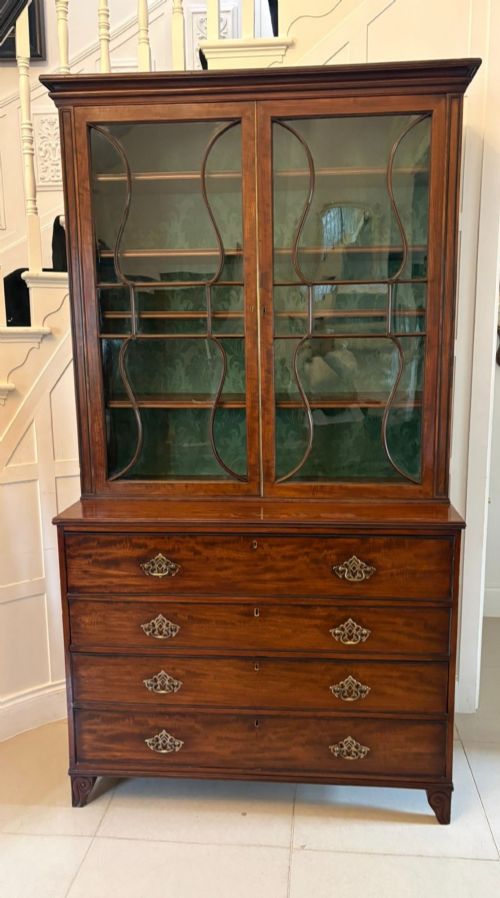
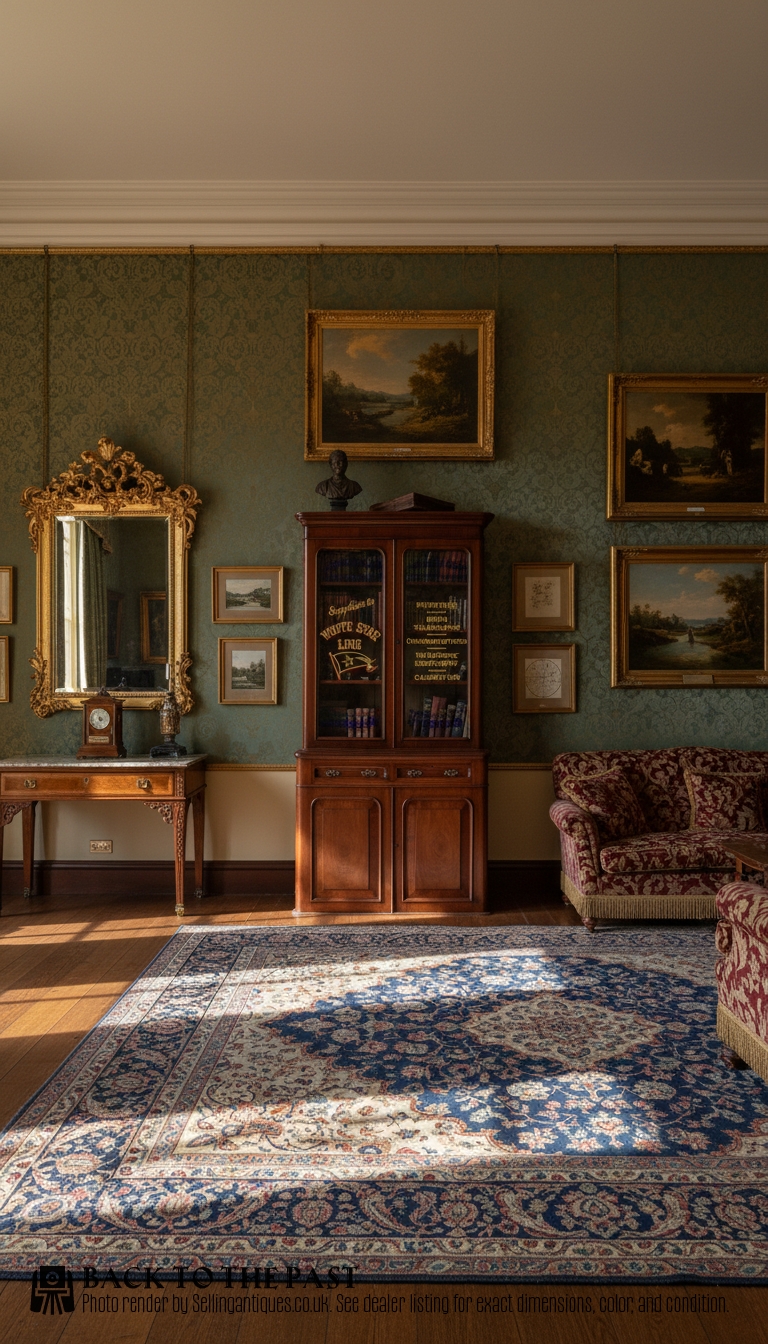
A dark mahogany bookcase cabinet bridges the gap between open shelving and secure display, emerging in forms that suit both grand libraries and compact studies. Buyers searching for a dark mahogany bookcase cabinet encounter various configurations including breakfront designs, bureau bookcases with writing desks, and tall glazed display units.
The pieces originating across the Georgian, Regency, Victorian, and Edwardian periods demonstrate a steady evolution in domestic storage. Victorian and Edwardian examples appear frequently, alongside earlier Regency and Georgian pieces that offer deeper historical character.
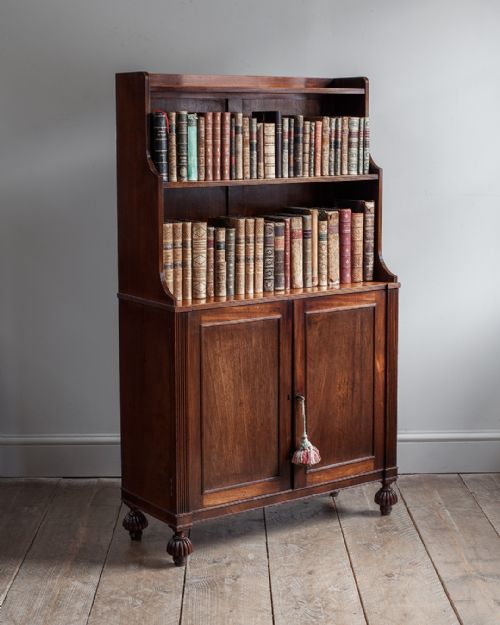
Makers utilised distinct regional styles, ranging from Chinese Chippendale flourishes to waterfall shelves and corner cabinets. Each object type serves a specific function, whether housing a private book collection or exhibiting decorative porcelain behind glass doors.
Materials and Technique
Cabinetmakers built these pieces primarily using solid mahogany and flame mahogany veneer, often enhanced by satinwood inlay and brass hardware. The underlying carcass construction frequently incorporates secondary timbers such as oak, providing structural stability for heavy book collections.
Glazing techniques employed individual glass panes set within wooden astragal bars, while specialised writing sections utilised fitted drawers and pigeonholes inside drop-down secretaire drawers. Surface finishing relied on hand-polished French polish to deepen the natural grain and dark tone of the wood.
Secret compartments inside bureau bookcases rewarded curious owners with hidden spring-loaded drawers behind pigeonholes.
Assessing Quality
The standard of a piece rests heavily on the selection of the timber, where highly figured flame mahogany veneer or rich solid mahogany sets the upper tier apart from plain surfaces. Cabinetmaking finesse shows in the tightness of the dovetail joints, the crispness of any carved details, and the survival of original brass fittings and glass panes.
Proportion and architectural harmony dictate the success of larger breakfront and double-height pieces. Refined execution in interior fitted drawers and well-balanced door panels separate standard utilitarian furniture from exceptional cabinet work.
Jas Shoolbred·George Oakley
The Dark Mahogany Bookcase Cabinet Glossary
- Astragal
- Moulding profiles used to hold glass panes within a door frame. These delicate wooden strips divide the glazed area into smaller geometric sections.
- Breakfront
- A cabinet design where the central section projects forward from the flanking wings. This configuration adds architectural depth to large bookcases.
- Secretaire
- A desk disguised as a drawer, featuring a drop-front panel that reveals a fitted interior with small drawers and pigeonholes. It combines writing functionality with bookcase storage.
- Vitrine
- A glass-fronted display cabinet designed specifically for showing porcelain or collectables. The term highlights the emphasis on visibility over enclosed storage.
- Waterfall
- A style of open shelving where each tier steps back progressively from the one below. This arrangement creates a cascading profile popular in the Regency era.
Dark Mahogany Bookcase Cabinet: Frequently Asked Questions
How do I date a mahogany bookcase?
Dating relies on observing construction methods, timber choice, and stylistic cues present in the piece. Georgian and Regency examples often display hand-cut dovetails and lighter carcass framing, while Victorian and Edwardian pieces frequently incorporate machine-sawn elements and heavier proportions.
Hardware and glass characteristics also offer chronological clues. Hand-blown cylinder glass panes show subtle distortion, whereas later manufactured glass remains uniform and flat.
How should I care for mahogany furniture?
Maintaining mahogany requires stable indoor humidity and protection from direct sunlight to prevent the timber from fading. Dusting regularly with a soft, dry cloth preserves the polished surface without building up residue.
Applying occasional appropriate wax feeds the wood and maintains the lustre of the finish. Avoid placing these cabinets near heat sources or damp areas.
Are glazed doors original on antique cabinets?
Determining originality involves inspecting the interior rebates and the timber framing around the glass. Original doors show consistent ageing, matching wood species, and traditional putty or wooden bead fixings.
Astragal bars should match the internal construction and period style of the main body. Modern replacement glass or mismatched framing indicates later alterations.