


Dark Hardwood Coffee Table
A dark hardwood coffee table brings dense grain, deep tone and distinct regional carving traditions into a sitting room.
Dark Hardwood Coffee Table
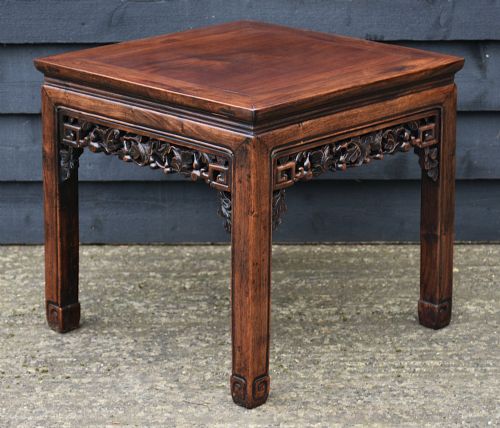
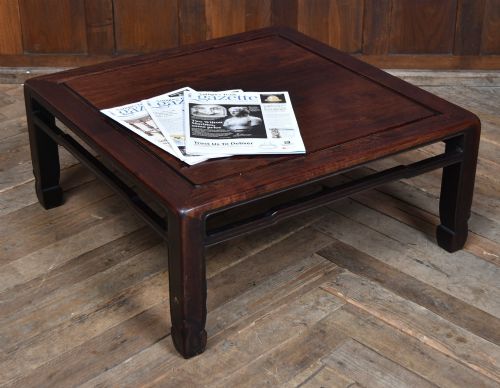
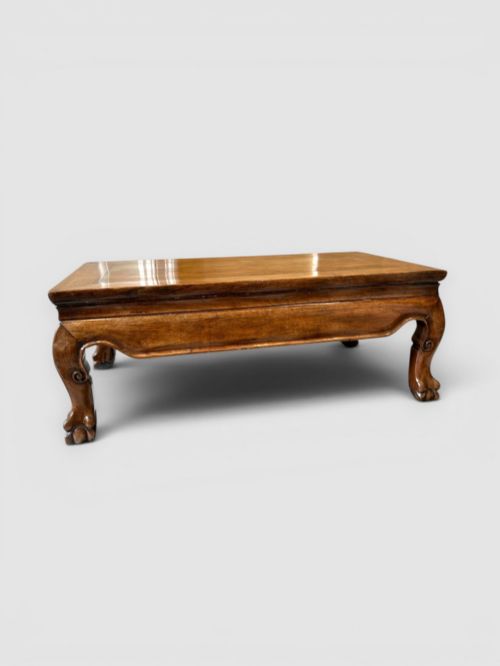
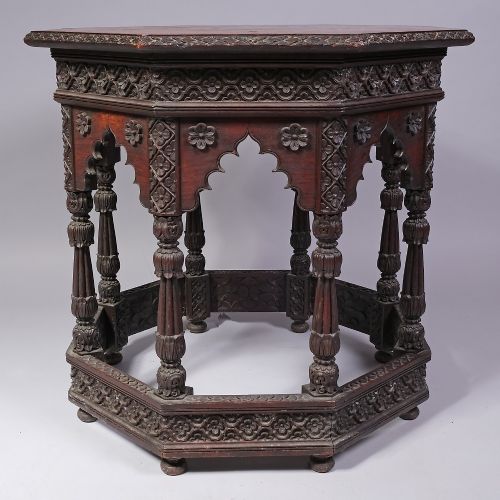
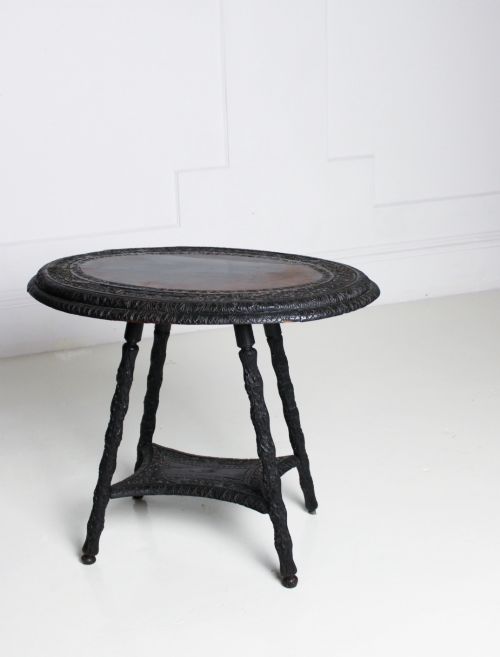
A dark hardwood coffee table groups together low tables, opium tables, low coffee tables and occasional tables produced in regional styles such as Anglo-Indian, Chinese Export and Traditional Chinese. Buyers seeking a dark hardwood coffee table most frequently encounter low rosewood, padouk or general hardwood examples dating from the nineteenth century or the early decades of the twentieth century.
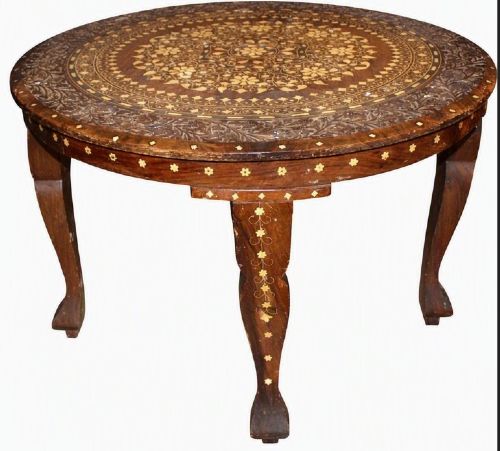
The selection ranges from circular and octagonal carved surfaces to nests of four tables, square stands and rectangular coffee tables. Many pieces originate from workshop traditions in China and India, spanning periods from the Victorian era through the early nineteen-twenties.
Forms extend beyond conventional low tables to include adapted campaign tea tables, octagonal lamp tables and elephant-form supports. These tables function centrally in modern rooms while retaining the specific decorative vocabulary of their overseas export origins.
Materials and Construction
Construction relies heavily on dense timbers like rosewood, padouk, teak and general hardwoods capable of supporting intricate hand carving. Joinery traditions prioritize sturdy frames suited to low surfaces and nested sets.
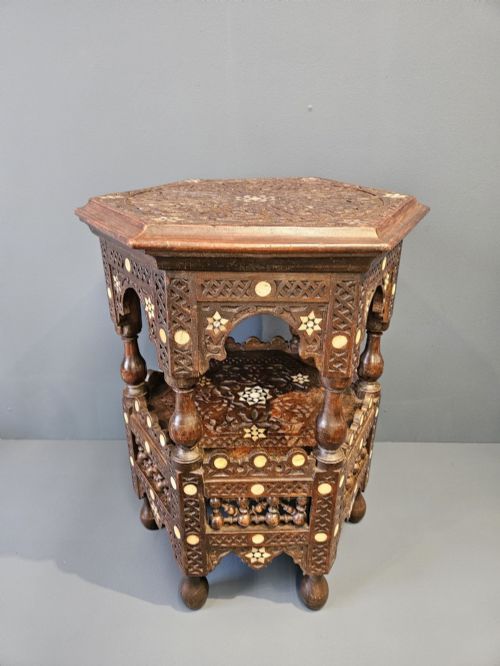
Surface enrichment often incorporates contrasting materials inserted directly into the dark wood ground. Bone inlay, brass wire or inset copper panels appear across Indian and Anglo-Indian octagonal and occasional tables.
Listings include nineteenth-century periods alongside Victorian, Edwardian and early twentieth-century dates up to nineteen-twenty.
Assessing Quality and Execution
Depth and crispness of hand carving separate standard commercial output from superior workshop production. Tables featuring deeply undercut foliage, animal figures or dragons demonstrate greater sculptural ambition than shallow stamped decoration.
The integration of secondary materials dictates overall refinement. Precise bone or brass inlay work flush with the surrounding hardwood surface denotes high-tier craftsmanship.
Liberty and Co
The Dark Hardwood Coffee Table Glossary
- Opium table
- A low, compact wooden table traditionally used in East Asia for reclining or serving. These low forms translate directly into compact modern coffee tables.
- Padouk
- A heavy, durable reddish-brown tropical hardwood prized for furniture making. It finishes with a deep dark tone suitable for export tables.
- Anglo-Indian
- Furniture made in India during the British colonial period, combining British forms with local carving techniques. These pieces often utilise teak or hardwood.
- Nest of tables
- A set of graduated tables designed to fit neatly beneath one another. They appear frequently in oriental hardwood and chinoiserie styles.
- Bone inlay
- The technique of embedding small pieces of carved bone into timber surfaces to form geometric or floral patterns. It creates striking contrast against dark hardwood.
Dark Hardwood Coffee Table: Frequently Asked Questions
What is an opium table?
An opium table is a traditional low wooden surface originating in China, built close to the floor for domestic use. Their compact proportions make them well suited as modern coffee tables.
They typically feature recessed legs and clean lines, though carved variants also exist within nineteenth-century production.
How do I use a nest of tables?
A nest of tables provides flexible surface space that can be expanded or stacked away as needed. They work well beside seating areas where extra room is occasionally required.
Individual tables can be separated around a room or kept nested together as a single block.
What is Anglo-Indian furniture?
Anglo-Indian furniture refers to pieces made in India by local craftsmen for British residents during the colonial period. They combine European furniture forms with intricate Indian carving.
Common materials include teak and heavy hardwoods, often featuring floral motifs or animal figures.
How do I care for dark hardwood?
Dark hardwood benefits from regular dusting with a soft cloth and occasional treatment with appropriate wood balms. Keeping tables away from direct heat sources prevents timber splitting.
Inlaid brass or bone elements require gentle cleaning to preserve the contrast against the dark grain.