




Oriental Hardwood Low Table
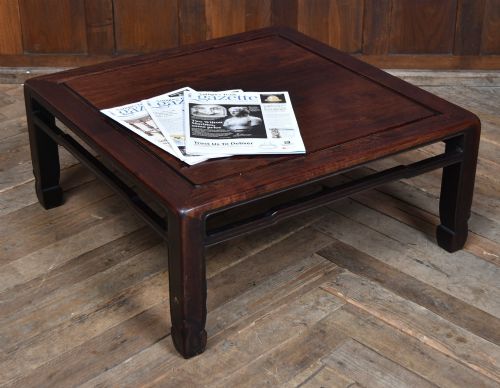
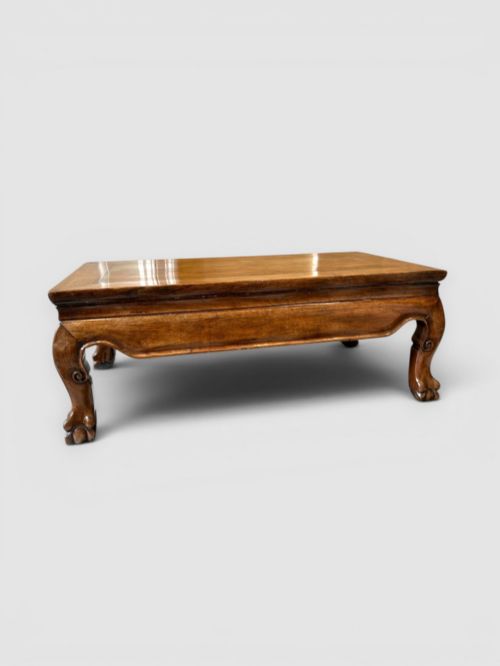
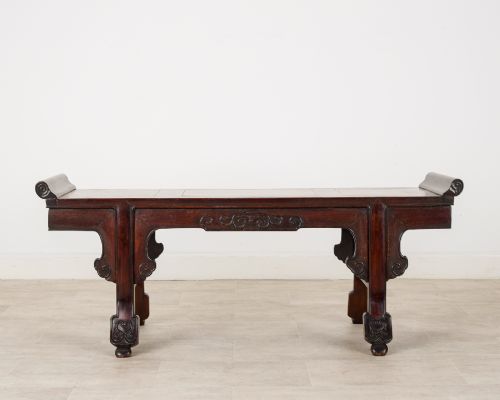
An oriental hardwood low table brings grounded proportion and dense timber grain to a room, ranging from simple coffee surfaces to scroll-end kang tables.
Oriental Hardwood Low Table
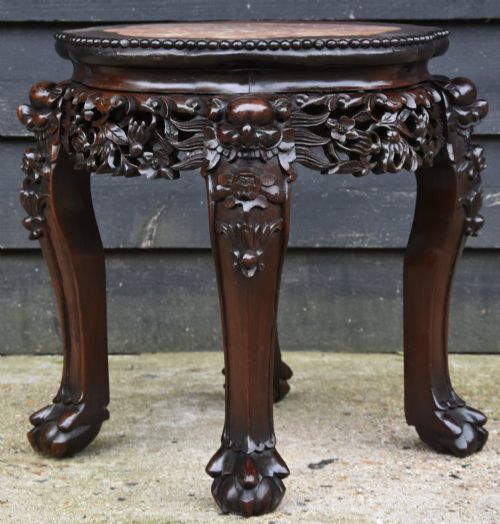
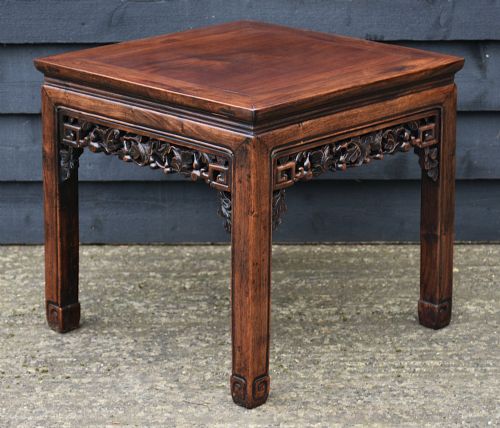
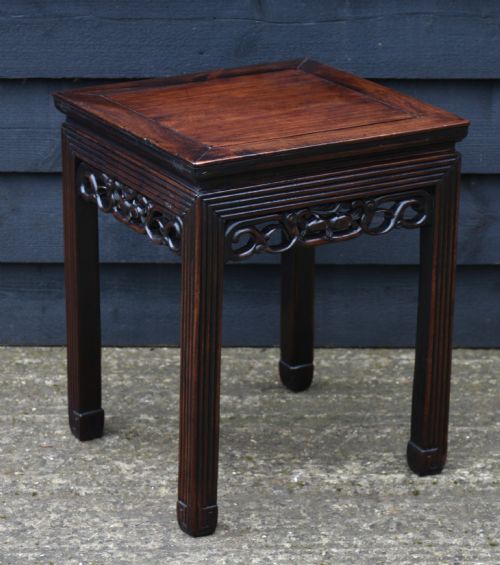
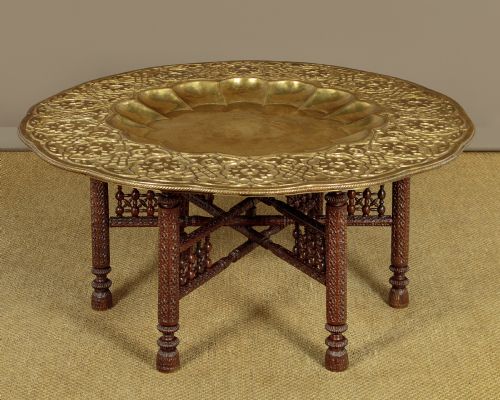
An oriental hardwood low table is typically encountered as a nineteenth century Chinese piece shaped for domestic use, spanning low coffee tables, altar benches, and pot stands. The selection leans heavily towards traditional Chinese forms including low kang tables and scroll-end variants.
Makers utilised dense timbers to build sturdy platforms suited to sitting or low serving. These low tables appear in square, rectangular, and circular formats, often drawing on Qing Dynasty design principles.
How they were made
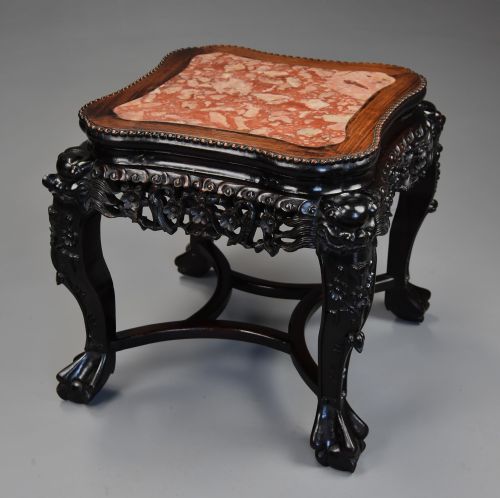
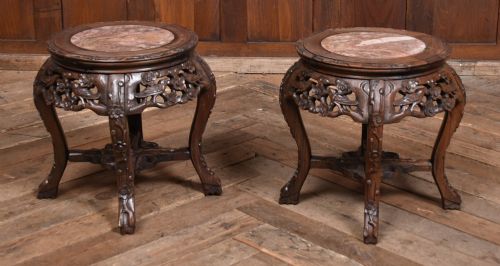
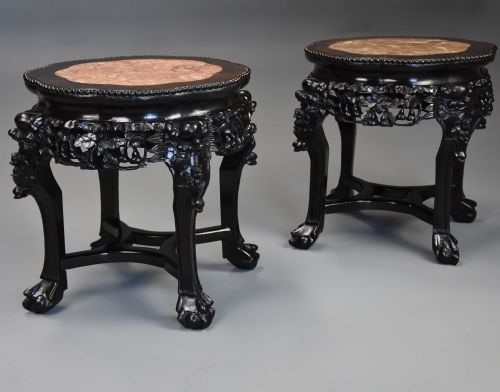
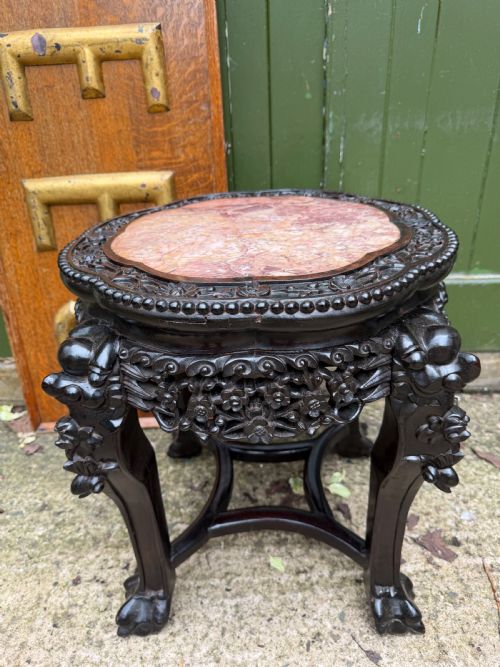
The construction relies on heavy tropical hardwoods such as rosewood, padouk, hongmu, and elm, selected for their weight and deep natural grain. Artisans frequently integrated inset panels of variegated marble, porcelain, or stone directly into the wooden framework.
Joinery techniques accommodated the seasonal movement of dense timber without metal fasteners. Surfaces were carved with scroll ends or traditional motifs, then finished to a rich patina.
Several low tables double as window seats or altar benches, proving that nineteenth century furniture multi-tasked long before modern studio flats.
What varies in quality
Quality separates along the depth of the carving and the selection of the timber grain. Finer pieces display crisp, deep relief work on aprons and legs rather than shallow machine-like cutting.
The choice of secondary materials marks the upper tier, seen in the selection of figured rosewood, well-matched marble inserts, or dense hongmu rather than simpler stained wood.
The Oriental Hardwood Low Table Glossary
- Kang table
- A low platform table traditionally used on a heated brick bed or floor in Chinese interiors for dining and writing. These pieces form a significant portion of low tables found today.
- Hongmu
- A categorical Chinese term meaning red wood, applied to dense, heavy tropical hardwoods such as rosewood and padouk. It develops a rich dark patina with age.
- Padouk
- A heavy, durable reddish-brown hardwood utilised in traditional furniture construction. It holds fine detail well under hand carving.
- Scroll-end
- A structural feature where the short ends of a table top curl outward or upward in a traditional scroll motif. This profile appears frequently on nineteenth century kang tables.
Oriental Hardwood Low Table: Frequently Asked Questions
What is a kang table?
A kang table is a low surface designed to sit directly on a sleeping platform or floor.
They were traditionally used for drinking tea, writing, or dining at floor level.
How do I style a low table?
These pieces suit modern living spaces as low coffee tables or display stands for ceramics.
Their restrained proportions work well when paired with contemporary seating.
What woods were used?
Carpenters relied on dense Asian hardwoods including rosewood, elm, and hongmu.
These timbers provide the structural strength needed for low, unbraced frames.
Are marble inserts original?
Many nineteenth century examples feature inset marble or porcelain panels designed into the top.
These cool surfaces were practical for holding hot vessels or serving food.