
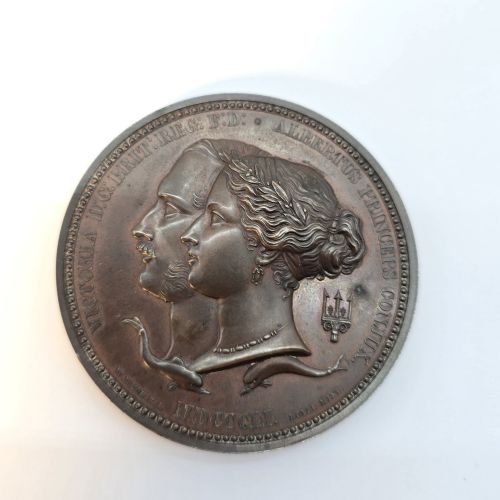
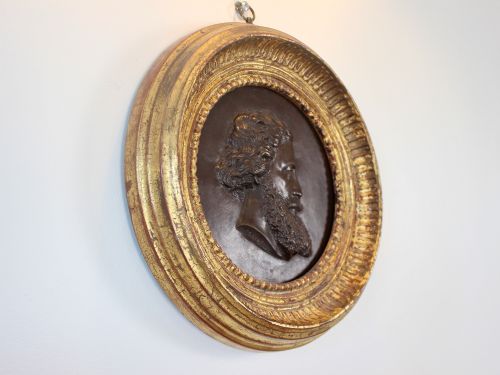


Dark Bronze Medallion
These dark bronze medallion pieces bring substantial nineteenth-century relief work and portraiture into a room.
Dark Bronze Medallion
A dark bronze medallion selection brings together heavy cast metal roundels, portrait plaques and exhibition medals from the nineteenth century. Buyers searching for a dark bronze medallion encounter commemorative pieces, portrait reliefs of literary and historical figures, and classical allegories designed for wall hanging or display.
The objects on this page originate predominantly from the nineteenth century, including Victorian pieces and international exhibition awards. Common formats include mounted wall panels in brass frames and freestanding commemorative medals celebrating figures like Shakespeare, Dickens and Rubens.
Continental and English workshops dominate the selection, spanning classical, Neoclassical and French historicism styles. Pieces range from intimate portrait profiles to monumental matched pairs in cast iron and bronze.
How they were made
Foundries utilised traditional casting techniques in bronze, cast iron and brass to produce deep relief surfaces and crisp detailing. Metalwork from this era frequently incorporates patination to achieve the characteristic dark bronze tone.
Mounting methods often involve velvet backing, wooden panels and giltwood frames to present wall plaques and medals securely. Engraving and signature stamping appear on exhibition pieces to record recipients and manufacturing firms.
What varies in quality
Provenance and official exhibition association elevate certain medals significantly, particularly when named to specific jurors or manufacturers. Material selection also alters the character, moving from standard bronze casting to finer chased surfaces set within elaborate frames.
The Dark Bronze Medallion Glossary
- Medallion
- A large medal or circular plaque intended for commemorative or decorative display rather than personal wear. These pieces frequently feature high-relief portraits or historical scenes.
- Patination
- The surface coloration and ageing applied to or naturally acquired by bronze over time. Dark bronze patination provides a rich, absorbing tone that highlights the relief contours.
- Relief
- Sculptural work where figures project from a flat background. High relief stands out prominently, creating strong shadows across the composition.
- Plaque
- A flat ornamental tablet of metal, wood or other material fixed to a wall or surface. Portrait plaques from the nineteenth century often celebrate literary figures and artists.
Dark Bronze Medallion: Frequently Asked Questions
What is a dark bronze medallion?
A dark bronze medallion is a heavy metal plaque or commemorative medal cast in the nineteenth century, often featuring portrait profiles or classical scenes.
These pieces were produced to celebrate exhibitions, honour historical figures, or serve as decorative wall art within Victorian interiors.
How were these wall plaques displayed?
Many nineteenth-century portrait plaques were mounted in brass frames, velvet surrounds, or wooden panels specifically for interior wall hanging.
Exhibition medals and smaller roundels were sometimes displayed in specialised cases or kept within cabinet collections by contemporary owners.
How do I identify nineteenth-century pieces?
Nineteenth-century metalwork often carries specific stylistic markers such as Neoclassical motifs, French historicism influences, or direct references to international exhibitions like those of 1851 and 1862.
Signatures, maker stamps, and named inscriptions to specific jurors or recipients further confirm the exact period and origin of the piece.
Are these pieces English or continental?
The selection includes both English and continental European works, reflecting the widespread popularity of bronze casting during the Victorian era.
English schools produced notable literary portraits, while continental foundries frequently created allegorical scenes with muses and putti.