




Bronze Wall Medallion
These bronze wall medallion pieces are heavy cast metal reliefs carrying classical portraits and commemorative scenes, chosen for their striking wall presence.
Bronze Wall Medallion
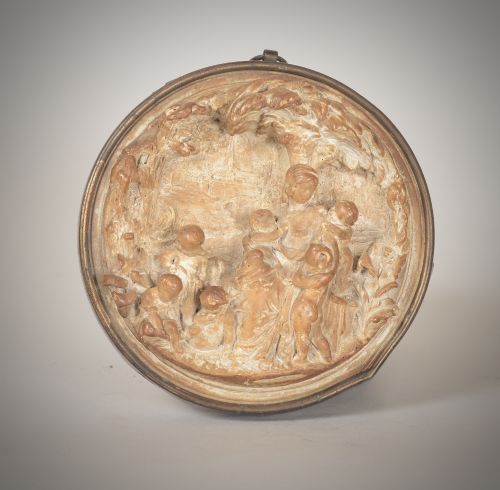
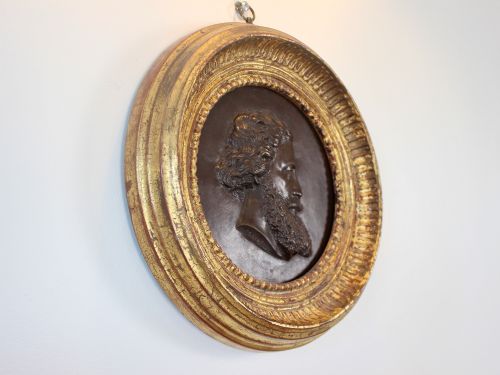
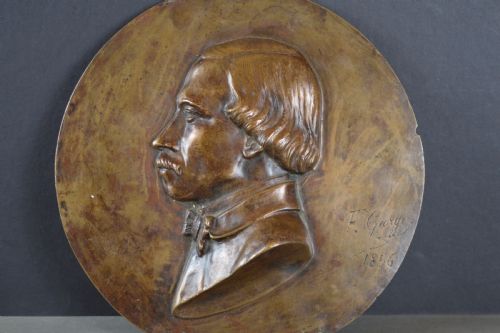
A bronze wall medallion sits flat against a surface as a plaque, roundel, or exhibition medal, depicting portraits, historical figures, or mythological scenes in relief. When you search for bronze wall medallion, you encounter works spanning the nineteenth century and early twentieth century, taking the form of roundels, rectangular wall panels, and framed plaques.
The objects derive from several stylistic movements, notably Victorian, Neoclassical, Renaissance Revival, French Empire, and Art Deco. Portrait subjects range from literary figures and monarchs to muses with putti, often housed in brass frames or turned mahogany surrounds.
Makers and signatories such as Mainfroy, Gustav Grohe, J Lavergne, and Coalbrookdale appear among the listings, alongside commemorative exhibition medals and Grand Tour plaster reliefs. Collectors find both single display pieces and matched pairs, mounted on wood panels or held within heavy metal frames.
Materials and construction methods
Foundry work relies on casting metal alloys, predominantly bronze, copper, and brass, alongside cast iron and cast lead finished with a bronzed surface. Molten metal flows into moulds to capture fine facial details and lettering, resulting in sharp relief work that stands clear of the backing plate.
Many items incorporate secondary materials for display, pairing metal plaques with giltwood, mahogany, and plain wood frames. Plaster also appears as a medium for Grand Tour reliefs, replicating classical carved stone and marble originals for travellers.
Listings feature works in bronze, copper, brass, cast iron, cast lead, wood, and plaster, spanning the Victorian period and the early twentieth century.
Distinctions in craftsmanship and finish
Mounting and framing quality elevate an individual piece, seen in turned mahogany surrounds, secure brass frames, and well-preserved patination. The handling of the metal surface, from dark natural patinas to gilt accents, determines how light strikes the relief.
MAINFROY·Gustav Grohe·Coalbrookdale·J Lavergne
The Bronze Wall Medallion Glossary
- Medallion
- A large medal or circular plaque intended for wall display rather than personal wear. It often commemorates a notable person, exhibition, or historical event.
- Relief
- Sculptural work where the figures project from a flat background. High relief stands out sharply, while low relief remains closer to the plane.
- Roundel
- A circular panel or plaque used in interior decoration. These frequently depict profile portraits in cast metal.
- Patina
- The surface coloration and sheen acquired by bronze and copper over time through oxidation and handling. A stable patina preserves the underlying metal detail.
Bronze Wall Medallion: Frequently Asked Questions
How do I hang a heavy bronze medallion safely?
Most heavier plaques require secure wall anchors and appropriate picture wire or built-in mounting brackets attached directly to the frame or backing board. Metal is heavier than it appears, so check the load-bearing capacity of your wall fixings before hanging.
Ensure the hanging wire or fixing point matches the weight distribution of the piece, particularly for monumental cast iron or bronze items mounted in timber surrounds.
What is a Grand Tour plaster relief?
Grand Tour plaster reliefs are nineteenth-century souvenirs collected by travellers visiting classical sites in Europe. They capture ancient sculpture and architectural details in a portable format.
Housed in simple frames or panels, these pieces offered Victorian and Edwardian buyers a tangible connection to classical art history without transporting heavy stone.
How should I clean a bronze wall plaque?
Dust bronze and copper surfaces gently with a soft, dry brush or microfiber cloth to remove settled debris. Avoid chemical metal polishes, which strip the historical patina and diminish the visual depth of the cast details.
Leaving the natural aged surface intact preserves both the aesthetic character and the historical integrity of the piece.
How do I distinguish French Empire style from Victorian pieces?
French Empire pieces often feature strict classical symmetry, laureate wreaths, and profile portraits of figures like Napoleon and Marie-Louise, frequently set within turned mahogany frames. Victorian works lean towards narrative scenes, literary portraits such as Charles Dickens, and heavier Gothic or Renaissance Revival framing.
Examining the treatment of the subject, the framing materials, and the style of lettering provides clear indicators of origin and period.