




Bronze Relief Medallion
These bronze relief medallion pieces capture history in metal, offering you a tangible piece of portraiture and commemoration to display on your walls.
Bronze Relief Medallion
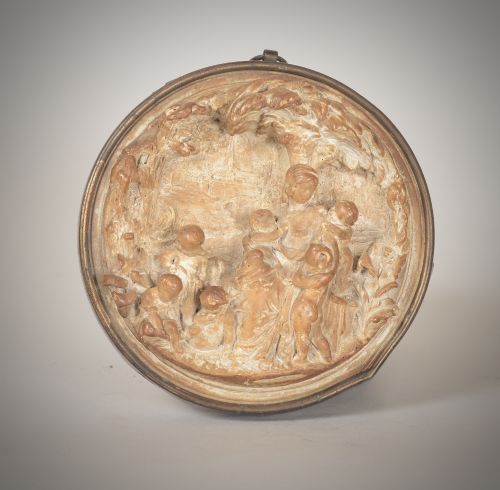
A bronze relief medallion brings historical figures, exhibitions, and classical art directly into interior spaces as wall plaques or framed panels. When you search for bronze relief medallion, you encounter wall art created across the nineteenth and early twentieth centuries, spanning Victorian, Neoclassical, and Renaissance Revival styles.
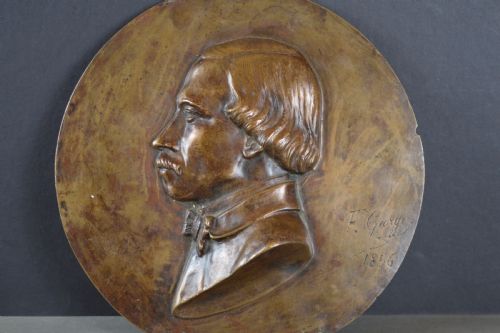
Most examples you meet on this page take the form of roundels or rectangular plaques depicting notable individuals, commemorative events, or mythological scenes. These pieces function as decorative wall panels that combine sculptural depth with historical significance.
Materials and casting methods
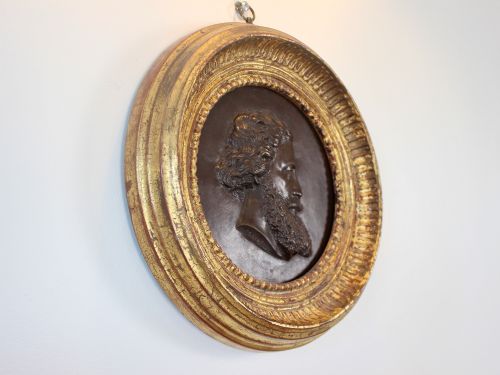
Many pieces display patination treatments that enhance the depth of the metalwork, highlighting the raised contours against recessed backgrounds. Some roundels combine cast lead with bronzed finishes, secured inside turned mahogany frames for wall display.
Charles Dickens maintains his characteristic scowl even when rendered permanently in solid bronze.
Distinctions in craftsmanship
The quality of the secondary materials, such as heavy turned mahogany frames or detailed brass mounts, elevates the overall piece. Signed works by documented sculptors and makers also distinguish superior examples within this field.
Smith, Beck And Beck·Gustav Grohe·J Lavergne·Coalbrookdale·Carl Ranch·De Grave Short And Fanner
The Bronze Relief Medallion Glossary
- Patinated bronze
- Bronze that has been treated with chemical solutions to produce a specific surface colour and finish. This process protects the metal while accentuating the sculptural details.
- Roundel
- A circular panel or medallion used for decorative wall art or architectural ornament. These are frequently framed in wood or brass.
- Exhibition medal
- A commemorative award minted to mark international industrial and cultural exhibitions. These medals record significant technological and artistic achievements of the period.
Bronze Relief Medallion: Frequently Asked Questions
How were these wall plaques displayed?
Many pieces arrived in original wooden frames, turned mahogany surrounds, or heavy brass mounts designed for hanging on interior walls. Smaller exhibition medals and roundels were often framed to serve as domestic wall art.
The combination of patinated metal and dark wood frames made them popular decorative elements in Victorian and Edwardian interiors.
How do I date a bronze plaque?
Dating relies on stylistic clues, historical subjects, and specific maker signatures or exhibition dates cast into the metal. Pieces commemorating Queen Victoria's jubilee or specific nineteenth-century exhibitions provide clear chronological anchors.
The surrounding frames and mounting styles also offer reliable indicators of the period of manufacture.
Who made these metal plaques?
Foundries, industrial exhibition makers, and named sculptors produced these works across Britain and continental Europe. Well-known foundries like Coalbrookdale and individual artists signed their casts to denote quality and authorship.
Exhibition medals record the work of precision instrument makers and international manufacturers of the Victorian age.