31,350  PAGES BROWSED TODAY PAGES TODAY 90  ANTIQUES UPLOADED TODAY NEW ARRIVALS
ID #SA906685
FOR SALE
£1,500
Email Buy
Save
1862 London International Exhibition Prize Medal for Carl Ranch Chronometer Maker
Jason Clarke Antiques
for sale €1,755     $1,905
£1,500
Jason Clarke Antiques

Jason Clarke Antiques

Sellingantiques Verified Since Jul 2015
View Dealers Stock Page
Id #SA906685
PDF SHARE
SAVE

1862 London International Exhibition Prize Medal for Carl Ranch Chronometer Maker

19th century
Description

For sale, the 1862 London International Exhibition bronze prize medal for the Danish Chronometer maker, Carl Ranch of Copenhagen.

This superbly executed medal was awarded and individually engraved to each of the 1862 Exhibitors that were bestowed with a prize for their efforts.

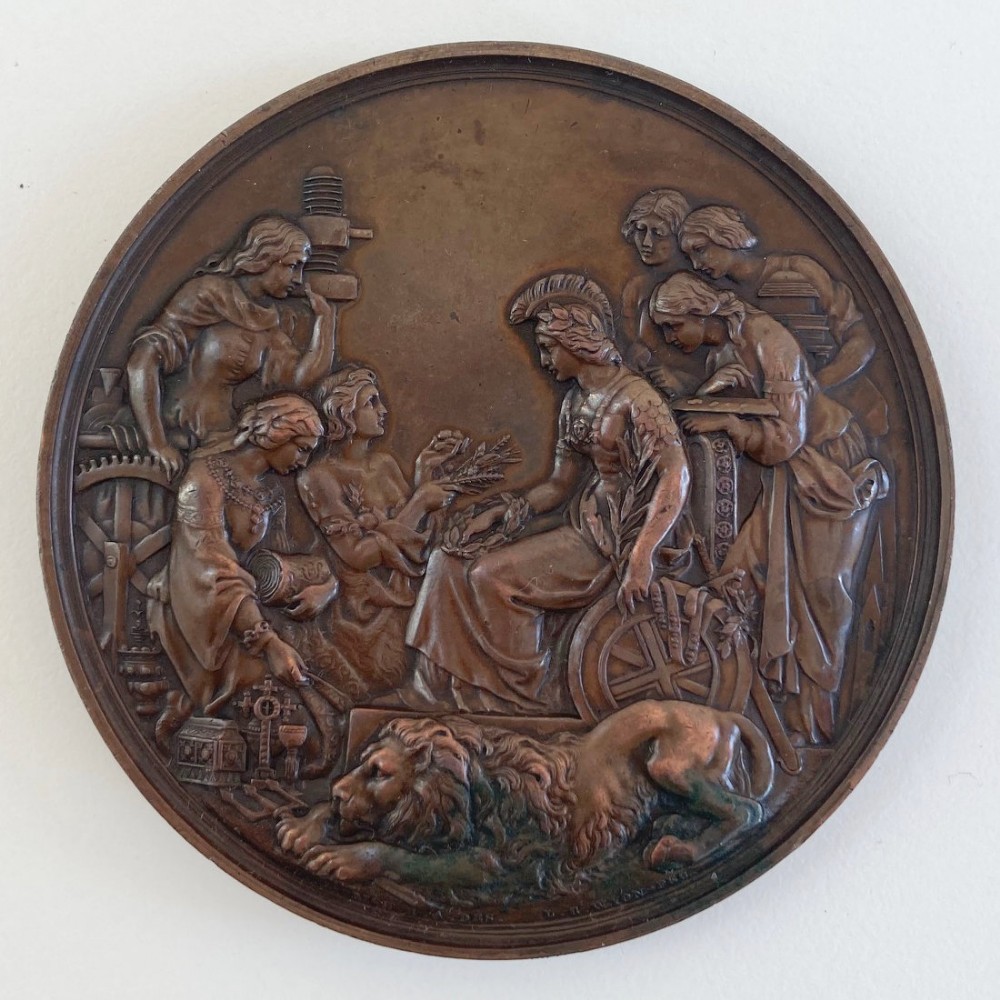
Struck entirely from bronze, the obverse face shows Britannia seated with shield to her side and a sleeping lion at her feet. She is surrounded by six women each individually representing Industry, Agriculture and The Arts. The rim below the lion is marked with, D. Maclise R.A. DES. & Leonard C. Wyon FEC.

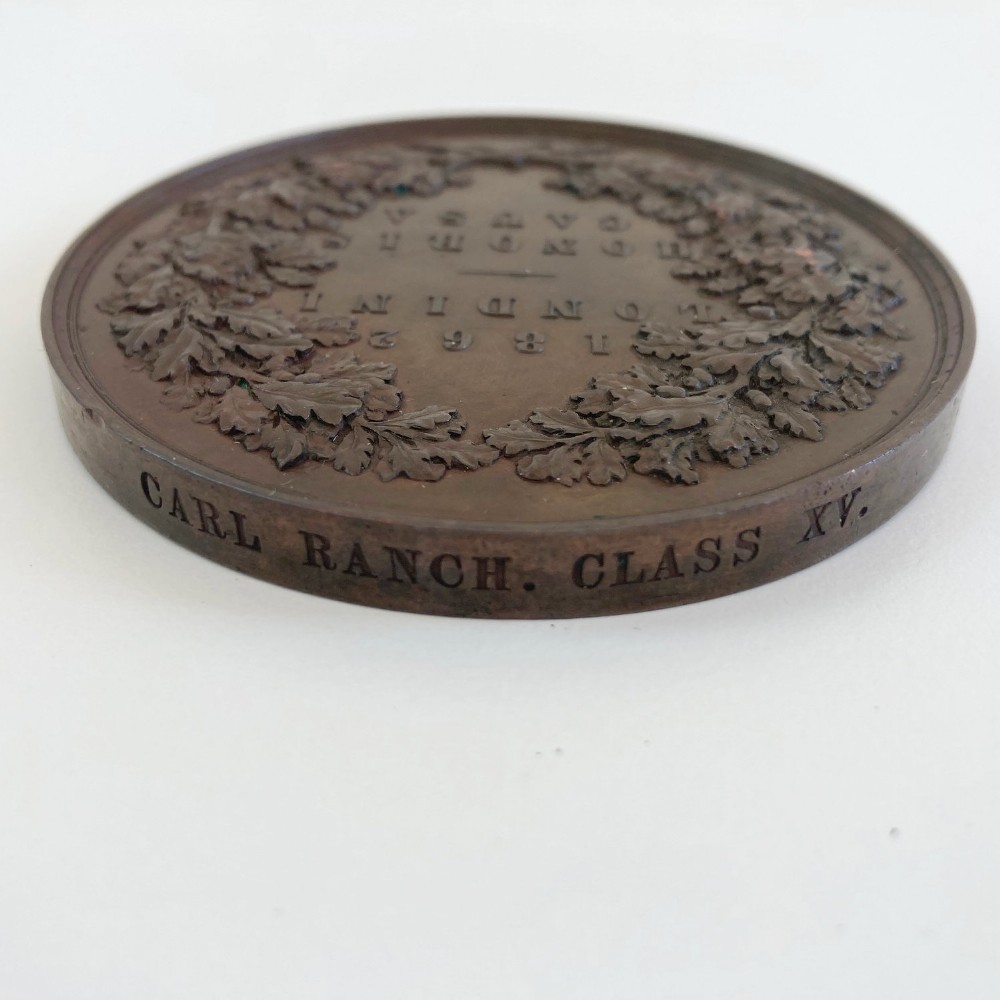
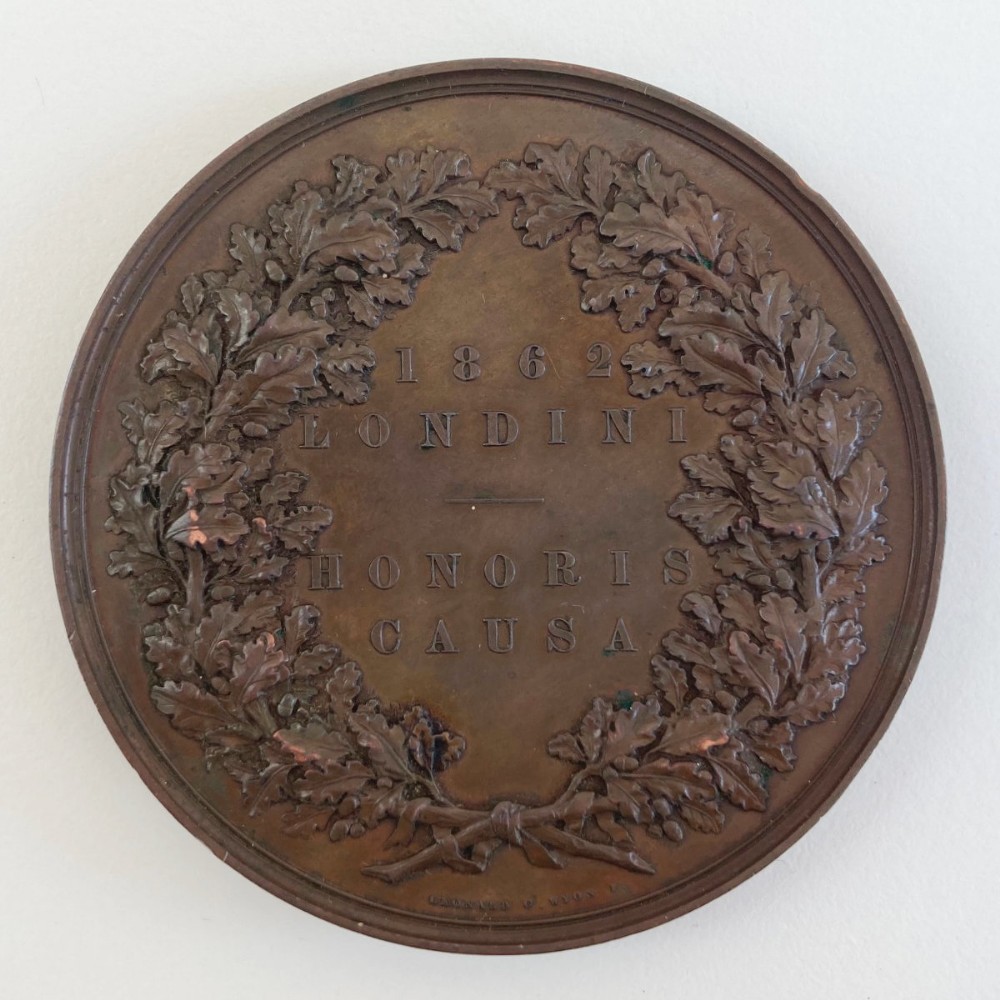
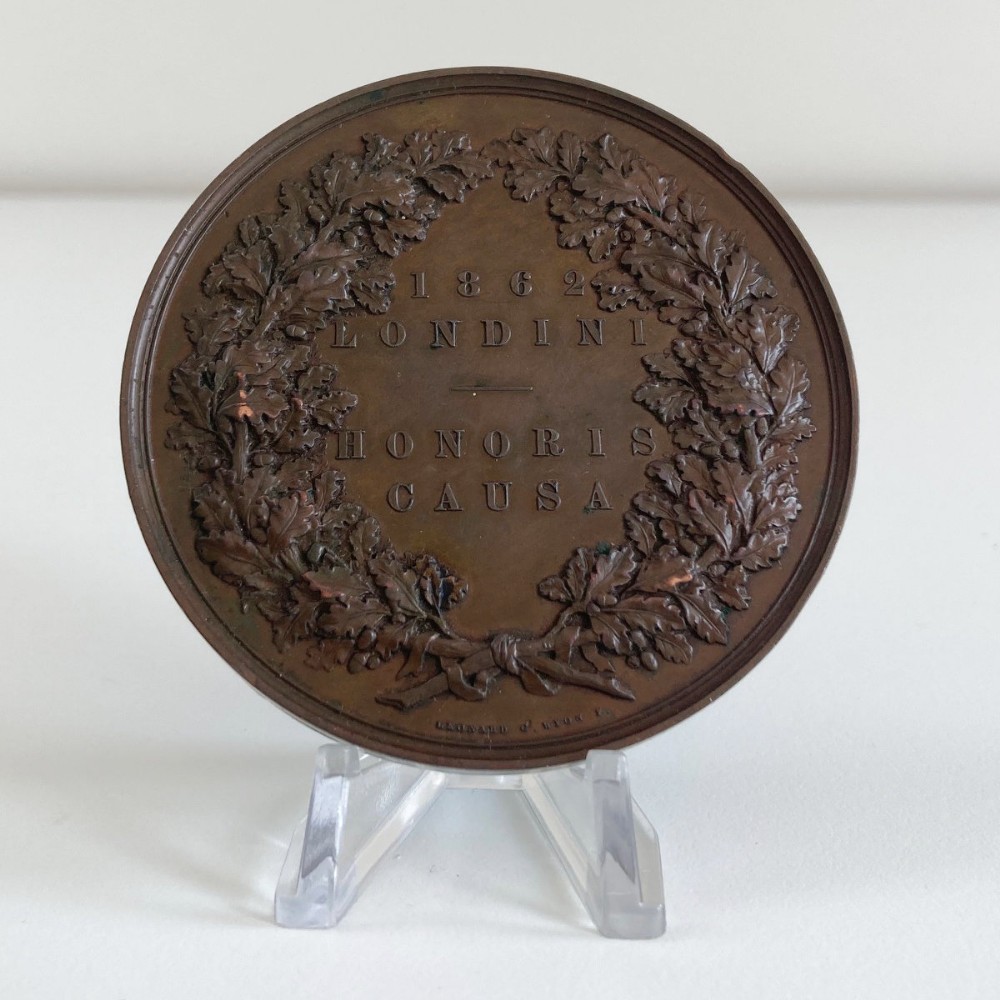
The reverse shows a wreath of oak running around the inner circumference with the words, 1862 Londini Honoris Causa which effectively translates to “London, a mark of esteem or respect” to the centre. In small letters to the base, the name of L.C. Wyon FEC is repeated.

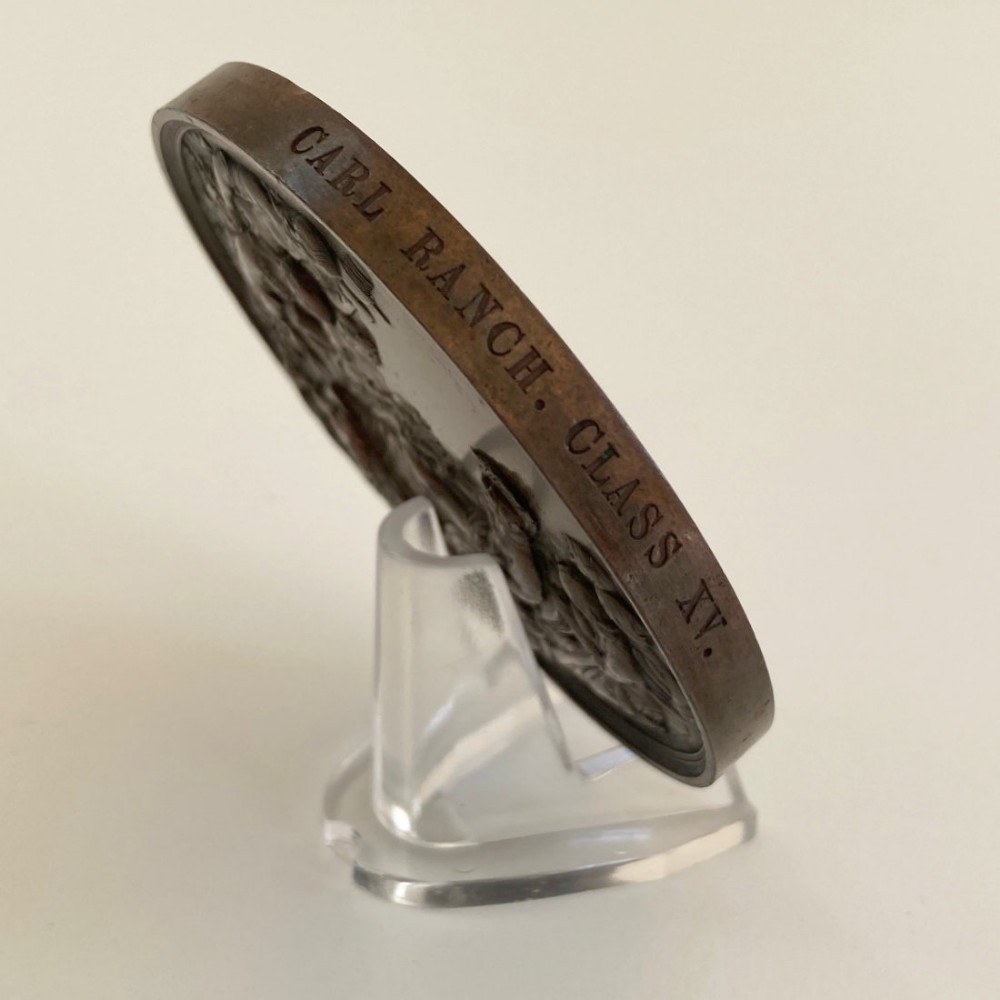
The edge of the medal is further engraved to Carl Ranch. Class XV.

The International Exhibition was declared open by The Duke of Cambridge on the 1st of May 1862 in South Kensington on a site which is now occupied by The Natural History Museum. To give some idea of its scale, it featured nearly thirty thousand exhibitors from thirty six countries throughout the six months of its existence and welcomed over six million visitors.

This second exhibition was meant to follow up on the huge success of the 1851 Exhibition, originally intended to have been opened in 1861, it was delayed due to the Italian War of Independence, the Civil War in America and not least because of the death of Prince Albert, its Chief Patron and supporter. The latter reason is of course why Queen Victoria was not present at the delayed opening in 1862.

The building that housed the Exhibition was designed using brick and iron by the architect Captain Francis Fowke and contracted out to the firm of Kelk & Lucas. Sadly, Parliament declined the Government’s wishes to purchase the building after the Exhibition but the materials which were reclaimed were eventually put to use in the building of Alexandra Palace. Fowke was also responsible for proposing the building of The Natural history Museum which was eventually constructed in 1881 and remains on the site to this day.

The 1862 exhibition was Ranch’s second appearance on the Victorian exhibition stage, having already gained a medal at the 1855 Paris Exhibition where he cemented his reputation for the production of fine marine chronometers.

He was placed within Class XV – Horological Instruments and his prize according to the juror’s report for, “excellence in chronometers” was no simple undertaking when you consider the competition which included English clockmakers such as Dent, Bennett, Barraud & Lund, Parkinson & Frodsham and Breguet all of whom gained prizes at the event.

Almost all of the Victorian clockmaking exhibitors made great use of this medal’s image on letterheads, trade cards, catalogues and other associated ephemera and Ranch was no different, numerous examples of his chronometers have tradecards with reproduction medal images of the Paris, London and later, the Stockholm exhibition of 1866 and the Paris exhibitions of 1867 and 1878 where the company found equal success. To find an example of the original medal for a chronometer maker is extraordinarily rare.

Owing to his Danish heritage, detailed information about Ranch’s careers is somewhat hard to deduce but he was born in 1818 and entered an apprenticeship with Johan Peter Christian Christensen in 1832. His career from about 1840 to 1860 remains unclear but he was certainly successful enough to have gained a commissioned as chronometer maker to the Danish Royal Navy.

Ranch died in August of 1869 although the company continued under family ownership until at least the 1930’s.

A super example from a notable exhibitor of Class XV. Horological instrument makers of this s

Physical Dimensions
Height
7.5cm (2.95")
Width
7.5cm (2.95")
Depth
1cm (0.39")
Declaration

Jason Clarke Antiques has dated this Victorian Bronze Exhibition Medal to the 1860s.
Reference Numbers
Sellingantiques Reference
SA906685
Description
For sale, the 1862 London International Exhibition bronze prize medal for the Danish Chronometer maker, Carl Ranch of Copenhagen.
This superbly executed medal was awarded and individually engraved to each of the 1862 Exhibitors that were bestowed with a prize for their efforts.
Jason Clarke Antiques
fig 1. A circular Victorian bronze prize medal featuring classical figures representing arts and industry surrounding Britannia above a reclining lion.
fig 1. 1862 London International Exhibition Prize Medal for Carl Ranch Chronometer Maker

Struck entirely from bronze, the obverse face shows Britannia seated with shield to her side and a sleeping lion at her feet. She is surrounded by six women each individually representing Industry, Agriculture and The Arts. The rim below the lion is marked with, D. Maclise R.A. DES. & Leonard C. Wyon FEC.
fig 2. A circular Victorian bronze prize medal featuring classical figures representing arts and industry surrounding Britannia above a reclining lion.
fig 2. 1862 London International Exhibition Prize Medal for Carl Ranch Chronometer Maker

The reverse shows a wreath of oak running around the inner circumference with the words, 1862 Londini Honoris Causa which effectively translates to “London, a mark of esteem or respect” to the centre. In small letters to the base, the name of L.C. Wyon FEC is repeated.
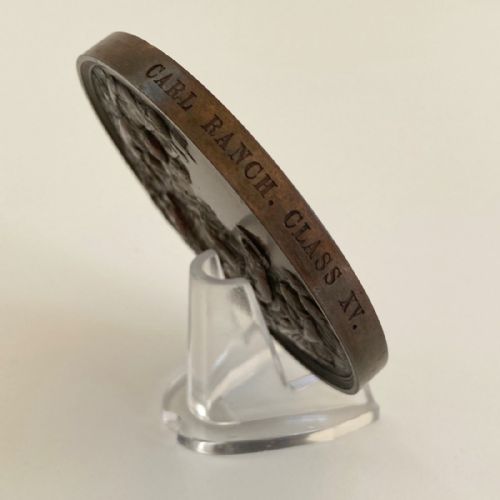
fig 3. A circular Victorian bronze prize medal featuring classical figures representing arts and industry surrounding Britannia above a reclining lion.
fig 3. 1862 London International Exhibition Prize Medal for Carl Ranch Chronometer Maker

The edge of the medal is further engraved to Carl Ranch. Class XV.

The International Exhibition was declared open by The Duke of Cambridge on the 1st of May 1862 in South Kensington on a site which is now occupied by The Natural History Museum. To give some idea of its scale, it featured nearly thirty thousand exhibitors from thirty six countries throughout the six months of its existence and welcomed over six million visitors.
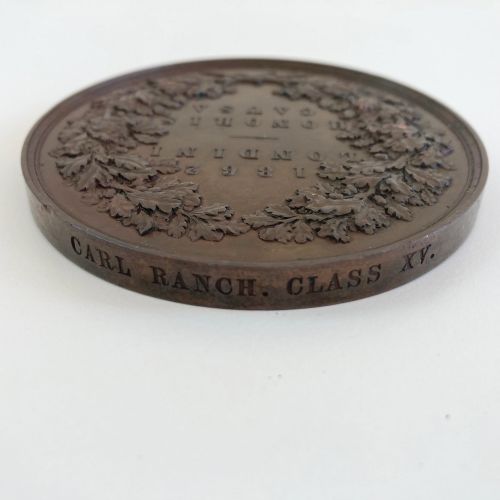
fig 4. A circular Victorian bronze prize medal featuring classical figures representing arts and industry surrounding Britannia above a reclining lion.
fig 4. 1862 London International Exhibition Prize Medal for Carl Ranch Chronometer Maker

This second exhibition was meant to follow up on the huge success of the 1851 Exhibition, originally intended to have been opened in 1861, it was delayed due to the Italian War of Independence, the Civil War in America and not least because of the death of Prince Albert, its Chief Patron and supporter. The latter reason is of course why Queen Victoria was not present at the delayed opening in 1862.

The building that housed the Exhibition was designed using brick and iron by the architect Captain Francis Fowke and contracted out to the firm of Kelk & Lucas. Sadly, Parliament declined the Government’s wishes to purchase the building after the Exhibition but the materials which were reclaimed were eventually put to use in the building of Alexandra Palace. Fowke was also responsible for proposing the building of The Natural history Museum which was eventually constructed in 1881 and remains on the site to this day.

The 1862 exhibition was Ranch’s second appearance on the Victorian exhibition stage, having already gained a medal at the 1855 Paris Exhibition where he cemented his reputation for the production of fine marine chronometers.

He was placed within Class XV – Horological Instruments and his prize according to the juror’s report for, “excellence in chronometers” was no simple undertaking when you consider the competition which included English clockmakers such as Dent, Bennett, Barraud & Lund, Parkinson & Frodsham and Breguet all of whom gained prizes at the event.

Almost all of the Victorian clockmaking exhibitors made great use of this medal’s image on letterheads, trade cards, catalogues and other associated ephemera and Ranch was no different, numerous examples of his chronometers have tradecards with reproduction medal images of the Paris, London and later, the Stockholm exhibition of 1866 and the Paris exhibitions of 1867 and 1878 where the company found equal success. To find an example of the original medal for a chronometer maker is extraordinarily rare.

Owing to his Danish heritage, detailed information about Ranch’s careers is somewhat hard to deduce but he was born in 1818 and entered an apprenticeship with Johan Peter Christian Christensen in 1832. His career from about 1840 to 1860 remains unclear but he was certainly successful enough to have gained a commissioned as chronometer maker to the Danish Royal Navy.

Ranch died in August of 1869 although the company continued under family ownership until at least the 1930’s.

A super example from a notable exhibitor of Class XV. Horological instrument makers of this s

Height
7.5cm (2.95")
Width
7.5cm (2.95")
Depth
1cm (0.39")
Date of Manufacture

Jason Clarke Antiques has dated this Victorian Bronze Exhibition Medal to the 1860s.

Reference Numbers
Sellingantiques Ref
SA906685
Jason Clarke Antiques
Sellingantiques verified Since Jul 2015
Dealer Profile

You can view the stock and full dealer information on the Jason Clarke Antiques Profile Page
PDF SHARE
SAVE
A circular Victorian bronze prize medal featuring classical figures representing arts and industry surrounding Britannia above a reclining lion.
1 / 5
Archive I A circular Victorian bronze prize medal featuring classical figures representing arts and industry surrounding Britannia above a reclining lion.

1862 London International Exhibition Prize Medal for Carl Ranch Chronometer Maker
Archive II A circular Victorian bronze prize medal featuring classical figures representing arts and industry surrounding Britannia above a reclining lion. View II
Archive III A circular Victorian bronze prize medal featuring classical figures representing arts and industry surrounding Britannia above a reclining lion. View III
Archive IV A circular Victorian bronze prize medal featuring classical figures representing arts and industry surrounding Britannia above a reclining lion. View IV
Archive V A circular Victorian bronze prize medal featuring classical figures representing arts and industry surrounding Britannia above a reclining lion. View V
Enlarged Archival View
Telephone 07815 046645
Location
Newbury
Berkshire
United Kingdom
Verified Since Jul 2015
Items For Sale 82
Items Sold 605
Jason Clarke Antiques
Verified Since Jul 2015
View Dealer Info
Location: Newbury, Berkshire, United Kingdom
Verified
Jul 2015
For Sale
82
Sold
605
A circular Victorian bronze prize medal featuring classical figures representing arts and industry surrounding Britannia above a reclining lion.
1862 London International Exhibition Prize Medal for Carl Ranch Chronometer Maker
Ref: SA906685
A circular Victorian bronze prize medal featuring classical figures representing arts and industry surrounding Britannia above a reclining lion.
Detail View 1
Detail View 2
Detail View 3
Detail View 4
Archival Detail
Every single antique dealer on our platform is individually approved by our internal team. We verify their professional trade history, ethical standards, and photographic quality to ensure a secure, high-standard buying environment. Upon joining, every dealer agrees to a strict 9-point code of conduct. While issues can occasionally arise, our dealers typically resolve them swiftly and directly with the buyer. In fact, since our founding in 2002, Sellingantiques has only had to step in to help resolve an issue on roughly five occasions—a true testament to the quality of our dealers and their dedication to your happiness.
Our dealers are highly experienced in packing and shipping fragile, high-value antiques. Because you are in direct contact with the dealer, you will be able to easily go through all available shipping and insurance options together to ensure your item arrives safely.
Antiques are the ultimate green purchase. By choosing historical pieces over newly manufactured goods, you completely eliminate the carbon footprint of modern mass production while preserving exceptional, timeless craftsmanship.

Prize medals from the 1862 International Exhibition in London were awarded to exhibitors who demonstrated exceptional technological, industrial, or artistic advancement. Designed by prominent die-engravers of the era, these bronze medallions served as official recognitions of merit on a global stage.

These medals were typically struck in solid bronze using heavy press machinery and engraved steel dies. The process allowed for high-relief sculptural detail and precise lettering, followed by chemical patination to protect the surface and give the metal a rich brown tone.

Authentic period medals feature crisp relief details, correct weight, and clean die-engraver signatures near the rim or base of the design. Many official prize medals also feature the recipients name or trade category engraved around the outer rim edge in uppercase lettering.

Small bronze medallions can be displayed on a metal or acrylic easel stand inside a cabinet, on a desk, or placed within a custom shadow-box frame for wall hanging. Grouping them alongside antique books or instruments enhances a traditional study or library setting.

Dust the surface regularly with a dry, soft-bristled brush to prevent build-up in detailed areas. Avoid using liquid polishes, abrasive cloths, or chemical cleaners, as these will remove the original historical patination and lower the objects value.
items
Add keywords to the filter
Price
£100
£250000
Era
Movements
Material
Origin
Stock Location
Freshness
Online Payments
Categories