
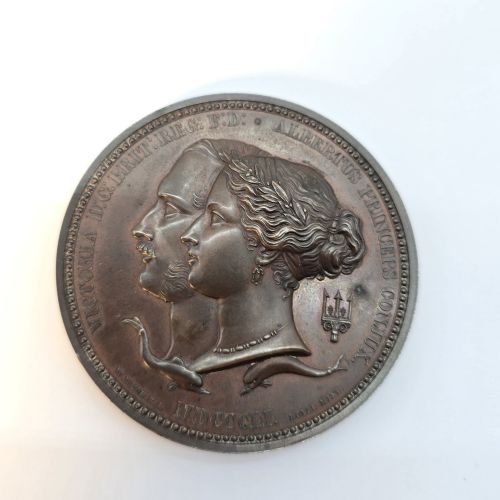


Victorian Commemorative Medallion
A Victorian commemorative medallion marks a notable public exhibition, royal jubilee or cultural figure through durable metalwork.
Victorian Commemorative Medallion
A victorian commemorative medallion serves to record significant national events, industrial achievements and notable figures of the nineteenth century. These objects frequently take the form of round medals or rectangular wall plaques struck or cast to honour exhibitions, literary figures and monarchs.
The versions most commonly met on this page span the mid to late nineteenth century, including official exhibition awards and portrait plaques. They connect directly to historical moments such as the Great Exhibition and international displays of trade and industry.
How they were made
Makers utilised bronze, copper, patinated bronze and silver gilt to strike or cast these medals and plaques. The metal was often carefully patinated or gilded to enhance the depth of the relief work.
Many surviving examples retain fitted boxes lined with velvet and satin, showing that these objects were intended to be preserved securely from the outset.
Several nineteenth-century exhibition medals still rest inside their original velvet and satin-lined boxes, having successfully avoided modern carpet crumbs for over a century and a half.
What varies in quality
The preservation of the original surface patination and the presence of a fitted velvet or satin-lined case elevate the integrity of the piece. Pieces that show heavy wear to the raised details lose their original narrative sharpness.
Frederic Boucheron·Smith Beck and Beck·Waterlow and Sons·De Grave Short and Fanner
The Victorian Commemorative Medallion Glossary
- Patinated bronze
- Bronze that has been chemically treated to alter its surface colour, usually to a rich brown or dark tone. This finish highlights the detailed relief work.
- Vermeil
- Silver gilt, comprising a base of sterling silver coated with a thin layer of gold. It combines the weight of silver with a warm golden appearance.
- Relief
- Sculptural technique where the figures and lettering project from a flat background. High relief creates strong shadow and depth.
- Medallion
- A large medal, usually created for commemorative rather than currency purposes. They are often displayed on walls or kept within fitted presentation cases.
Victorian Commemorative Medallion: Frequently Asked Questions
What events do these medals commemorate?
These pieces record major international exhibitions, royal jubilees and cultural milestones of the nineteenth century.
They were issued to jurors, prize winners and the public to mark specific industrial and historical achievements.
Were all medals awarded to specific people?
Official exhibition medals were often engraved on the rim or surface with the name of the recipient firm or juror.
Other commemorative pieces were produced generally for sale or presentation to the wider public.
How should I display a wall plaque?
Bronze and patinated metal plaques suit hanging on panelled or neutral walls where lighting can catch the relief.
Ensure secure fixings are used to support the weight of solid metal wall panels.
How do I care for silver gilt metal?
Keep vermeil and silver gilt items away from abrasive cleaners that will wear away the gold layer.
Dust gently with a soft dry cloth and store in a dry environment to prevent tarnishing.