


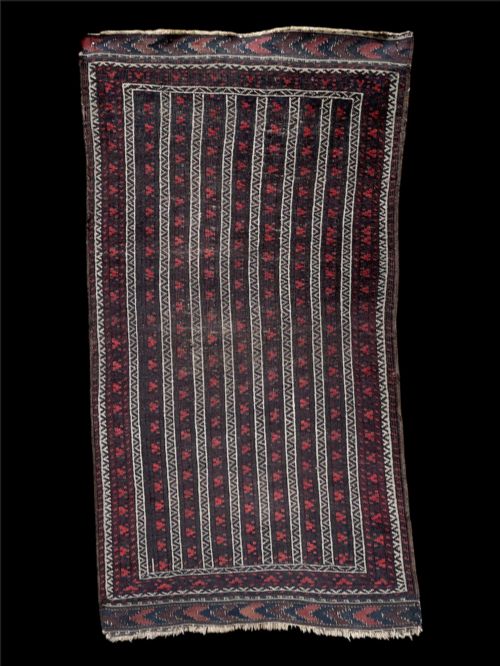
Dark Blue Rug
A dark blue rug anchors a room with deep indigo tones, woven by tribal and village hands across Persia, the Caucasus, and Afghanistan.
Dark Blue Rug
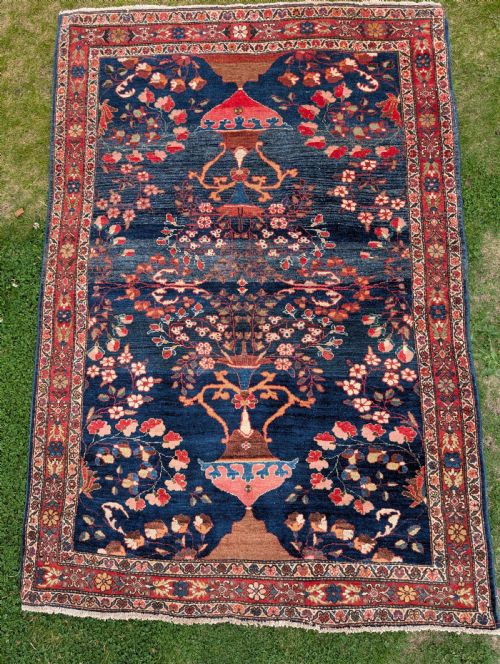
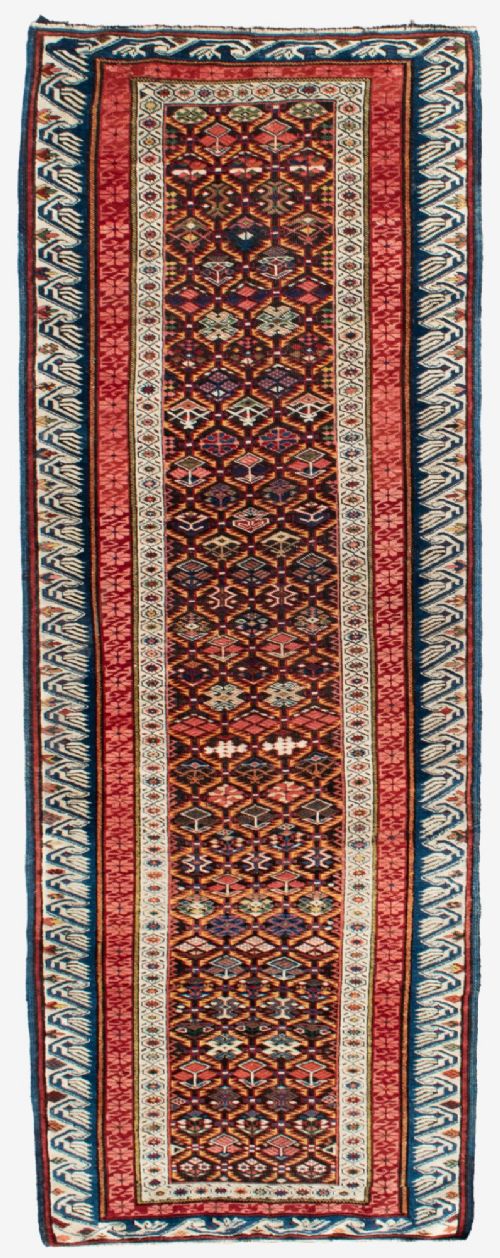
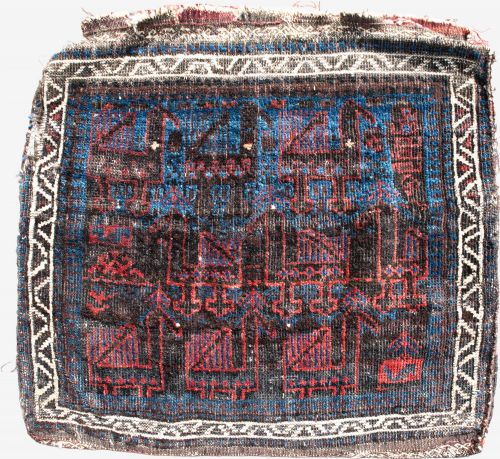
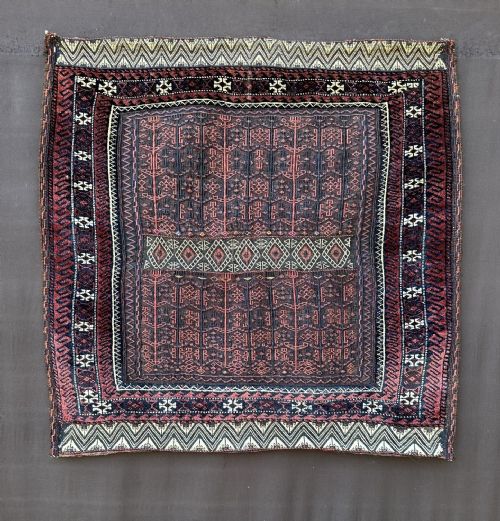
A dark blue rug encompasses tribal weavings, village carpets, and nomadic textiles produced across Persia, Anatolia, the Caucasus, and Afghanistan from the late nineteenth century into the early twentieth century. When searching for a dark blue rug, buyers encounter diverse formats including full room-size carpets, narrow runners, square bag faces, and small prayer mats.
The pieces originating from this tradition reflect distinct regional styles such as Baluch, Qashqai, Khamseh, Heriz, and Kashan. Village weavers and nomadic tribes utilised deep indigo fields as a backdrop for geometric medallions, boteh motifs, and stylized floral patterns.
The selection ranges from early antique nomadic main carpets down to smaller utility pieces like bread sofrehs and torba face covers. Each rug carries the structural characteristics and dye palettes specific to its originating tribe or weaving centre.
Materials and construction
The construction relies heavily on hand-spun wool foundations and pile, occasionally incorporating cotton for warps and wefts or goat hair in tribal borders for added durability. Weavers knotted these materials by hand on vertical or horizontal looms, building dense structures designed to withstand decades of nomadic or village use.
Natural dyes provide the characteristic deep blue and indigo shades seen across the pieces, often combined with madder red, camel hair tones, and ivory. These organic colorants yield subtle variations in tone across the field, known locally as abrash.
Several small square pieces started life as camel bags or bread mats woven inside nomadic tents before finding a second life on parlour floors.
Evaluating the weaving
Quality in these textiles rests upon knot density, the handling of natural dyestuffs, and the integrity of the structural foundation. Tightly packed knots and supple handle indicate superior wool preparation and careful loom work by the weaver.
Artistic execution also separates standard utility pieces from exceptional examples, observed in the precise symmetry of geometric motifs, the balance of secondary borders, and the depth achieved through varied indigo dye saturation.
The Dark Blue Rug Glossary
- Abrash
- Natural variation in wool colour caused by changes in dye batches or successive dyepots. This subtle tonal shading is typical of traditional hand-dyed carpets.
- Boteh
- A stylised teardrop or almond-shaped motif representing a floral spray or cypress tree. It appears frequently in Persian and Baluch tribal designs.
- Sofreh
- A flatwoven or piled spread used for dining, kneading bread, or holding grain. These textiles often feature minimalist tribal geometry.
- Torba
- A wide wall-pocket or storage bag face produced by Turkmen and related tribes. They display distinct gul medallions arranged in rows.
- Warp
- The vertical foundation threads stretched lengthwise on the loom before knotting begins. Fringe typically forms from these exposed ends.
Dark Blue Rug: Frequently Asked Questions
How do I clean an old wool rug?
Gentle surface brushing and professional specialist washing maintain the wool pile without damaging the natural dyes.
Avoid harsh chemical immersion or high-heat drying to preserve the structural integrity of the foundation.
Where were these tribal pieces woven?
Weavers produced these textiles across Persia, the Caucasus, Anatolia, and western Afghanistan.
Nomadic confederations and settled village communities each maintained distinct regional weaving traditions.
Can I place these rugs in high traffic areas?
Dense wool construction and sturdy hand-knotted foundations allow many of these carpets to handle moderate hallway or living room traffic.
Using a quality underlay prevents sliding and reduces friction against the floorboards.
How do I identify a tribal design?
Tribal designs typically feature geometric medallions, repeating lattice patterns, and stylized animal or plant forms rather than courtly curves.
Asymmetrical structures and spontaneous shifts in border patterns often point to nomadic production.