

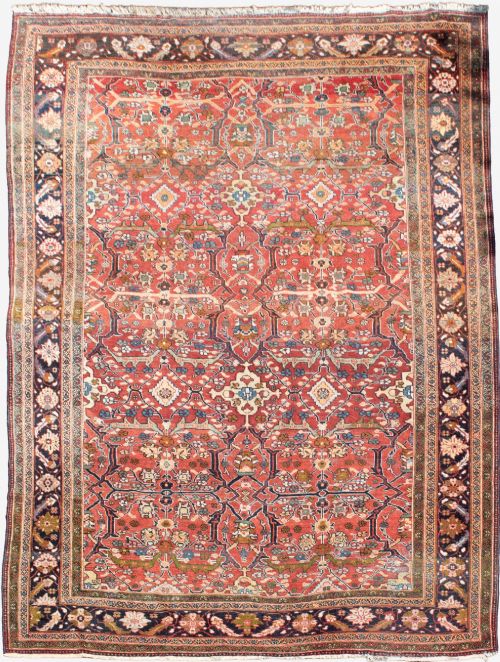


Mahal Wool Carpet
A mahal wool carpet brings substantial Persian craftsmanship into a room, offering robust floor coverings woven to endure.
Mahal Wool Carpet
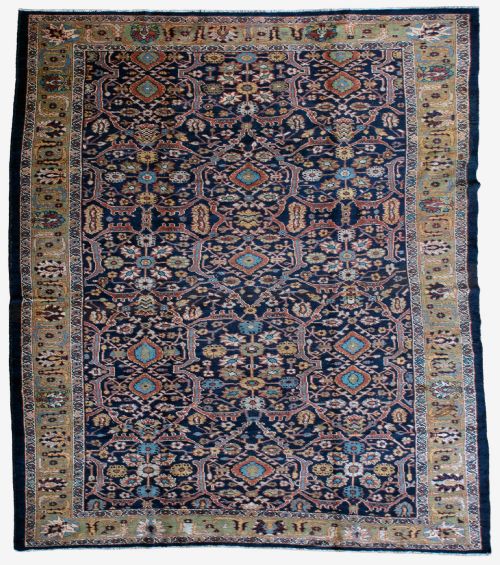
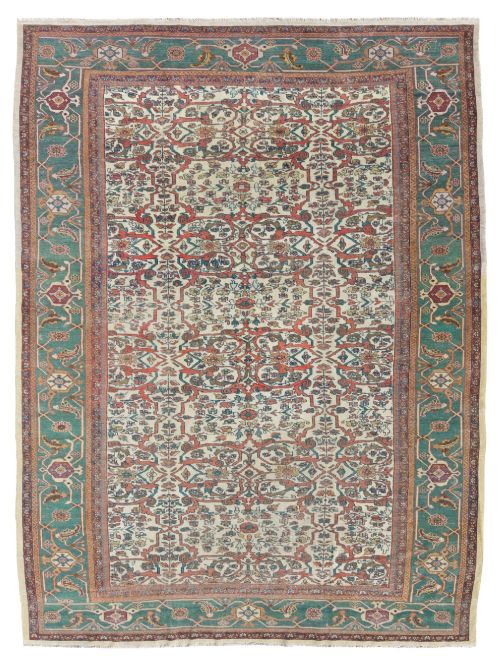
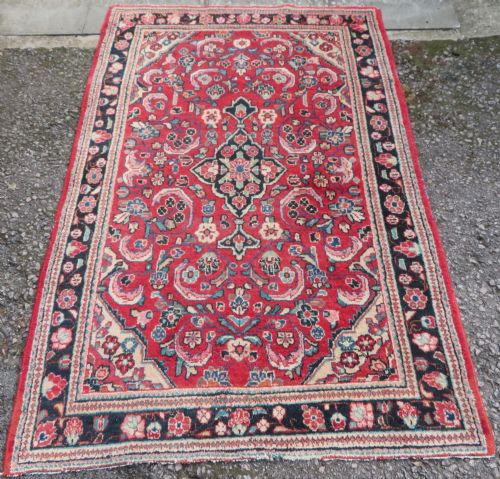
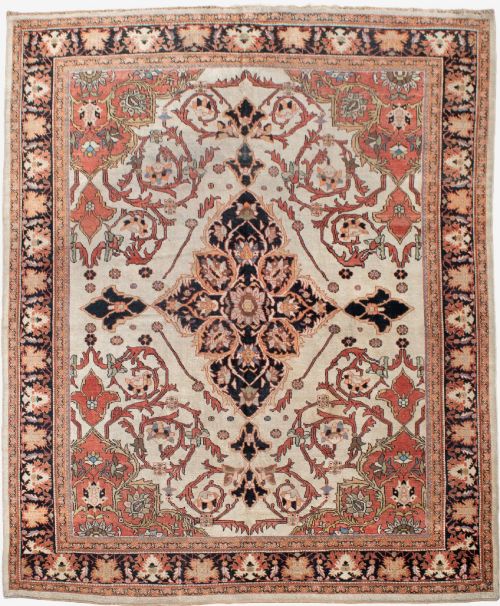
A mahal wool carpet represents a distinct category of floor covering originating from Western Persia, appearing across formats from expansive carpets to narrow runners and smaller village rugs. When exploring this selection, buyers encounter pieces spanning the late nineteenth century into the early decades of the twentieth century. These textiles frequently carry designations linking them to regional centres and related styles such as Sultanabad, Ziegler, Saroukh, and Fereghan.
The aesthetic vocabulary encompasses traditional Persian motifs, often featuring all-over shrub patterns, ivory grounds, or terracotta fields. Village rugs from the Chahar Mahal valley region and pieces associated with Bakhtiari tribes sit alongside grander commercial weaves. Sizes vary widely, accommodating intimate spaces as well as oversize country house interiors requiring substantial dimensions.
Evaluating quality and execution
Quality reveals itself in the fineness of the knotting and the handled weight of the wool pile. Superior examples display precise drawing within the traditional Persian motifs and harmonious saturation across the ivory, terracotta, or patterned grounds.
The integrity of the cotton foundation and the evenness of pile wear determine how successfully a carpet transitions into a modern interior. Subtle variations in dye absorption and wool selection distinguish standard village productions from finer workshops.
Several runners here bring a proper country house look, ready for boots and corridors.
The Mahal Wool Carpet Glossary
- Mahal
- A style of Persian carpet originating from the district surrounding Sultanabad in Western Persia. These pieces are known for robust construction and bold, decorative patterns.
- Ziegler
- A classification often applied to nineteenth-century Persian carpets produced or influenced by European firms like Ziegler and Co. They typically feature softened palettes and expansive floral designs.
- Sultanabad
- A regional designation for carpets woven in the area that later became known as Arak. These works share technical similarities with Mahal productions.
- Fereghan
- A style associated with a specific weaving region in Persia, frequently noted for fine knotting and intricate overall designs. Examples often demonstrate exceptional wool quality.
- Chahar Mahal
- A high valley region in Western Persia associated with village and tribal weaving traditions. Rugs from this area often exhibit distinctive regional motifs.
Mahal Wool Carpet: Frequently Asked Questions
How do I clean a mahal wool carpet?
Vacuum gently without using a rotating brush bar to protect the wool pile and cotton foundations. Professional cleaning tailored to antique Persian textiles remains essential for deep maintenance.
Avoid saturation and harsh chemical treatments that can alter the natural dyes. Regular gentle care preserves the structural integrity of the weave.
Where were mahal carpets made?
These carpets originated in Western Persia, specifically in and around the town of Sultanabad and the surrounding valleys. Village and tribal groups in the Chahar Mahal region also produced distinct related rugs.
Production spanned both organised workshops creating large decorative formats and smaller village settings crafting domestic runner and area rug sizes.
How do I date an antique mahal?
Dating relies on examining the structural materials, dye characteristics, and stylistic traits typical of nineteenth and early twentieth-century Persian weaving. Archival comparisons with dated examples help establish production periods.
Changes in chemical dye usage towards the end of the nineteenth century also provide a technical benchmark for distinguishing earlier pieces.
Are these carpets suitable for heavy traffic?
The combination of dense wool pile and sturdy cotton foundations makes these carpets exceptionally durable for high-traffic areas like corridors and hallways. Runners and oversize formats were originally built to withstand constant use in country houses.
Using an appropriate underlay helps distribute weight evenly and prevents slipping beneath furniture.