






Dark Blue Baluch Carpet
A dark blue baluch carpet brings deep indigo tones and nomadic wool craftsmanship straight into a room.
Dark Blue Baluch Carpet
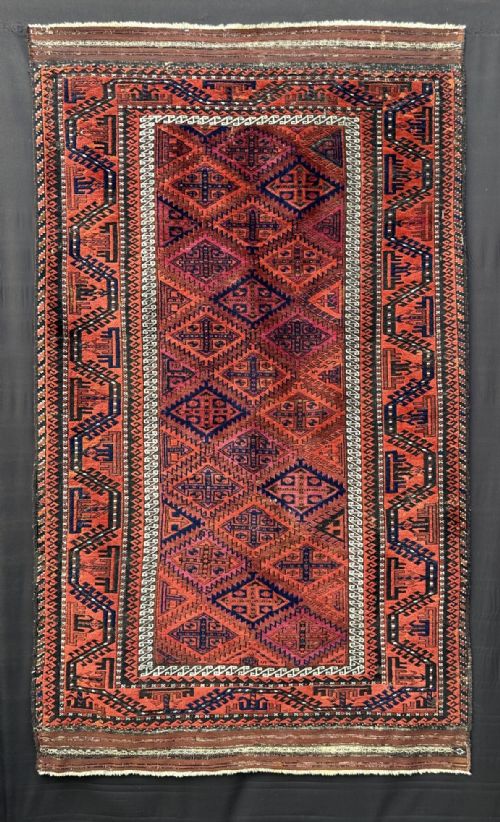
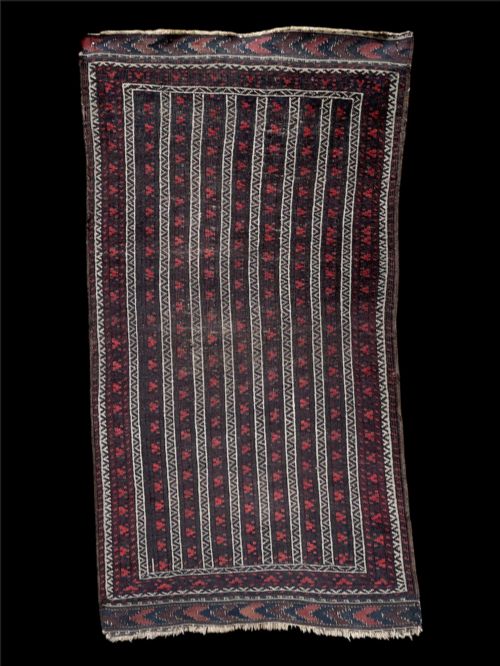
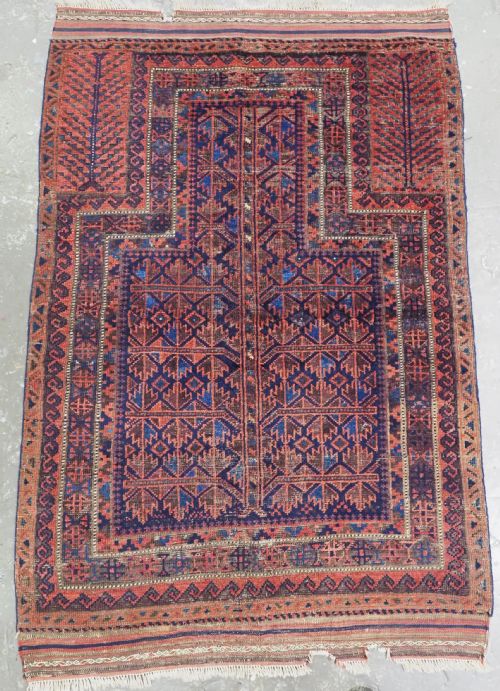
A dark blue baluch carpet represents traditional tribal weaving originating from the borderlands of Afghanistan, Persia, and Khorasan. These pieces span from the late nineteenth century through to the early decades of the twentieth century, capturing distinct regional designs.
Buyers will encounter formats ranging from smaller area rugs and prayer rugs with single or multiple mihrabs to larger main carpets. Specific traditional patterns such as the mina khani, kalam donneh, and dokhtar-e-qazi appear frequently across these textiles.
Attributions often link specific pieces to sub-groups like the Timuri, Mahdad Khani, or Quchan Kurds. Each group brings subtle variations in motif organisation while maintaining the characteristic dark ground palette.
Materials and construction methods
Weavers utilised hand-spun wool for the pile and foundation, often supplemented with goat hair for durable selvedges and structural integrity. This combination provides a sturdy handle suited to nomadic daily use.
Natural dyes delivered the saturated indigo and deep blue ground colours characteristic of the type. Artisans combined these with secondary vegetable colorants to outline intricate geometric and floral motifs.
Dark Blue Baluch Carpet Retail Price Guide 2026
Typical asking prices for dark blue baluch carpet among the pieces listed under this phrase on Sellingantiques today, from the lower quarter to the upper quarter. They describe what is for sale here now, not the wider market.
Some nineteenth-century weavers hid tiny hooked amulets within the dark indigo field to ward off the evil eye.
Standards of execution
The precision of the weave and the handled weight of the wool determine the distinction between average and superior examples. Tighter knotting supports clearer definition within complex box medallion and lotus leaf designs.
Depth and clarity of the natural dyes separate standard items from exceptional ones. Rich, uniform saturation across the indigo ground without muddy tones indicates superior dye preparation.
The Dark Blue Baluch Carpet Glossary
- Mina khani
- A traditional repeating lattice pattern of geometric flowers connected by curved vines. It appears frequently in nineteenth-century Khorasan and Baluch weaving.
- Mihrab
- The architectural arch motif used on prayer rugs to indicate the direction of prayer. Examples range from single arches to complex seh mihrab variants.
- Dokhtar-e-qazi
- A specific traditional design style associated with Timuri and Baluch prayer rugs. The name translates traditionally to refer to the judge's daughter.
- Selvedge
- The reinforced outer edge of a carpet that protects the side cords from fraying. Goat hair is frequently utilised here for added strength.
Dark Blue Baluch Carpet: Frequently Asked Questions
What is a dark blue baluch carpet?
A dark blue baluch carpet is a tribal floor covering hand-woven by nomadic and village groups in regions spanning modern Afghanistan, eastern Persia, and Khorasan. These textiles are defined by their deep indigo grounds and distinct geometric or stylised floral patterns.
Created during the nineteenth and early twentieth centuries, they reflect the specific tribal traditions of makers such as the Timuri and Mahdad Khani. Their portable format suited nomadic lifestyles while providing durable warmth.
How were these carpets used originally?
Nomadic and village communities utilised these carpets as versatile floor coverings, bedding borders, and portable furnishings within tents or mud-brick dwellings. Prayer rugs served a specific devotional purpose for individual daily prayers.
Because the weavers lived moving lives, the formats remained manageable in scale. They were laid on packed earth or felt rugs to insulate living spaces against cold ground.
How do I live with one of these carpets?
Placing a tribal rug in a modern interior requires a stable underlay to prevent slip and protect the vintage wool foundation from friction. Keep them out of direct, harsh sunlight to preserve the natural indigo and dark blue dyes over time.
Gentle vacuuming without a beater bar removes trapped dust effectively. Professional cleaning tailored to antique vegetable-dyed wool ensures the textile remains stable.
How can I tell different tribal designs apart?
Design attribution relies on examining specific motifs like the box medallion, lotus leaf, or kalam donneh patterns. Regional groupings such as Western Afghan, Khorasan, or Timuri each favoured particular arrangements of borders and field geometry.
Structural details, including the presence of goat hair selvedges and hand-spun wool characteristics, further help distinguish between the various nineteenth-century groups.