


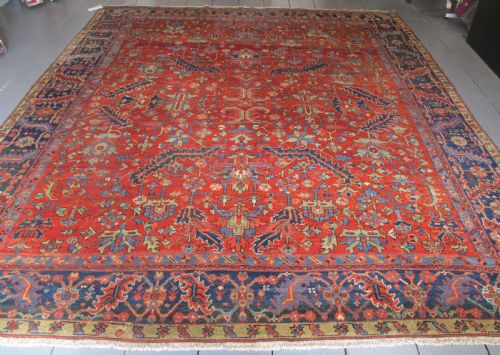


Victorian Era Tribal Rug
These victorian era tribal rug examples bring dense village patterns and rich wool into a room.
Victorian Era Tribal Rug
A victorian era tribal rug brings together hand-knotted textiles originating from Persian, Anatolian, Turkmen, and Caucasian traditions during the nineteenth century. These floor coverings range from small mats and runner rugs to large carpets, produced by nomadic and village weavers.
Most pieces encountered here date from the decades around eighteen-eighty and eighteen-ninety, reflecting Victorian-period trade and tastes. The selection spans specific regional types including Baluch, Tekke, Hamadan, Ushak, and Karaja workshops.
Buyers select these items to anchor a room with geometric motifs and deep field colours. Each carpet displays the distinct tribal vocabulary of its maker, from repeated guls to elaborate border systems.
How they were made
Weavers utilised natural materials, relying predominantly on wool and hand-spun wool for the pile, foundations, and structural warps and wefts. Cotton also appears in the structural foundations of certain carpets from this period.
The construction involves hand-knotting techniques executed on upright looms. Artisans employed traditional vegetable and natural dye methods to colour the wool before working intricate tribal patterns.
Victorian Era Tribal Rug Retail Price Guide 2026
Typical asking prices for victorian era tribal rug among the pieces listed under this phrase on Sellingantiques today, from the lower quarter to the upper quarter. They describe what is for sale here now, not the wider market.
Listings demonstrate pieces dated to eighteen-eighty and eighteen-ninety alongside general Victorian attribution.
What varies in quality
The calibre of a piece rests on the handling of its wool and the clarity of its dye work. Hand-spun wool yields a tactile depth and patina that alters how the surface catches the light.
Design execution distinguishes standard village production from finer workshop output. Crispness in geometric motifs, completeness of borders, and structural integrity dictate the standing of an individual carpet.
The Victorian Era Tribal Rug Glossary
- Gul
- A primary medallion motif characteristic of Turkmen and related tribal weaving traditions. These repeating octagonal guls often define the central field of the carpet.
- Warp
- The vertical threads stretched tightly on the loom that form the skeleton of the rug. Fringe ends typically display these foundational cords.
- Weft
- The horizontal threads passed across the warps between rows of knots to secure the pile. Cotton and wool serve this structural purpose.
- Pile
- The dense surface layer of knotted wool that forms the nap of the rug. The height and tightness of this wool layer shape the texture.
- Runner
- A long, narrow carpet format designed for hallways, corridors, or staircases. These pieces balance length with a restricted width.
Victorian Era Tribal Rug: Frequently Asked Questions
How do I clean a tribal rug?
Maintenance requires gentle vacuuming without a rotating brush bar to protect the hand-knotted wool pile. Professional specialist cleaning remains essential for addressing deep dirt or spills safely.
Water exposure should stay limited during routine care to prevent dye bleed or foundation rot. Proper placement away from direct harsh sunlight preserves the natural dyes.
Where were these rugs made?
Origin points span nineteenth-century Persia, Anatolia, Central Asia, and the Caucasus region. Nomadic tribes and village communities produced these textiles using traditional local methods.
Specific provenances include Baluch territories, Afghan regions, and Turkmen tribal groups. Trade routes subsequently brought these nineteenth-century pieces into Western markets.
Are these carpets suitable for heavy foot traffic?
The dense wool pile and sturdy hand-knotted construction allow these rugs to handle regular domestic use. Hallways and living spaces accommodate runners and main carpets effectively.
Using a quality underlay prevents slipping and cushions the foundation against floorboards. This added layer reduces friction and extends the functional lifespan of the weave.
How do I date a Victorian rug?
Dating relies on stylistic analysis, material composition, and structural characteristics recorded in the weaving. Pieces from this era typically align with production around the eighteen-eighty and eighteen-ninety decades.
Natural dye palettes and hand-spun wool indicate nineteenth-century origins prior to synthetic dye introduction. Comparing knot structures and regional motifs helps confirm the period.